

What is 庞征博引
庞征博引 is for self-directed learners and lifelong learnersAI learning tool, which turns topics you want to understand systematically into personalized articles that can each be read in 5–10 minutes and connect with one another. Users first say what they want to learn; the product learns their foundation, goals, and starting point, then continuously serializes around that topic. While reading, you can ask questions about a specific paragraph or give feedback on your level of understanding, and this information affects the content and direction of subsequent articles.
庞征博引 is suited for self-directed learning driven by work, life, and interests: encountering an unfamiliar field at work, wanting a systematic introduction to a technology or industry, developing a long-term interest, or understanding new problems encountered in life. The site also has a continuously updated public knowledge base, collecting public introductory topics on work, life, interests, and new fields, which can be read without logging in.
The name "庞征博引" is adapted from the idiom "旁征博引". In the field of "AI + education", it focuses on personalized learning through short-form reading and interactive questioning.
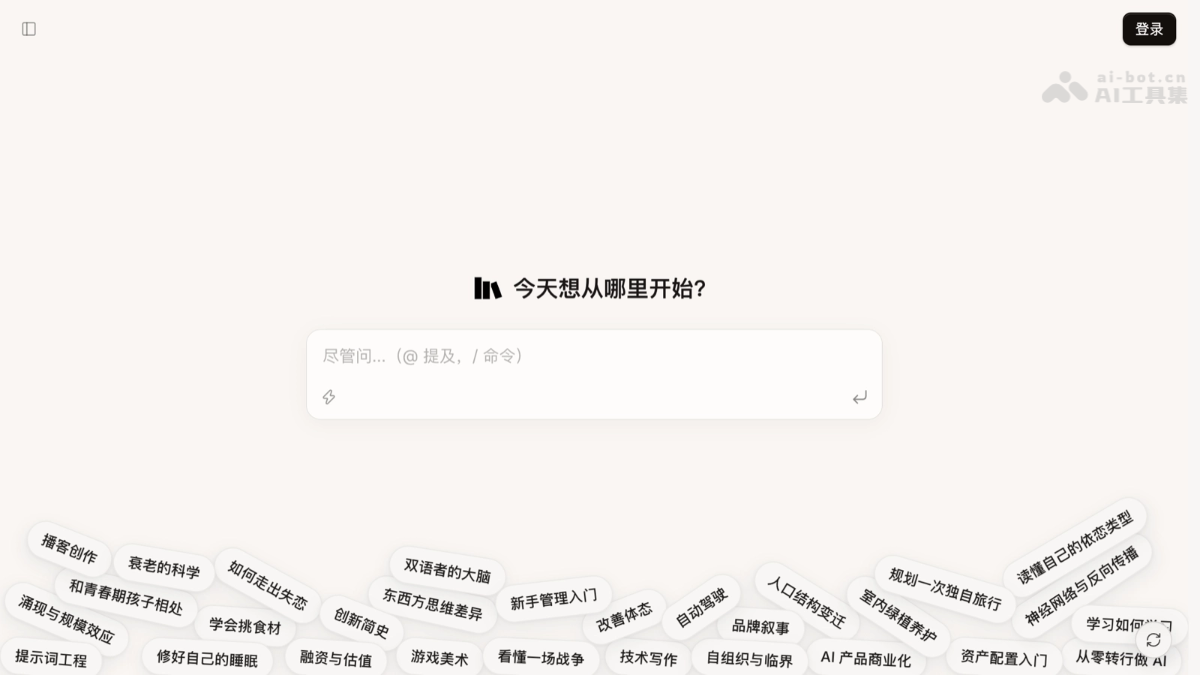
庞征博引's main features
- Turn topics into a series: Each learning topic consists of a set of articles that build on one another, helping readers gradually build understanding rather than just getting scattered answers.
- Start from the reader's starting point: Before starting, it learns your existing foundation, learning goals, and interests, avoiding repetition of what you already know and not defaulting to starting from page one of a textbook.
- 5–10 minutes per article: It breaks down complex topics at a microlearning pace, so one reading session can be completed attentively and is easier to sustain over the long term.
- Ask while reading: Select any paragraph of the main text to ask a question, comment, or give feedback on your level of understanding, without leaving the current article to re-describe the context.
- Feedback affects the next article: What you did not understand and where you want to go deeper becomes the basis for subsequent content; you can return to the conversation to adjust direction at any time.
- Content includes sources: When writing articles, it searches online and includes reference sources, which readers can review and verify one by one.
- Public knowledge base: Public topics (https://pangzhengboyin.com/wiki) are continuously updated, covering work, life, interests, and new fields, and can be read and experienced without logging in.
How to use 庞征博引
- Enter a topic: Visit the 庞征博引 official website https://pangzhengboyin.com/, and enter the topic you want to learn, for example "want to understand how large models are trained" or "want to systematically understand personal income tax".
- Complete the starting point questionnaire: After logging in, answer a few questions about your existing foundation, goals, and interests, and the AI will use this to plan and write the first article.
- Ask while reading: Read the article; when you encounter something you do not understand or want to go deeper into, select the corresponding paragraph and ask directly.
- Feedback drives the series forward: After reading, give feedback on your level of understanding or new points of interest, and the next article will continue based on this information.
- Adjust or start a new topic: Return to the conversation to adjust direction when needed, and you can start a new learning topic.
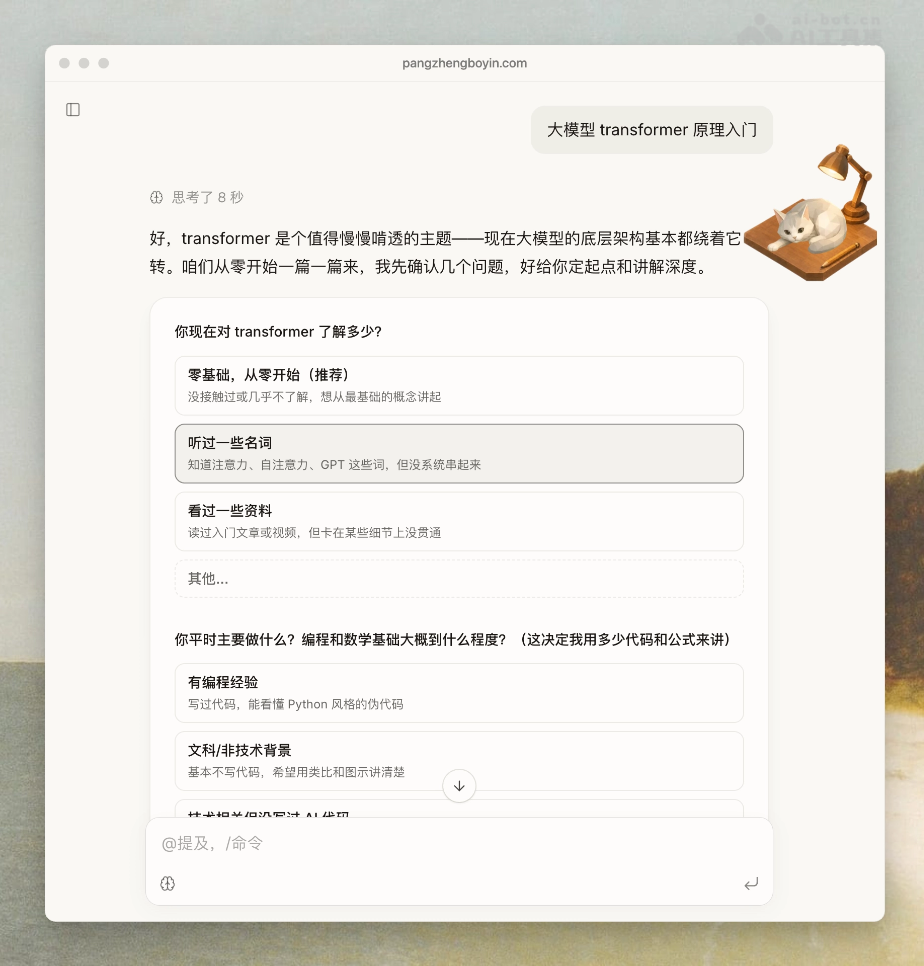
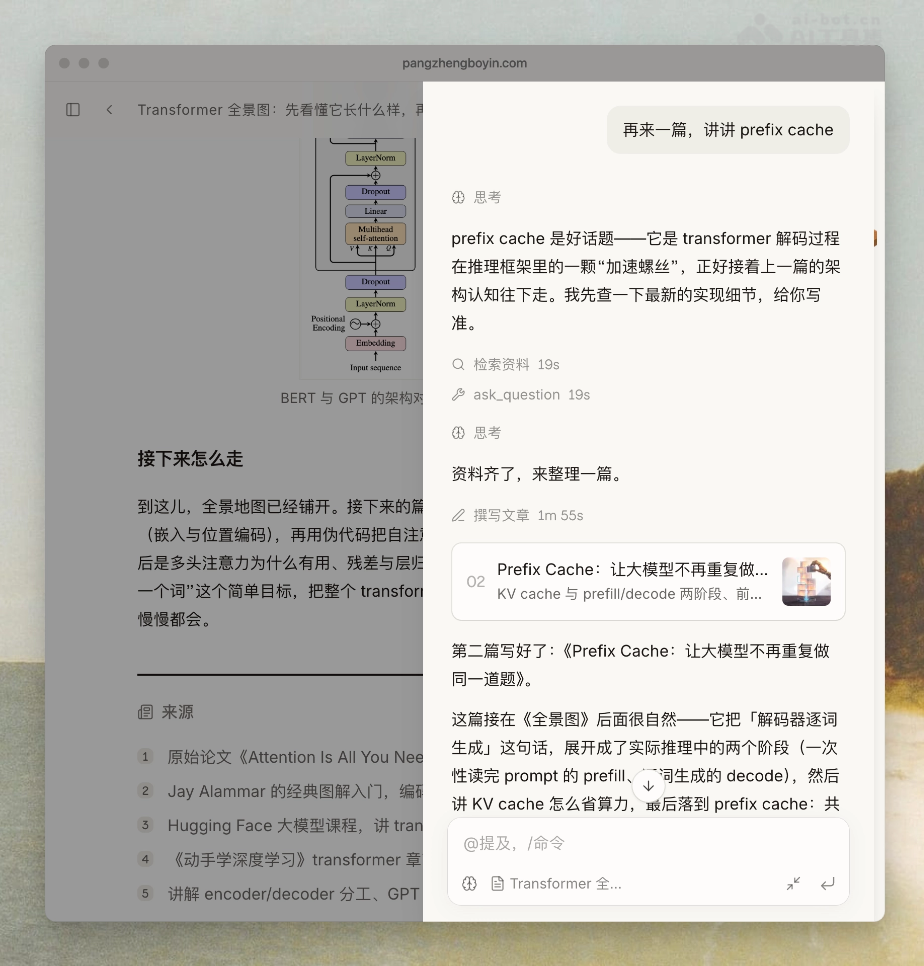
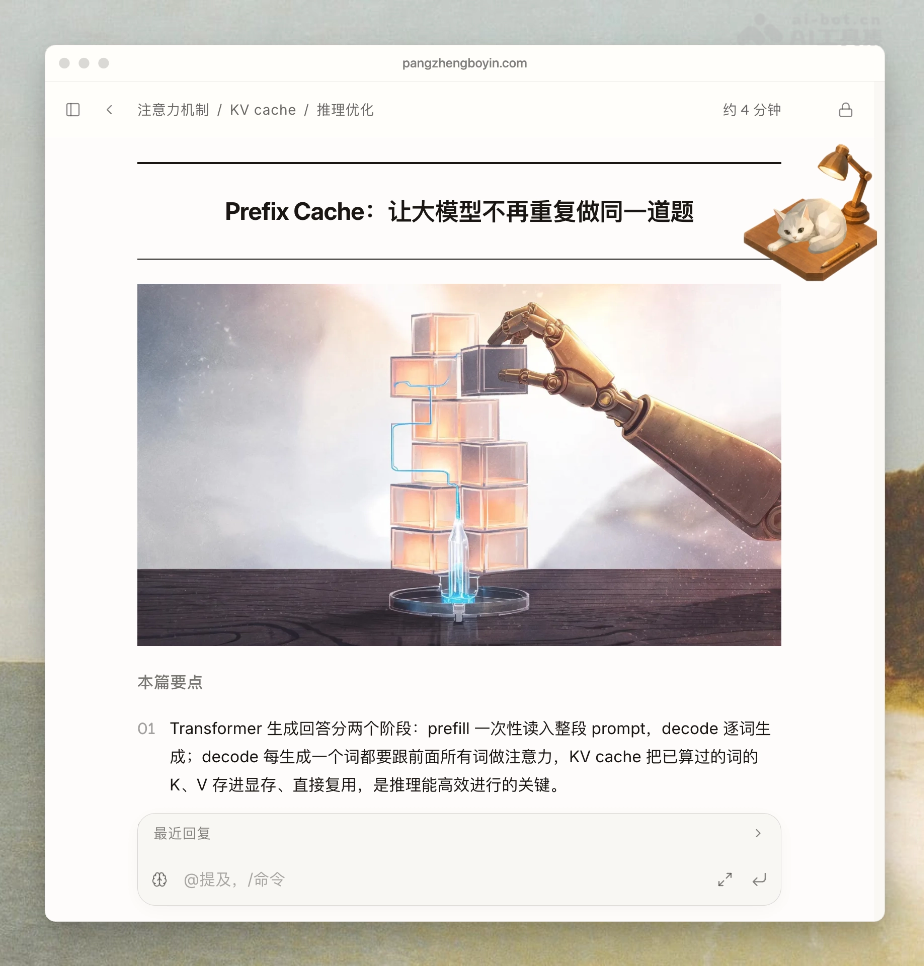
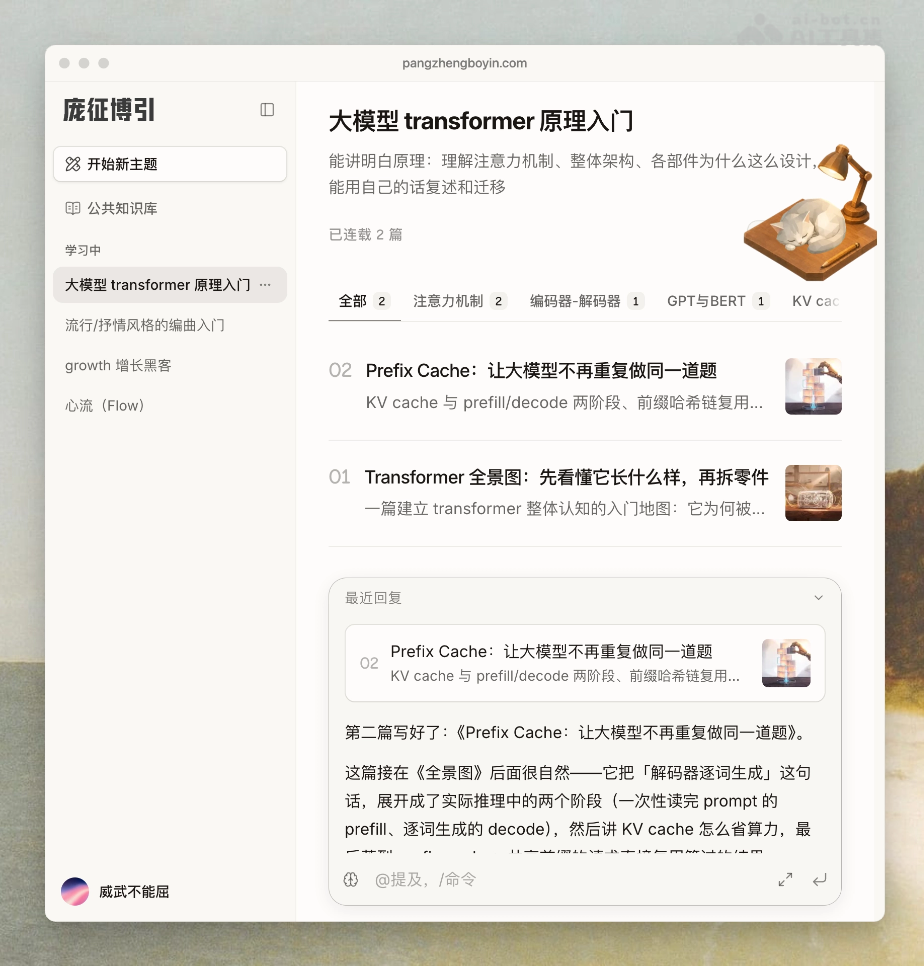
庞征博引's core advantages
-
Organized around "learning one topic": Organize scattered Q&A into continuous articles, helping gradually build complete understanding.
-
Start from your personal starting point: First understand the basics, goals, and interests, to avoid repeating content you already know.
-
Micro-learning pace: Each article takes 5–10 minutes, making it easier to finish in one sitting and keep going long term.
-
Ask while reading, iterate with feedback: Paragraph-level questions and comprehension feedback influence the direction of the next article.
-
Verifiable content: When writing, search online and attach reference sources, making it easy to check item by item.
-
Low-barrier experience: The public knowledge base can be read without logging in, and you can decide afterward whether to create a personal topic.
Extensive comparison with similar competing products
| Product or format | What to start with | Main content | Better suited for whom |
|---|---|---|---|
| Pangzheng Boyin | A learning topic, as well as your own foundation, goals, and interests | Short serialized articles continuously updated based on reading and question feedback | People who do not yet have ready-made materials or courses and hope to gradually build complete understanding from their own starting point |
| NotebookLM(Gemini Notebook) | Sources such as documents, web pages, and videos added or selected by the user | Source-based Q&A, summaries, notes, and various learning materials | People who already know how to collect materials and hope to understand, organize, and review existing materials |
| Google Learn About | A topic, question, text, or image | Explanations, learning cards, images, videos, quizzes, and interactive exploration | People who want to immediately explore unfamiliar topics and keep asking questions along the way |
| ChatGPT Study Mode(learning mode), Gemini Guided Learning | A question, task, or learning goal | Step-by-step explanations, guiding questions, hints, and knowledge checks | People who want to practice thinking, solve problems, or check understanding through dialogue |
| Online courses such as Coursera and Chinese University MOOC | Courses pre-designed by universities, institutions, or instructors | Videos, readings, exercises, assignments, and for some courses certificates or degree pathways | People who want to take systematic courses according to a fixed syllabus and value teachers, assignments, or learning credentials |
| DeepWiki | A specific code repository such as on GitHub | Project documentation generated from the code repository and kept up to date, as well as Q&A around the code | Developers who need to quickly understand an open-source project, code structure, or implementation details |
Application scenarios of Pangzheng Boyin
-
Filling knowledge gaps at work: Temporarily encountering unfamiliar business, technology, or industries and wanting to gradually understand from your own starting point.
-
Laying groundwork before entering a new field: When you have not yet decided which long course to choose, first use short articles to build a framework, then decide the direction to go deeper.
-
Long-term interest learning: Continuously accumulate around topics such as photography, history, cooking, and basic economics, reducing scattered bookmarks.
-
Understanding practical life issues: Such as personal income tax, social security, and rental contracts, focusing on background, concepts, and judgment frameworks rather than just conclusions.
-
Preschool transition and experience: Start by using the public knowledge base to preview without logging in, or fill in concepts/prerequisite knowledge, then enter the MOOC course or DeepWiki to dig deeper into the code repository.
Pangzheng Boyin's common questions
Q1: What content can Pangzheng Boyin help you learn?
A1:Any topic suitable for being broken down into articles for continuous understanding can be tried, including work knowledge, new fields, life problems, and personal interests. Public topics in the public knowledge base can serve as references.
Q2: Are the articles fixed in advance?
A2:No. The product arranges subsequent content based on the user's starting point and reading feedback; when the direction changes, it can also be readjusted in the conversation.
Q3: Does Pangzheng Boyin have a mobile version?
A3:The product is a web version and can be accessed using a mobile browser without installing an app.


