
Recently Tencent's Hunyuan Hy3came out,WorkBuddy and you can use it for free right away. Everyone's rushing to use it, and it's even causing queues.
Hy3 is an upgraded version released at the end of April Hy3 preview .
In blind tests of the models on real work, Hy3's average score was better than GLM 5.1. On tasks like reasoning, agents, and long context, it even matches the performance of larger flagship models at home and abroad (whose parameter scales are often 2 to 5 times that of Hy3).
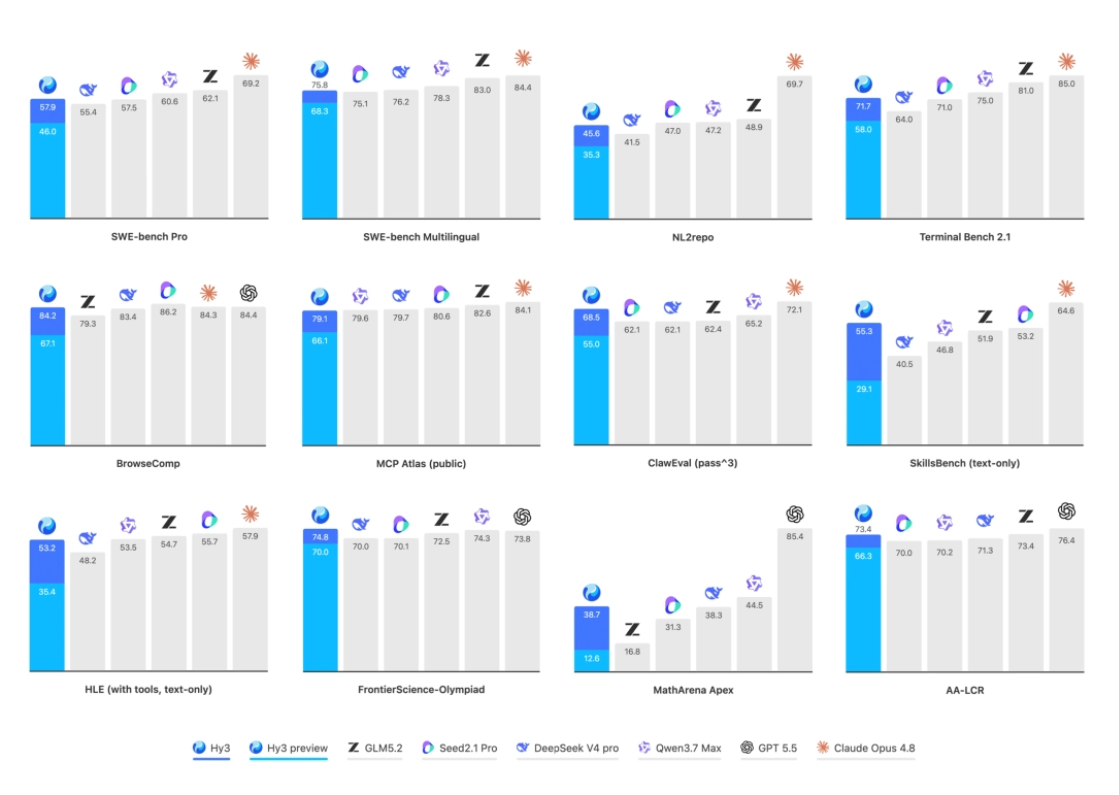
Since Hy3's marketing claims it matches larger (2-5x) flagship models and is actually stronger than GLM 5.1, then of course we have to test it based on that claim.
I chose two with higher parameter counts than Hy3: GLM 5.1,DeepSeek-V4-Pro, and one with a similar parameter count:DeepSeek-V4-Flash, to compare them all side by side.
Whether it's a mule or a horse, let's take it out for a run!
01. Model Hands-On Test
Case 1 Front-End Design
Prompt:
Make an AI model comparison Dashboard.
Contents include:
- 1. Top shows 4 models: hy3, GLM 5.1, DeepSeek V4 Pro, DeepSeek V4 Flash.
- 2. Middle is a scoring matrix: code, reasoning, writing, vision, speed, stability.
- 3. Right side shows the pros and cons of the currently selected model.
- 4. Bottom shows the test case run records.
Design requirements:
- 1. Don't make a marketing landing page.
- 2. It should look like a professional SaaS tool, with high information density but not messy.
- 3. Support desktop and mobile.
- 4. Have real interactions: switch models, filter test types, sort scores.
- Don't use large gradient backgrounds, glassmorphism, or empty decorations.
Hy3:
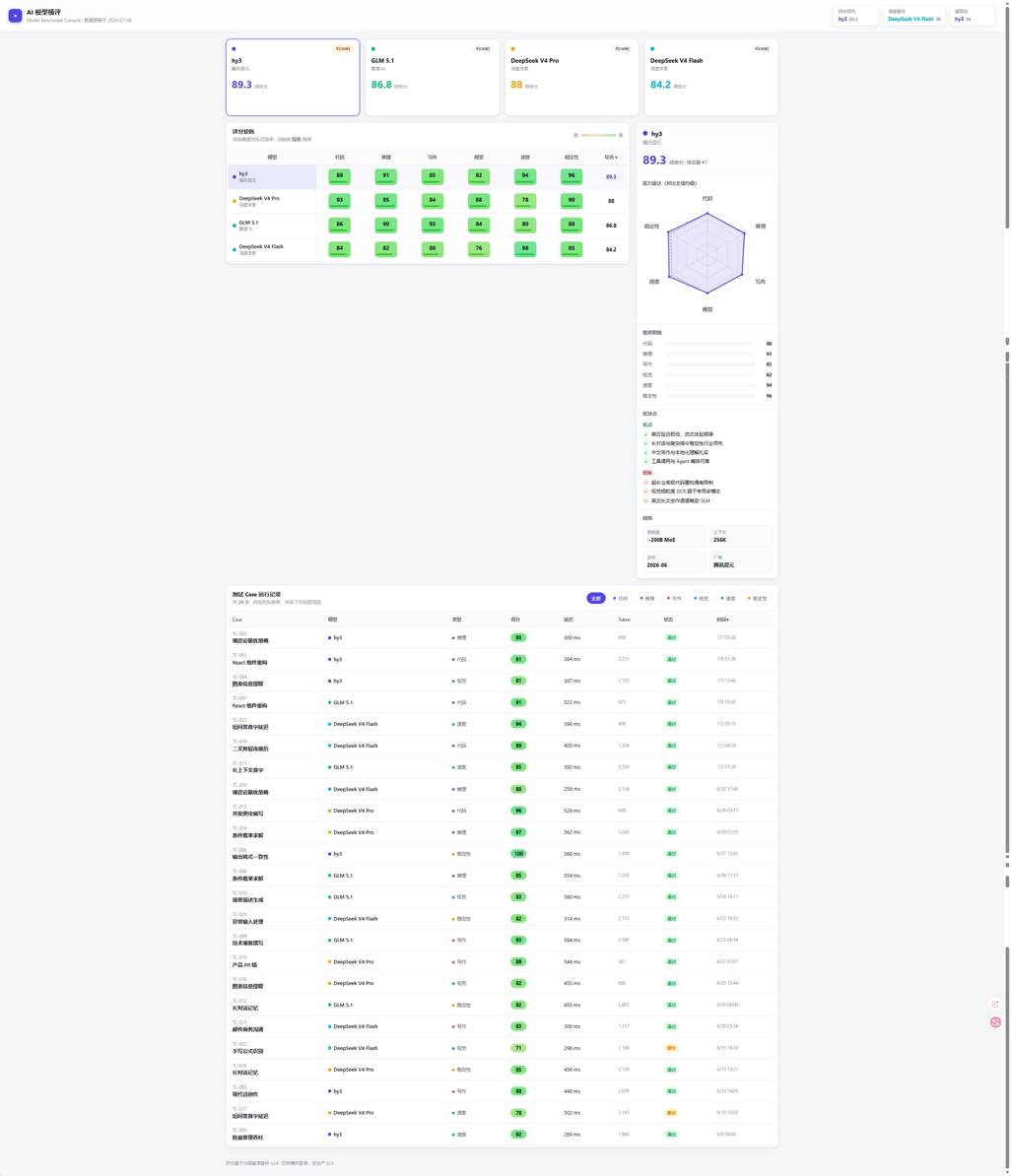
Hy3 has a very high level of completion, and its information architecture is the most like a real comparison tool: top KPIs, 4 model cards, scoring matrix, right-side model details, radar chart, dimension breakdown, pros and cons, specs section, test records, and filters are all there.
There is an obvious blank area on the left side of the middle section on desktop, causing an uneven browsing rhythm on the page.
DeepSeek-V4-Pro:
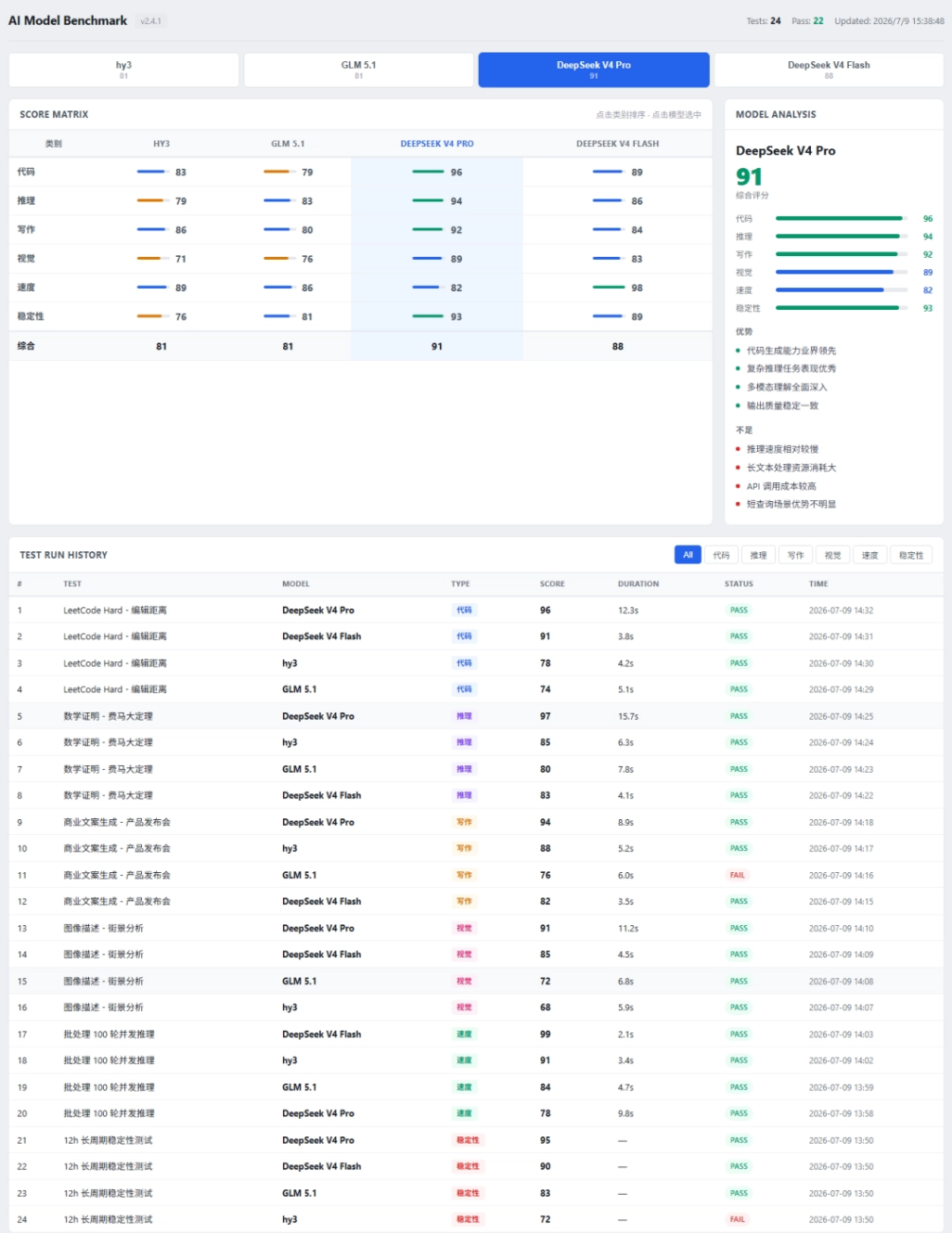
DeepSeek-V4-Pro has a clear structure, with a 6-dimension × 4-model scoring matrix, and the selected column, filter buttons, and test history table all work.
But its design recognition is relatively weak, like a "standard white-background SaaS table demo"; there is a large blank area in the matrix section, and page density control is poor; in details, it lacks model profiles, specs, and graphical capability panels, so it's not memorable enough.
DeepSeek-V4-Flash:
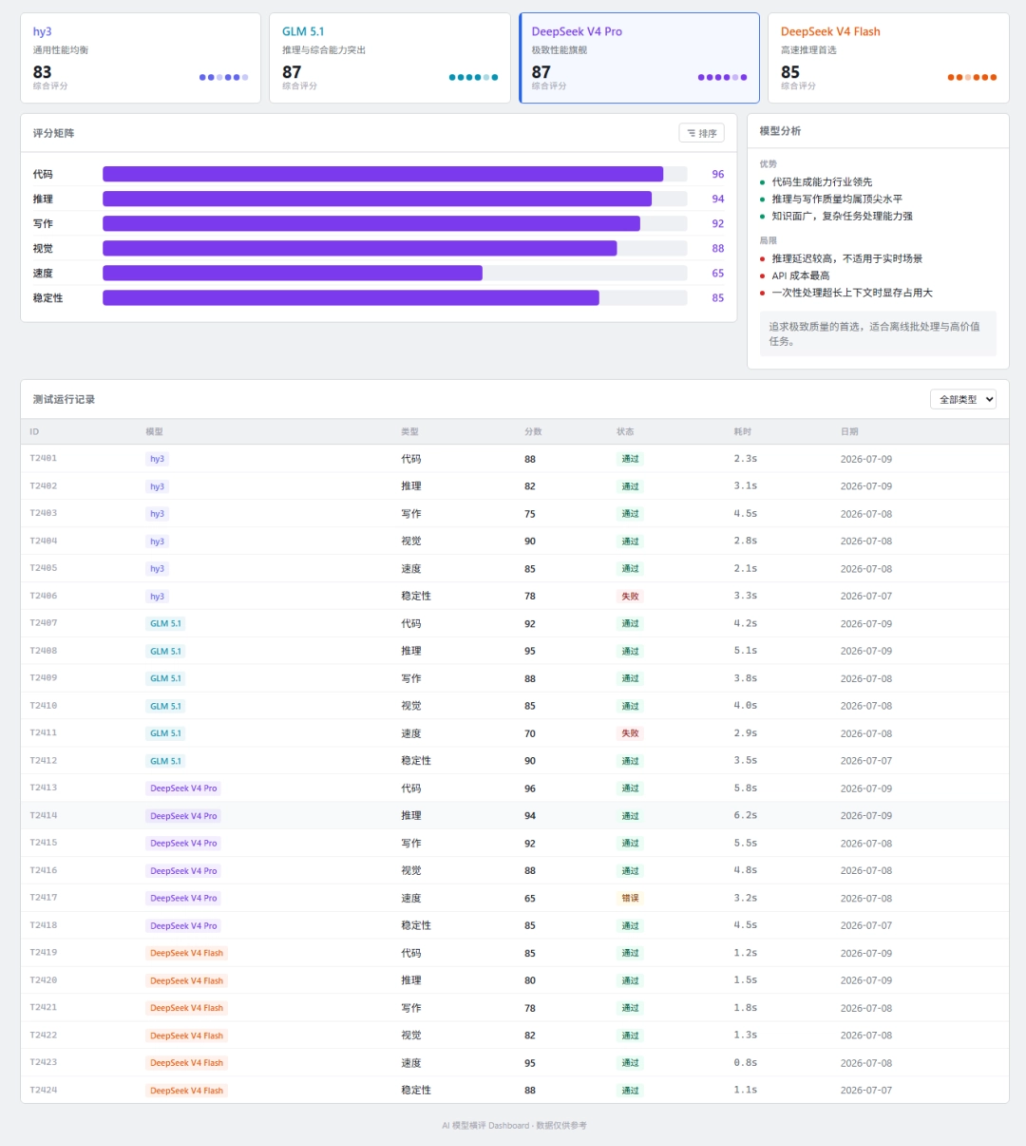
DeepSeek-V4-Flash's cards, bar charts, and tables are all very stable, visually restrained, and it doesn't misuse decorations.
But the so-called "scoring matrix" only shows the 6 dimensions of the currently selected model, not a true four-model side-by-side matrix. There are few information levels, more like a model details page + record table, and not much like a complete comparison workbench.
GLM 5.1:
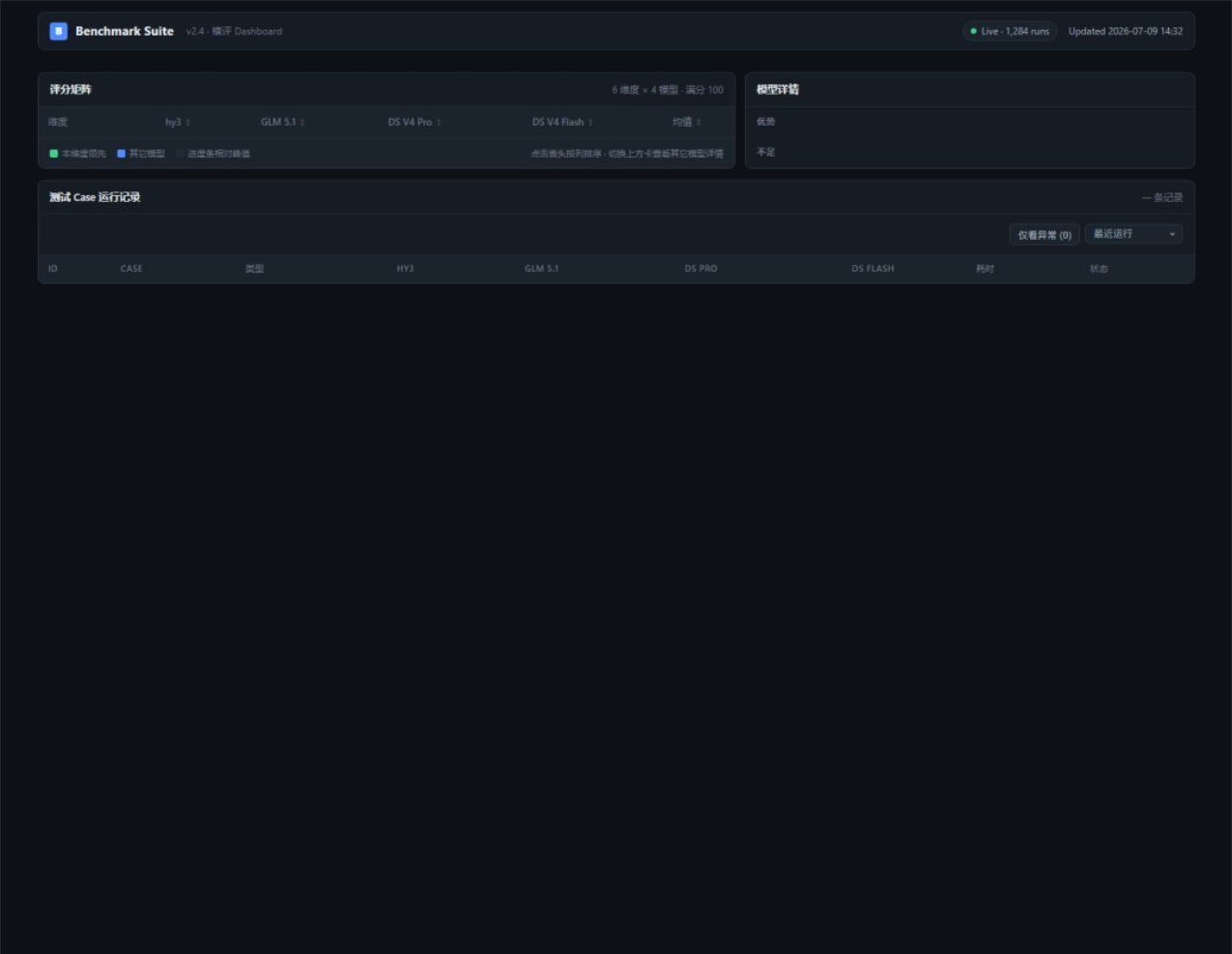
The GLM 5.1 page didn't run. The browser reported Invalid or unexpected token, and the model cards, matrix, details, and test records all failed to render, leaving only the dark shell and empty table headers.
Ranking for this case: Hy3 > DeepSeek-V4-Pro > DeepSeek-V4-Flash > GLM 5.1
Case 2 3D Physics Interaction
Prompt:
Make a 3D ball maze.
Requirements:
- Use Three.js.
- There is a tilted maze board and a small ball in the scene.
- Control the tilt of the maze board with the keyboard arrow keys.
- The small ball rolls according to the tilt direction.
- There are walls, a finish point, and failure holes.
- Reaching the finish point displays the completion time.
- Falling into a hole resets it.
- It needs basic physics effects; it cannot just change coordinates and pretend to roll.
Very stable, comes with three.min.js locally, and can run directly; the physics implementation is clear, with a tilting board, a rolling ball, wall collisions, falling into holes and resetting, a finish point, timing, fall count, and a mobile D-pad. After pressing keys, the ball's position and the timer both change noticeably.
DeepSeek-V4-Pro:
DeepSeek-V4-Pro's approach is quite advanced, using React Three Fiber + Rapier, and the build also passes, showing that it knows to use a physics engine.
But actually playing it has fairly big problems: the left-right gravity logic is chaotic, and when the board tilts up, it runs toward the high side.
DeepSeek-V4-Flash:
There is a canvas, a maze, timing, holes, and a completion popup.
The downside is that the game system is still thin: few holes, little HUD information, and the left-right gravity logic is chaotic—when the board tilts up, it runs toward the high side..
GLM 5.1:
Very high completeness: the screen has a complete maze, walls, multiple failure holes, a finish point, shadows, a HUD, best time, WASD/arrow keys, R to restart, and mouse view rotation.
However, the up-down-left-right gravity logic is all chaotic—when the board tilts up, it runs toward the high side.
Ranking for this case: Hy3 > GLM 5.1 > DeepSeek-V4-Pro > DeepSeek-V4-Flash
case 3 Tower defense game
Prompt:
Make a mini tower defense game.
Requirements:
- There is a fixed path on the map, and enemies move along the path.
- Players can place towers on empty ground.
- Towers automatically attack the nearest enemy within range.
- Enemies drop gold when they die.
- Each wave increases the number and speed of enemies.
- There are health, gold, waves, pause, and restart.
- There are at least two types of towers: single-target high damage and area low damage.
- The game must be balanced enough to play at least 5 waves.
Hy3:
Hy3 has three types of towers: arrow tower, cannon tower, and ice tower, covering single-target, AOE, and slow; it also has sell refunds, pause, restart, and wave status. The UI is clear, and the enemy health bars, path, and tower placement feedback are all good, like a complete mini-game prototype.
DeepSeek-V4-Pro:
DeepSeek-V4-Pro's React/Vite version, placing towers and the 5-wave flow are usable.
But overall it is more like a basic Demo: only two types of towers, no log/sell/slow/enemy type variation, and the visuals are also relatively simple.
DeepSeek-V4-Flash:
DeepSeek-V4-Flash's single-file completeness is decent: it can place towers, start waves, and return money for kills, with event prompts and a tower attribute panel.
The weakness is that there are only two types of towers, the enemies and strategic depth are average, and the interface looks weak.
GLM 5.1:
GLM 5.1's game structure is very productized: 10 waves, two types of towers, multiple enemy types, speed buttons, an event log, and complete shop information on the right side.
But the visuals are rather dark, and combat feedback is not intuitive; there are few tower types, and there is no sell/upgrade.
Ranking for this case: Hy3 > GLM 5.1 > DeepSeek-V4-Flash > DeepSeek-V4-Pro
case 4 Code debugging
Prompt:
The following Python code is used to find the indices of two numbers in an array whose sum is target, but there is a bug. Please point out the bug, provide fixed code, and add 3 test cases.
def two_sum(nums, target):
seen = {}
for i, n in enumerate(nums):
if target – n in seen:
return [i, seen[n]]
seen[n] = i
return []
Hy3:
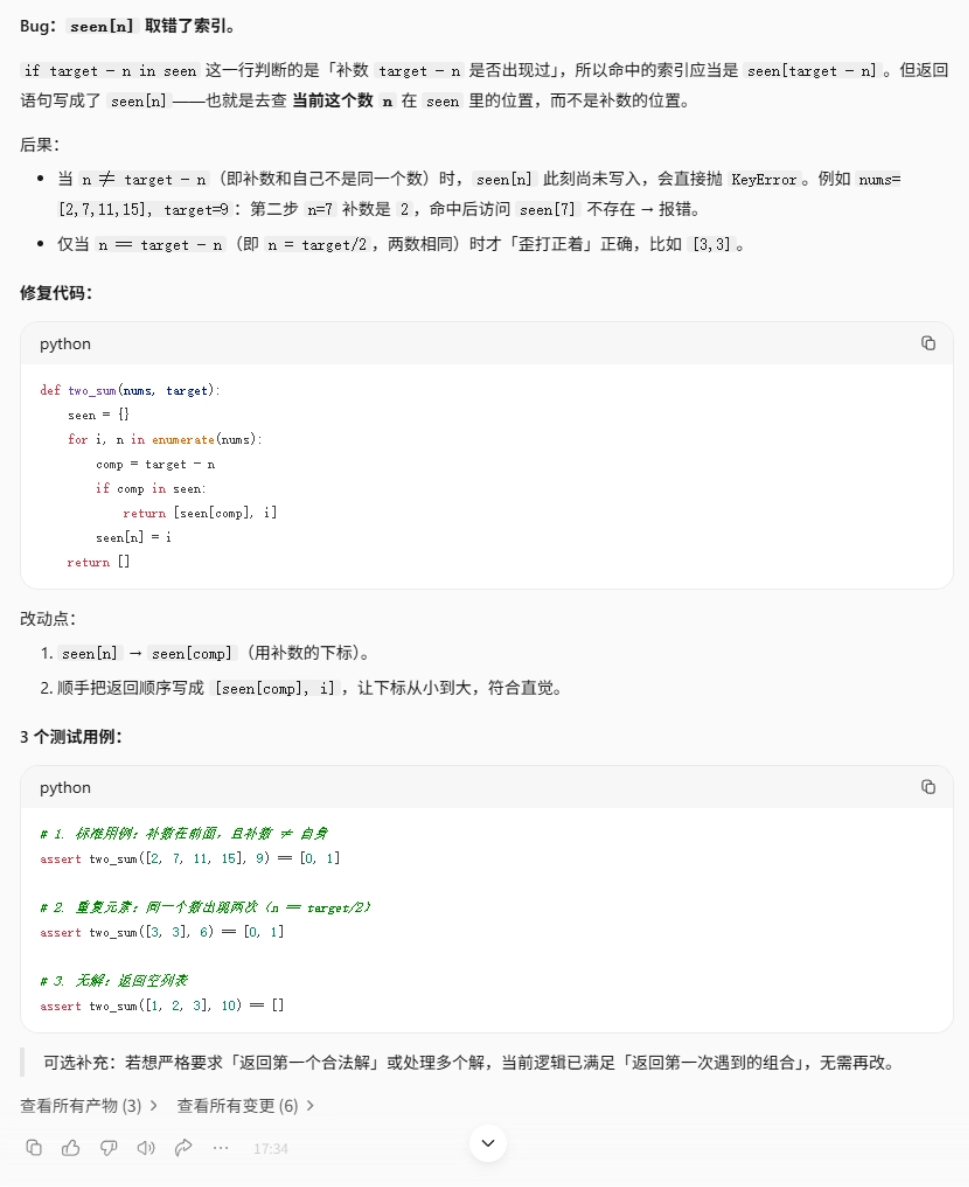
Hy3 explains the standard test cases clearly, can point out that [2,7,11,15] will cause a KeyError, the fixed code is correct, and the tests cover basic, duplicate, and no-solution cases.
It is just slightly too absolute in saying that "it is only correct if n == target – n"; if the original return order is strictly required to be [0,1], [3,3], the original code might also be reversed.
DeepSeek-V4-Pro:
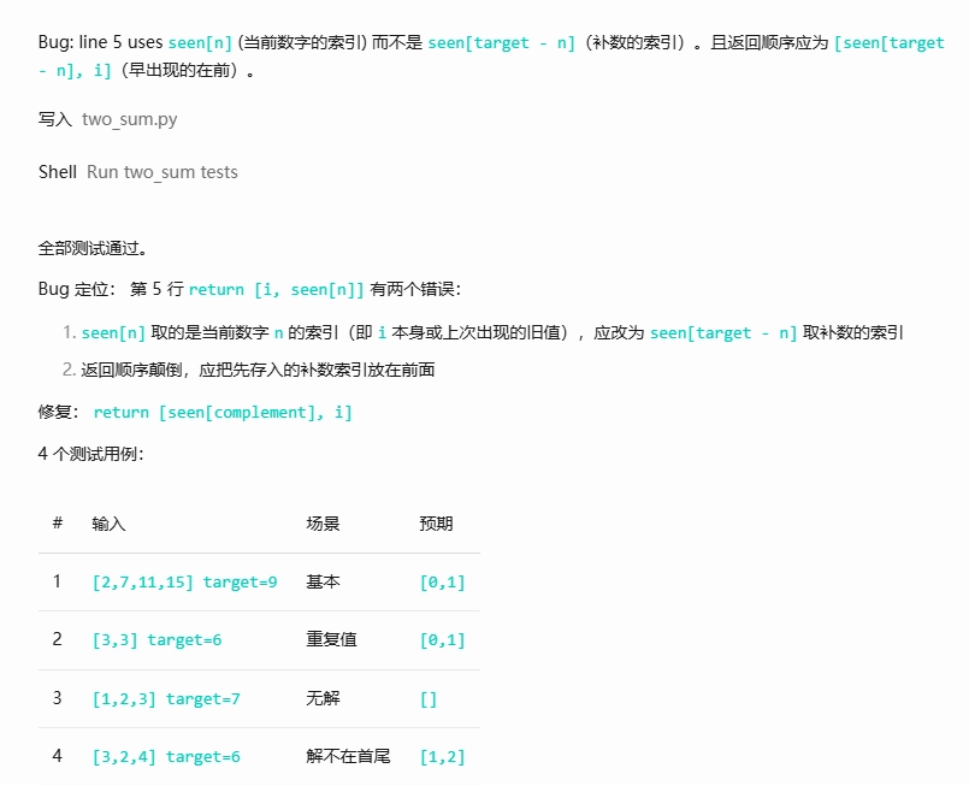
DeepSeek-V4-Pro's fix and tests are correct, and the 4 test cases cover everything. But the explanation says seen[n] may be "the index of the current number n, i.e. i itself", which is not rigorous, because seen[n] = i happens after the check, so it usually has not been written yet.
DeepSeek-V4-Flash:
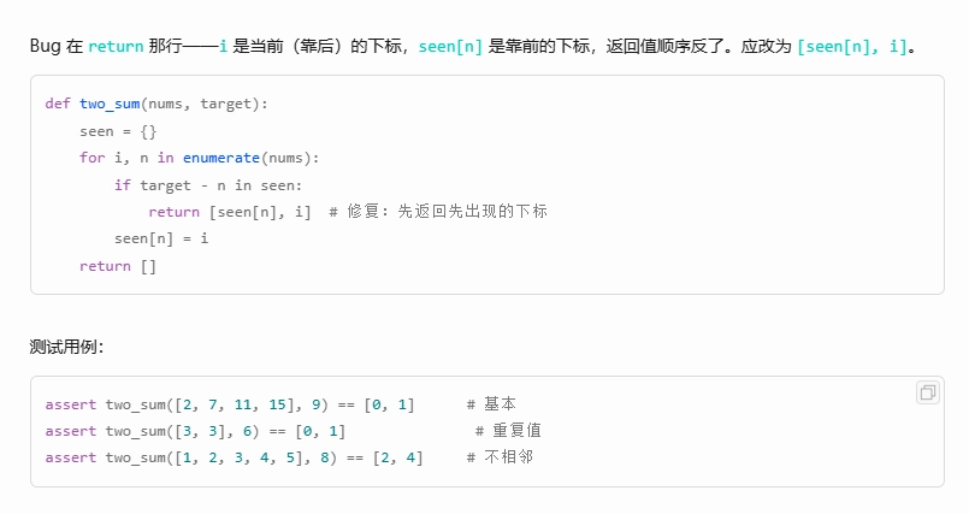
DeepSeek-V4-Flash is clearly wrong. It misdiagnoses the problem as "the return order is reversed", but still writes seen[n] and does not change it to seen[target – n]. The standard case [2,7,11,15], target=9 will still raise KeyError, and the tests it provides do not even pass.
GLM 5.1:
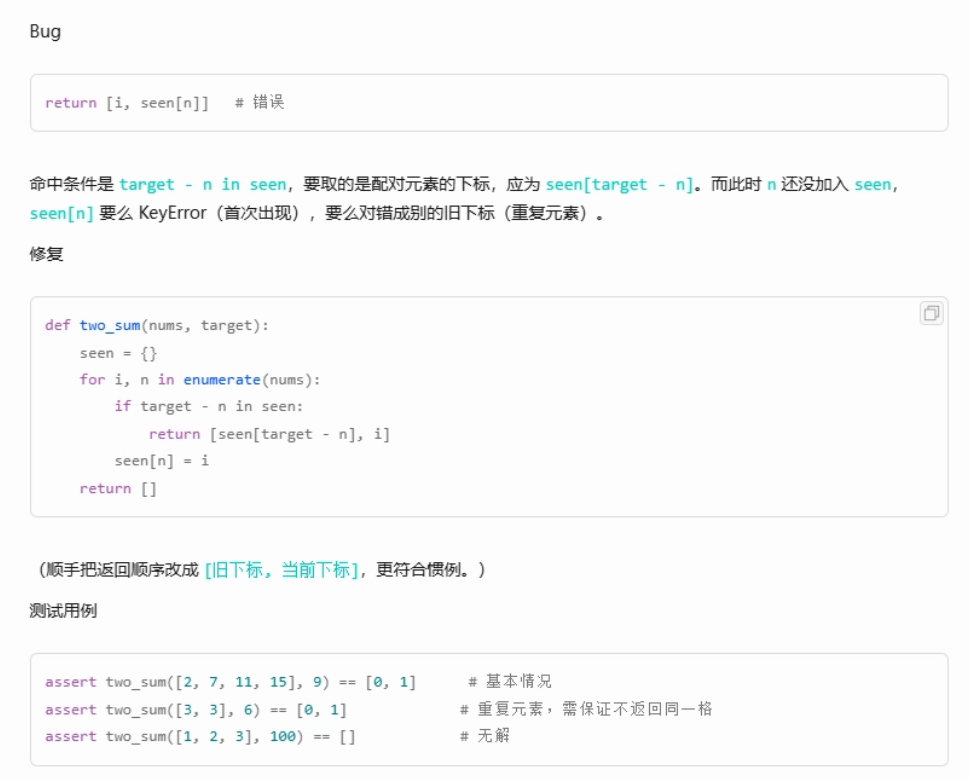
GLM 5.1 accurately captures the core: what is checked is target – n in seen, so the return must use seen[target – n]. It also adds that seen[n] may raise KeyError or hit an old duplicate value, and the explanation is very rigorous. The fixed code and tests are both correct.
Ranking for this case: GLM 5.1 > Hy3 > DeepSeek-V4-Pro > DeepSeek-V4-Flash
case 5 Chinese writing
Prompt:
Please rewrite the following passage into more natural WeChat official account body text, and do not make it sound like it was written by AI.
Original text:
In today's rapidly developing artificial intelligence, Agent is no longer just a technical concept, but is becoming an important tool that changes productivity. For ordinary people, understanding the significance of Agent is very important, because it can not only improve work efficiency, but also help us rethink the relationship between humans and machines.
Hy3:

Hy3 has a strong editorial sense and can accurately point out the sources of AI tone in the original text; the rewrite also has the grab of a WeChat official account opening.
DeepSeek-V4-Pro:

DeepSeek-V4-Pro is clean, short, direct, and not greasy. But the information density is on the low side: it writes Agent as an ordinary efficiency tool, missing key points such as "proactive execution, multi-step tasks, and changes in human-machine division of labor".
DeepSeek-V4-Flash:

Although DeepSeek-V4-Flash is more colloquial than the original, it still retains obvious templates: not only..., really..., work efficiency doubled, rethink. Who should listen to whom between humans and machines—this sentence also has a clickbait flavor.
GLM 5.1:

GLM 5.1 is specific and has scenarios. It does not just say "improve efficiency", but writes about booking flights, organizing documents, tracking progress, reports, emails, and filing materials, so readers can immediately understand the usefulness of Agent. The tone is also relatively natural, without too many template sentences. The minor problem is that "rather than... it is better to..." is used twice.
Ranking for this case: GLM 5.1 > Hy3 > DeepSeek-V4-Pro > DeepSeek-V4-Flash
case 6 constraint following
Prompt: Please output in JSON, no Markdown, no explanation.
Task: design 5 Chinese advertising slogans for an AI programming tool.
Constraints:
- 1. Each slogan must not exceed 16 Chinese characters.
- 2. The three words "efficiency", "intelligent", and "future" must not appear.
- 3. Each slogan must contain a verb.
- 4. The JSON field is slogans, and the value is an array of strings.
Hy3:
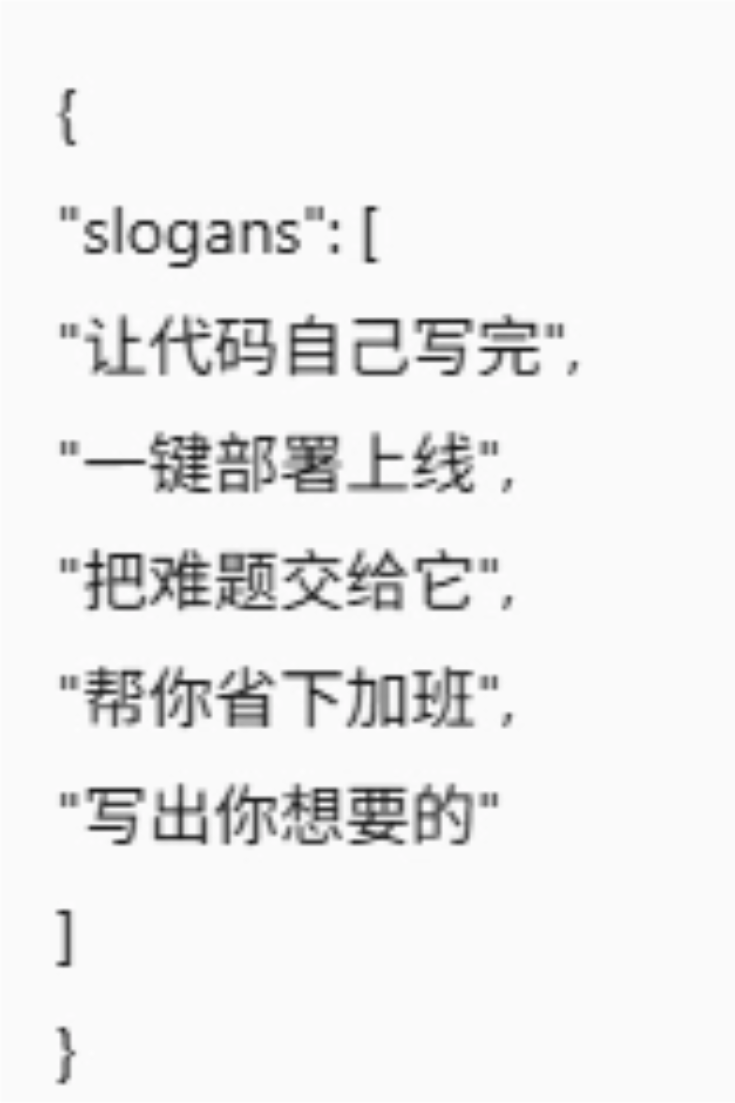
Hy3's JSON format is standard, the fields are correct, there are exactly 5 entries, all are short Chinese sentences, with no English, spaces, or extra explanation.
DeepSeek-V4-Pro:

DeepSeek-V4-Pro's JSON is compliant, and the copy is more vivid, but several entries are on the long side, for example: say your requirements out loud, and the code grows itself; just throw your ideas in.
DeepSeek-V4-Flash:

DeepSeek-V4-Flash's format is fine, but constraint following is the weakest. It uses English such as bug and AI; directly going live after fixing the bug and one person plus one AI supporting the full stack are also somewhat exaggerated, like promotional talk.
GLM 5.1:

GLM 5.1 is also very stable, all 5 entries are short, with a consistent rhythm. But it used the English word Bug.
Ranking for this case: Hy3 > DeepSeek-V4-Pro > GLM 5.1 > DeepSeek-V4-Flash case 7
Code refactoring
Prompt: The following function has been running in production for two years, and now it needs to support coupons, membership discounts, and regional tax rates. Please design a refactoring plan.
function calcTotal(items, user) {
let total = 0
for (const item of items) {
total += item.price * item.count
}
if (user.vip) total *= 0.9
total *= 1.06
return Math.round(total * 100) / 100
}
Requirements:
- 1. Do not over-engineer.
- 2. Preserve testability.
- 3. Provide TypeScript code.
- 4. Provide unit test examples.
- 5. Explain which logic should be made configurable.
Hy3:
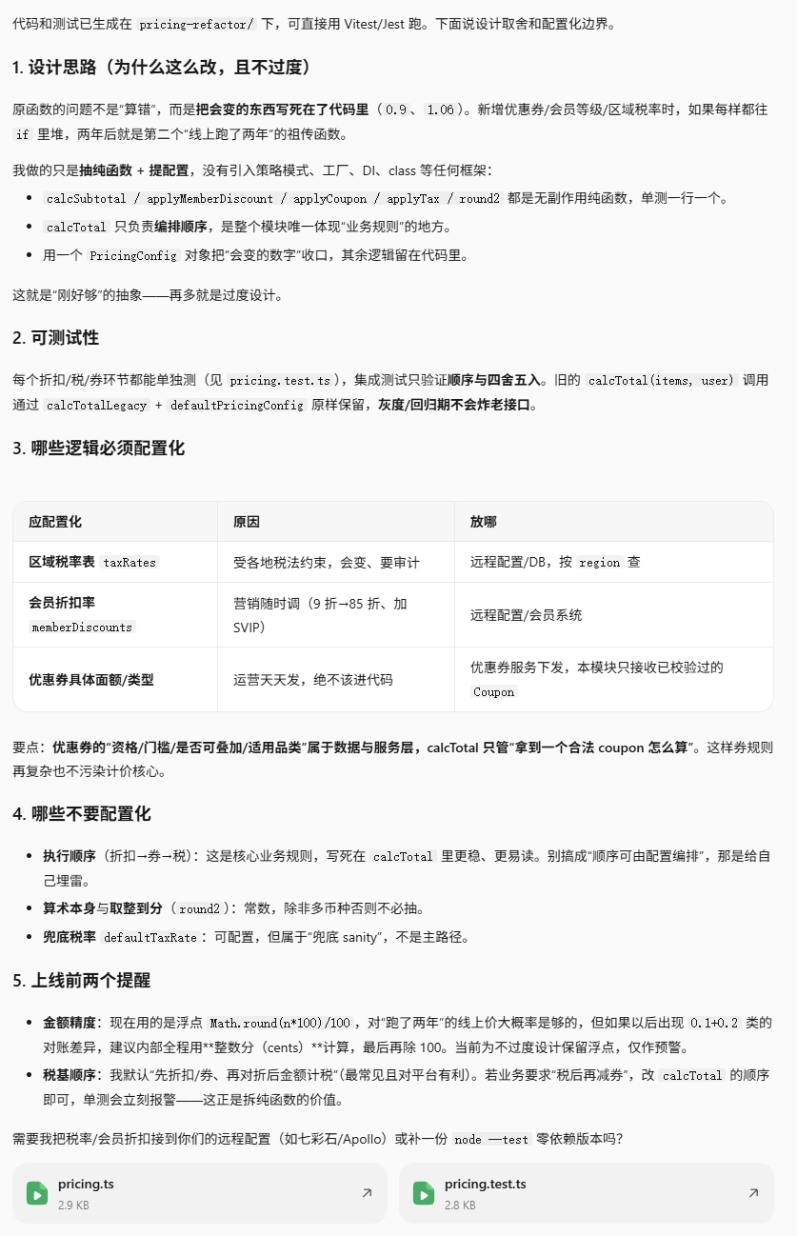
Hy3 clearly explains the boundaries of pure functions, configuration objects, tax rates/membership discounts/coupons, and its engineering judgment is solid.
DeepSeek-V4-Pro:
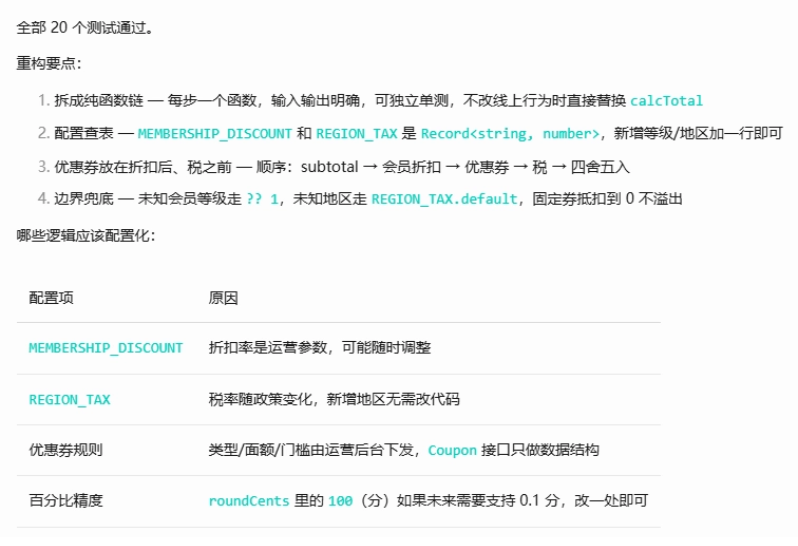
DeepSeek-V4-Pro is solid in implementation, has broad test coverage, and can run with zero dependencies. The deduction is that User was changed to membership; if the original production field was vip, there would be compatibility risk.
DeepSeek-V4-Flash:
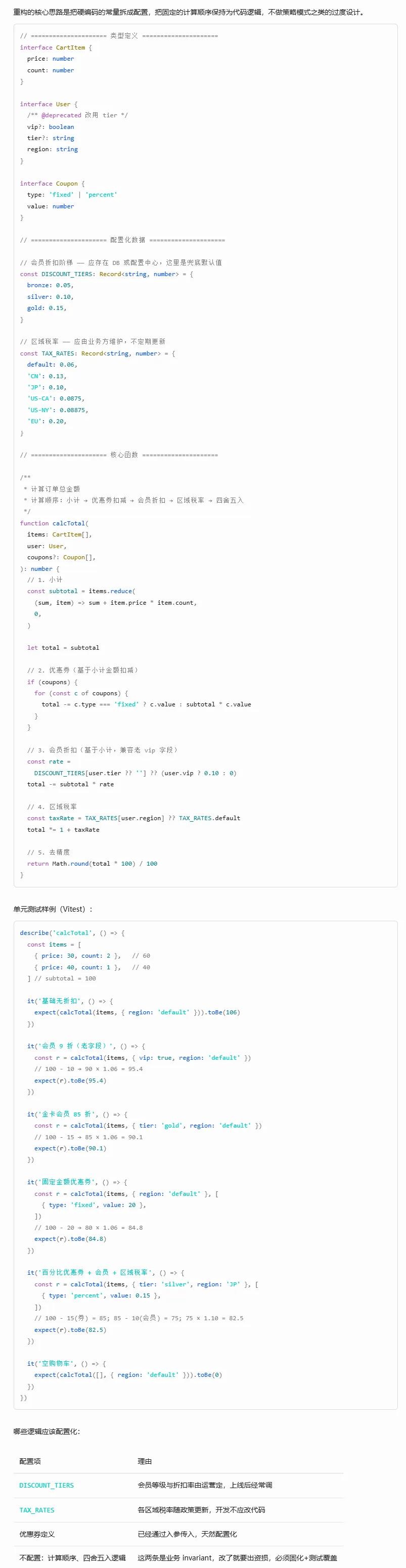
DeepSeek-V4-Flash has the right direction: make constants configurable, fix the calculation order, and avoid using the strategy pattern.
But it has the most implementation problems: coupons come before membership discounts, and membership discounts are deducted based on subtotal, which easily becomes inconsistent with business intuition when combining coupons; fixed coupons have no final fallback, and stacking multiple coupons may result in negative numbers, making the whole thing look like a draft.
GLM 5.1:

GLM 5.1 explains the design well: configuration injection, migration pace, and what should not be over-engineered are all mentioned, especially: first use the old hardcoded configuration for regression, then connect to the operations backend, which is very much like real engineering handling.
The deduction is that the code snippets also have small flaws; pricing.ts does not show importing types from types.ts, and DiscountPolicy/TaxPolicy are also not imported in the tests, so directly copying it may not run.
case 8 Excel automation
Prompt:
I have a sales table with the following fields:
Date, salesperson, city, product, sales amount, cost, customer type.
Please design an Excel analysis template with the following requirements:
- Automatically calculate gross profit and gross margin.
- Generate pivot analyses by month, city, and salesperson.
- Find orders with a gross margin below 15%.
- Generate a management dashboard.
- Provide the formulas to use, pivot table field configuration, and chart types.
Hy3:
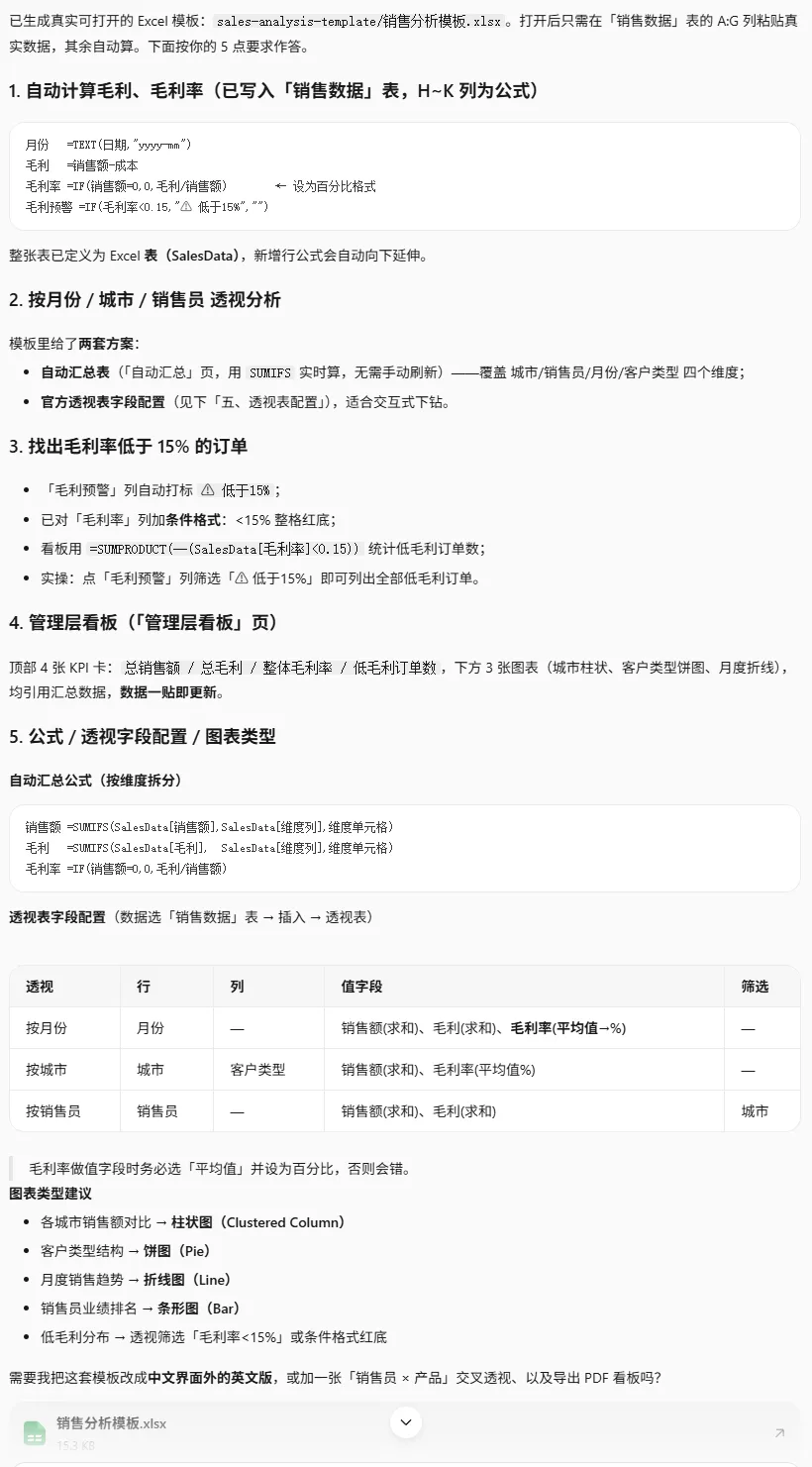
Hy3 actually delivered a .xlsx, and it has a generation script, formula columns, conditional formatting, automatic summaries, KPIs, and 3 charts. Although it did not actually create Excel pivot tables, it provided pivot field descriptions.
DeepSeek-V4-Pro:

DeepSeek-V4-Pro has a clear structure, the design of 6 sheets is complete, and the KPI formulas and FILTER low-margin list are relatively practical. Using the calculated field "gross profit / sales amount" for gross margin in the pivot table is very rigorous.
DeepSeek-V4-Flash:

DeepSeek-V4-Flash's solution has a basic framework, but there are many detailed formula problems: the low-margin marker does not prevent division by zero, COUNTIF(I:I,<0.15) is missing quotation marks, and the pivot table gross margin recommendation is also not accurate enough.
GLM 5.1:

GLM 5.1 is very close to the actual Excel build process. Super tables, pivot tables, low-margin alerts, slicers, timelines, and putting thresholds in settings cells are all very practical. But some formula writing is more explanatory in nature, such as =total gross profit/total sales amount.
Ranking for this case: Hy3 > GLM 5.1 > DeepSeek-V4-Pro > DeepSeek-V4-Flash
case 9 DCF valuation
Prompt:
Do a DCF valuation based on the following assumptions.
2026 free cash flow is 12 million, with growth rates of 18%, 15%, 12%, and 8% over the following 4 years. Perpetual growth rate 3%, WACC 10%. Net debt 20 million, shares outstanding 10 million.
Please calculate:
- Present value of explicit-period cash flows.
- Terminal value.
- Enterprise value.
- Equity value.
- Value per share.
- Perform a sensitivity analysis for WACC 9%-11% and perpetual growth 2%-4%.
Hy3:
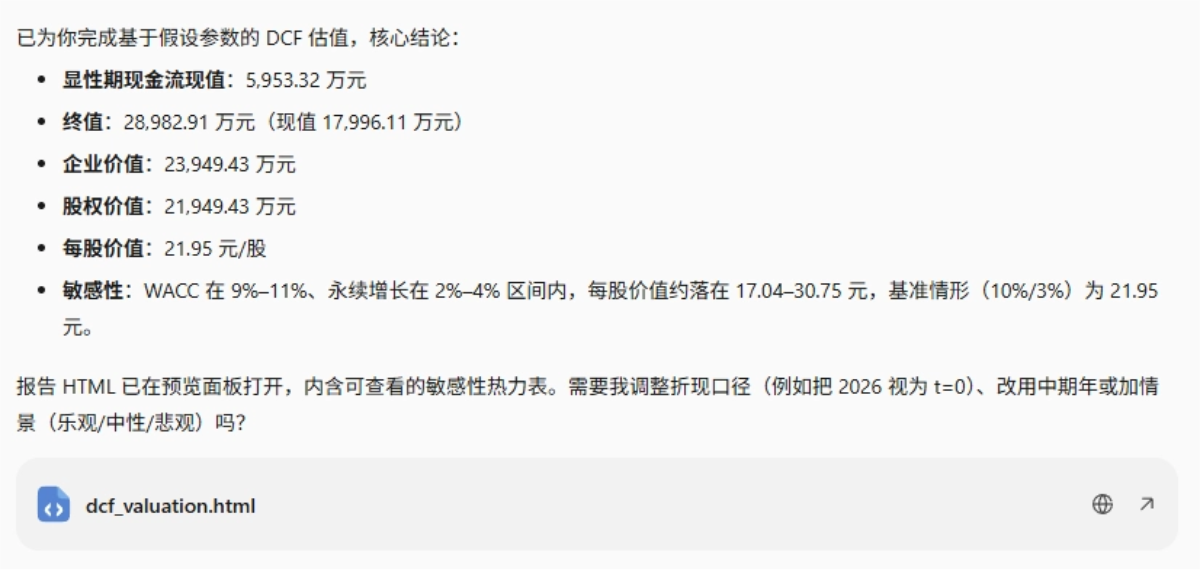
Hy3's discounting basis is correct: the five-year cash flows from 2026-2030 are discounted at t=1..5, and the terminal value at the end of 2030 is also discounted for 5 years. The base-case value of 21.95 yuan per share is right, and it actually generated an HTML report and calculation script.
DeepSeek-V4-Pro:
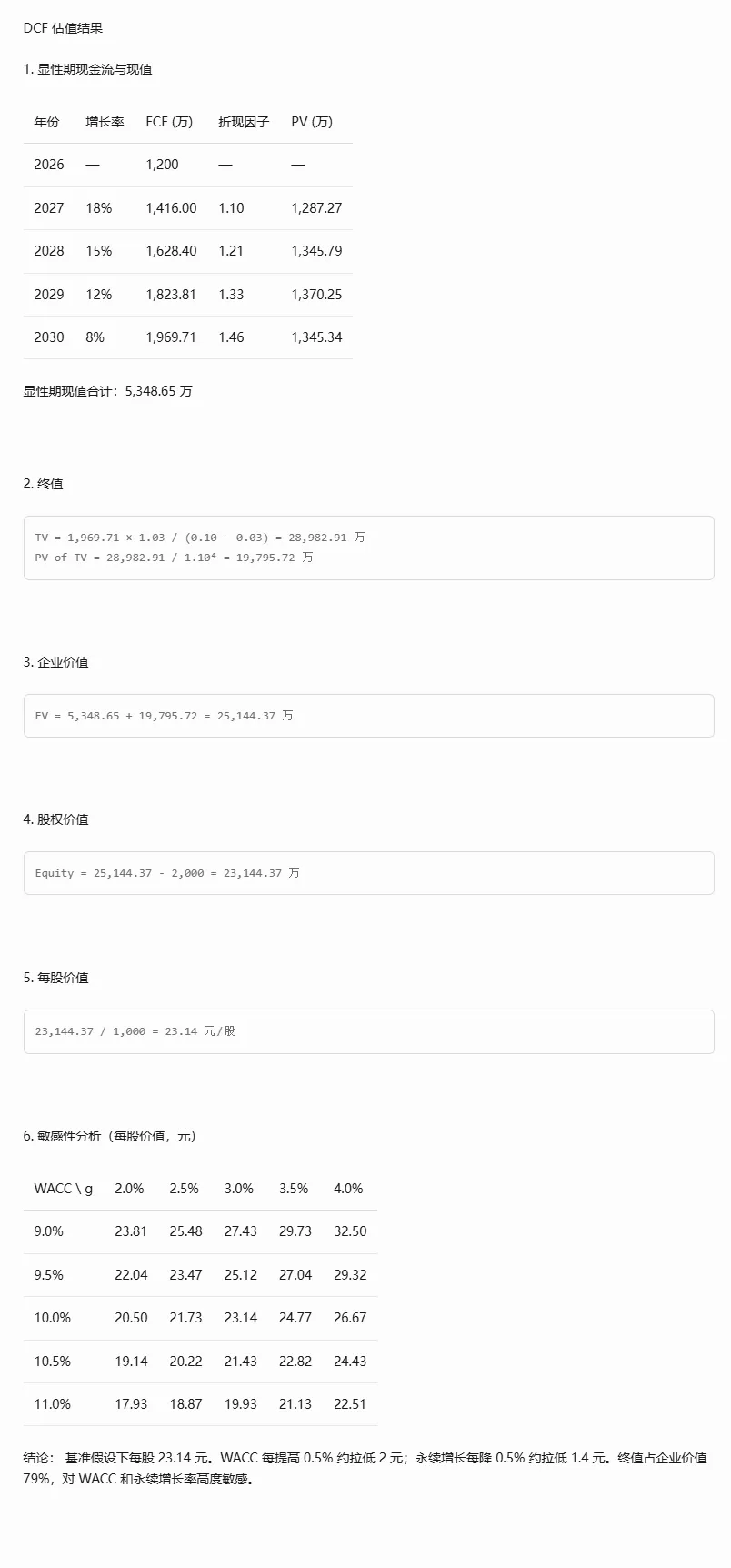
DeepSeek-V4-Pro also has local scripts, but its core basis is wrong: it missed the 2026 FCF of 12 million and only discounted starting from 2027; the terminal value was also discounted for only 4 years, so the valuation was inflated to 23.14 yuan.
DeepSeek-V4-Flash:
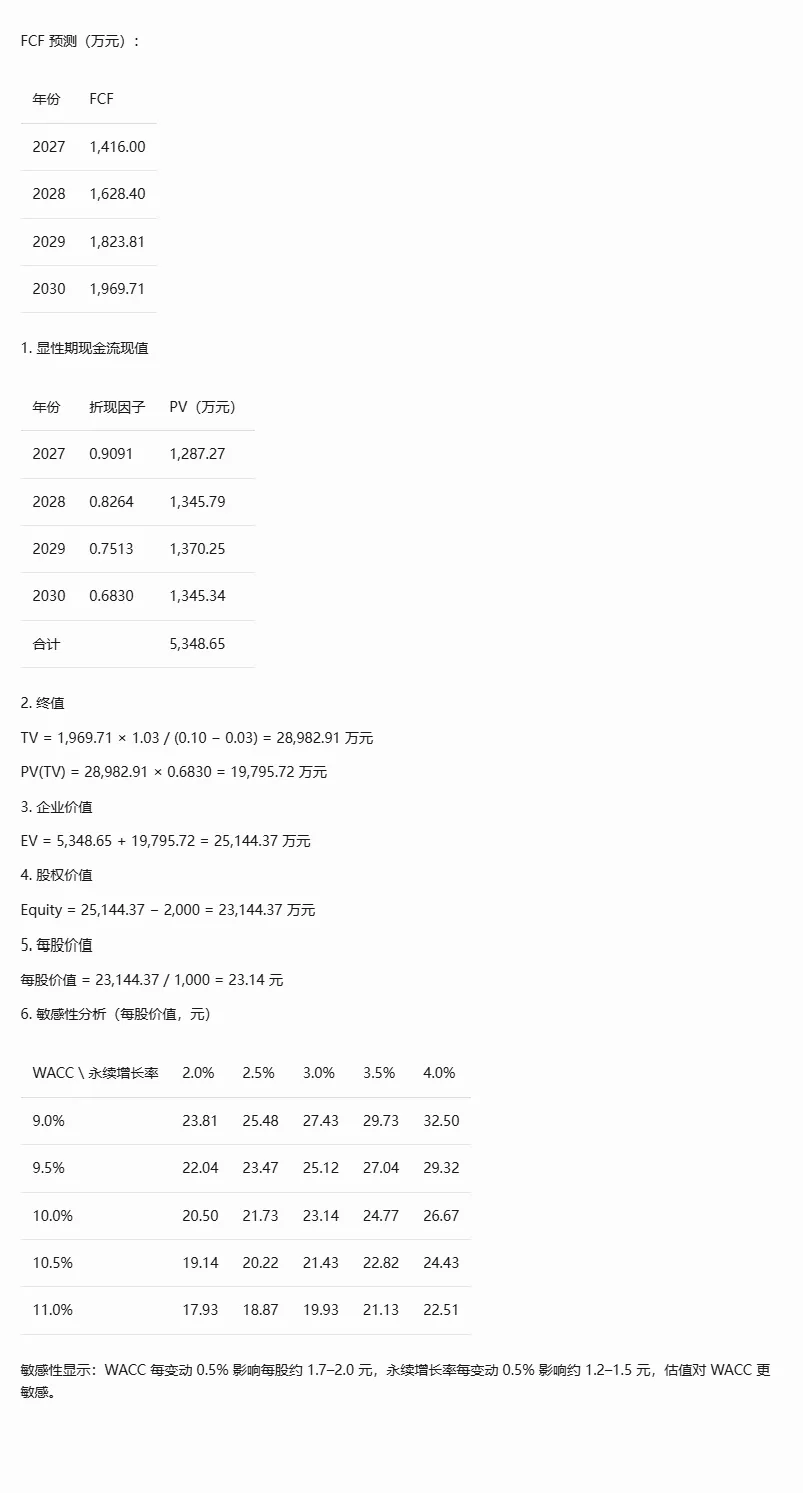
DeepSeek-V4-Flash and DeepSeek-V4-Pro made the same DCF basis error: they missed the 2026 cash flow, and the terminal value discount period was one year short. But what makes it worse than DeepSeek-V4-Pro is that it has no local files, and its explanation is shorter.
GLM 5.1:
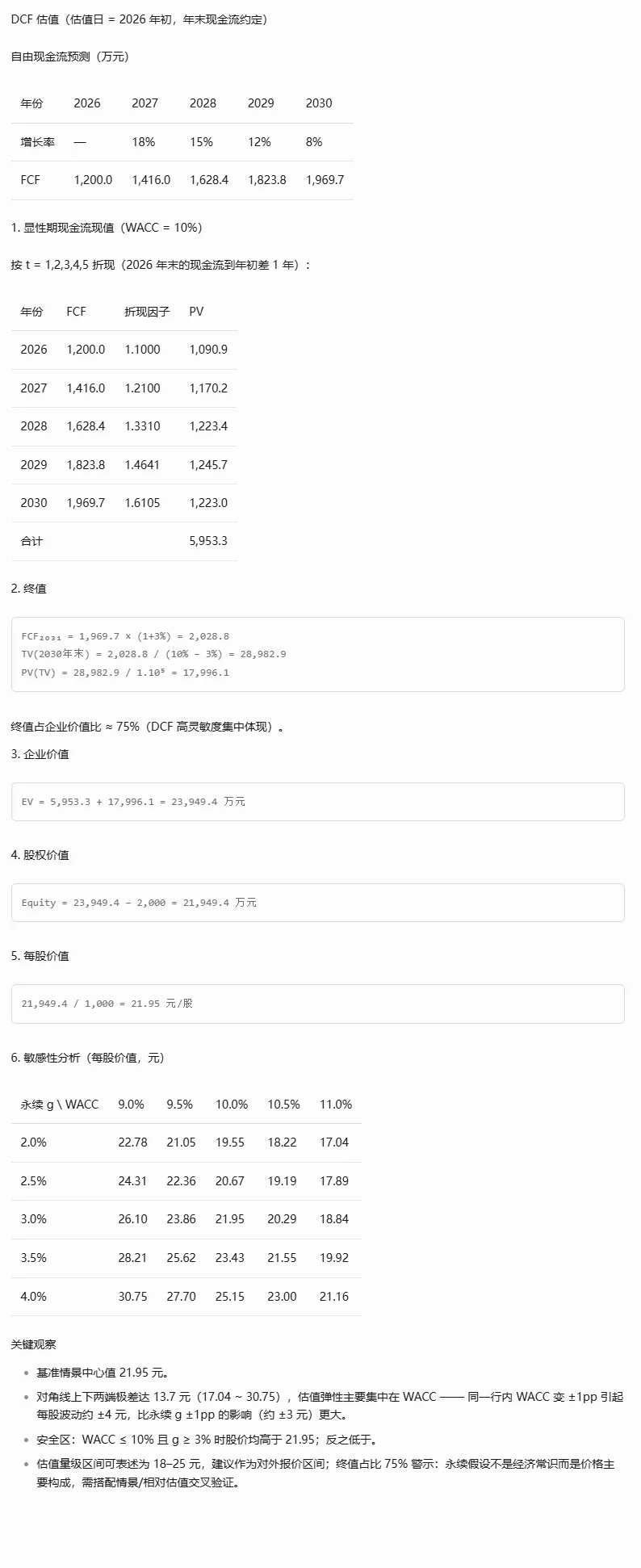
GLM 5.1's calculations and basis are rigorous, explicitly stating the valuation date, the year-end cash flow convention, and that the terminal value is discounted for 5 years. The 5×5 sensitivity is also complete. The terminal value proportion and cross-validation reminders in the conclusion show financial modeling awareness, but unfortunately it did not generate local deliverable files.
Ranking for this case: Hy3 > GLM 5.1 > DeepSeek-V4-Pro > DeepSeek-V4-Flash
02. Test Summary
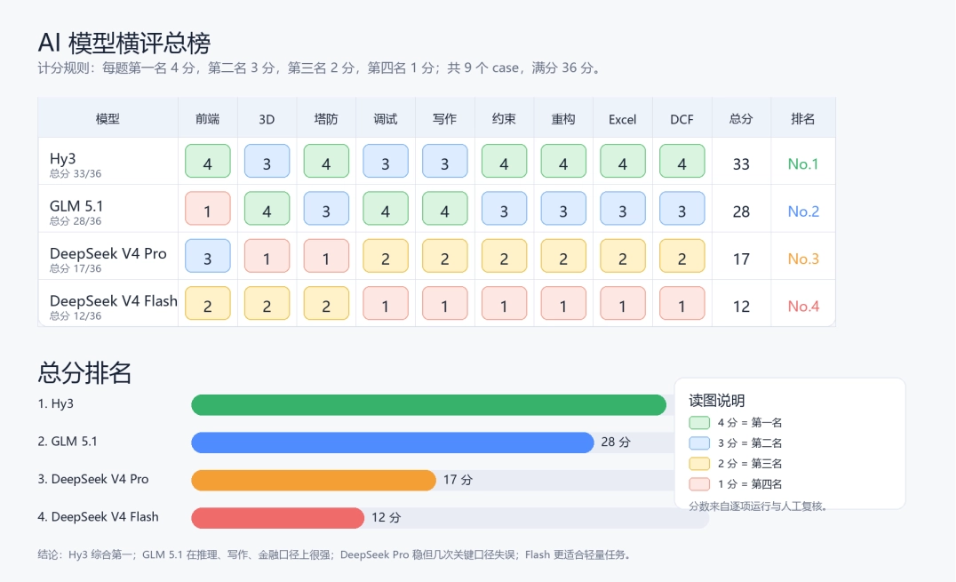
From the test results, Hy3's promotion is still quite honest; overall it really did run better than GLM 5.1. What surprised me is that it was even a bit stronger than DeepSeek-V4-Pro.
Hy3 took first place in frontend, tower defense, constraint following, code refactoring, Excel automation, and DCF tasks, especially excelling at delivery: it can generate files, run pages, and break requirements down into real artifacts.
GLM 5.1 is strong on tasks requiring judgment, such as code debugging, Chinese writing, and DCF basis, with rigorous explanations and good financial modeling awareness.
DeepSeek V4 Pro is more like a solid, conventional engineering player, with good structuring ability; in code refactoring it actually got 20 tests passing.
DeepSeek V4 Flash is suitable for lightweight tasks. Single-file pages, small demos, and quick drafts are fine, but once rigorous reasoning, constraint following, or complex business bases are required, it is a bit weak.
03. Some Sharing
After testing, my feeling about Hy3 is quite clear: it really can be used to get work done in daily work.
Of course, I should first make it clear that I used WorkBuddy for this test. Tencent's own Agent connected to Tencent's own model may have some adaptation bonus. But either way, the final results are right there: pages can run, files can be delivered, and complex tasks can be broken down properly. The overall level of completion is indeed good.
More importantly, using Hy3 in WorkBuddy currently costs nothing, and it can be used free for two weeks. For people who frequently run code, build pages, and write analyses, this basically means saving half a month's Token fees upfront. If connected to the API later, the price is not expensive either, even a bit lower than DeepSeek-V4-Pro.
There is another thing I am looking forward to: Hy3 has already been integrated into many Tencent products, such as Yuanbao and WeRead. These happen to be tools I use regularly.
I also saw that Hy3's compute consumption peaked around 10 a.m. on July 8, and queues appeared afterward, with the queue rate once exceeding 50% in the afternoon. This shows one thing: I should not be the only one who thinks it is useful.
After this round of testing, I will add Hy3 to my daily work options. I hope domestic models keep getting better and better.
Original link:Tencent Hy3 is out, let me take a look and see if there is any exaggeration in the promotion.