
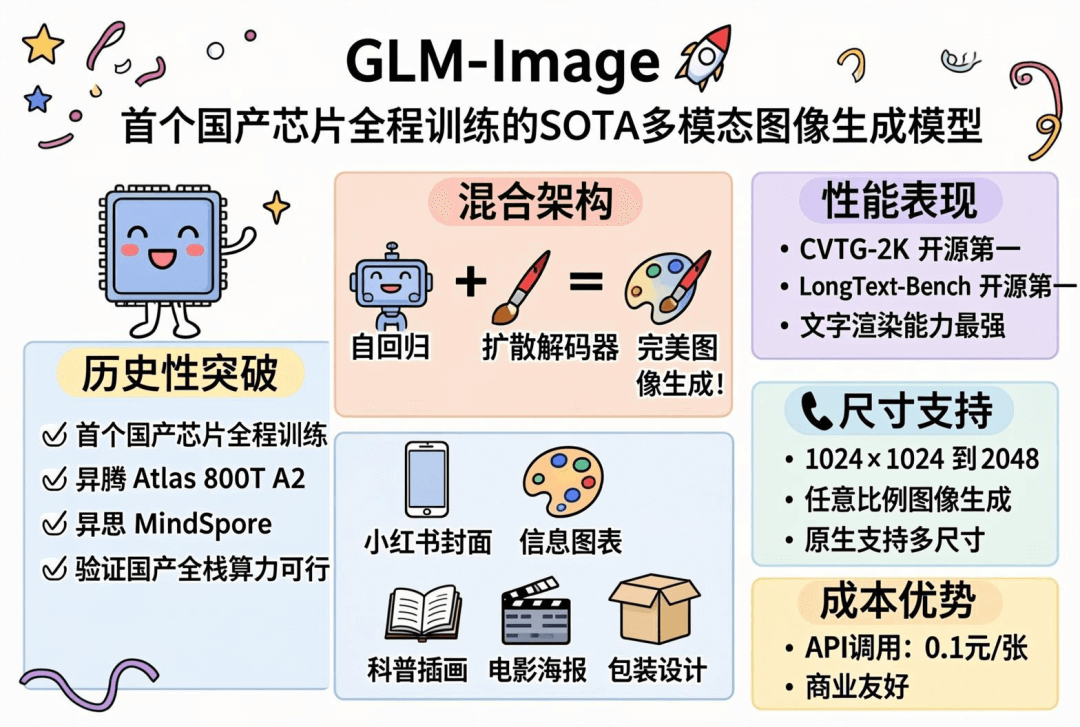
Nano Banana Pro It has taken the internet by storm, with all kinds of infographics, posters, and knowledge cards flooding everywhere. But when you actually put it to use in your daily work, many people run into this problem: once there is a lot of text, the generated images always end up with crooked, misshapen Chinese characters. The layout is perfectly fine in places, but the text information is wrong and simply cannot be used directly.
This pain point that has long plagued creators and office workers has finally been solved today by a domestic model.
Zhipu has released and open-sourced its latest multimodal model GLM-Image, with a text accuracy of 0.9116, making it the open-source model with the highest text rendering accuracy at present.NEDIts metrics are equally top-tier, with a high degree of adherence to prompts and fewer typos and missing characters.
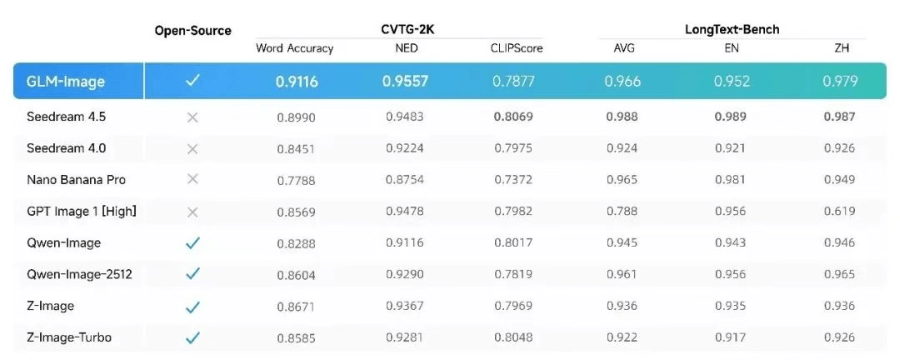
It really caught my attention. Without further ado, let's put it to the test together.
01. Text RenderingSOTAHow Strong Is It?
Currently GLM-Image has 3 ways to try it out. You can experience it online directly on BigModel or call the API, both at 0.1 yuan per image, and it natively supports images of any size from 1024*1024 to 2048*2048.
Online generation does not support modifying the size or aspect ratio, and will output images at a fixed 1280*1280 size.
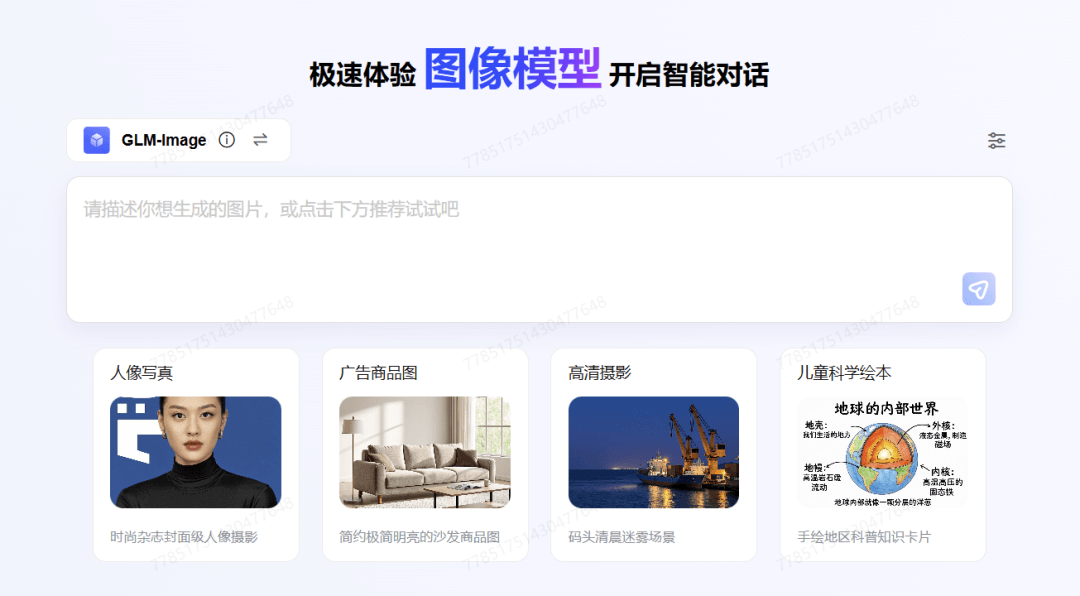
Official website:
https://bigmodel.cn/trialcenter/modeltrial/image
The "AI Drawing" agent in the Zhipu Qingyan APP or web version also lets you try GLM-Image for free.
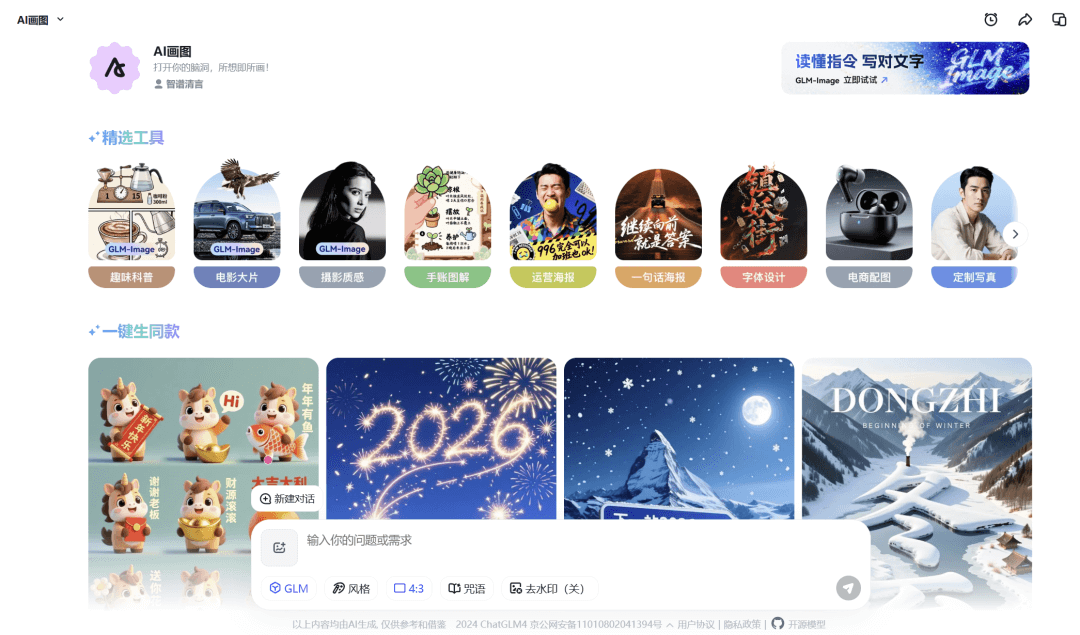
Official website:
https://chatglm.cn/main/gdetail/65a232c082ff90a2ad2f15e2
I would recommend that everyone use it by calling the API on Claude Code , as the results are better and it also supports custom sizes.
For the Claude Code configuration steps, you can refer to this tutorial:A Step-by-Step Guide to Connecting GLM-4.5 to Claude Code: The Complete Guide to Configuring the Strongest Open-Source Model
Request example (remember to replace the API KEY, prompt, and image size):
curl -X POST "https://open.bigmodel.cn/api/paas/v4/images/generations" \-H "Authorization: Bearer YOU-API-KEY" \-H "Content-Type: application/json" \-d '{"model": "glm-image","prompt": "图像提示词","size": "1056 × 1408"}'
Case 1 Popular Science Illustration
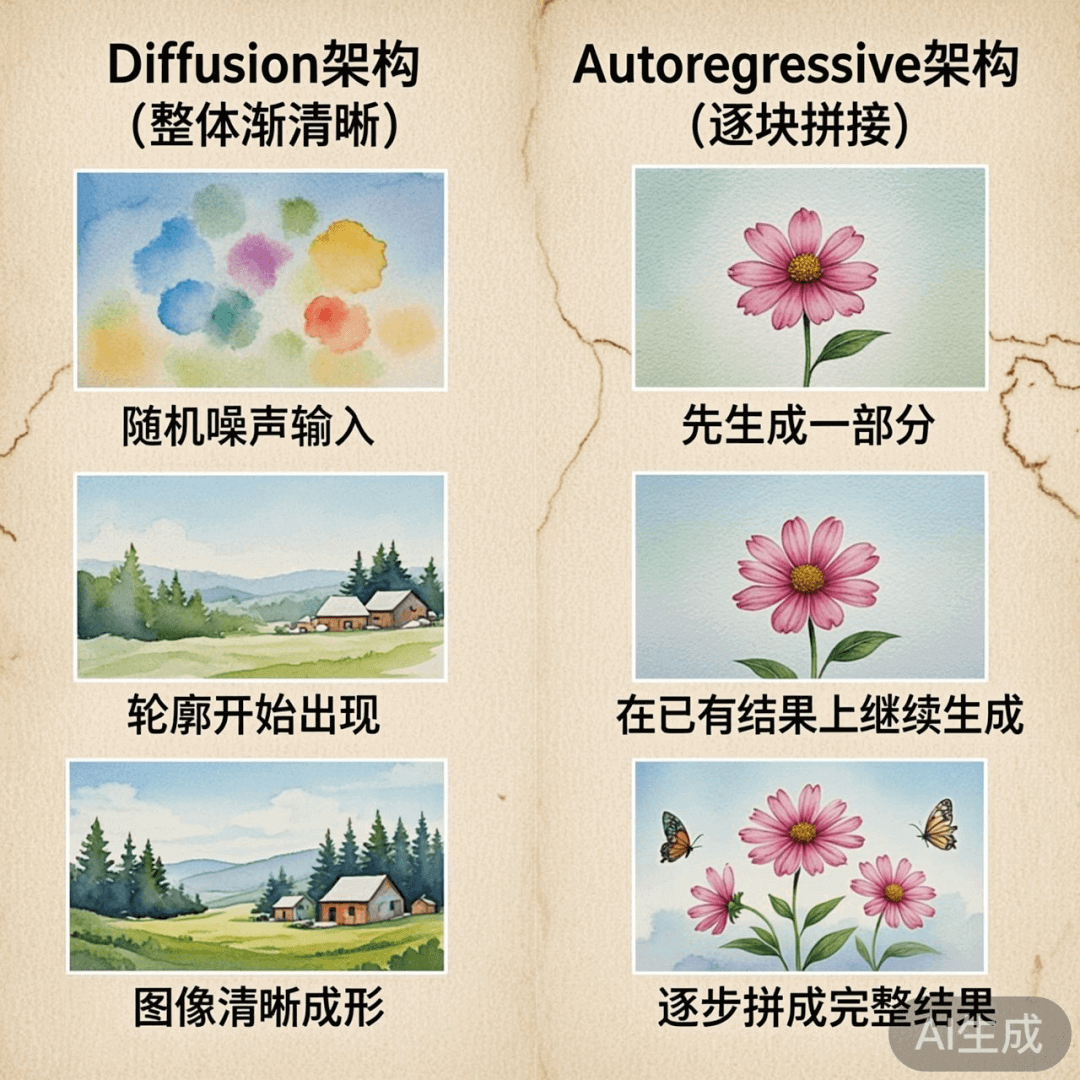
Prompt: A watercolor hand-drawn style popular science illustration of model architecture, with a left-right comparison layout. A beige faux-aged watercolor paper texture background, with natural bleeding and coffee stain effects, and a soft, translucent hand-drawn texture.
Left side – Diffusion architecture (gradually clear as a whole): The title "Diffusion Architecture (Gradually Clear as a Whole)" is at the top.
Show 3 progressive watercolor images arranged vertically:
Abstract colorful watercolor noise blobs, with colors mixed in disorder, labeled "Random Noise Input".
The watercolor blocks in the image begin to gather toward several main areas, and the overall noise decreases significantly, no longer a screen full of scattered spots. A rough compositional direction faintly appears in the image, such as the upper-lower distinction between ground and sky, with low-saturation blurry tree shadows and house color blocks in the distance, but all elements exist only as blurry color fields, with no clear edges, no distinct outlines, and no recognizable details.
Labeled "Contours Begin to Appear". A clear and complete watercolor pastoral landscape painting, including trees, houses, and sky, rich in detail, labeled "Image Clearly Takes Shape".
Right side – Autoregressive architecture (patch-by-patch assembly): The title "Autoregressive Architecture (Patch-by-Patch Assembly)" is at the top.
Show 3 modular assembly processes arranged vertically:
A small watercolor flower square appears in the upper-left corner, complete and clear in shape, labeled "Generate a Part First".
On the premise of fully preserving the position, size, and shape of the flower from the first step unchanged, add watercolor squares of leaves and stems next to the flower. The newly added content naturally joins with the original flower. It is forbidden to move, scale, or redraw the existing flower. Labeled "Continue Generating on the Existing Result".
Building on the fact that the positions of all elements in the previous two steps remain completely unchanged, continue to add new flowers, green leaves, and butterflies, ultimately forming a complete bouquet image, annotated with "Step by step assembled into the complete result".
Overall style requirements: watercolor hand-drawn textbook illustration style, soft and natural colors. All text annotations use handwritten-style Chinese fonts. Watercolor edges blend naturally, and lines are not completely closed to avoid an industrial and digital feel, maintaining a warm and friendly popular-science atmosphere.
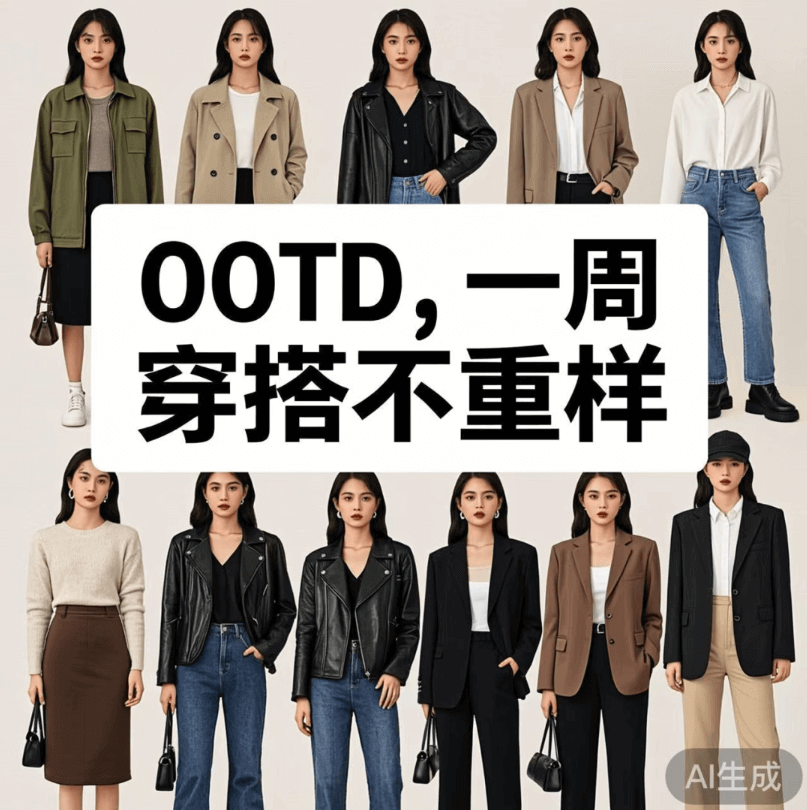
Case 2 Xiaohongshu Cover
Prompt: Generate a Xiaohongshu note cover with the theme of commute OOTD outfits, content: "OOTD, a week of outfits without repeats"
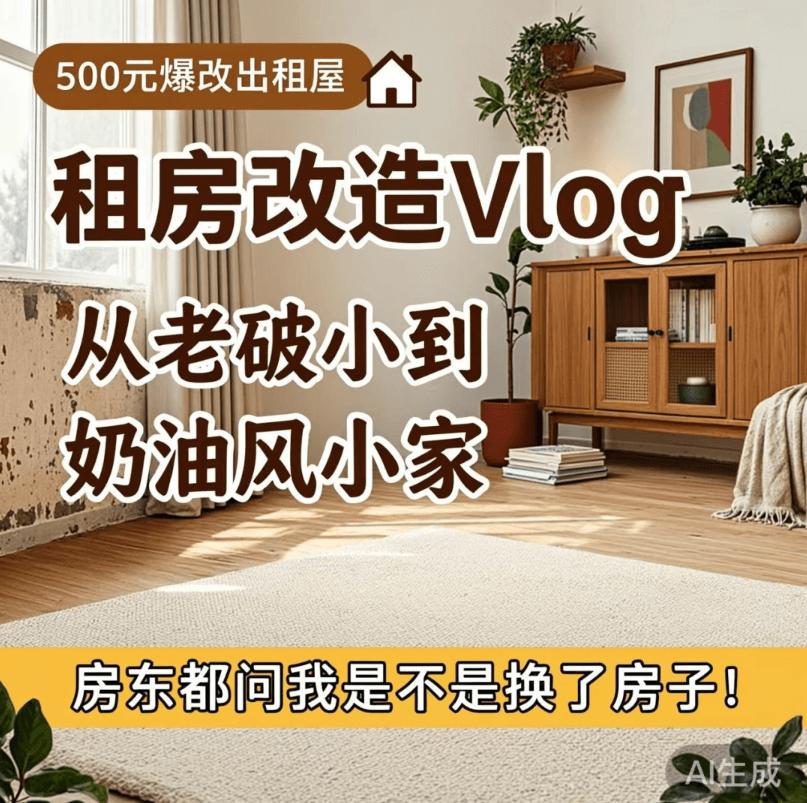
Prompt: Generate a Xiaohongshu note cover with the theme of rental renovation vlog, size 3:4, content: "500 yuan extreme makeover of a rental apartment 🏠 From old and shabby small place to a creamy-style cozy home, even the landlord asked if I had swapped apartments!"
Case 3 Comic
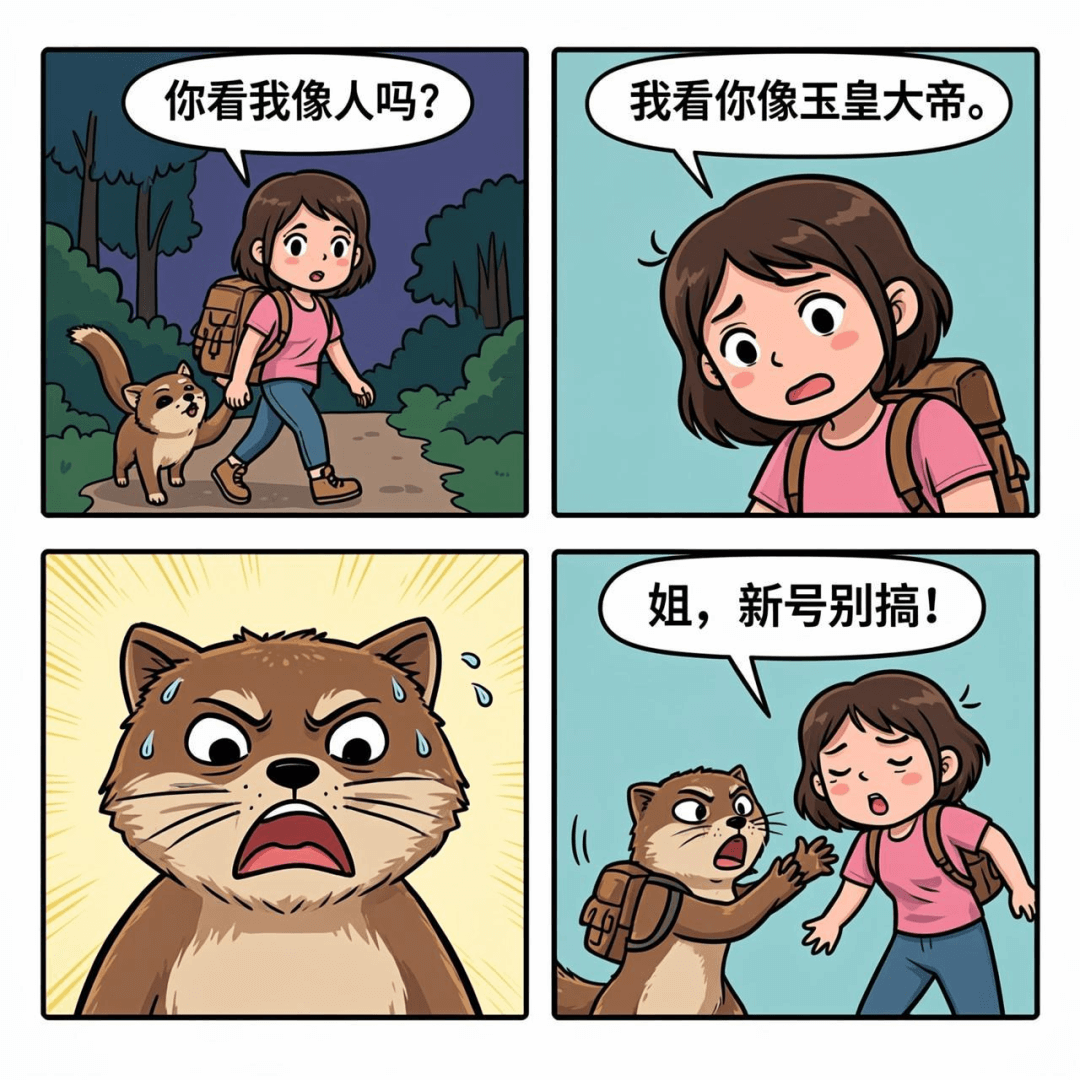
Prompt: Generate a humorous folk-custom-themed comic illustration containing 4 panels, with the protagonists being a human girl and an anthropomorphic yellow weasel. The overall style is light and funny, with a slight touch of Chinese folklore elements. The art style leans cartoonish, but the characters' expressions are exaggerated and clear.
Panel 1
Nighttime path scene. A human girl walks carrying a bag. A yellow weasel walking upright suddenly blocks the middle of the path, with a serious and mysterious expression.
(Speech bubble) The yellow weasel says: "Do I look like a human to you?"
Panel 2
The girl stops, tilts her head in thought, looking casual.
(Speech bubble) The girl says: "I think you look like the Jade Emperor."
Panel 3
The yellow weasel instantly has pupils like an earthquake, with an extremely terrified expression, breaking out in cold sweat. No dialogue, exaggerated emotion.
Panel 4
The yellow weasel suddenly rushes forward and covers the girl's mouth, nervously shouting in a low voice.
(Speech bubble) The yellow weasel says: "Sis, don't mess around with a new account!"
Overall style requirements:
Combination of Chinese folklore + modern jokes
Exaggerated expressions, obvious body movements
All dialogue in Chinese
Clean visuals, clear comic panels
Atmosphere leans funny, twist, internet meme style
No horror elements, leaning light comedy
Generate another sequel:
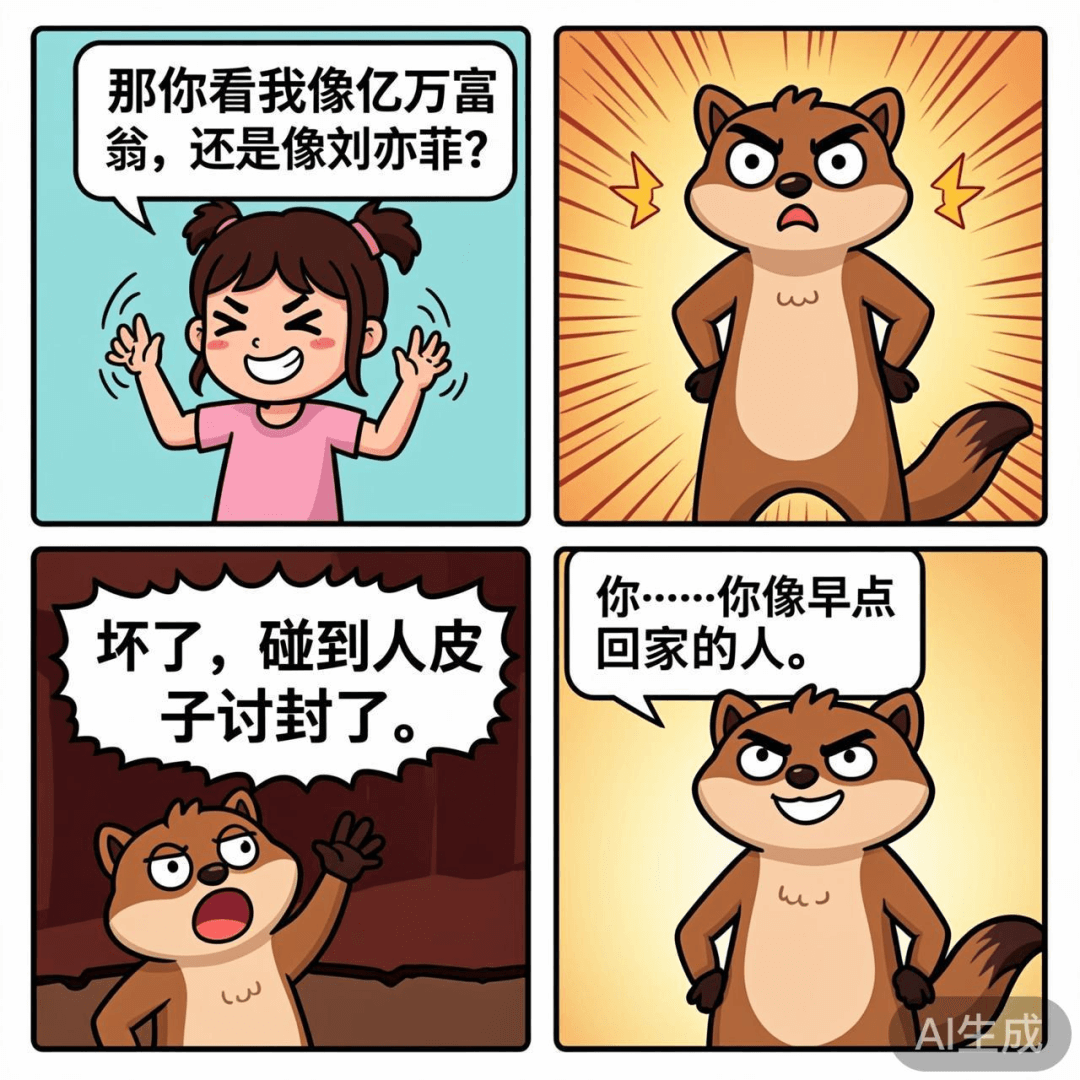
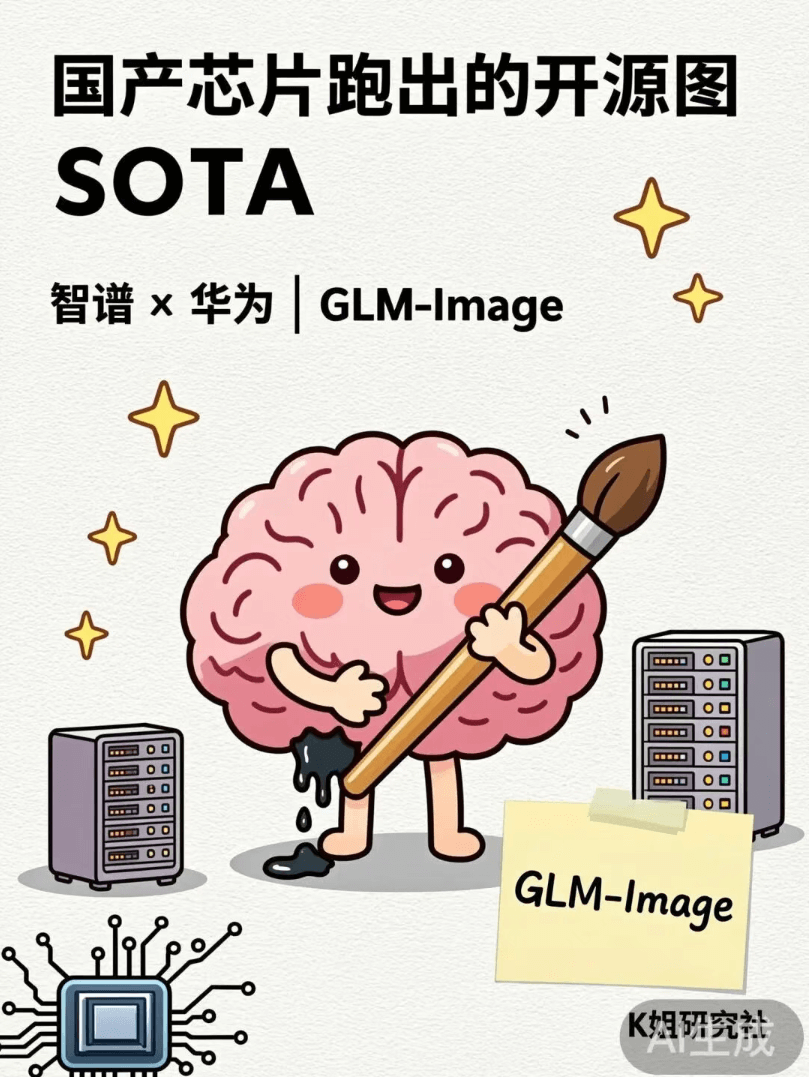
Case 4 Xiaohongshu image
Prompt: Xiaohongshu-style infographic, cartoon style, handwritten-style text, off-white background.
At the center is a cartoon-style "brain + paintbrush" combined image, symbolizing "cognition + generation", with "GLM-Image" handwritten on a sticky note beside it.
At the top, use a large handwritten title: Open-source image SOTA produced by domestic chips
Subtitle below: Zhipu × Huawei | GLM-Image
Add cartoon chip, server, and sparkle sticker elements. The overall visual has a tech feel but leans cute.
Overall style: hand-drawn, fresh, tech cartoon feel, lots of white space, prominent highlights. All images and text are in hand-drawn style, with no realistic elements.
Watermark in the lower right corner: "K姐研究社"
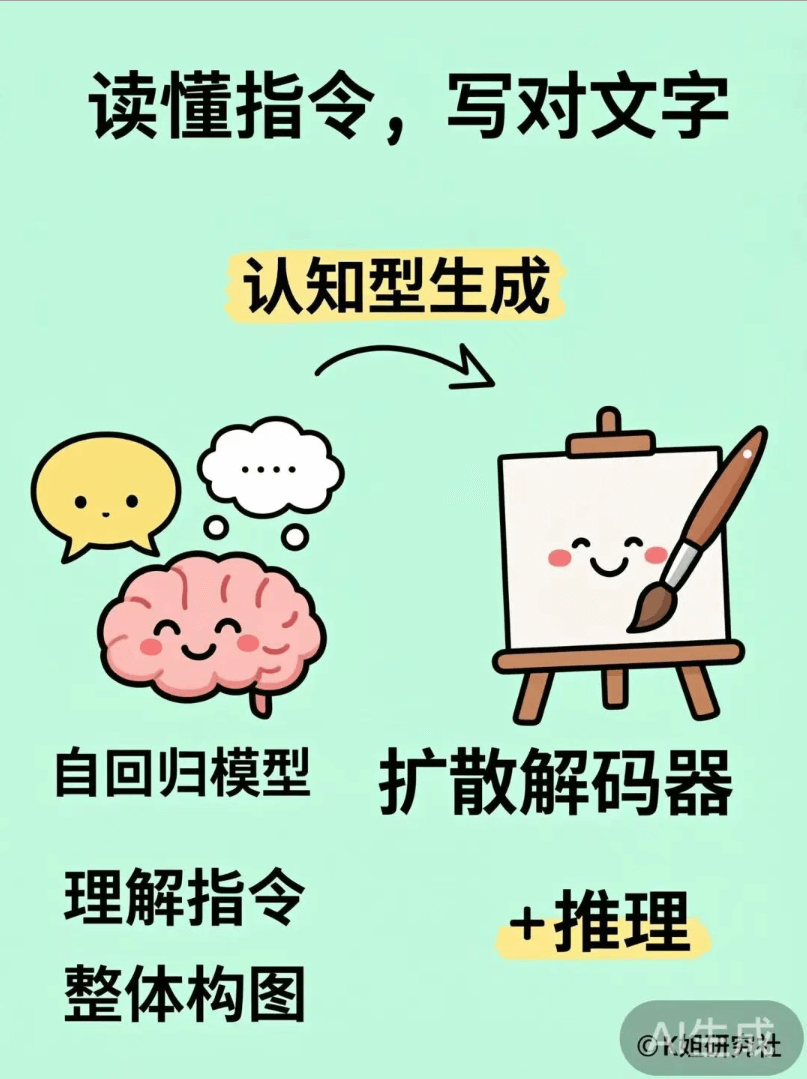
Prompt: Xiaohongshu-style infographic, cartoon style, handwritten-style text, light mint green background.
Left-right structure diagram in the image:
On the left is a cartoon "speech bubble + brain", annotated "Autoregressive model | Instruction understanding | Overall composition"
On the right is a cartoon "paintbrush + text strokes", annotated "Diffusion decoder | Detail rendering | Text strokes"
Connect in the middle with hand-drawn arrows, write the title above: understand the instructions, write the right text
Use highlighter underlines to emphasize the keywords "cognitive generation" and "knowledge + reasoning".
Overall style: hand-drawn, cute, clear and easy to understand, concise information, lots of white space.
Watermark in the bottom right corner: "K姐研究社"
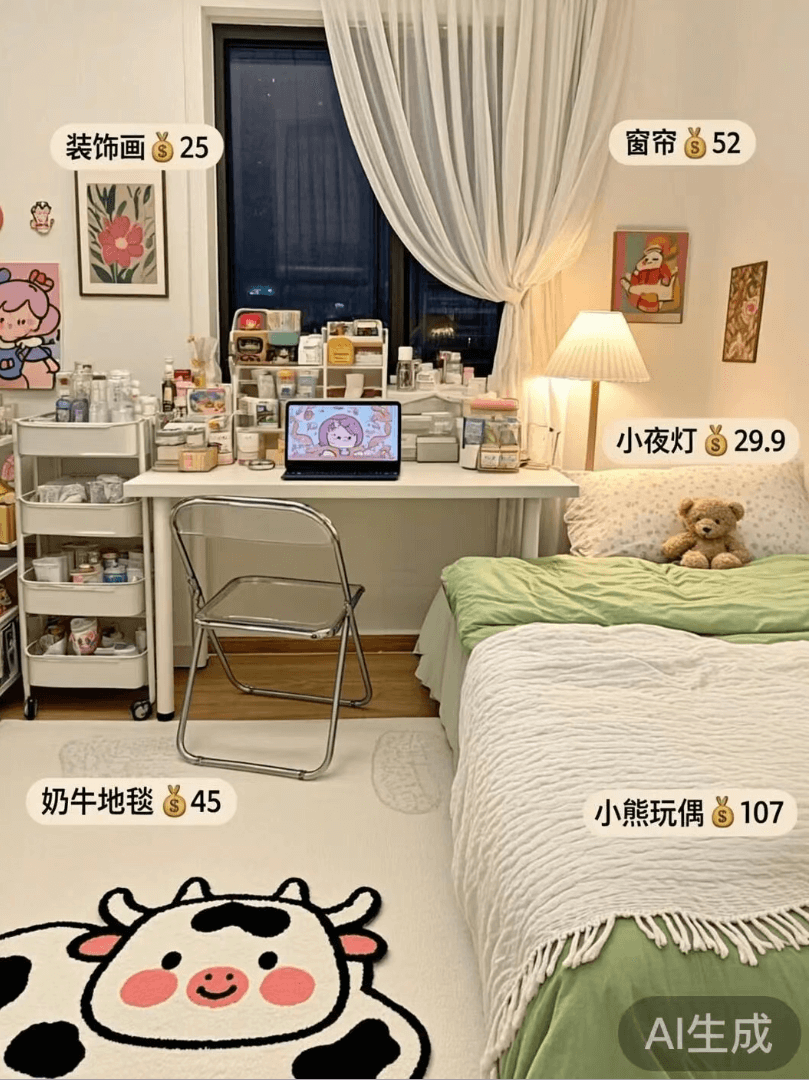
Case 5 Information annotation
Prompt: Generate a Xiaohongshu-style bedroom layout display image, realistic photographic texture, vertical composition. The scene is a small bedroom, overall warm and healing, leaning toward Japanese and cute style. On one side is a single bed, green bedsheet, white bedspread, with a little bear plush toy and throw pillows on the bed. Next to the bed is a cartoon-style rug, with a cute cow image pattern, soft colors.
In the middle of the room is a white desk, with an open laptop on it, the screen displaying a brightly colored illustration, while also placed stationery, a water cup, and small ornaments. Behind the desk is a window, white sheer curtains hanging naturally, and city lights faintly visible outside the window at night. By the window and on the desk are warm yellow desk lamps and small night lights, creating a soft nighttime atmosphere. On the left are multi-tier storage racks and bookshelves, filled with books, storage boxes, plush toys, small night lights, and daily necessities; the items are abundant but overall tidy, with a slight sense of real life.
Overlay multiple product annotation labels on the image, with a style similar to Xiaohongshu recommendation images. The label text is yellow or light yellow, with slight outlines and shadows, clearly readable. Each label must be anchored near the corresponding item, arranged irregularly, and the annotation content includes product names and price information, such as "decorative painting💰25", "cow rug💰45", "small night light💰29.9", "curtains💰52", "little bear plush toy💰107", etc., forming a complete sense of a room layout expense list, but not obscuring the main visual subject."
Case 6 Recipe
Prompt: Generate an infographic for "Green Pepper Stir-Fried Pork", including step-by-step recipe information, requirements:
Top-down view, minimalist style, white background
Display the Chinese name of the dish in the top center
Label the Chinese names, quantities, and calorie content of all ingredients
Use dashed lines and icons to show the cooking steps
Show the plated presentation of the finished dish at the bottom
Based on the traditional preparation method of this dish, automatically match the appropriate:
1. Ingredient list (including precise portions and calorie content)
2. Cooking step icons (for example, chopping, stir-frying, seasoning, etc.)
3. Presentation style after completion
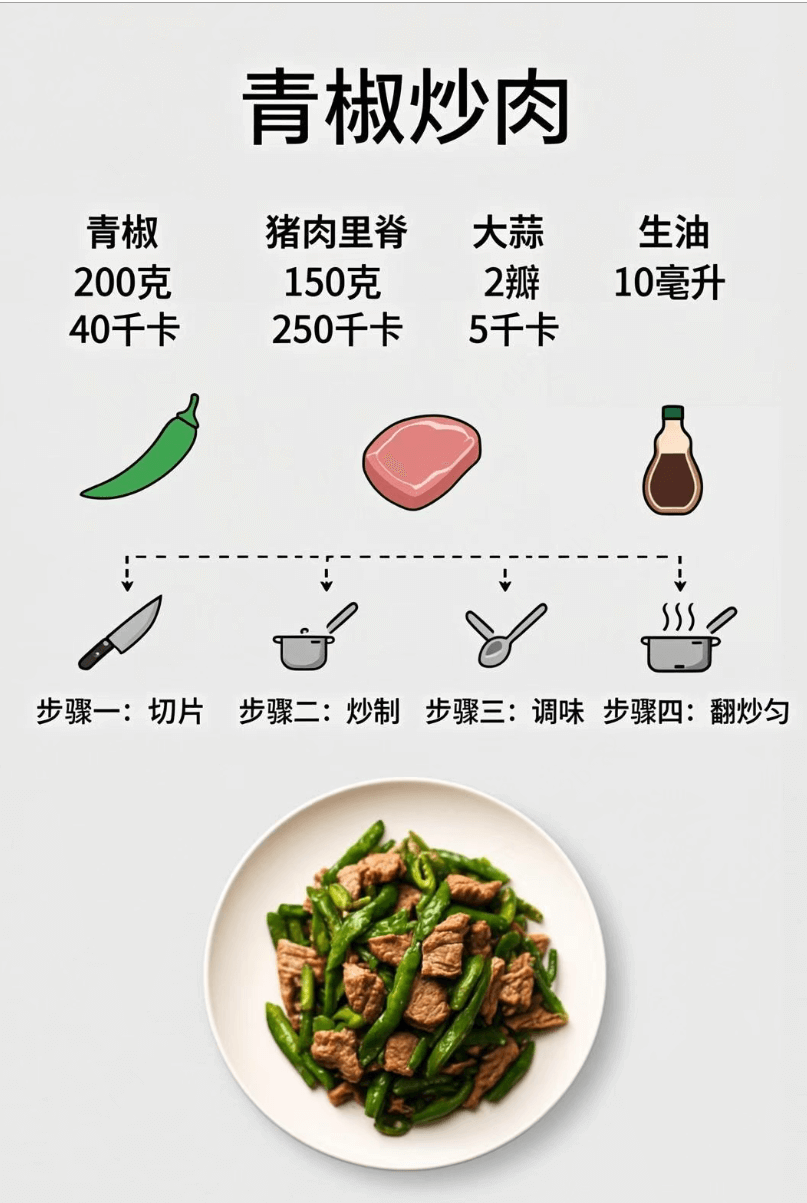
Case 7 Infographic
Prompt: Generate a premium close-up poster of napa cabbage, product photography style. The image uses a centered composition, with the main subject being a fresh, plump napa cabbage, leaves wrapped layer by layer, outer leaves light green, inner core pale yellow, leaf veins clearly visible, the surface having a naturally fresh and moist texture, overall appearing clean, tender, and substantial.
The background color is a pure light gray background, without any clutter or texture, highlighting the form and texture of the ingredient itself.
The lighting uses soft natural light, shining from the front side, the leaves evenly lit, with clear layers; slight soft shadows form at the bottom and behind, enhancing the sense of depth without excessive contrast, making the image clean and premium.
Top text layout
Text arranged at the top center of the image:
Main title: "Napa Cabbage" font style is natural and casual handwriting, the font color taken from the fresh light green of the cabbage outer leaves, soft strokes, friendly and natural.
Subtitle / Copy: "Clears heat and relieves restlessness, moistens dryness and promotes bowel movements, strengthens the spleen and nourishes the stomach." The copy is generated based on the principles of traditional Chinese medicine dietary therapy, highlighting the cooling and moisturizing properties and regulating effects of Chinese cabbage.
Subtitle font: Handwritten style, font color is a warm brown, hierarchy is lower than the main title, visually soft and restrained.
Bottom content area (cooking methods display)
At the bottom of the image, three cooking methods suitable for Chinese cabbage are arranged horizontally. Each method includes a corresponding small finished dish image and Chinese text description, with a unified and concise style:
Stir-fried Chinese Cabbage: The image shows cabbage quickly stir-fried over high heat, with crisp and tender stems and leaves and glossy leaves, presenting the most basic home-style flavor.
Chinese Cabbage and Tofu Stew: The image shows Chinese cabbage and tofu stewed together, with a light broth, reflecting mild nourishment and suitability for all seasons.
Vinegar-Spiked Cabbage: The image shows sliced cabbage quickly stir-fried with a slight charred aroma, fresh color, highlighting a sour and appetizing taste.
Overall style requirements:
The overall style is minimalist product advertising, with ample white space, restrained information, emphasizing the natural form and healthy attributes of the ingredients. The texture is high-end, clean, and not exaggerated, suitable for healthy eating, fresh food brands, or wellness visual content. Real photographic texture, no illustration feel, no cartoon feel, high resolution, suitable for posters, e-commerce main images, or health science popularization displays.
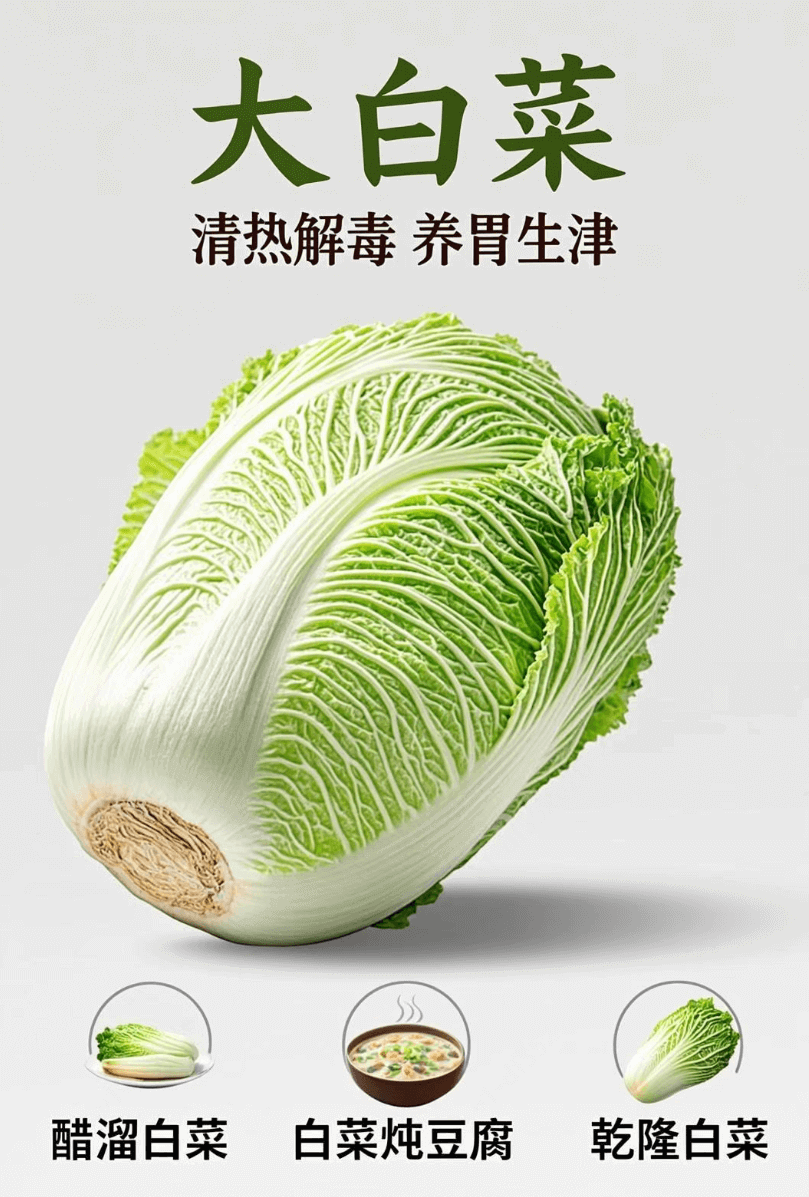
Case 8 Poster
Prompt: Modern creative style poster, the main subject is a close-up of a donkey, the donkey's mouth is outlined into a smiley face with pink lines, the background is a pure blue sky; at the top of the image there is pink artistic font text "泥嚎啊 Hello 打工人"; on the left side are white text of different office workers' daily lives, ("Work pressure is heavier than a mountain, wallet weight is lighter than paper" "A flurry of operations, then a salary of three thousand five" "Going to work is like going to a grave, getting off work is like clubbing" "Coffee keeps me alive every day, salary is spent every year" "Overtime until hair falls out, savings only two digits left") text is small. The color tone is mainly blue and brown, bright colors with sharp contrast, using a close-up composition, highlighting the donkey's face and creative smiley face, overall creating a humorous and teasing relaxed atmosphere of office workers' daily lives.
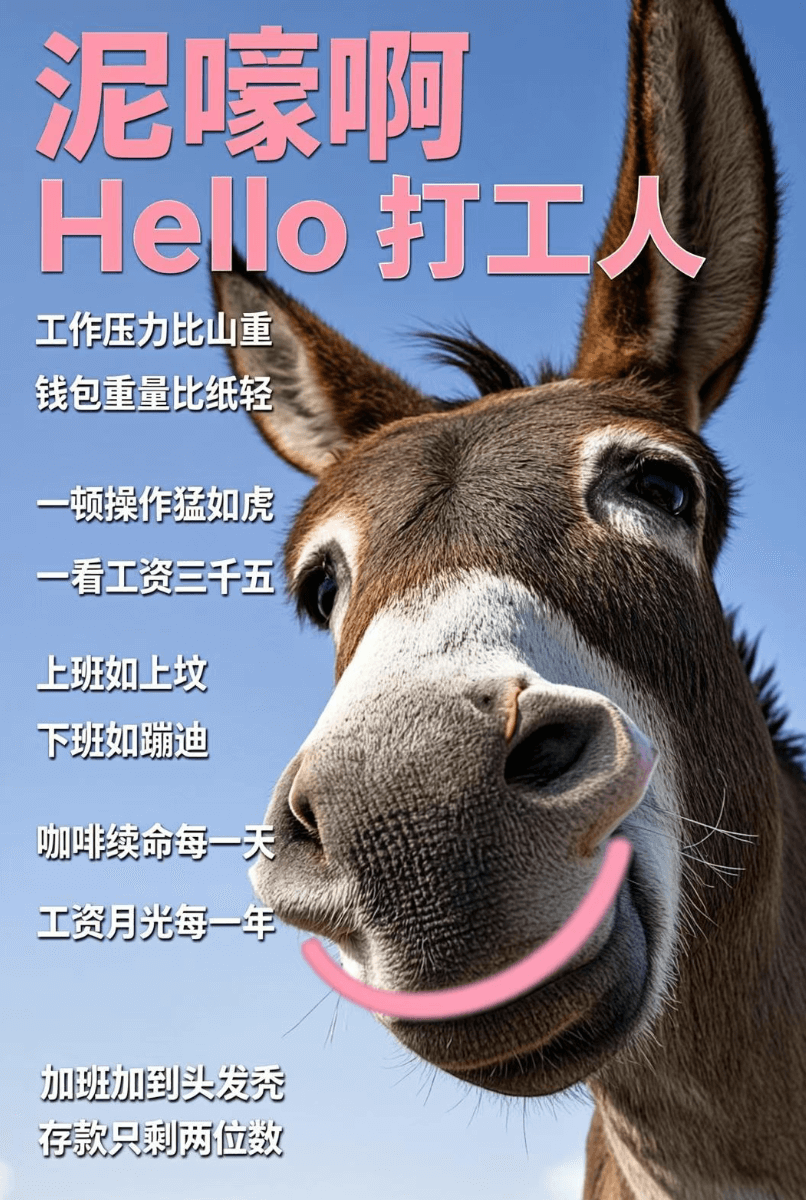
Case 9 Movie Poster
Prompt: This is a retro-style movie poster, themed "Sunset at the Seaside" (SUNSET AT THE SEASIDE). The image uses an orange-red seaside sunset as the background, with the silhouettes of a man and a woman sitting on a seaside bench, creating a tranquil atmosphere. The poster uses a contrasting color design of fluorescent green and orange-red. The handwritten-style "海边的日落" text is highly visually striking, paired with the copy "Tired of the city's 4 p.m. sunset, occasionally I also want to see a sunset by the sea," conveying a longing for nature and romance. The retro elements at the bottom (year "2025," brand logo "cc ORIGINAL POSTER," etc.) reinforce the nostalgic texture, and the overall style is both artistic and full of retro trendiness.
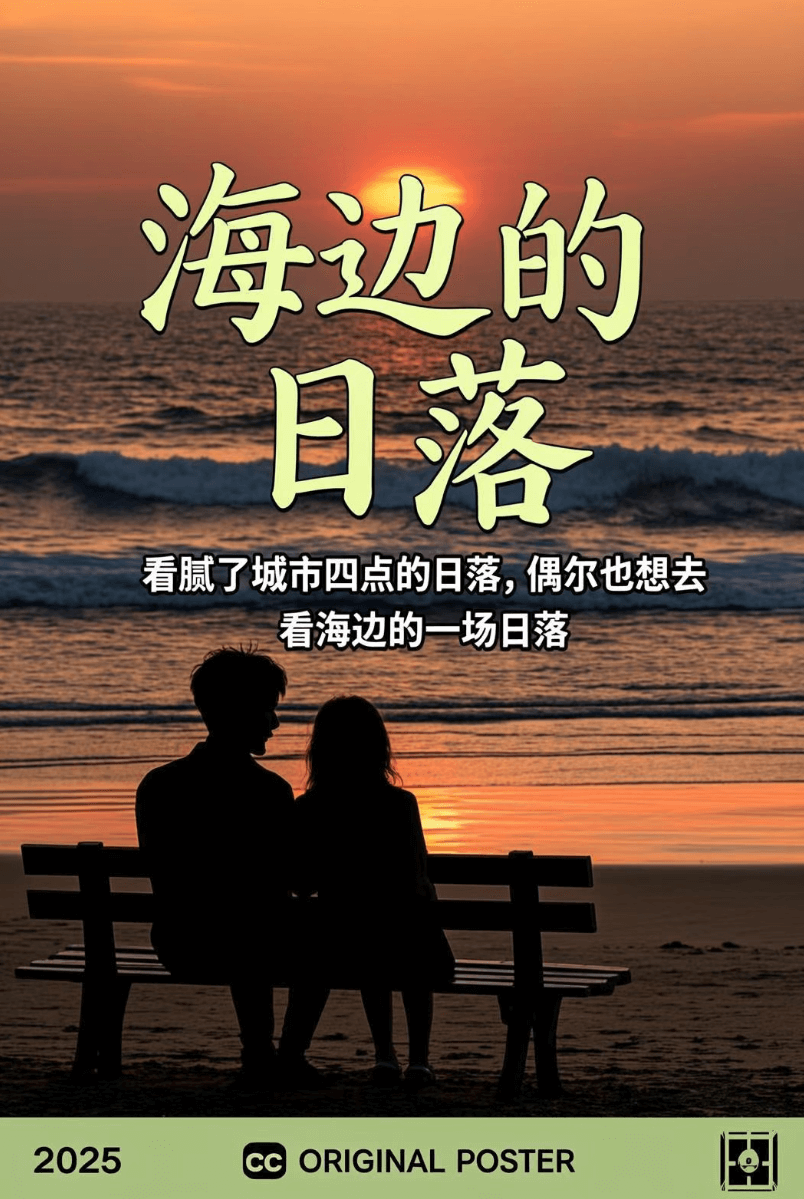
Case 10 Packaging Design
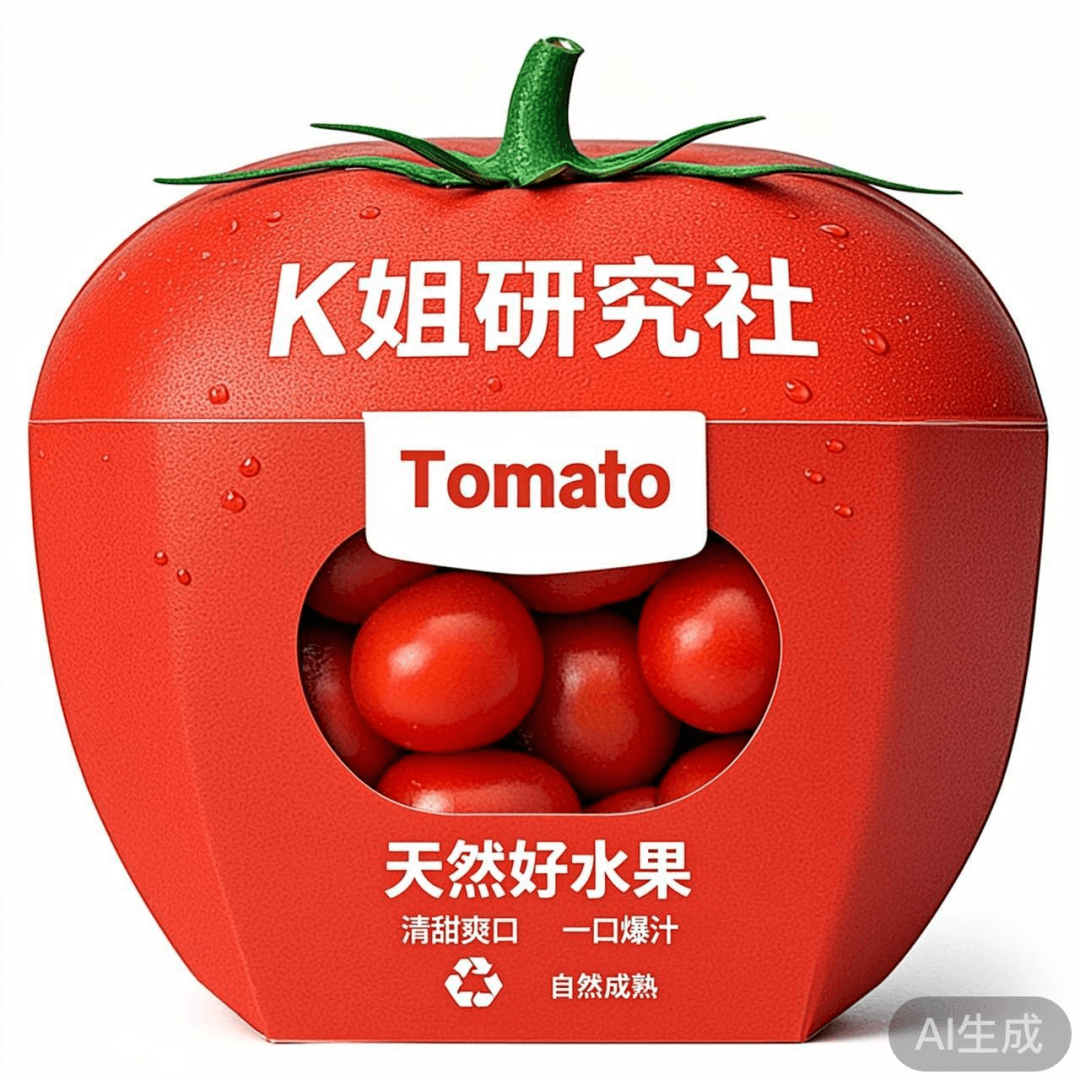
Prompt: 3D realistic-style tomato packaging box. The main body is designed in a creative tomato shape, made of red paper material, with the surface simulating the yellow speckled texture of a real tomato's skin, and the top equipped with a green simulated fruit stem. The box body is designed with a hollow window, three-dimensionally displaying multiple plump round cherry tomatoes inside, with the fruits arranged in a layered way. The front of the packaging has a white label clearly printed with the text "Tomato". The box body also bears the "K姐研究社" brand logo as well as product information such as "天然好水果", "清甜爽口", "一口爆汁", and "自然成熟". At the same time, the packaging is clearly marked with a recycling symbol, reflecting practicality and environmental friendliness. The overall background is pure white, using an eye-level perspective, highlighting the packaging's three-dimensional shape and rich material details, such as the glossy feel of the tomato, the texture of the paper material, and the exquisite printed markings. The design style is simple and fresh, with the main color palette of red, white, and green, conveying a natural and healthy brand tone, successfully creating a creative and eco-friendly food packaging design feel. The image is high-definition with rich details.
02. Autoregressive + Diffusion Encoder
This time, Zhipu did not continue to use the mainstream Diffusion architecture, but instead adopted a self-developed hybrid architecture of autoregressive + diffusion encoder.
The Diffusion architecture is essentially a process of gradually turning highly chaotic noise into clarity, just like the process from squinting to opening our eyes, where the scene before us goes from blurred outlines to clarity.
Images generated by models with the Diffusion architecture have a strong overall sense and unified style, making them very suitable for posters and illustrations. Nano Banana Pro, Midjourney, and Seedream 4.5 are all typical Diffusion architecture models.
In the generation process of Diffusion, text is also treated as a complex shape to be restored. When text density is high, characters are prone to being stretched and distorted during the diffusion process, easily resulting in the "ghost scribbles" we commonly see.
Autoregressive (AR) generates step by step in order, and at each step it uses the already generated content as context for reference. The model first generates one character, then based on this character determines what the next character should be, with strong correlation between the preceding and following content.
In GLM-Image's hybrid architecture, the autoregressive mechanism intervenes first, responsible for writing the text content in the prompt correctly in order, and then the diffusion encoder completes the image details and overall visual presentation. The accuracy of the text is higher, and the overall image still has texture and style.
03. Some Sharing
Overall, in use, GLM-Image's Chinese instruction understanding ability is very good, and the accuracy of text generation is also high. Even when information density is high, there is rarely garbled text. Adding quotation marks to the text part makes it more accurate. For content creators, this is truly a productivity tool.
GLM-Image is based on Huawei A2 chips and MindSpeed-related training frameworks, and has run through the complete process from data preprocessing to large model training, demonstrating that on a domestic full-stack computing power foundation, cutting-edge multimodal models also have a realistic path to being fully trained and continuously iterated, no longer being bottlenecked by foreign computing power.
GLM-Image is not only usable and easy to use, but its cost is also kept very low. Currently GLM-Image generates one image in a single run for only 0.1 yuan, while Nano Banana Pro is about one yuan per image, a 10-fold cost difference.
The value of GLM-Image is not only reflected in its capabilities themselves. GLM-Image has verified a replicable technical route, providing a referenceable engineering paradigm for more multimodal models in the future.
This path of cutting-edge models, within the domestic technology system, is not only feasible but has already begun to be steadily established.
Original link:Domestically produced Nano Banana is open source! 10 hands-on test cases to quickly get you up to speed on GLM-Image