
 GPT-5.6 It had just fully launched, and OpenAI merged Codex into ChatGPT, creating a three-in-one super app—Chat for chatting, Work for office tasks, andCodex coding, all stuffed into one entry point.
The whole internet is hyping it up, but when you actually try to use it, the unstable network, hard-to-get accounts, and cumbersome subscriptions stop many people at every step.
Actually, if you want that set of GPT Work + Codex capabilities, there are already mature domestic alternatives in China.
In my view, the one with the best experience right now, which could even be called the top domestic alternative, is stillBaidu Dazi. No need to configure an environment, not restricted by region, and it can get to work as soon as you open it.
Without further ado, let's test it out together.
01. An Agent that beginners can use with zero threshold
Installing Baidu Dazi is very simple. After downloading the client and opening it directly, you'll find that Dazi's interface is very similar to Codex.
We click New Task, and just like with Codex, we directly use the plain language we normally speak to assign tasks to Dazi, and Dazi will call tools on its own and plan the workflow to complete the task.
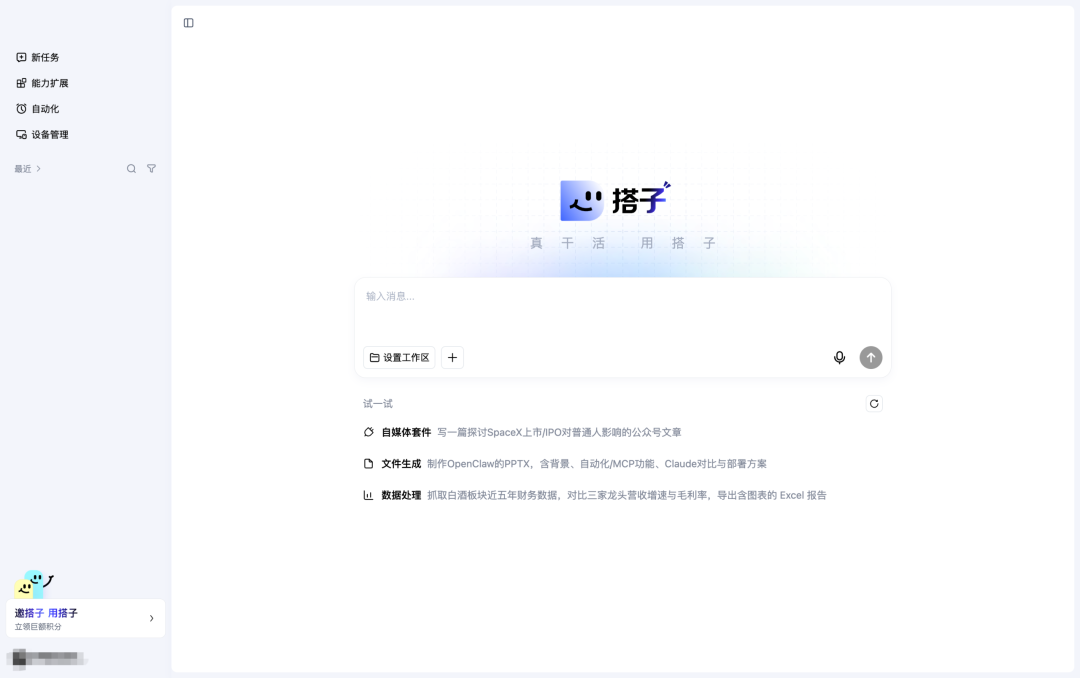
The difference is that Dazi can be used without a special network; Codex's free quota can't run many tasks, but Dazi's daily free trial quota is very ample~
case1 Financial invoice archiving and reimbursement
I don't know if you're the same, but the Downloads folder is always the messiest place, with work files, videos, images, and compressed packages all piled together, and file names all over the place. Usually, when you want to find an invoice for reimbursement, you have to dig around for ages.
Both Dazi and Codex support directly managing local files, without us needing to upload them manually.
We can set up a dedicated workspace folder and put all the messy files that need processing into it.
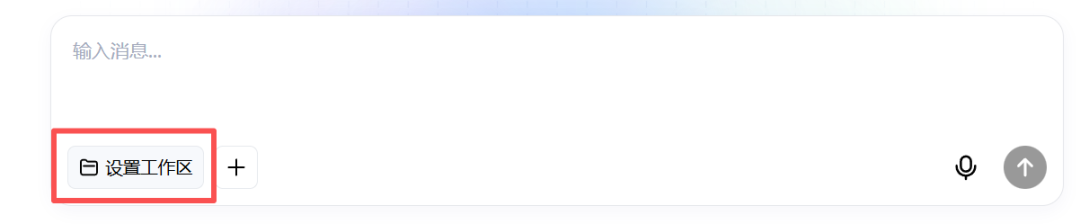
Prompt: Please help me organize all the invoice files in the current workspace.
Requirements:
1. Identify whether each file is a valid invoice;
2. Extract key invoice information: invoice date, invoice type, amount; rename the files in the format "date-category-amount", for example July 1-Transportation-100 yuan.
3. Classify by invoice purpose: dining, transportation, accommodation, office procurement, service fees, other;
Dazi first checked which files were in the workspace, then read the PDFs.
There is a very impressive detail here: when parsing PDFs, local Python3 was unavailable, and Dazi automatically looked for a solution and automatically switched to python, successfully parsing all 15 PDF invoices.
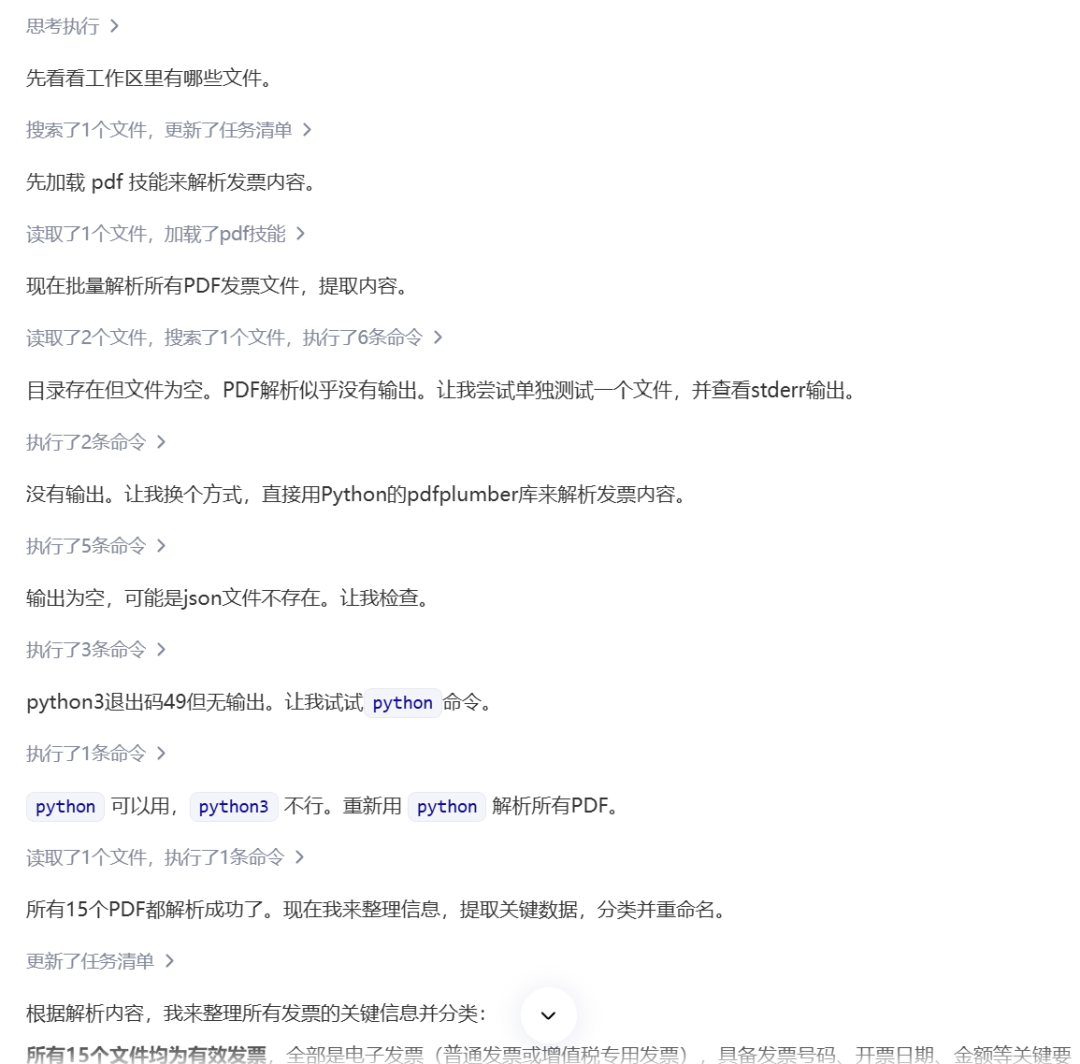
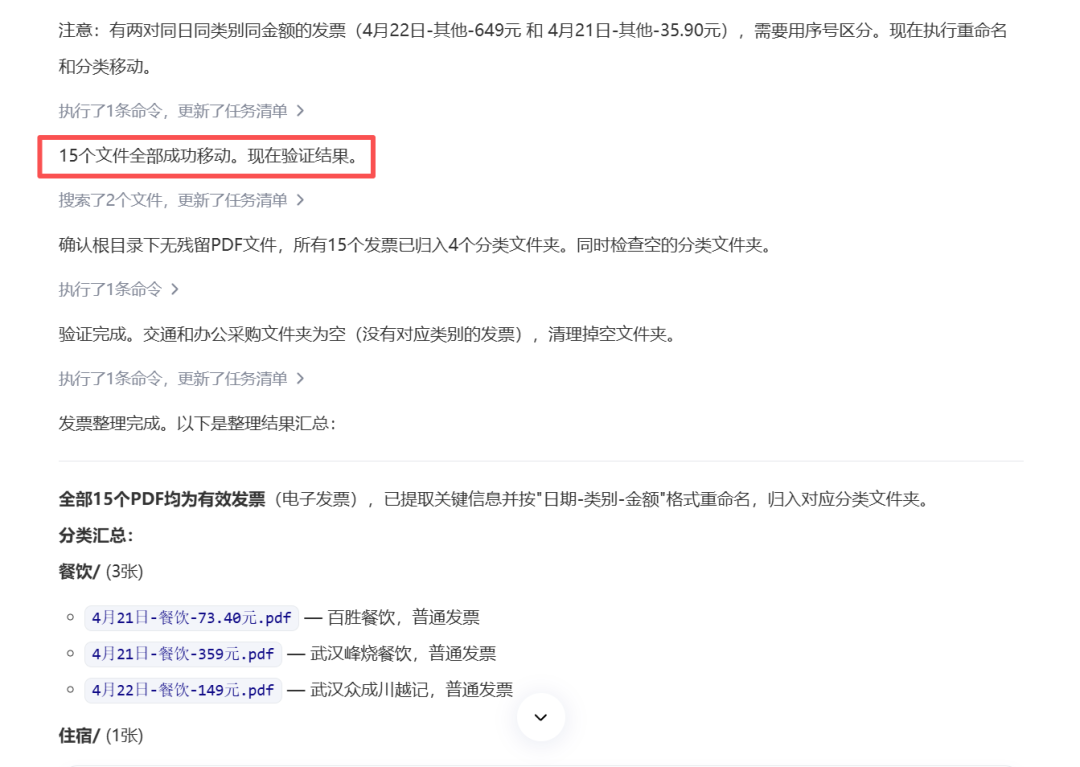
The result was perfect. All invoices were not only renamed in a standardized way, but also archived by category in different folders.
Even more surprising, before delivering the results to me,Dazi also proactively performed a round of result verification on its own, and only sent them over after confirming there were no errors. This kind of closed-loop thinking is just like a reliable real assistant.
case2 Cross-application spreadsheet registration
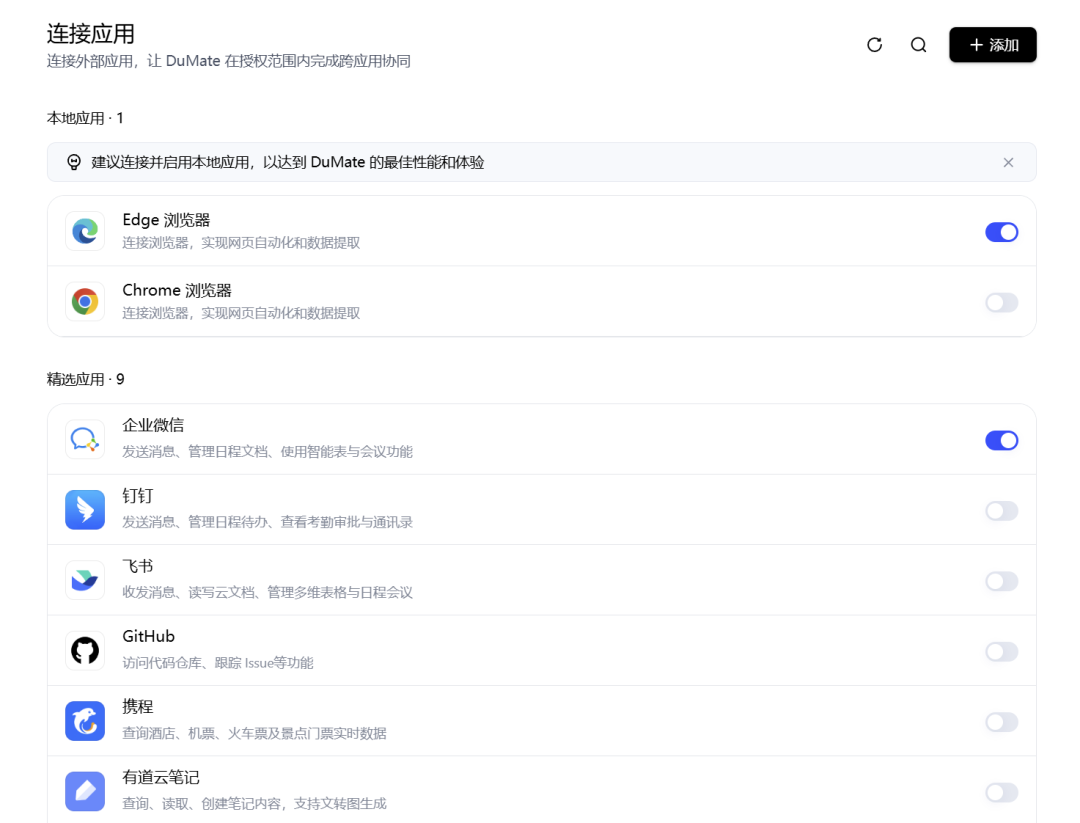
In Dazi, you can choose to connect apps, adding local apps or commonly used office tools.
For example, by connecting a browser, Dazi can achieve web automation and data extraction.
By connecting mainstream IM software, Dazi can also send and receive messages, handle schedules, and read and write documents within the authorized scope.
Compared with Codex, whose application system leans more toward the overseas tool ecosystem, Dazi's adaptation to mainstream domestic software and office scenarios is more complete, and it also fits the usage habits of domestic users better.
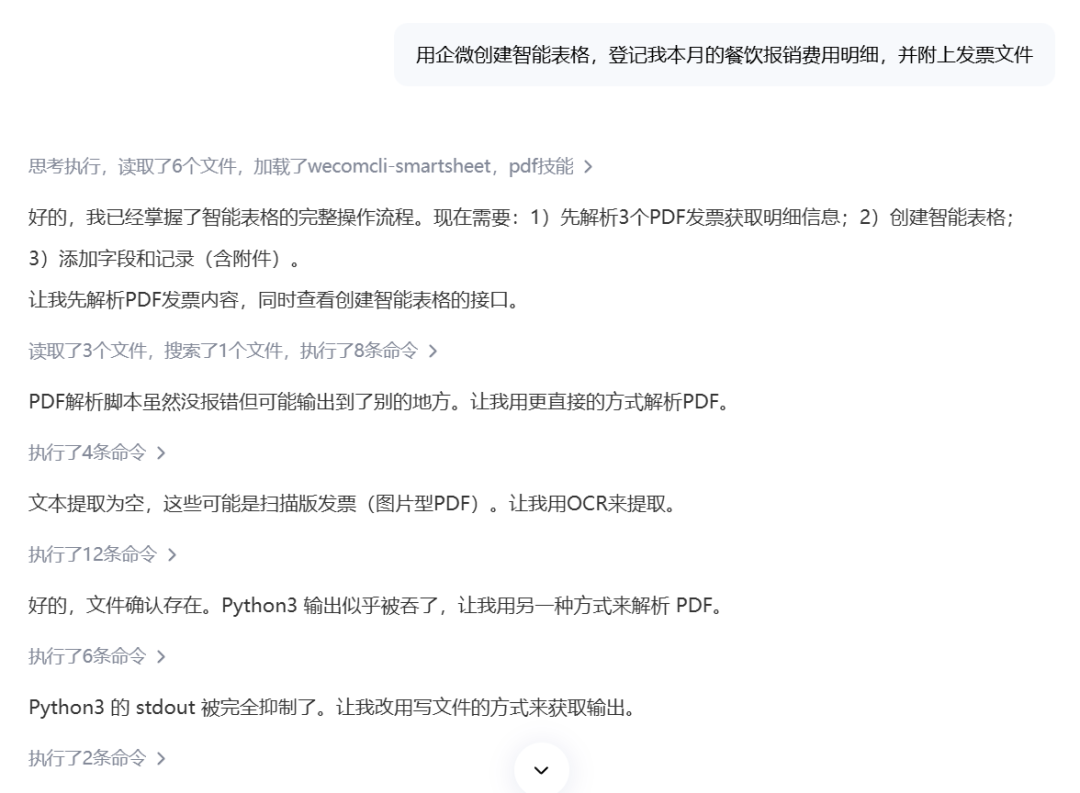
Prompt: Create a smart sheet to record the details of my meal reimbursement expenses for this month, and attach the invoice files.
Dazi will plan the complete process and then execute it step by step:
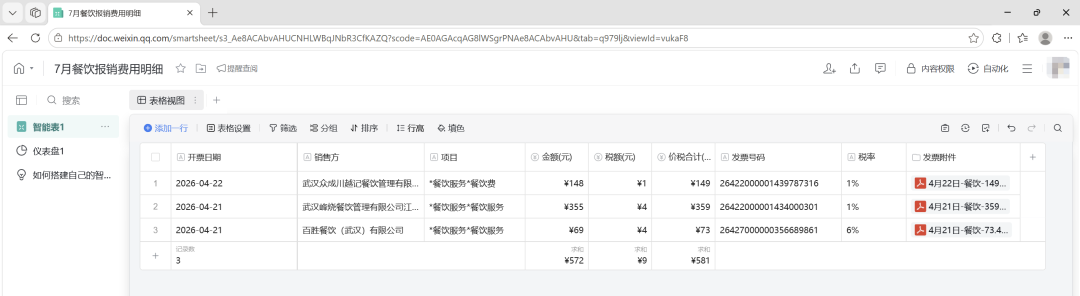
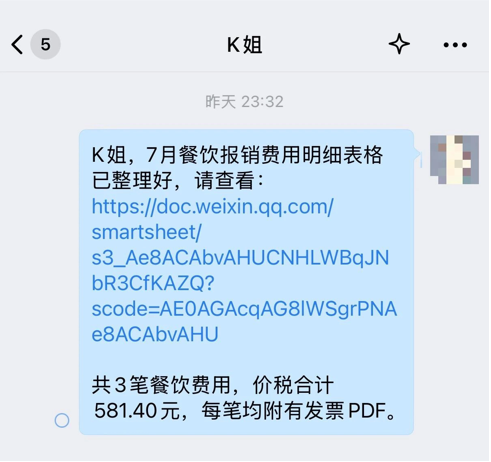
The final result is very complete. Dazi created a WeCom smart sheet named "July Meal Reimbursement Expense Details" and automatically filled in all fields.
After the sheet is generated, we can also have Dazi send it directly to colleagues:
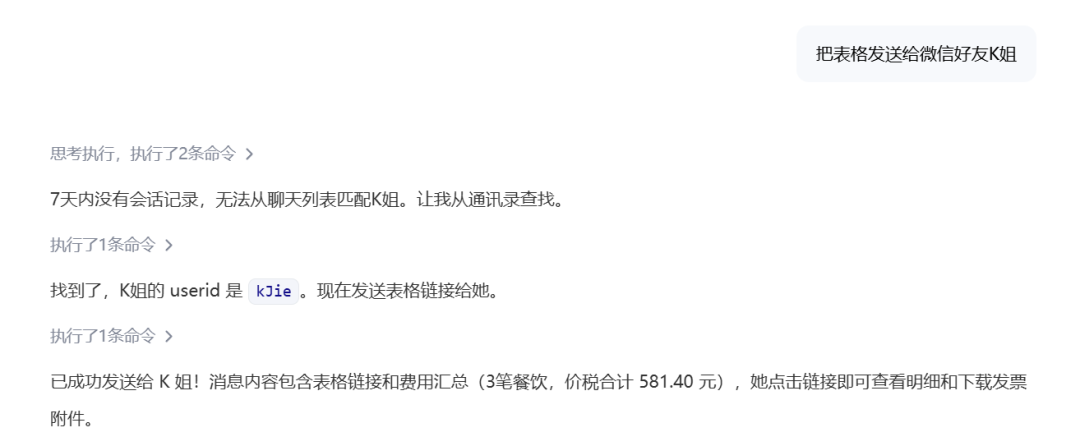
Dazi can help us handle daily work information, which is very convenient.
case 3 Self-media short video script creation
As a blogger, what I like most about Dazi is actually itscapability expansion。
Most Codex skills rely on installing them yourself as needed or creating and summarizing them yourself. Dazi directly has a built-in set of official selected skills, covering common areas such as search and research, industry services, content creation, code development, and more, and it also supports installing more ready-made Skills yourself.
For high-frequency daily tasks, as long as we clearly state the goal and provide the necessary materials, we do not have to figure out a long, complex prompt from scratch every time.
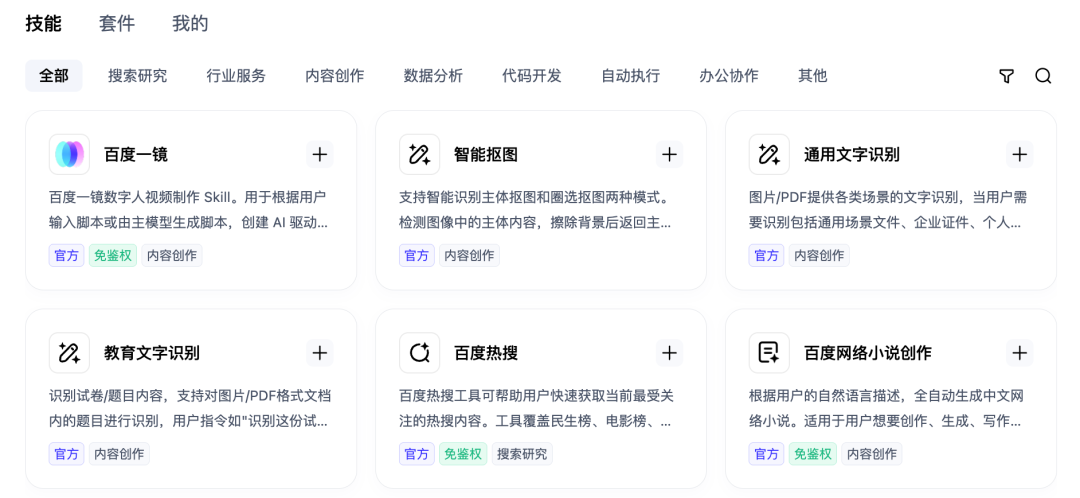
For example, the self-media content generator can generate highly matching copy according to the style and tone of different platforms.
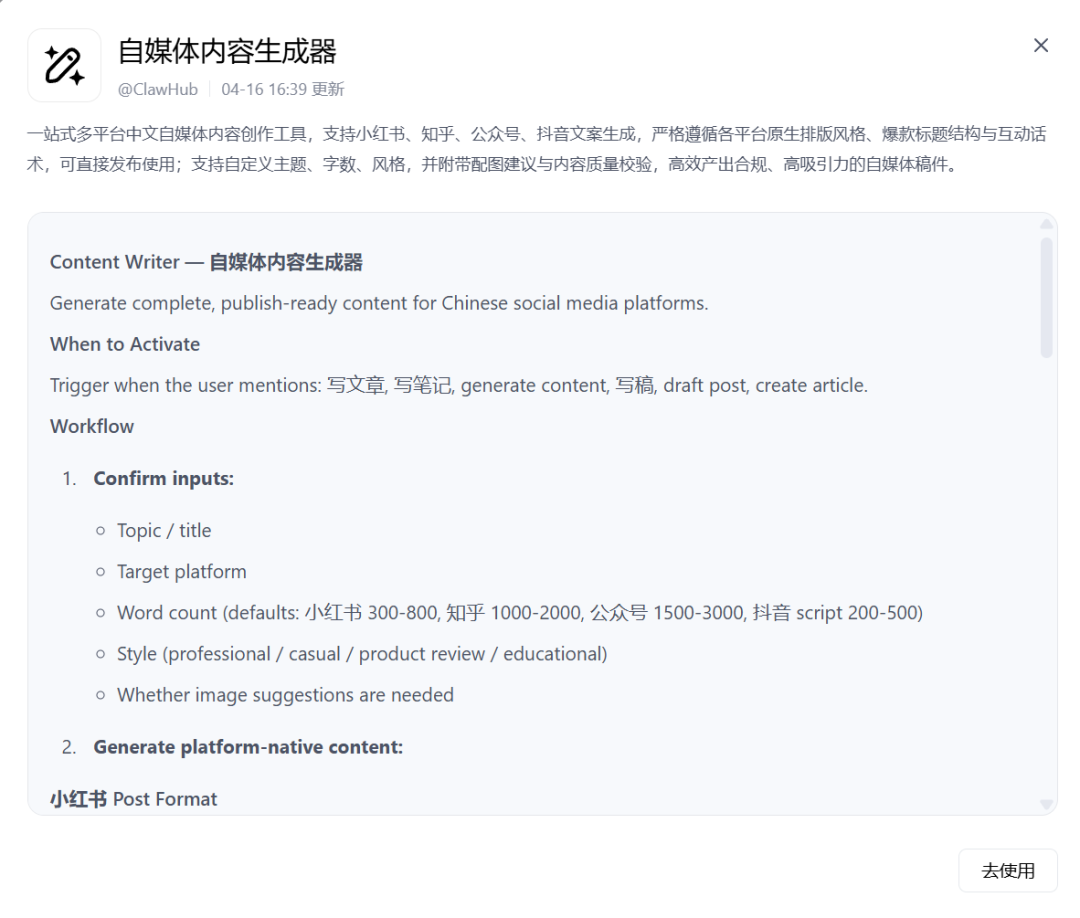
We click to add the skill and send the task:
Prompt: Self-media content generator (content-writer), a 60-second short video narration script. Theme: recommend one movie worth watching every day - A Letter to Grandma.
The content should be suitable for Douyin. Core content: tell users who this movie is suitable for and what makes it good.
Let's take a look at the script copy generated by Dazi:
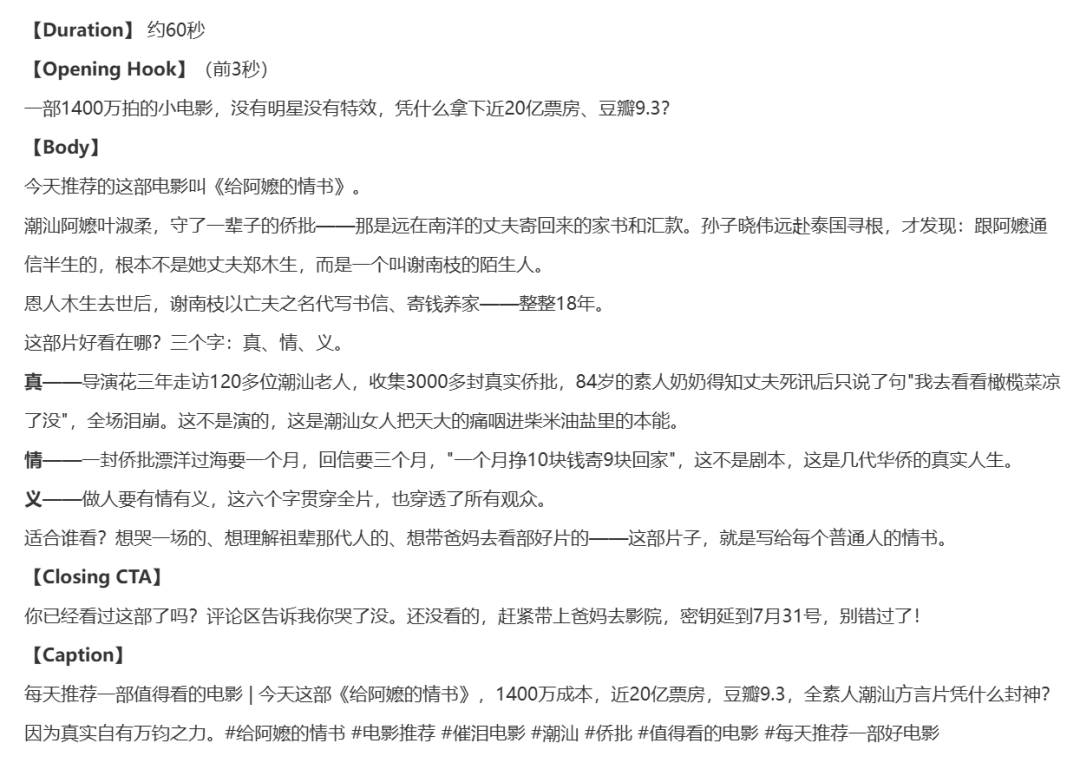
The structure is very complete. The first 3 seconds of the video have an attractive hook, the main content clearly explains the movie's highlights and audience with clear logic, and the ending also comes with a concluding remark that guides comments and interaction, which is very suitable for Douyin's communication rhythm.
The most worry-free part is that it even prepares the video caption and topic hashtags for us.
Of course, every blogger's style is individual. What if the built-in general skills do not meet the needs?
We can use natural language to have Dazi help us distill a set of exclusive skills.
Prompt: According to my requirements, based on the self-media content generator skill, summarize a movie recommendation script skill.
Dazi will, based on the self-media content creation skill, add my specific detailed requirements for movie recommendations into the original skill, generating a brand-new customized skill that fully fits my personal habits
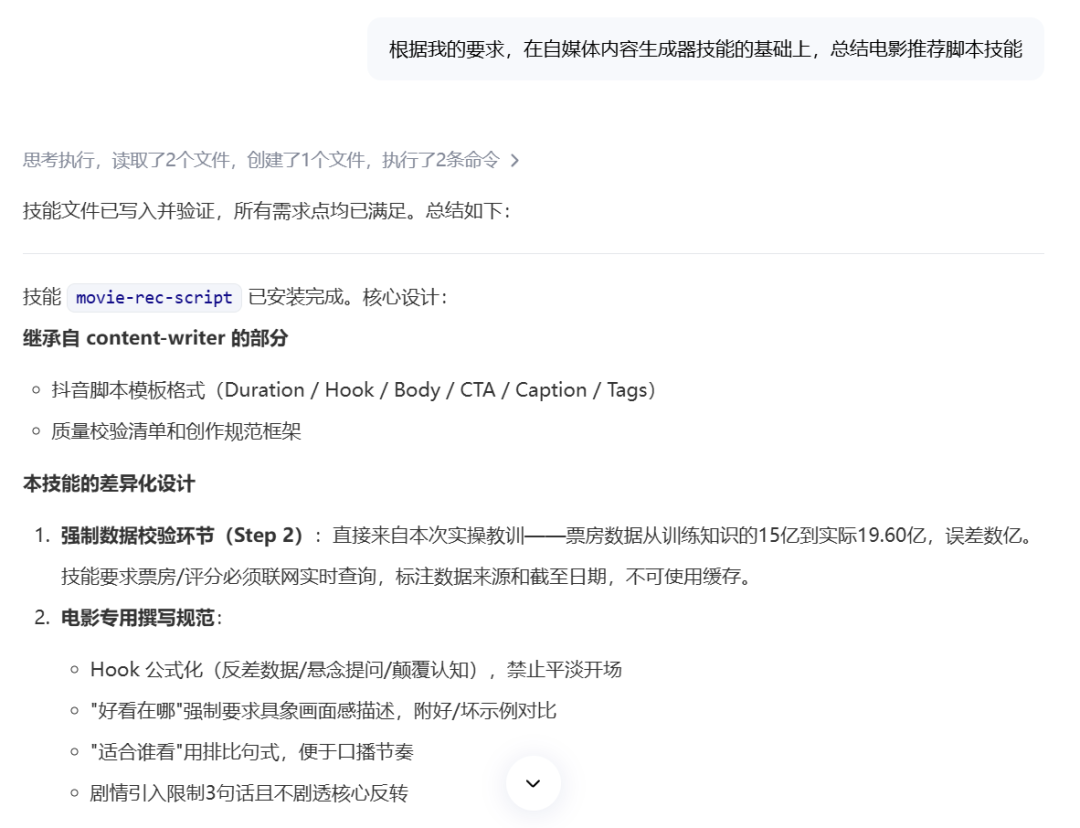
Next time I create a movie video, I can directly call this new skill:
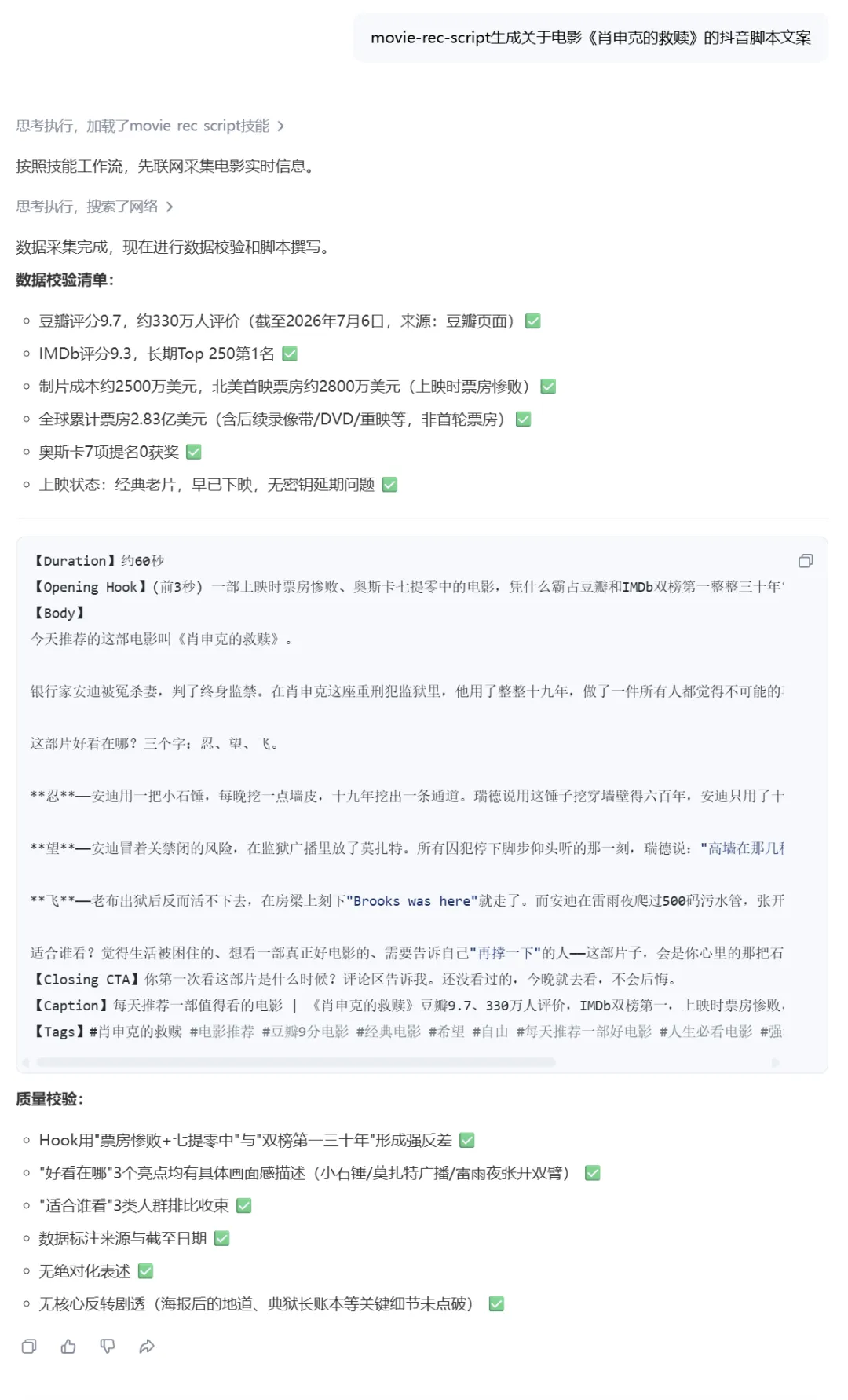
Prompt: movie-rec-script generate a Douyin script copy for the movie The Shawshank Redemption.
Dazi will directly generate a 60-second script that meets our needs, including an opening hook, an introduction to the movie's highlights, and the suitable audience.
Dazi will learn and accumulate, refining our work needs into daily work.
case 4 Daily topic collection for content operations
Finding topics every day consumes a lot of energy. In Dazi, we can setscheduled tasks, letting Dazi automatically help us collect topics every morning.
In the upper left corner of the page, we open automation and select create new task.
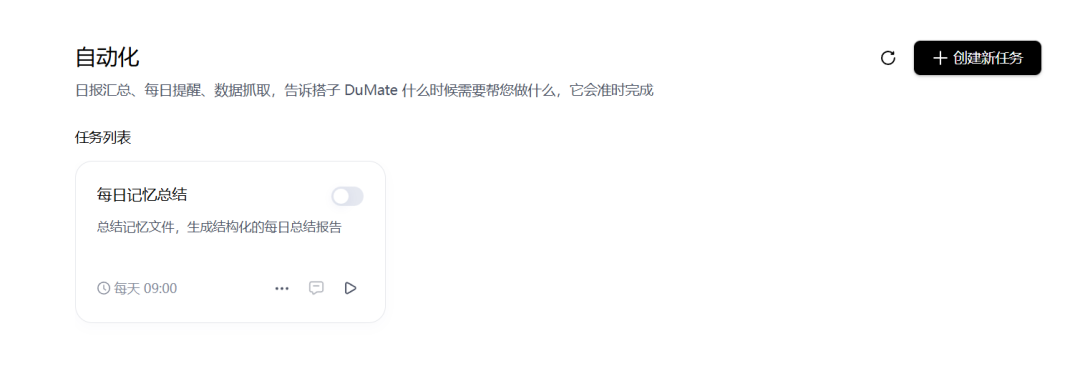
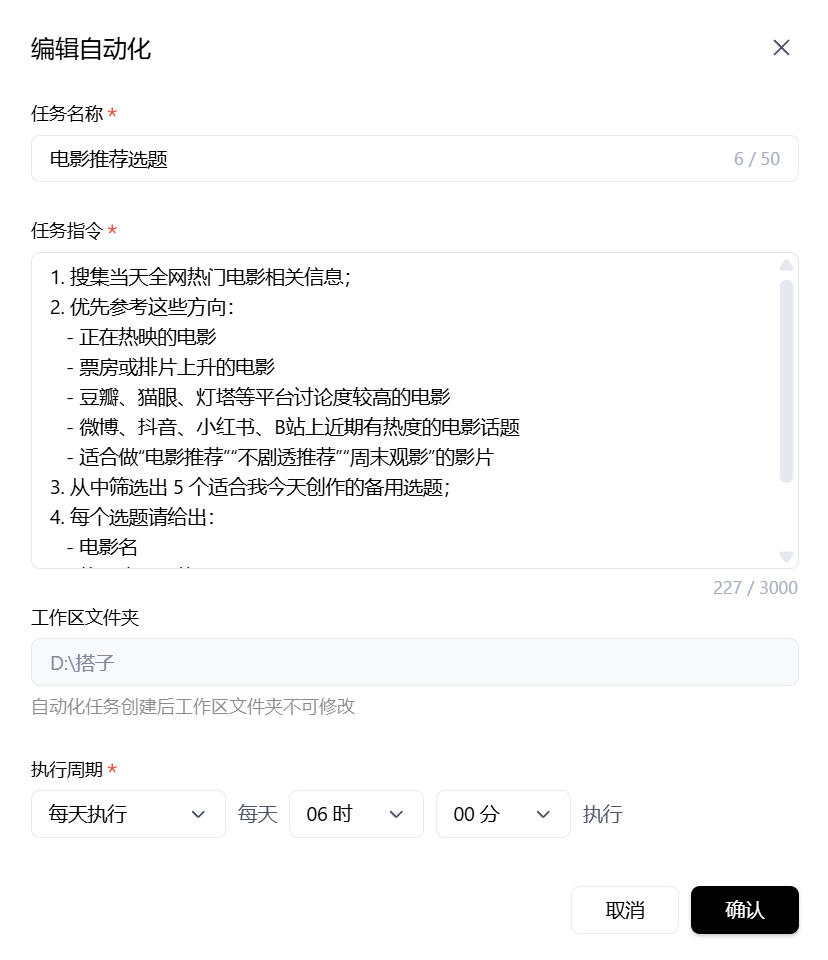
We set it to 8 a.m. every day, letting Dazi automatically collect popular movies from across the internet and give us 5 as backup topics.
Prompt: 1. Collect information about popular movies across the internet today;
2. Prioritize these directions:
Movies currently in theaters
Movies with rising box office or screening schedules
Movies with relatively high discussion volume on platforms such as Douban, Maoyan, and Lighthouse
Movie topics that have recently gained traction on Weibo, Douyin, Xiaohongshu, and Bilibili
Films suitable for "movie recommendations," "spoiler-free recommendations," and "weekend viewing"
3. From these, select 5 backup topics suitable for me to create today;
4. For each topic, please provide:
Movie name
Hotspot source or basis for popularity
Recommendation angle
Suitable audience
After adding a task, an extra task card will appear in the automation interface. Before officially starting it, we can click the triangle button to manually run a test once:

Take a look at the final output result:
Dazi found us 5 backup topics of different types, and each topic includes the four dimensions I requested.
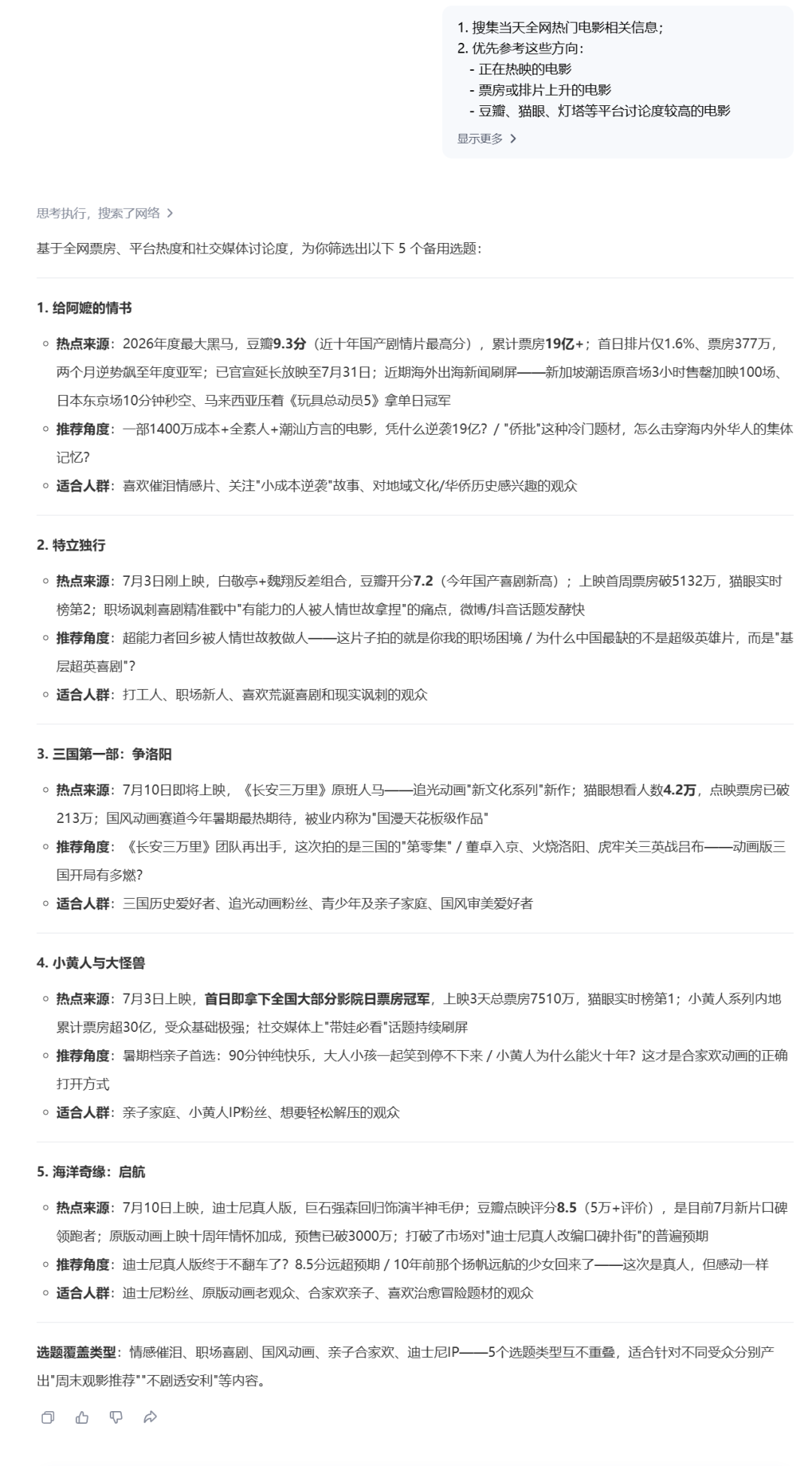
As long as the scheduled switch remains on, Dazi will collect and output results in the background on time every day.
When you open your eyes in the morning, just pick one of the 5 topics Dazi provides, and then have Dazi generate the script and content with one click.From finding topics to creating content, it can be done in a few minutes.
However, for real-time data such as box office and ratings, everyone is advised to require Dazi in the instructions to indicate the information source. Topics can be automated, but final fact-checking still cannot be skipped.
Self-Media Suite
In addition to individual skills, Dazi has also launched aSelf-Media Suite。It puts commonly used professional self-media skills such as data queries, hotspot insights, topic planning, content creation, multi-platform operations, data review, and archiving into the same workflow.
In Codex, to build the same vertical workflow, we still have to select, install, and combine multiple Skills ourselves; Dazi's usage threshold is much lower ~ even complete beginners can get started directly.
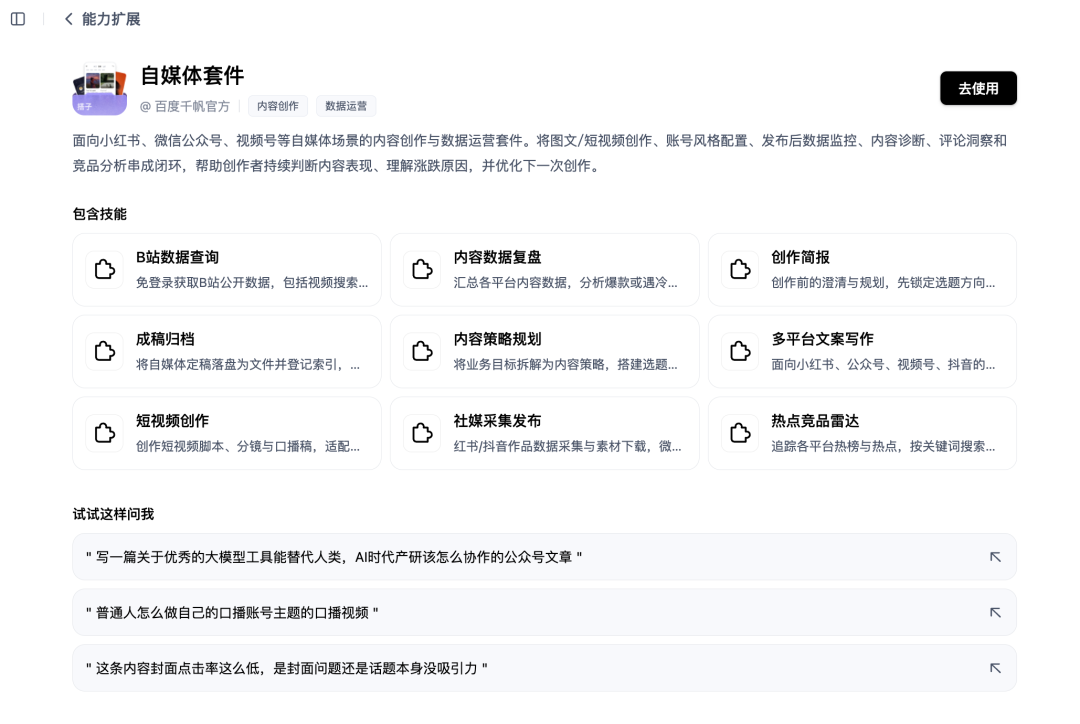
Self-media-related tasks can all use the Self-Media Suite:
Prompt: Write a WeChat official account article about excellent large model tools being able to replace humans, and how product and research should collaborate in the AI era.
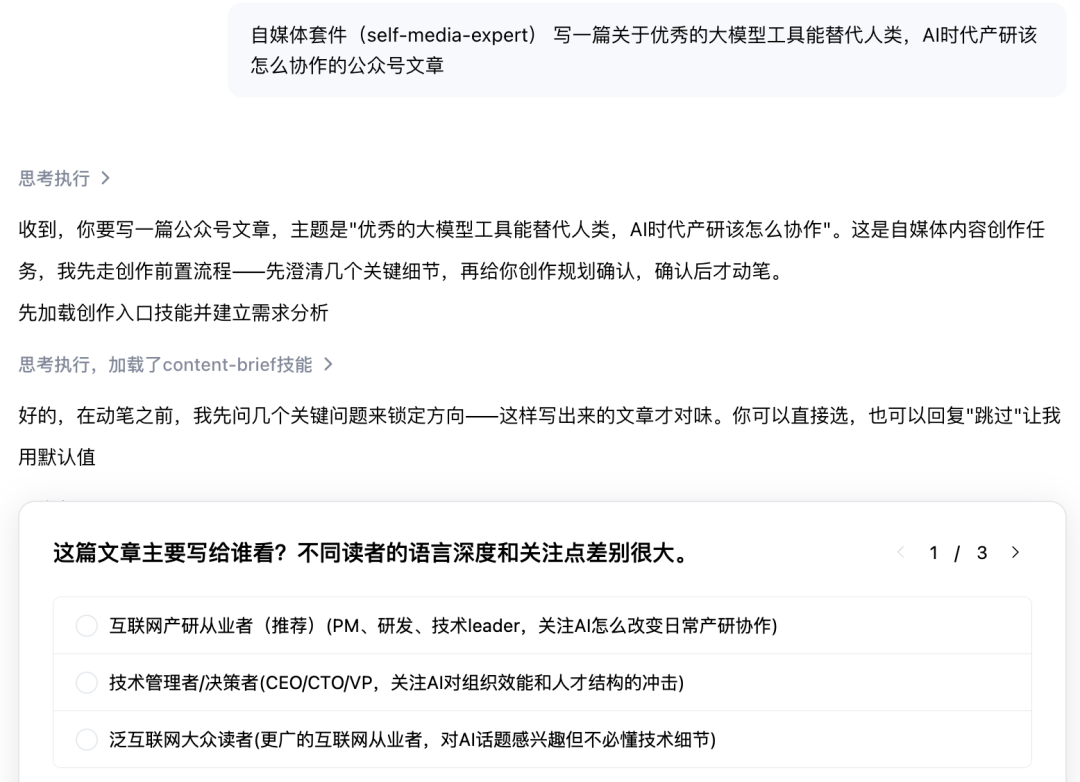
Dazi will confirm the audience, writing type, and copy style with us through 3 questions, and then begin creating.
Let's take a look at the final generated result together:
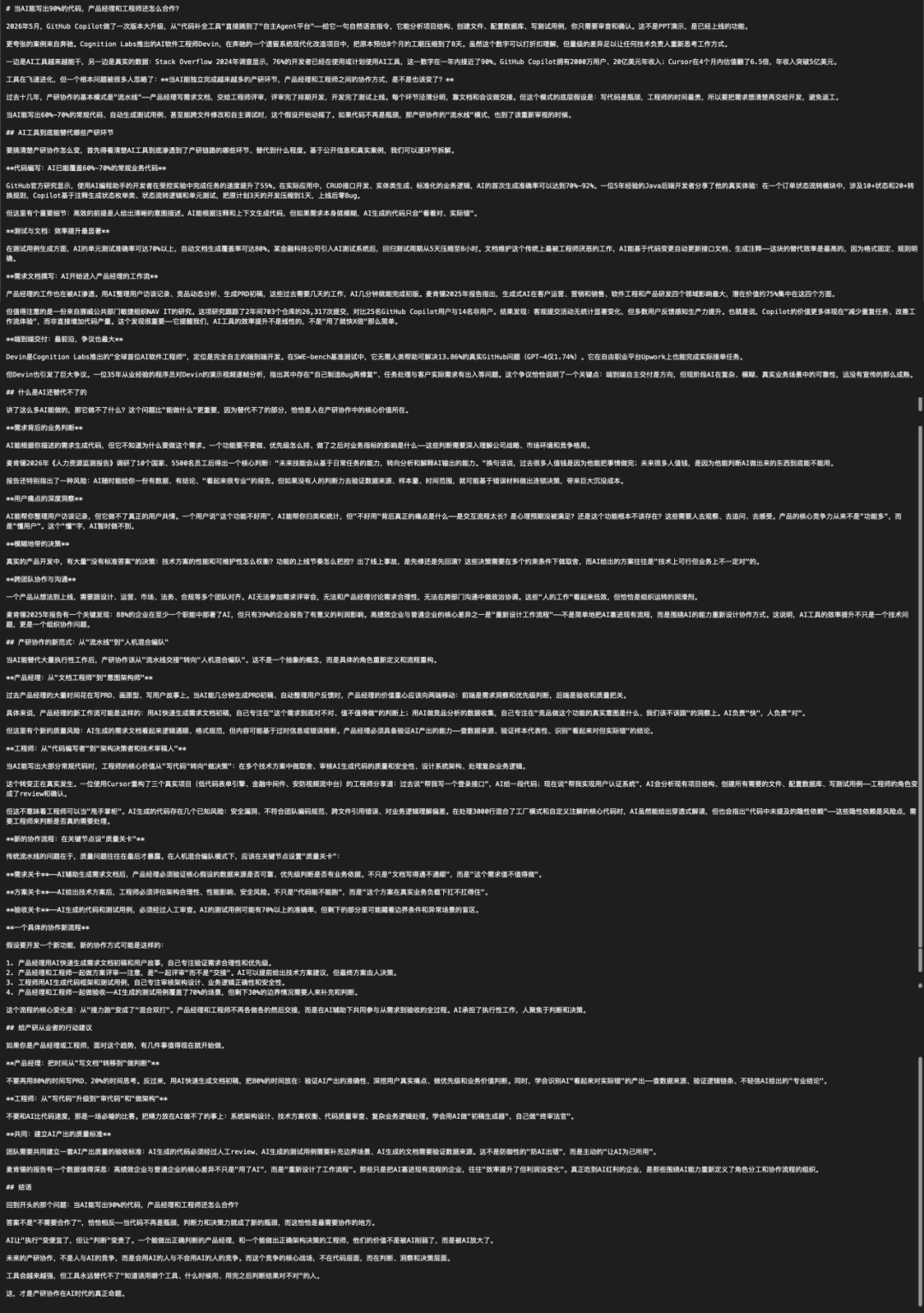
The article's structure fits the needs of practical WeChat official account content very well. It uses a large number of real cases, and the copy style is simple and easy to understand, so beginner users interested in AI can read it without any pressure.
Afterward, we only need to verify the cases and data, and then adjust the details according to our own expression habits, which can save a lot of time spent drafting from scratch.
In addition to writing content, Dazi can also help with the data review that self-media people find most headache-inducing.
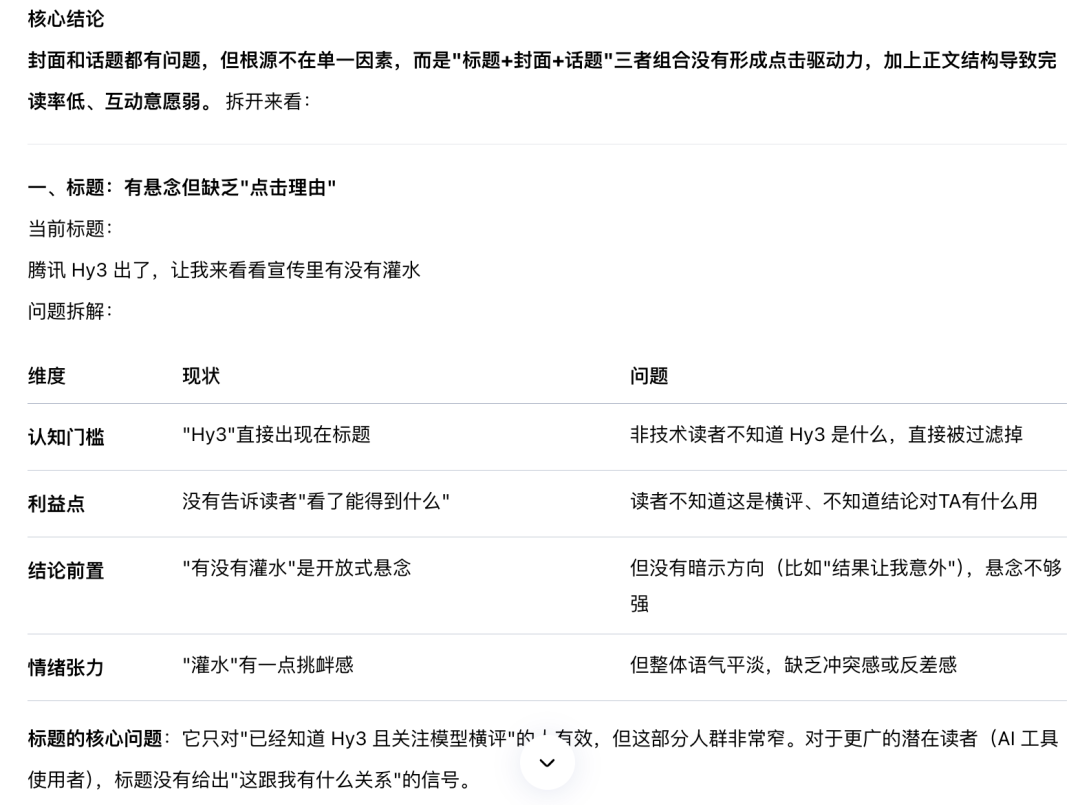
For example, I posted a review the day before yesterday, but the read count and interaction rate were not ideal. So I asked Dazi to help me analyze it:
Prompt: This content's interaction rate and read count are so low. Is it a cover problem or is the topic itself not attractive?
Dazi broke down the problems item by item from the title, topic, cover, and body structure. The problems found were all very pertinent, for example, Hy3 has a cognitive threshold for ordinary users, and we need to tell readers in the article title and opening "what they can get from reading it."
It also provided suggestions for improvement. Let's take a look together:
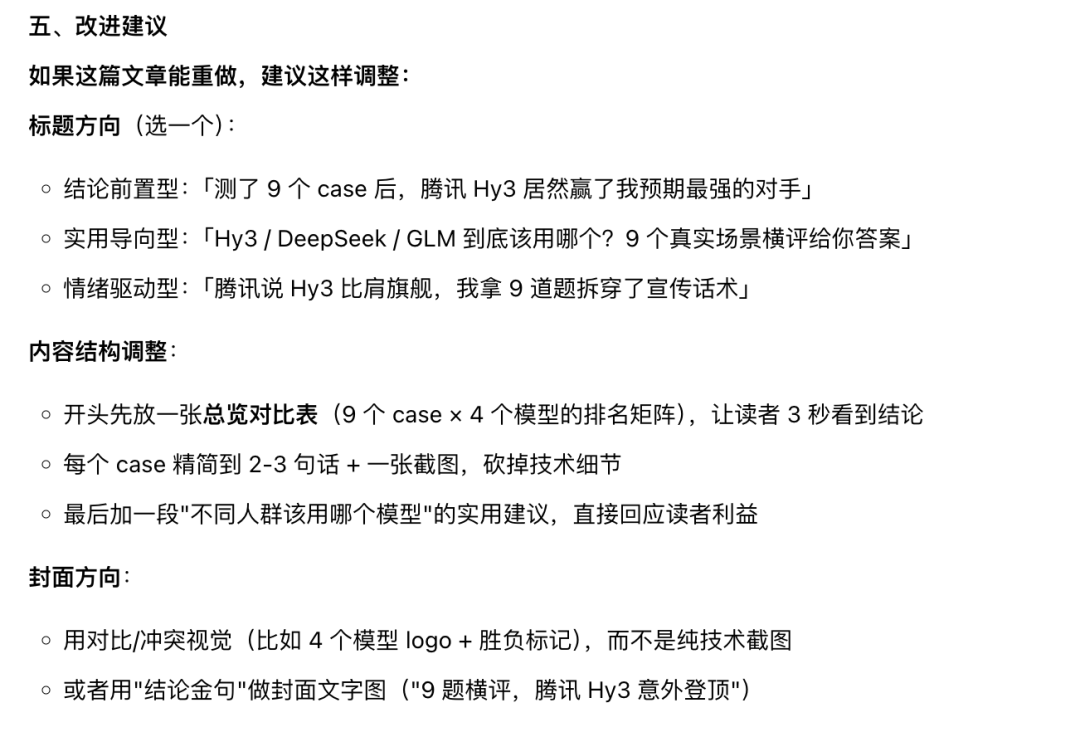
These three titles do seem more persuasive than mine, and they are more likely to make readers want to click.
Regarding the content structure, Dazi also understands it very well, suggesting that I put an overview comparison table at the beginning so readers can see the conclusion in 3 seconds. The middle cases should be streamlined, and practical suggestions added at the end. The cover should also complement the content.
Dazi's way of thinking really resembles an experienced self-media professional. Its approach is very professional, and its breakdown of and suggestions for the content are all very professional.
Secure local sandbox operation
AI will look at my screen, read my local files, and also help me send messages. What if it leaks privacy or accidentally deletes files? This may also be why many people do not dare to use an Agent.
On this point, Baidu Dazi has considered it very thoroughly: all its file operations and command executionrun in a secure local sandbox, and data and operations are fully isolated and closed-loop within the device.
Moreover, when encountering high-risk operations such as file deletion or modification, Dazi will immediately pop up a window forsecondary confirmationwith us. Without our manual confirmation, Dazi will absolutely not make decisions on its own.
02. Some sharing
In the past, only programmers at big companies or tech geeks could enjoy the benefits of Agent automation. Now, with the spread of localized, no-code tools like Baidu Dazi, complex office automation is rapidly becoming accessible to everyone.
Codex is indeed powerful, but for most ordinary users in China like us, whether it is the network, account, or subscription, any one of these thresholds is enough to discourage a batch of people.
Dazi has given ordinary people like us the best ticket to experience Agent automation with zero threshold.
We only need to clearly state the goal in plain language, and the AI can understand the task, execute the task, handle exceptions, and ultimately deliver the result on its own.0 threshold + truly easy to use is the key to enabling ordinary people to actually put technology to use.
Moreover, Dazi is also very cost-effective. Logging in every day gives 1000 free credits, which for daily light use is definitely generous and satisfying. Even if it is not enough, the current first-month subscription for 9.9 yuan can add another 1000 credits per day, which is very impressive.
We do not necessarily have to learn cumbersome programming configurations. Being able to clearly break down and express our own business needs is becoming a new, lower-threshold productivity standard in the AI era.
Original link:Zero-threshold start! This may currently be the best domestic Codex alternative