
The research goals of artificial intelligence (AI) form a grand, multi-level, and multi-dimensional system, with the core being to simulate, extend, and even surpass human intelligence through technological means. The path to achieving this goal can be summarized in three aspects:At the technical level, AI continuously improves the intelligence level and autonomy of machines in perception, cognition, and action through core technologies such as machine learning, deep learning, and reinforcement learning;At the application level, as a general-purpose technology, AI deeply empowers thousands of industries such as healthcare, education, transportation, and finance, solves complex problems, and enhances social productivity;At the level of social impact, the development goal of AI is to promote social progress and a leap in productivity while prudently addressing the ethical, legal, and security challenges it brings. By building a global governance framework, it ensures that technology develops in a direction that is safe, reliable, controllable, and consistent with the common values of humanity, ultimately moving toward an intelligent era of human-machine collaboration and harmonious coexistence.

The Core Goals of AI Research: Simulating and Extending Human Intelligence
As a core branch of computer science, the fundamental goal of artificial intelligence (AI) is to explore and develop technologies and methods that can simulate, extend, and even surpass human intelligence. The realization of this grand goal is not achieved overnight; it is broken down into a series of specific and executable research directions.
💡Core Insight
From the initial imitation of logical reasoning to today's exploration of complex cognitive functions, AI research has always revolved around the core of building "agents." These agents can not only demonstrate outstanding capabilities in specific tasks, but more importantly, they can adapt to constantly changing environments, continuously learn, and evolve.
Overview of Traditional Research Goals
In the early stages of artificial intelligence research, scholars broke down the grand concept of "intelligence" into a series of operable sub-problems. According to the authoritative definition of Wikipedia, the traditional goals of AI research mainly include:
- Learning and Reasoning: Learning and reasoning are the two core pillars of artificial intelligence research, giving machines the ability to acquire knowledge from data and make logical judgments.
- LearningThe goal is to enable computer algorithms to improve their knowledge through observation and past experience without explicit programming.
- ReasoningFocuses on developing algorithms that can simulate human logical reasoning and problem-solving.
- Knowledge Representation and Planning:Knowledge representation and planning are key to building intelligent systems that can understand and act on a complex world.
- Knowledge RepresentationThe goal is to encode "known" information in a machine-understandable way, involving the establishment of an ontology for objects, relationships, and concepts. Through effective knowledge representation, AI systems can answer intelligent questions and reason about facts in the real world.
- PlanningIs the process of determining a series of action steps for an agent to achieve a specific goal based on knowledge representation.
For example, AI systems can analyze traffic data to optimize urban development and reduce traffic congestion, or analyze weather patterns to plan crop rotation and irrigation schedules, achieving more efficient resource management.
- Natural Language Processing and Perception:Natural Language Processing(Natural Language Processing, NLP) and Perception are the bridges through which AI interacts with humans and the physical world.
- The goal of NLPis to enable machines to understand, interpret, and generate human language, achieving natural communication between humans and machines.
- Perceptionendows machines with sensory capabilities similar to those of humans, especially vision and hearing. Computer Vision is the core of the perception field, with the goal of enabling machines to "see and understand" images and videos, achieving functions such as object recognition, scene understanding, and image generation.
- Robotics support: AI provides robots with the capabilities of perception, decision-making, and action, enabling them to work independently in complex and dynamic environments and to accomplish various tasks ranging from precision industrial operations to everyday household chores.
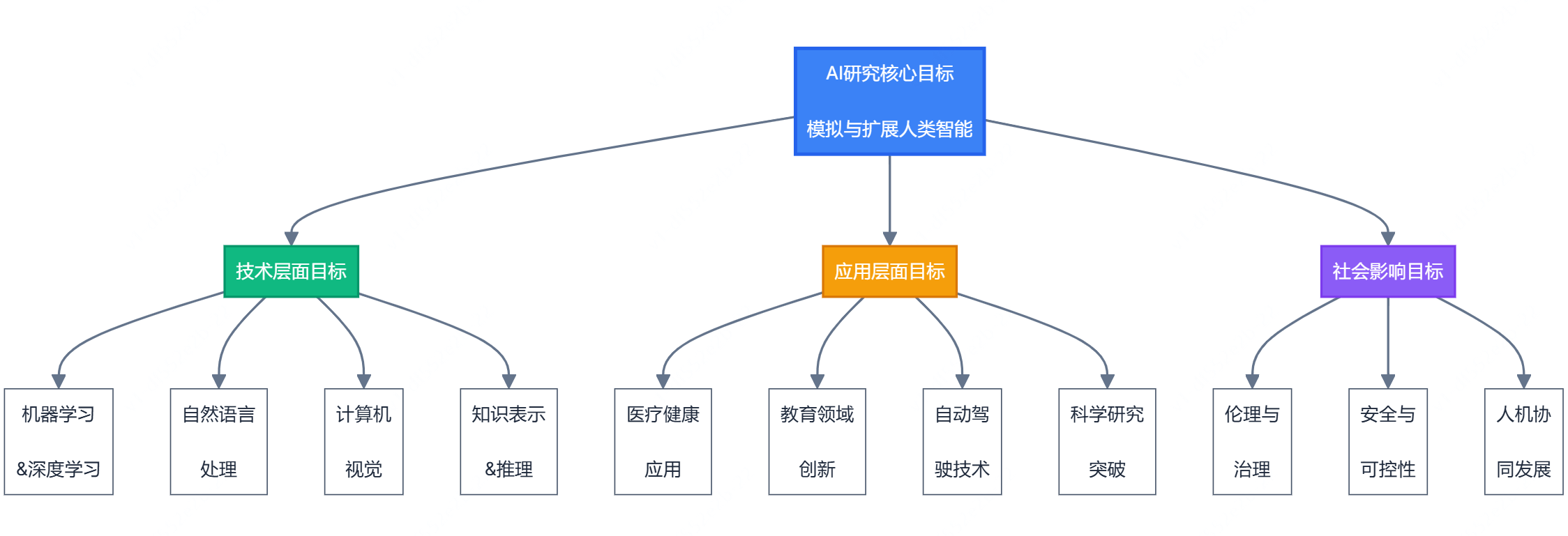
(AI research goal architecture)
Ultimate goal: achieving Artificial General Intelligence (AGI)
In the grand blueprint of artificial intelligence research, achievingArtificial General Intelligence(Artificial General Intelligence, AGI) is regarded as a long-term and ultimate goal. Unlike the current mainstream Narrow AI, AGI aims to create an intelligent system that can think, learn, and understand like a human and can flexibly apply the knowledge it has learned to a variety of different tasks.
Although the realization of AGI still faces enormous technical and theoretical challenges and is currently still in the stage of theoretical research and exploration, this goal drives basic research in the AI field to continue moving forward. Some leading AI research institutions, such as OpenAI and Google DeepMind, are committed to the research and development of AGI, hoping to create AI systems that can complete almost all cognitive tasks.
Technical level: enhancing machine intelligence and autonomy
The core pursuit of artificial intelligence research at the technical level is to continuously improve the intelligence level and autonomous action capabilities of machines. It is not merely about having machines execute preset programs, but about enabling them to learn from the environment, adapt to changes, and independently make complex decisions.
Core driving forces: machine learning and deep learning
Machine Learning(Machine Learning) andDeep Learning(Deep Learning) are the core engines of modern artificial intelligence development, and their common goal is to build systems that can autonomously learn from data and improve efficiency.
- Deep learning breakthroughs: revolutionary breakthroughs have been achieved in the field of pattern recognition, especially in image and speech recognition.
- Reinforcement learning: through a "trial-and-error" mechanism, it gives AI autonomous decision-making capabilities and has achieved remarkable results in fields such as games and robot control. In reinforcement learning, an agent influences the environment by executing actions and adjusts its policy (Policy) according to the rewards (Reward) or penalties (Penalty) fed back by the environment, in order to obtain the maximum cumulative reward over the long term.
- Generative AI: the goal is to enable machines to create entirely new and original content, such as text, images, music, and even code.
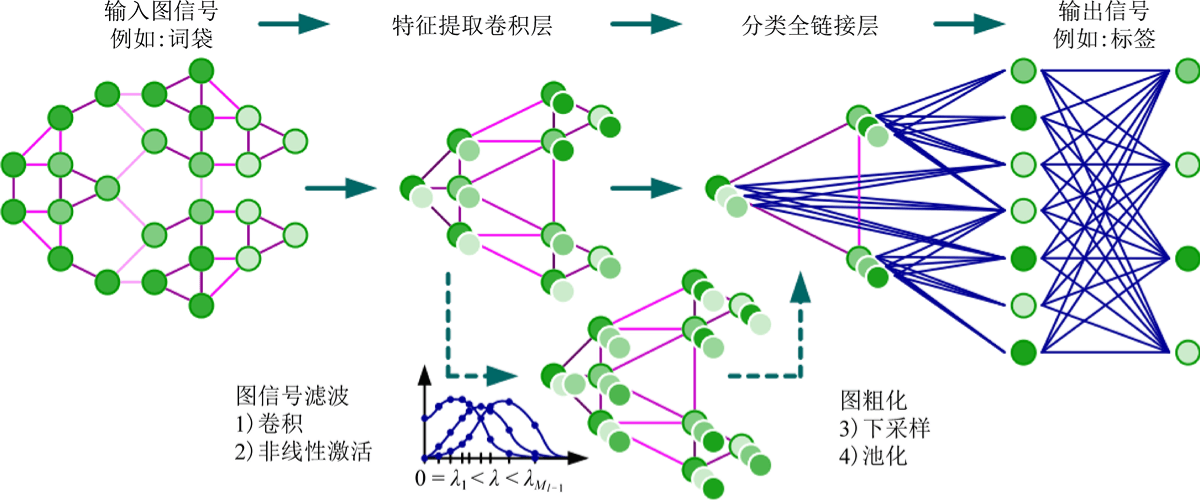
Key technical paths: enhancing perception, cognition, and action
Perception, cognition, and action constitute a complete intelligent closed loop: perception is the entry point for acquiring external information, cognition is the core for understanding and reasoning about information, and action is the final link that puts intelligent decisions into practice.
📌Perceptual recognition and knowledge computing
Improving perceptual recognition and knowledge computing capabilities is the foundation for enhancing AI intelligence. Through technologies such as computer vision and speech recognition, machines can accurately and efficiently extract meaningful information from multimodal data.
Knowledge computing focuses on how to transform perceived information into structured knowledge, involving the construction and reasoning of knowledge graphs to achieve deeper semantic understanding and logical reasoning.
📌 Cognitive Reasoning and Motion Execution
Enhancing cognitive reasoning and motion execution capabilities is key for AI to move from "perceptual intelligence" to "cognitive intelligence." This includes logical reasoning, probabilistic reasoning, and commonsense reasoning for handling uncertainty.
Motion execution capability is mainly related to robotics, with the goal of enabling robots to perform physical tasks accurately and flexibly, requiring advanced control algorithms and environmental perception capabilities.
📌 Optimizing the Human-Computer Interaction Experience
Optimizing the human-computer interaction experience is a key link in AI technology moving toward popularization and application. The development of natural language processing technology has greatly promoted progress in human-computer interaction.
Affective computing enables AI to recognize, interpret, and simulate human emotions and moods, providing more personalized services by analyzing users' facial expressions, tone of voice, and body language.
Frontier Exploration: The Integration of AI and Robotics Technology
The deep integration of AI and robotics technology is one of the most forward-looking exploration directions in the current artificial intelligence field, with the goal of creating intelligent agents that can truly autonomously perceive, decide, and act, and perform complex tasks in the physical world.
🚀 Integration Advantages
AI provides robots with a powerful "brain," capable of processing complex sensor data, understanding the environment, and performing high-level reasoning and planning
Robots provide AI with a "body" for direct interaction with the physical world. Precise motion control, task execution and operation.
📌 Adaptability to Dynamic Environments
Enhance robots' adaptability in dynamic and unstructured environments, and through reinforcement learning and meta-learning technologies, enable robots to quickly adapt to new tasks and environments
📌 Real-Time Decision-Making and Continuous Learning
Achieve millisecond-level decision response, while through continuous learning technology, enabling robots to continuously accumulate knowledge in the process of performing new tasks and avoid forgetting previously learned skills.
Application Level: Empowering All Industries
The rapid development of artificial intelligence technology is no longer merely theoretical exploration in laboratories; it has penetrated into all areas of the social economy and become a core driving force for industrial transformation and innovation. From healthcare, education, and finance to transportation, manufacturing, and entertainment, AI is empowering all industries with unprecedented depth and breadth.
🚗 Transformative Application: Autonomous Driving
Autonomous driving level classification:
- L2-L3: Assisted Driving, adaptive cruise control, lane keeping, etc.
- L4: High Autonomous Driving, fully autonomous in specific scenarios
- L5: Fully Autonomous Driving, autonomous driving in unrestricted scenarios
Autonomous driving is one of the most eye-catching and transformative applications of artificial intelligence technology, achieving autonomous navigation and control of vehicles by fully or partially replacing human drivers through AI systems. This application integrates multiple core technologies in the AI field, including computer vision, sensor fusion, decision planning, and control theory.
♦️ The Core Role of AI in Autonomous Driving
- Perception Layer:Recognize lane lines, traffic signs, pedestrians, and vehicles
- Decision layer:Plan safe and efficient driving paths
- Control layer:Convert into steering, acceleration, and braking commands
♦️Applications of generative AI in autonomous driving
- Generative AI plays an important role in autonomous driving simulation training and can generate large numbers of realistic and diverse virtual driving scenarios.
- Severe weather simulation
- Complex traffic scenarios
- Edge case testing
♦️Challenges and opportunities
Although autonomous driving technology has made considerable progress, it still faces enormous challenges in terms of safety and ethical decision-making. Safety is the most important consideration for autonomous driving systems, and any tiny mistake may lead to catastrophic consequences.
Ethical decision-making is another thorny issue. In unavoidable accident scenarios, AI systems need to make "moral choices," which involves complex judgments about ethics and values.
🏥Healthcare: improving diagnostic and treatment efficiency
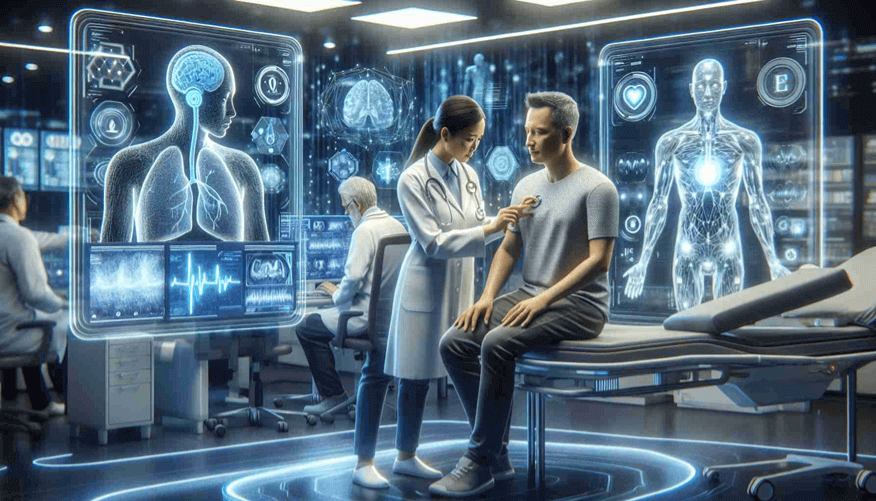
The application of artificial intelligence in the healthcare field is profoundly changing the way diseases are diagnosed, treated, and managed with unprecedented depth and breadth. AI technology can process and analyze massive amounts of medical data, including medical imaging, electronic health records, genomic data, and clinical trial data, helping doctors make more accurate and efficient decisions.
⭐AI-assisted medical imaging analysis
AI algorithms based on deep learning, especially convolutional neural networks (CNNs), perform excellently in image recognition tasks and can automatically identify subtle lesion features in medical images that are difficult for the human eye to detect.
For example, an AI system developed by DeepMind has surpassed human radiologists in accuracy when analyzing mammograms to detect breast cancer.
⭐Accelerating new drug development and personalized treatment
AI technology is completely changing the traditional model of new drug development, greatly shortening the development cycle and reducing development costs. By analyzing massive amounts of biomedical data, it can quickly screen out compounds with potential therapeutic effects.
In personalized medicine, AI can tailor the optimal treatment plan for each patient, achieving "one person, one face" precision treatment.
⭐Optimizing hospital management and processes
Through data analysis and predictive models, AI technology helps hospital managers make more scientific decisions, improve operational efficiency, reduce operating costs, and improve patients' medical experience.
This includes intelligent management methods such as predicting emergency room visit numbers, optimizing operating room scheduling, and precise drug inventory management.
🧑🏫Education: achieving personalized learning
Artificial intelligence is profoundly reshaping the face of education and providing unprecedented possibilities for achieving truly personalized learning. The traditional "one-size-fits-all" education model is difficult to adapt to each student's unique learning needs, pace, and interests.
AI is driving education to shift from a 'teacher-centered' to a 'student-centered' paradigm.
🧑🎓AI tutors and learning assistants
Based on natural language processing and machine learning technologies, they provide students with round-the-clock, one-on-one tutoring and support, guiding thinking rather than directly giving answers.
🪄Smart blackboards and immersive experiences
Integrating touch screens, projectors, and AI software, they turn traditional blackboards into interactive multimedia teaching platforms, and combine VR/AR technology to create immersive learning experiences.
💡Teaching management and instant feedback
Automatically grade homework and exam papers, analyze learning data to generate detailed reports, help teachers fully understand students' learning situations, and achieve precise teaching interventions.
📌Other Key Application Areas
🧑⚖️Fintech: Risk Assessment and Fraud Detection
AI can process massive multidimensional data and build more accurate and more dynamic risk assessment models. It quickly assesses credit risk in credit approval and identifies abnormal transaction patterns in real time in fraud detection.
🔬Scientific Research: AI for Science (AI4S)
Apply AI technology to basic scientific research to accelerate the process of scientific discovery. Promote major breakthroughs in fields such as physics, chemistry, materials science, and life sciences.
🏙️Smart Cities and Traffic Optimization
AI-based intelligent traffic signal control systems can dynamically adjust signal timing based on real-time traffic flow, predict future traffic flow, provide travelers with optimal route planning, and build a more efficient transportation system.
Social Impact Level: Opportunities and Challenges Coexist
As a disruptive technology, artificial intelligence has brought huge technological dividends and economic opportunities, and has also triggered a series of profound social, ethical, and governance challenges. How to maximize AI's positive role while effectively addressing its potential negative impacts has become a core issue of common concern for countries around the world.
Promote Social Development and a Leap in Productivity
- As the "leading goose" of the technological revolution and industrial transformation: The deep integration of AI with technologies such as 5G, the Internet of Things, big data, and blockchain is building a brand-new intelligent infrastructure and providing strong support for the digital transformation of all industries. For example, the combination of AI and the Internet of Things has given rise to applications such as smart homes, smart factories, and smart cities, achieving a seamless connection between the physical world and the digital world. The combination of AI and big data makes it possible to extract value from massive data, providing a foundation for precision marketing, scientific decision-making, and personalized services. The combination of AI and 5G provides reliable network guarantees for applications with extremely high real-time requirements, such as autonomous driving, telemedicine, and the industrial internet.
- Promote Industrial Optimization and Upgrading and High-Quality Development: Artificial intelligence is the core driving force for promoting industrial optimization and upgrading and achieving high-quality development. In the manufacturing sector, AI technology is widely used in intelligent production lines, quality inspection, equipment maintenance, and supply chain management, realizing the automation, flexibility, and intelligence of the production process, thereby improving product quality and production efficiency and reducing production costs. In the agricultural sector, AI can analyze meteorological data, soil data, and crop growth data to provide farmers with precise planting suggestions and achieve precise application of water, fertilizer, and pesticides, thereby improving agricultural output and resource utilization efficiency. In the service sector, AI applications are even more ubiquitous. From intelligent customer service and personalized recommendations to robo-advisors, AI is reshaping the formats and models of the service industry and improving the efficiency and quality of services.
- Improve the Overall Operational Efficiency of Society: The application of artificial intelligence can significantly improve the overall operational efficiency of society, optimize the allocation of public resources, and improve the quality of public services. In urban management, AI can, by analyzing traffic flow, energy consumption, and public safety data, achieve intelligent management of urban infrastructure and enhance the city's operational efficiency and emergency response capabilities. For example, intelligent transportation systems can reduce congestion, smart grids can optimize energy distribution, and intelligent security systems can improve the level of public safety. In the field of public services, for example, in government services, AI can provide services such as intelligent question answering and online approval, simplify administrative procedures, and improve the government's service efficiency and transparency. In environmental protection, AI can, by analyzing satellite remote sensing data and meteorological data, monitor air and water quality conditions in real time and provide a scientific basis for environmental governance.
Pathways to Productivity Leap:
- Direct Effects: Automation improves production efficiency; intelligence improves product quality; precision reduces operating costs
- Indirect Effects: Giving rise to emerging industries and business forms; creating new employment opportunities; driving business model innovation
Addressing Ethical Challenges and Building a Governance Framework
With the rapid development and widespread application of artificial intelligence technology, the ethical challenges it brings have become increasingly prominent and have become a focal point of common concern for global society. These challenges cover multiple aspects such as data privacy, algorithmic fairness, attribution of responsibility, and employment shocks, and pose severe tests to existing social norms and laws and regulations.
United Nations AI Ethics Principles: The United Nations Educational, Scientific and Cultural Organization (UNESCO) adopted the Recommendation on the Ethics of Artificial Intelligence in 2021, proposing a series of core ethical principles:
- Principle of Do No Harm: Ensure the safety and well-being of humans, the environment, and ecosystems
- Fairness and Non-discrimination: Avoid bias and discrimination in the decision-making process
- Transparency and Explainability: The decision-making process is transparent, and users have the right to understand the decision-making mechanism
- Principle of Accountability: Clarify the responsible entities and scope of responsibility when harm occurs
🔏Privacy Protection and Data Governance
Privacy protection is the cornerstone of AI ethics. The reliance of AI systems on massive amounts of personal data has sharply increased the risk of data privacy breaches. Strict data protection regulations must be established to ensure the lawful and compliant use of personal data.
Data governance involves data quality, security, sharing, and usage standards. High-quality, unbiased data is a prerequisite for training fair and reliable AI models.
🧍Human Oversight and Algorithmic Control
Human oversight is the last line of defense for ensuring that AI systems are safe and controllable. For high-risk AI applications, such as autonomous driving and medical diagnosis, it must be ensured that humans can intervene and take control at critical moments.
To avoid completely handing humanity's fate over to the "black box" of algorithms, it is necessary to establish effective human-machine collaboration mechanisms and maintain ultimate human control over key decisions.
🌐Building a Global Governance System
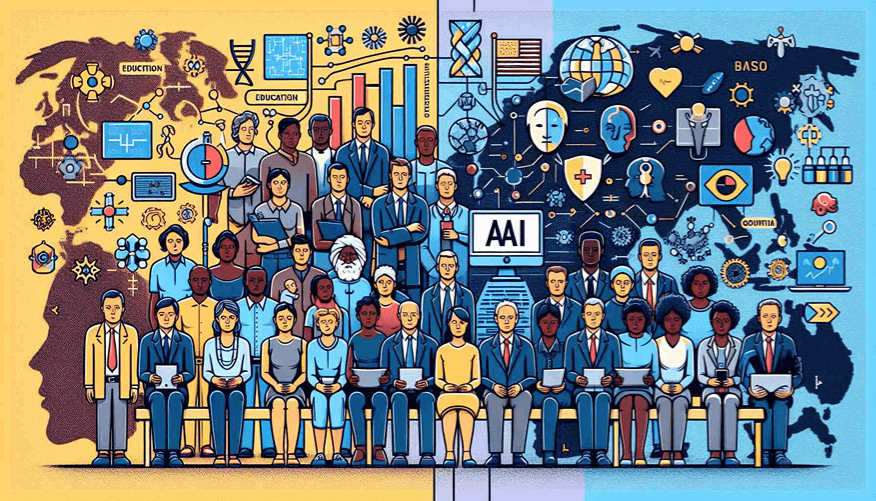
The governance of artificial intelligence is a complex global issue and requires the establishment of an inclusive, diverse, and multi-stakeholder global governance system. Strengthen international cooperation and promote dialogue and collaboration among governments, international organizations, and technology companies.
The governance system should be inclusive, fully considering the cultural backgrounds, stages of development, and values of different countries and regions, and ensuring that decisions can reflect the overall interests and concerns of society.
Future Outlook: Toward an Intelligent Era of Human-Machine Collaboration
The development of artificial intelligence will place greater emphasis on collaboration with humans, moving toward a new era of human-machine symbiosis and intelligent integration.
In this era, AI will no longer merely be a tool to replace human labor, but will become an intelligent partner that enhances human capabilities and co-creates value with humans. Technological development will place greater emphasis on explainability, fairness, and security, striving to build more trustworthy and reliable AI systems.
📖 Technology Trend: Small Data Learning
Shifting from big data to small data learning, developing algorithms that can learn under small-sample and weakly supervised conditions, improving AI's learning efficiency and generalization ability.
🔍 Explainable AI
Explainable AI(XAI) is rising, addressing AI's "black box" problem, enhancing decision-making transparency and trustworthiness, and making AI's decision-making process clearer to humans.
🤝 Human-AI Alignment
The importance of Human-AI Alignment is increasingly prominent, ensuring that AI goals and behaviors remain consistent with human values, intentions, and long-term interests.
Characteristics of the Future Intelligent Society
Technology Development Directions
- Enhanced Robustness:Improve the security and attack resistance of AI systems
- Explainability:Establish transparent and understandable decision-making mechanisms
- Continuous Learning:Achieve lifelong learning and knowledge accumulation
- Human-Machine Collaboration:Build efficient human-machine collaborative work models
Social Adaptation Mechanisms
- Lifelong Learning:Cultivate core competencies for adapting to the AI era
- Education Reform:Focus on cultivating critical thinking and creativity
- Vocational Training:Establish a comprehensive skill transition system
- AI Literacy:Enhance the public's rational understanding of AI
The ultimate goal is to build an intelligent society of harmonious human-machine symbiosis and mutual promotion, making AI technology truly a powerful driving force for advancing human social progress and achieving sustainable development.
The path to realizing the goals of artificial intelligence research is a complex and systematic undertaking that requires the coordinated advancement of technological breakthroughs, application innovation, and social governance. Only under the premise of ensuring safety, reliability, and controllability can AI technology truly unleash its enormous potential and create a better future for humanity.