What is FastGPT
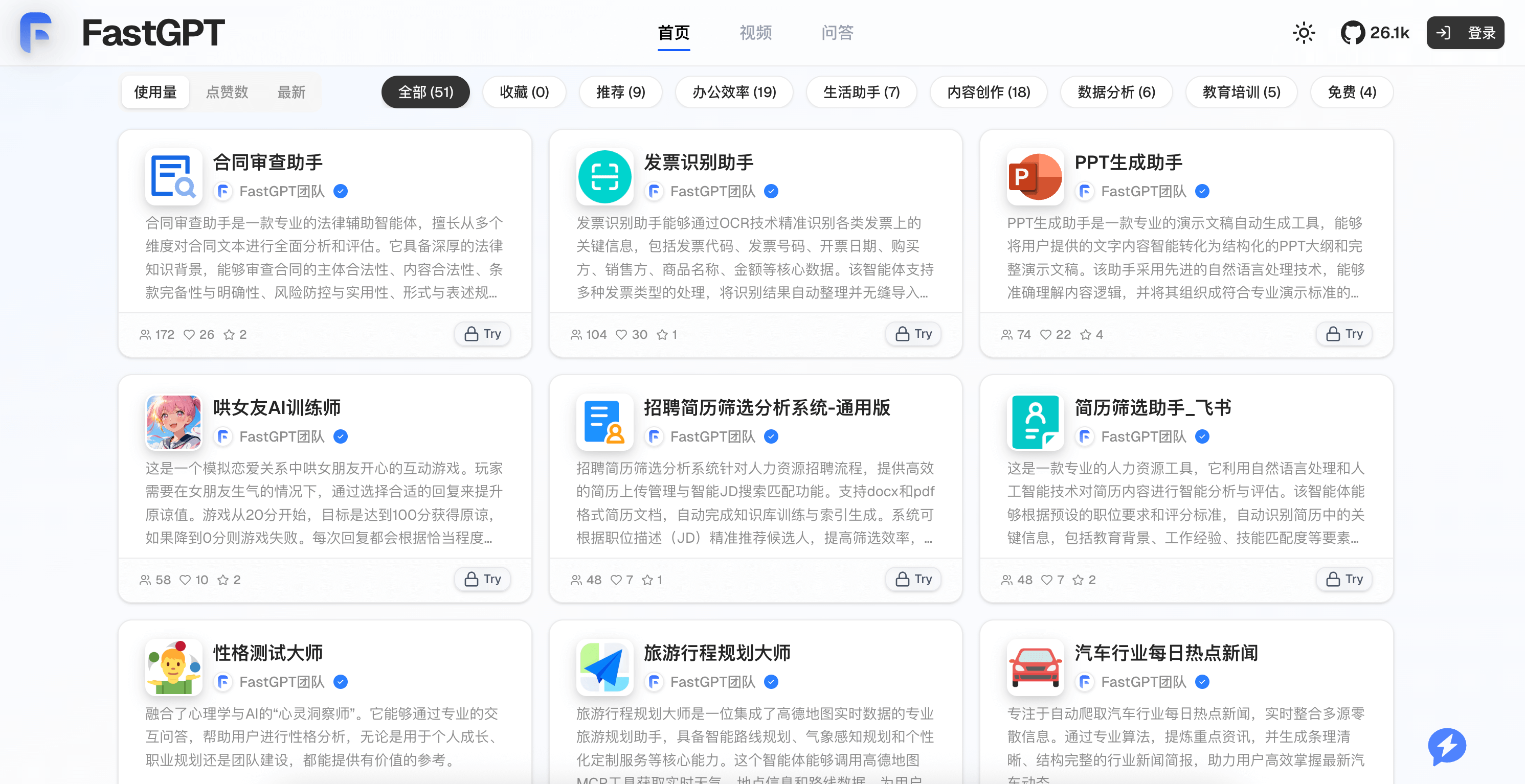
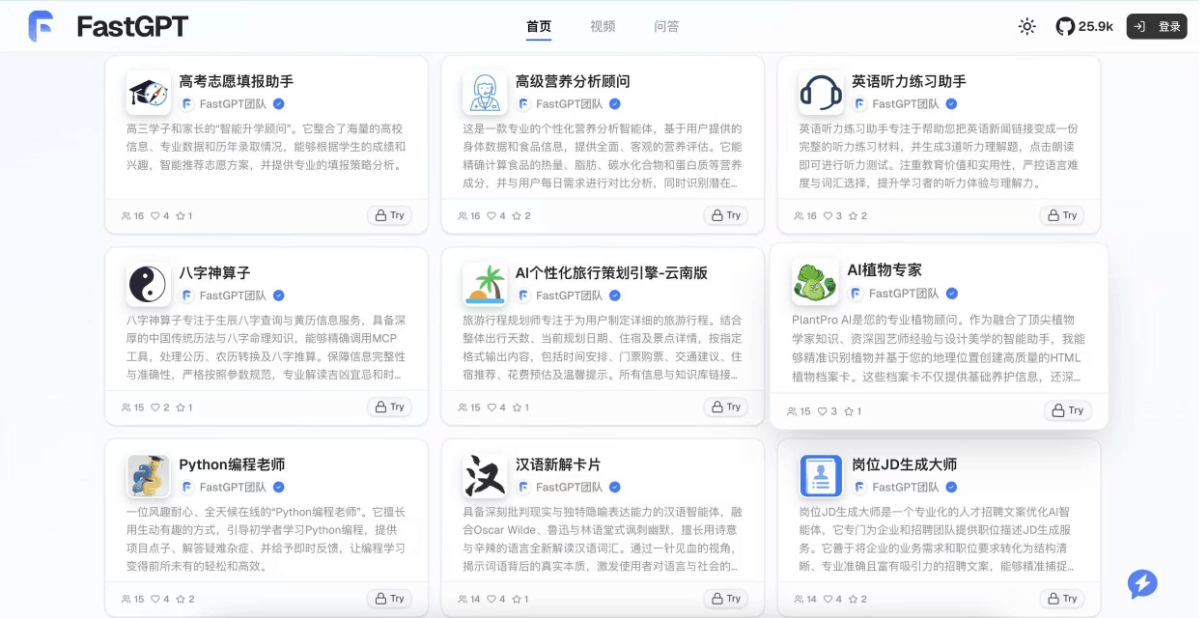
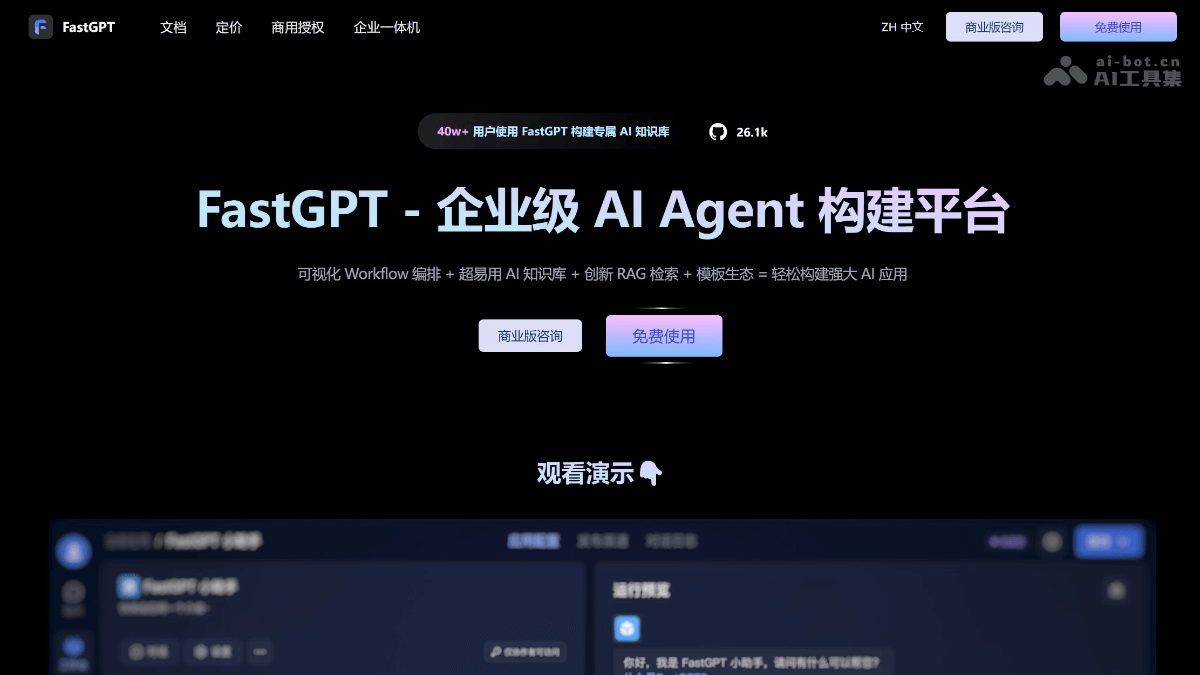
FastGPT is a new-generation enterprise-grade AI Agent building platform that provides visual Workflow orchestration capabilities and an extremely easy-to-use AI knowledge base. With innovative RAG retrieval technology and a powerful template ecosystem, it helps you easily, like building with blocks,build powerful AI applications. It is mainly aimed at enterprise administrative HR, operations customer service, and development engineers, solving frontline work problems.
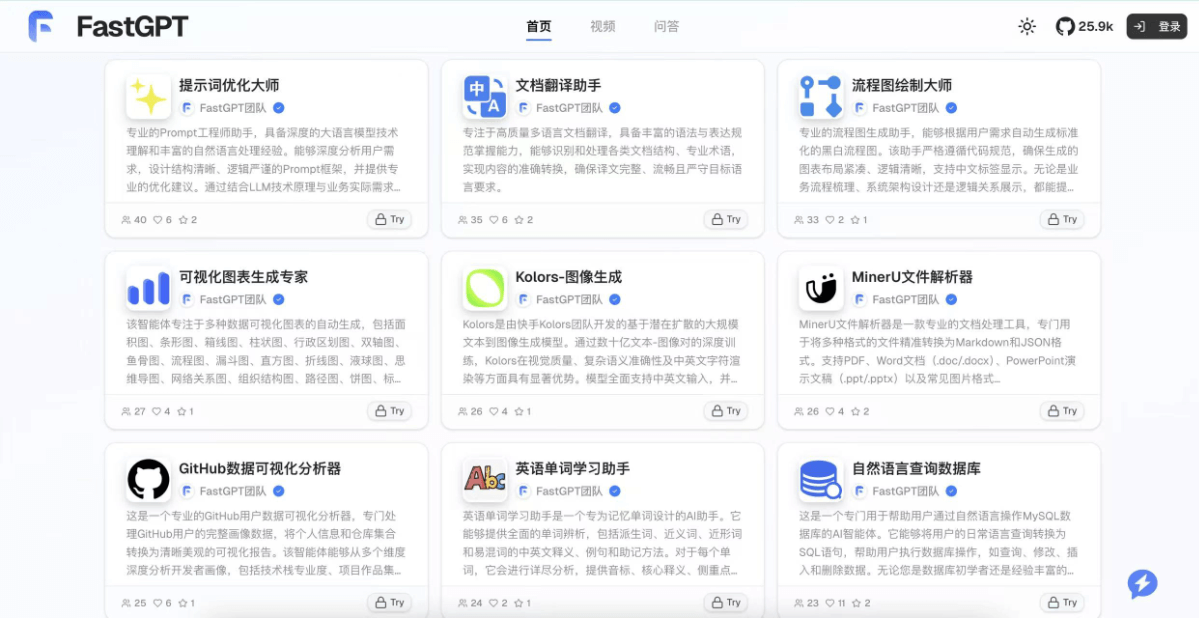
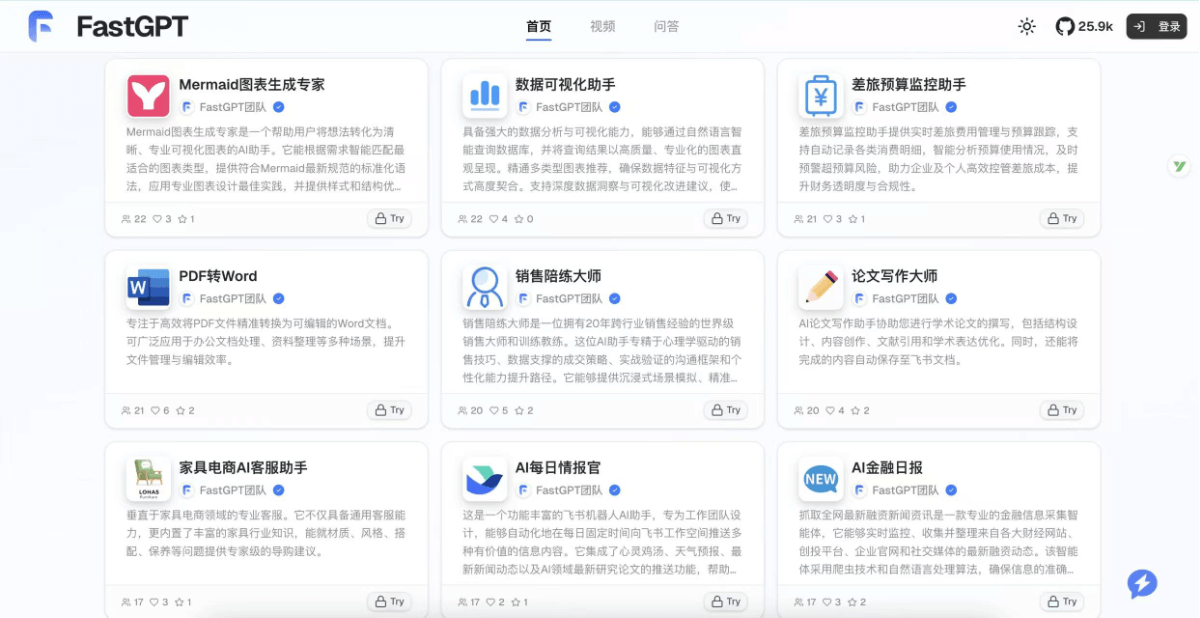
FastGPT has rich expansion capabilities and a toolbox, making it easy to implement automated workflows such as AI intelligent customer service, automated financial report processes, automatic e-commerce order processing, intelligent inventory management, batch generation of marketing copy, internal knowledge base Q&A, and more, significantly improving enterprise organizational efficiency.
Main features of FastGPT
- Visual workflow building: Supports users in building complex data flow and task automation processes without writing code by dragging nodes and connecting lines.
- Diverse application ecosystem integration: Seamlessly connects to multiple mainstream domestic and international applications and services (such as Feishu, DingTalk, WeCom, and various databases), breaking down system silos and enabling data interoperability.
- Rich preset AI components: Provides out-of-the-box AI capability nodes (such as AI chat, knowledge base search, question classification, and document parsing), allowing users to easily embed intelligent capabilities into business processes.
- Enterprise knowledge base empowerment: Supports building data sources such as internal enterprise documents, databases, and APIs into a knowledge base, providing accurate and reliable information sources for AI applications and improving decision quality.
- Access to mainstream AI models: Supports mainstream models such as ChatGPT, Claude, DeepSeek, and ERNIE Bot, allowing users to experience cutting-edge AI capabilities.
- Intent recognition within conversations: Supports Chatbot selecting workflows based on different intents, user-system interaction during conversations, process confirmation, and intent recognition fallback.
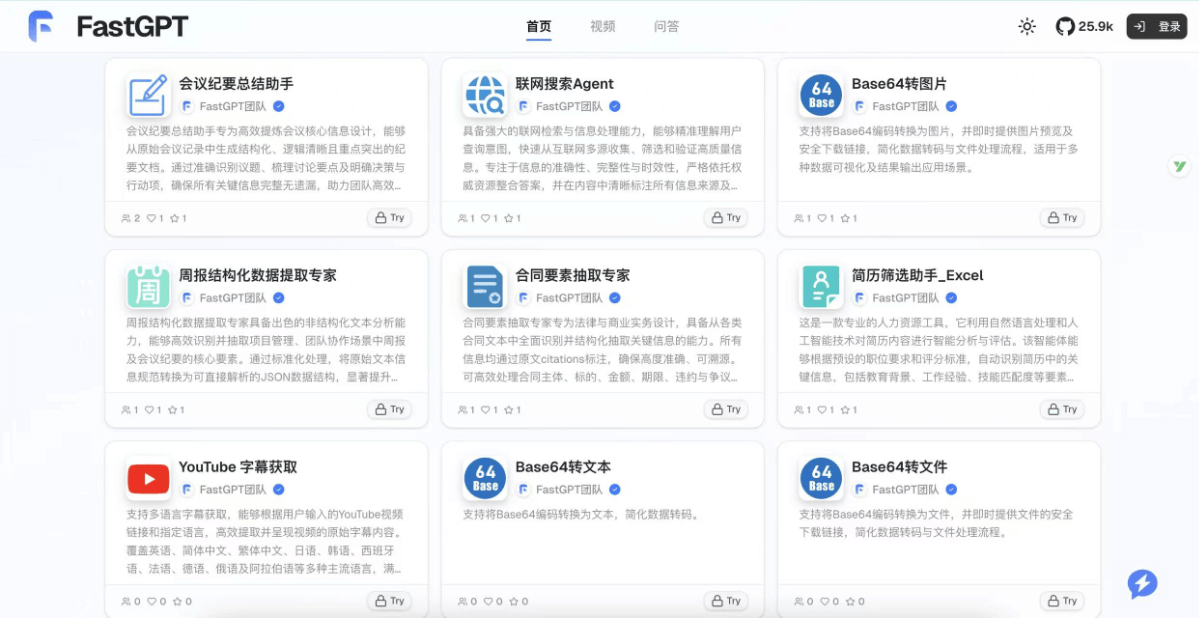
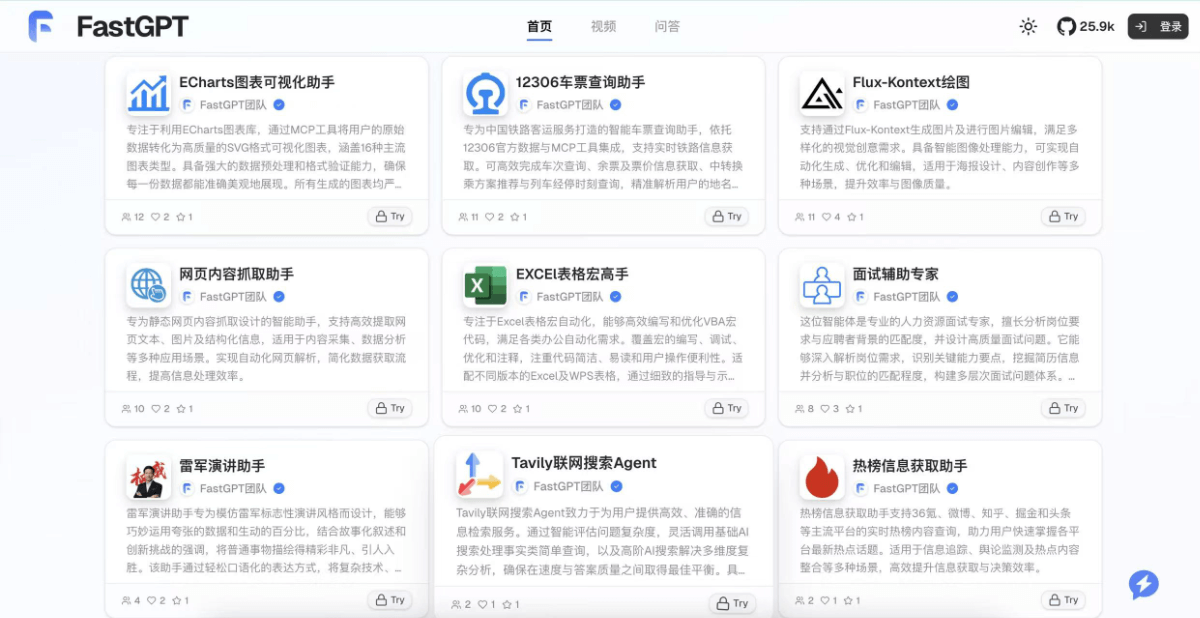
- Automatic content capture: Provides one-stop content processing capabilities covering information collection, format conversion, and hot topic tracking, including web page content scraping, Markdown-to-file conversion, hot list data retrieval, text content extraction, and Base64 encoding and decoding.
- Powerful toolbox and extensions: Built-in development tools such as code execution, HTTP requests, conditionals, and batch execution, and supports extending custom capabilities through protocols such as MCP to meet complex business logic requirements.
- Team collaboration and asset management: Provides team spaces, shared workflows, and unified asset (knowledge base, variables) management functions, supporting enterprise-grade collaboration and automated operations.
How to use FastGPT
- Visit the platform: Visit the FastGPT official website fastgpt.cn , register and log in, and enter the work backend.
- Import a knowledge base: Click "Knowledge Base" and import the prepared electronic documents.
- Create a workflow: Click "Workspace", create a new workflow, and enter the workflow name.
- Edit the workflow: On the workflow canvas, add a "Knowledge Base Search" node and select and connect the imported knowledge base. Add an "AI Chat" node, connect it to the knowledge base node, and configure the chat parameters.
- Run preview: Click Run to test conversations with your knowledge base Q&A bot.
- Publish: Workflows can be published through no-login pages, APIs, Feishu bots, DingTalk bots, WeChat official accounts, etc.
FastGPT application scenarios
- Intelligent enterprise operations and collaboration:Internal knowledge hub, administrative and IT automation, intelligent meeting assistant.
- Data intelligence and business insights:AI search and information integration, voice of customer insights, intelligent data governance, dynamic reports and dashboards.
- Marketing and sales automation:Intelligent private traffic operations, sales enablement, advertising and content distribution.
- Intelligent content creation and operations:In-depth long-form writing, multimedia content generation, cross-platform design assistance, viral topic selection and planning.
- Customer service scenarios: Intelligent Q&A and precise routing, script assistance and knowledge accumulation, customer sentiment analysis and early warning.
- Education and training scenarios: Personalized learning and adaptive tutoring, intelligent lesson preparation and courseware generation, learning effectiveness evaluation and feedback.
- E-commerce scenarios: Data-driven supply chain optimization, omnichannel customer service and user insights, refined private traffic operations.