
There are many AI tools now, but most still require people to keep watching them constantly. You have to open the tool, enter questions, add context, watch results, and keep following up. Every time the task changes or the project changes, a lot of context has to be explained all over again.
In a real team, it gets even more of a headache. GitHub Issues need triage, CI failures need investigation, dependency upgrades need follow-up, user feedback needs organizing, and when alerts come in, you still have to judge whether they are false positives. This work is not actually hard, it is just troublesome and draining.
I have been looking for a product that can solve this problem.
Recently Alibaba launchedQoderWakethis digital employee product. Its concept is 24/7 digital employees. Each employee has a role, identity, memory, skills, and permission boundaries. They wake up on their own when it is time to work, report to you after finishing, and ask for instructions first when encountering high-risk operations.
Well then, Sister K immediately arranged common workflows from real teams to try it out.
01. How to use it? Very simple
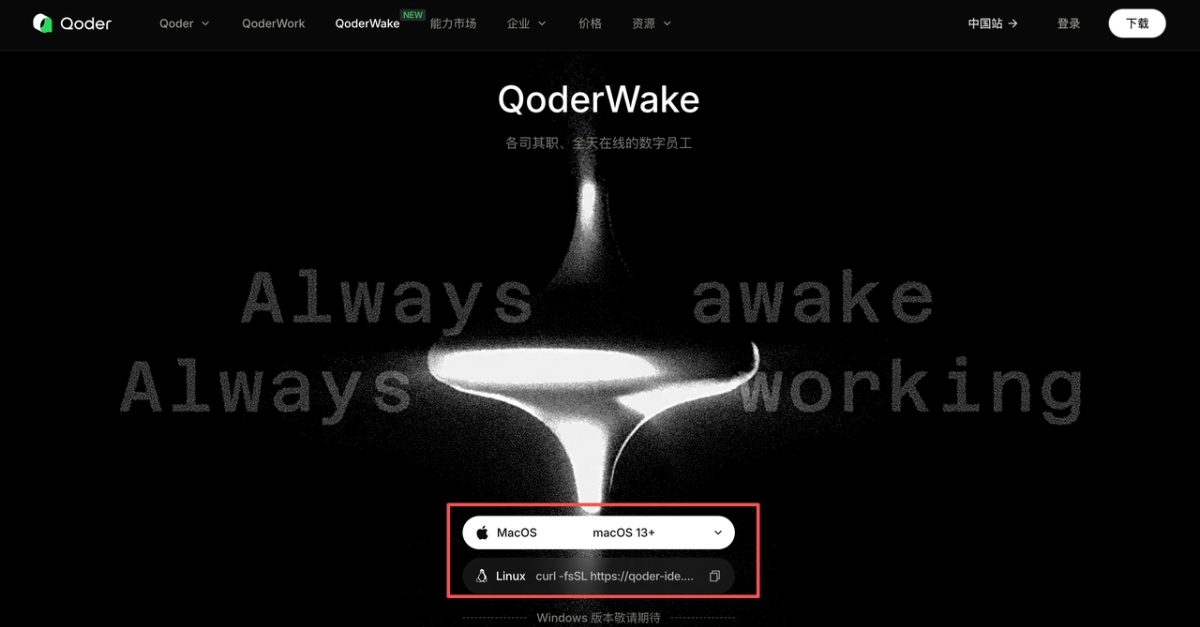
First go to the official website to download it. Currently only Apple systems are supported. The Windows version will be available soon, so you can look forward to it.
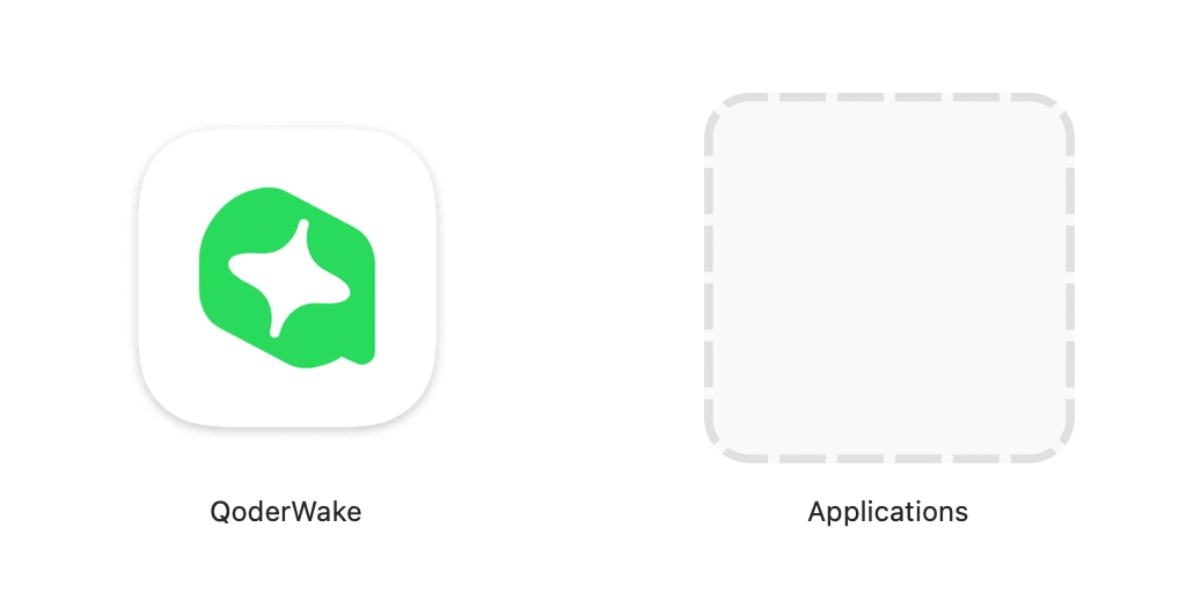
The installation process is the same as other apps.
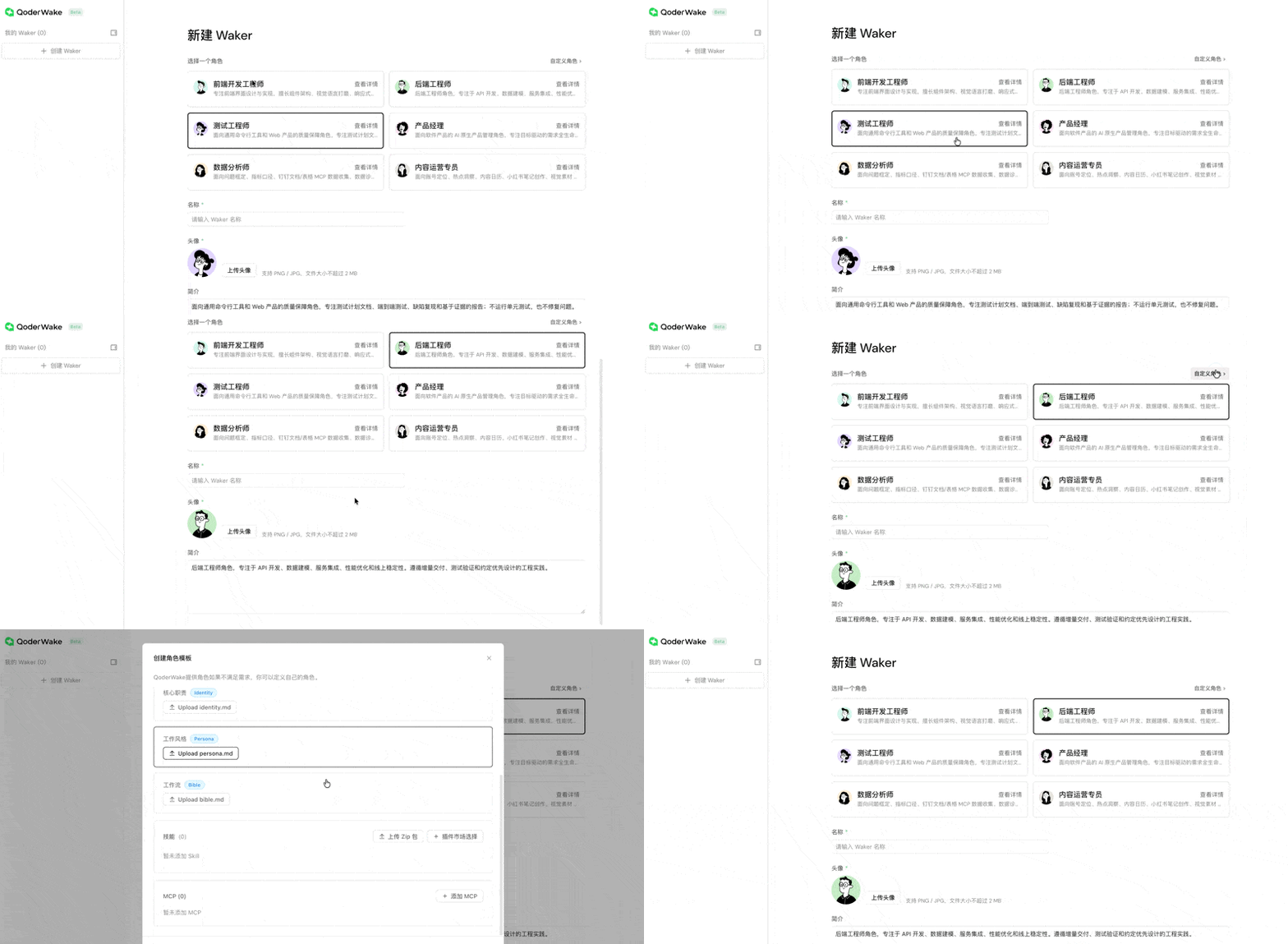
After installation, the home page looks like this. It comes preset with 6 digital employees: frontend, backend, testing, product, data analyst, and content operations. If you feel that is not enough, you can also customize your own exclusive digital employees.
02. Hands-on testing
Case 1: GitHub Issue triage
I first created a backend engineer employee, bound it to a GitHub repository, and set up an event-triggered work task, so that whenever a new Issue appears in the repository, it enters the triage process.
The task prompt is like this:
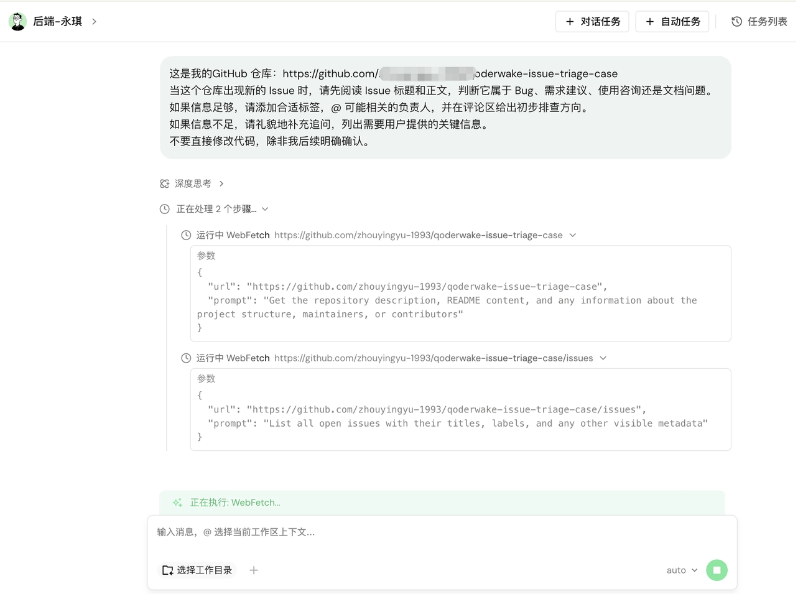
My expected result is that Yongqi can read the new Issue by itself, determine the type of problem, apply labels, and leave the first effective comment. If it is a Bug, it should point out the modules that may be affected and suggest logs or files to check first. If there is not enough information, it must ask follow-up questions first. Do not guess blindly.
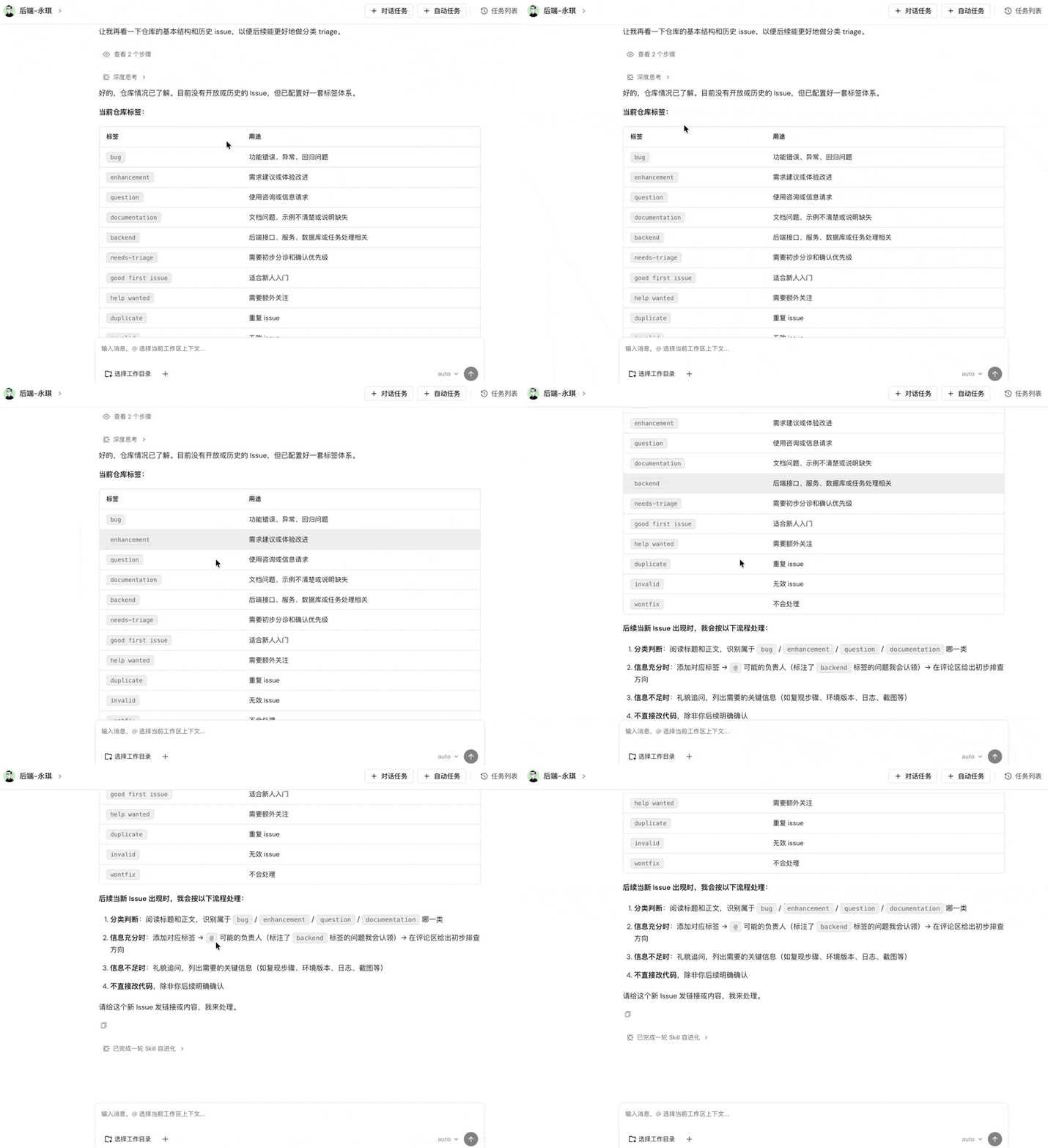
I created a new Bug Issue. A few minutes later, this backend engineer employee woke up on its own and started working. It first read the body, then determined that this was a problem possibly involving interface boundary conditions, then added labels such as bug, backend, and needs-triage. It also performed a preliminary investigation and asked follow-up questions, and finally summarized the key investigation points.
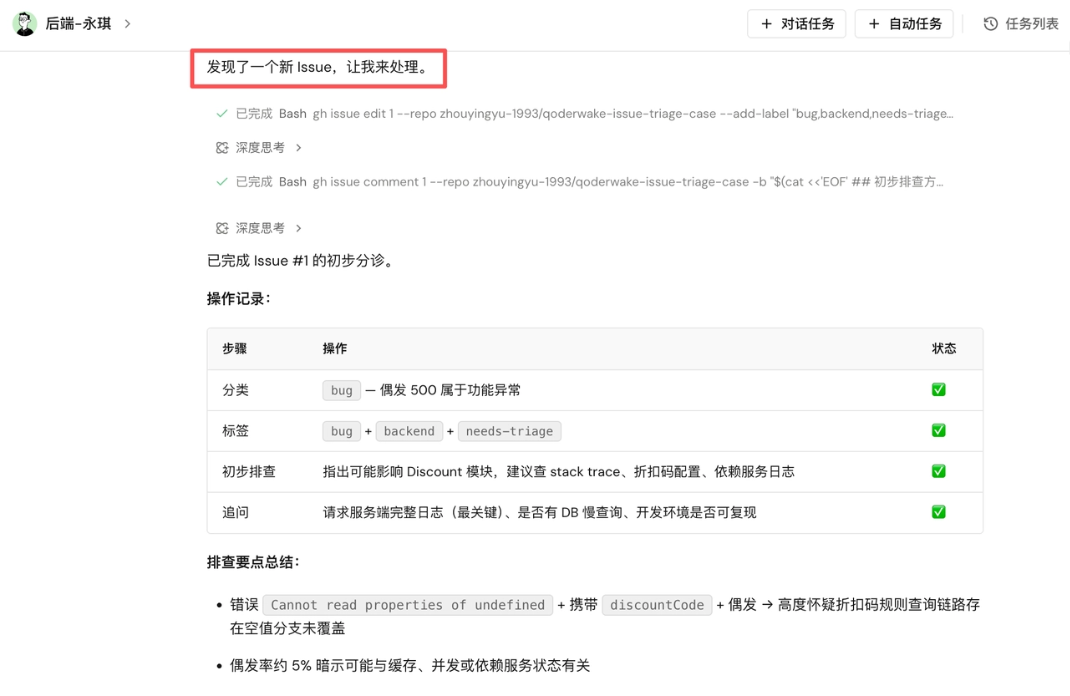
This case actually reflects QoderWake's "production readiness." Issue triage is not especially difficult, but it easily piles up. The digital employee first classifies, labels, and leaves direction, so the person responsible later does not have to start reading the queue from zero.
In Issue triage, I basically did not need to manage Yongqi's work. I set up result syncing in the DingTalk group, and after Yongqi finished, it sent it directly to me. It was indeed very convenient.
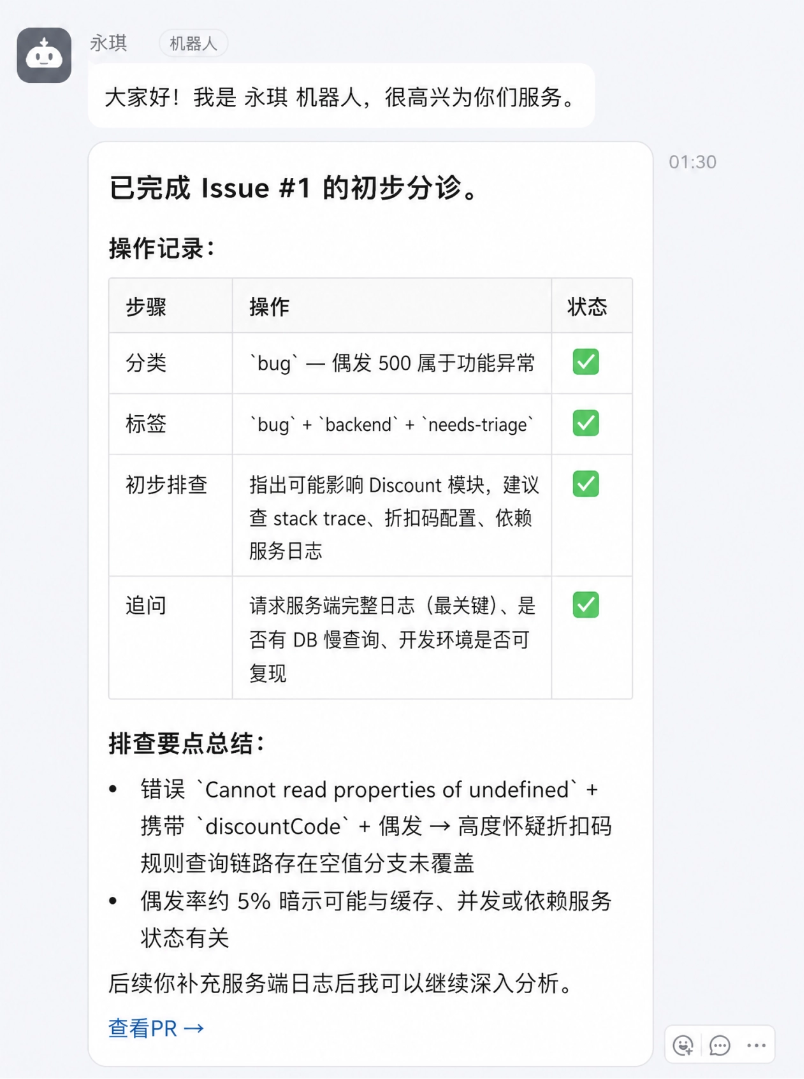
Personally, I feel QoderWake is very suitable for taking over the first layer of triage. It can already move Issues from "nobody looks at them" to "someone can pick them up."
Case 2: CI failure diagnosis
In the second scenario, I set up a post-pipeline-failure work task for the test engineer employee. It does not need to merge code directly; it must first explain the cause of the failure clearly.
The task prompt is like this:
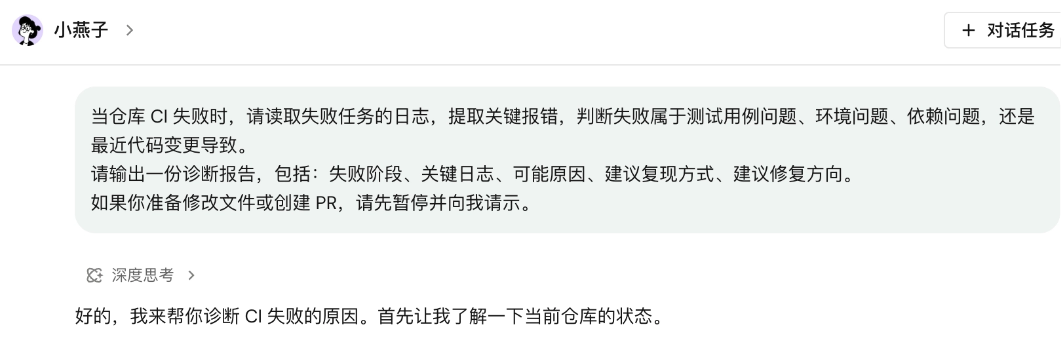
What I hope is that after CI fails, what the team sees is not just a wall of red lights, but a readable diagnostic report. The report should include the failure location, key errors, possible causes, and suggested next steps.
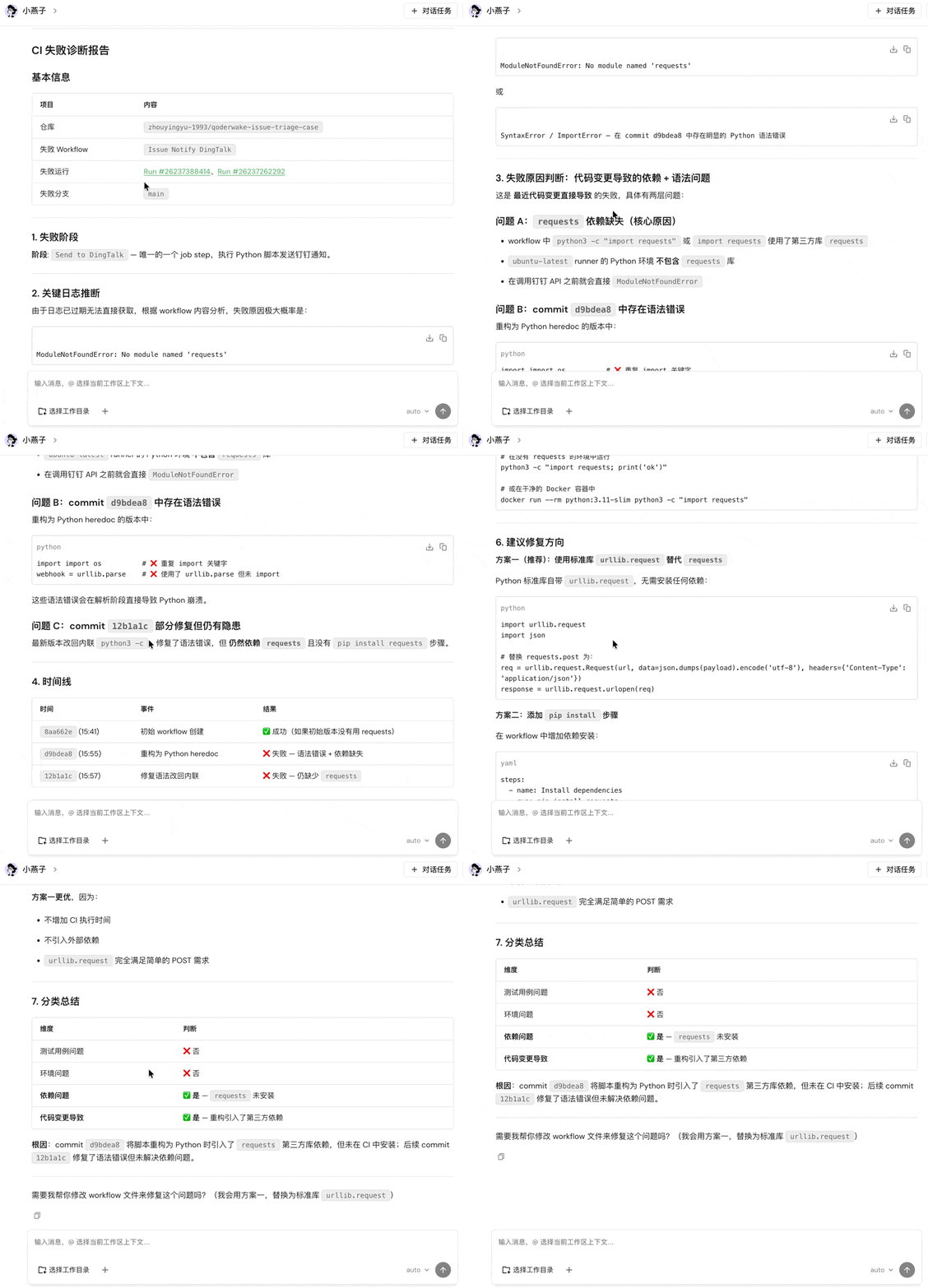
It's still quite impressive—all of these were implemented. Moreover, the test engineer, Xiaoyanzi, will first locate the failed job, then extract the key logs, rather than foolishly pasting the entire log as-is. Xiaoyanzi will link the error to recent changes and determine whether it's an unstable test case, an environment change, a dependency issue, or a problem introduced by a certain commit.
The report structure is also very clear: it first states at which stage the failure occurred, then lists the key errors, and then gives the most likely causes and suggested reproduction methods.
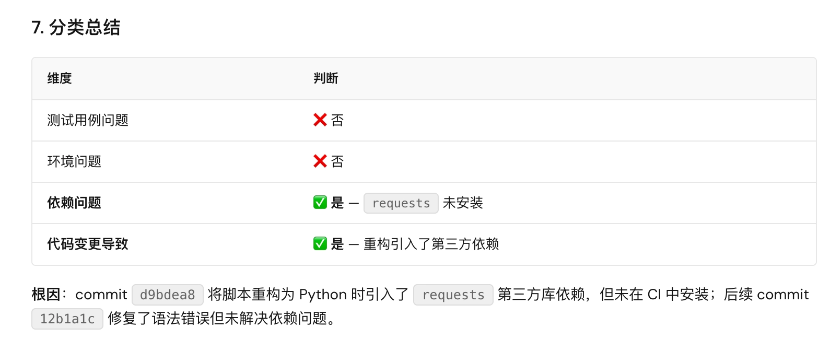
This final categorized summary and root cause is so thoughtful—it's perfect for covering the time when the team isn't at their computers.
Many CI failures are actually very simple problems—it's just that no one is willing to dig through the logs right away.
If a digital employee first turns the logs into a structured report, it can save a lot of fragmented time before the morning meeting.
Case3: Dependency Upgrades and Security Inspections
For the third scenario, I set up a dependency inspection task that runs every Monday morning, and assigned it to a backend engineer employee.
Prompt:
Check the current project dependencies every Monday morning. Please scan the dependency manifest, identify upgradable versions and potential security risks.
Prioritize minor and patch version upgrades, and run tests to verify compatibility.
For major version upgrades, upgrades involving security policy changes, or upgrades that may affect production behavior, please provide a risk explanation first and wait for my confirmation.
Finally, please output the upgrade list, test results, risk assessment, and recommended next steps.
Yonghe Robot first gave a project overview, listing the files, their purposes, and external dependencies very clearly.
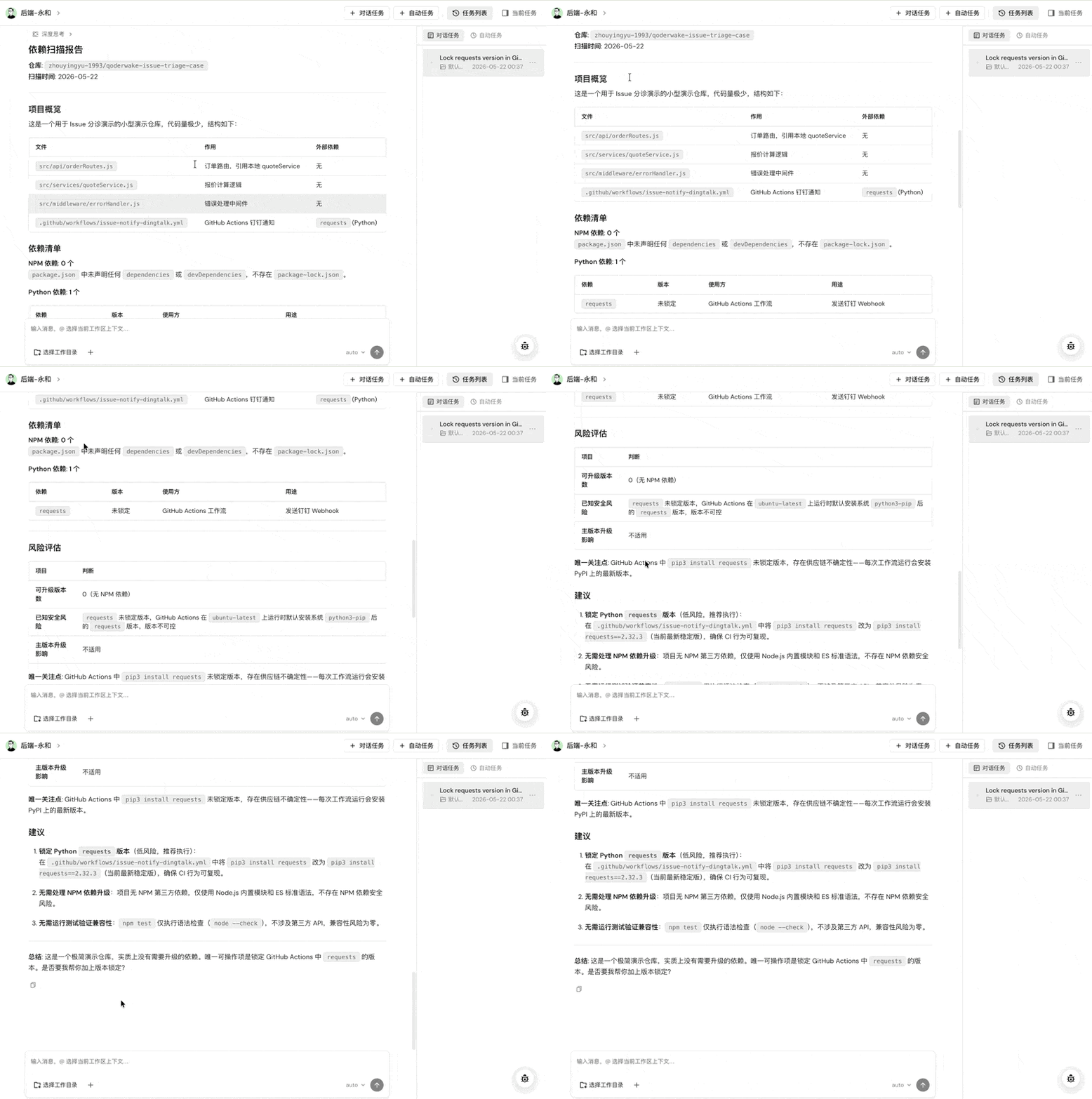
Then it helped me conduct a risk assessment and very directly pointed out the “only concern.”
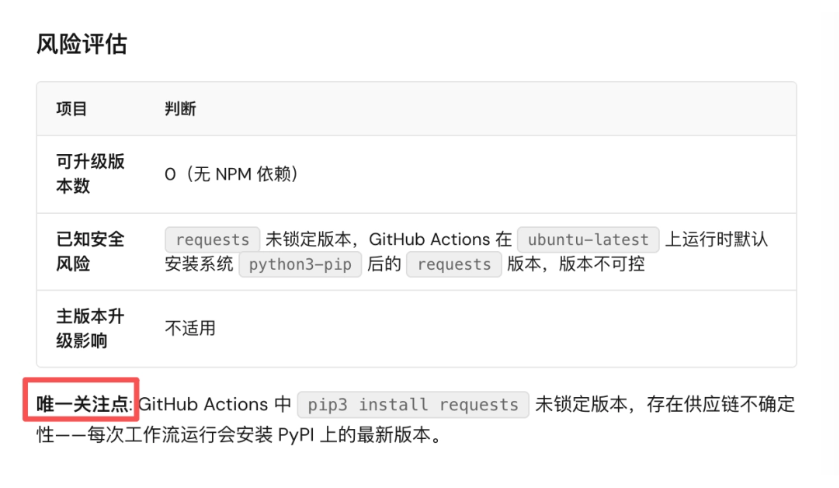
Finally, it gave very clear recommendations and a summary.
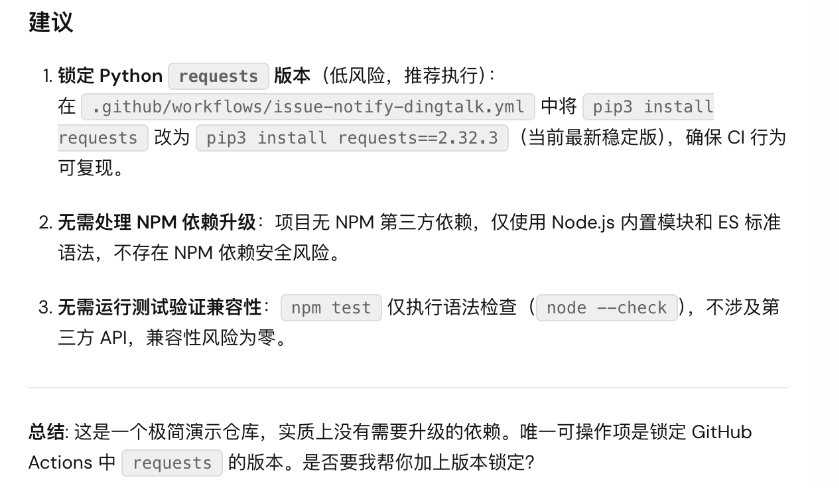
What I mainly wanted to see in this case was whether it would act recklessly, and the result was exactly as expected.
QoderWake's permission red lines and approval mechanism provide a trust boundary—it will act, but it won't act recklessly.。
Case4: Product Organizing User Feedback
For the fourth scenario, I didn't continue with R&D tasks. Instead, I switched to a product manager employee, Sister K, and gave her a batch of user feedback to organize into requirements material.
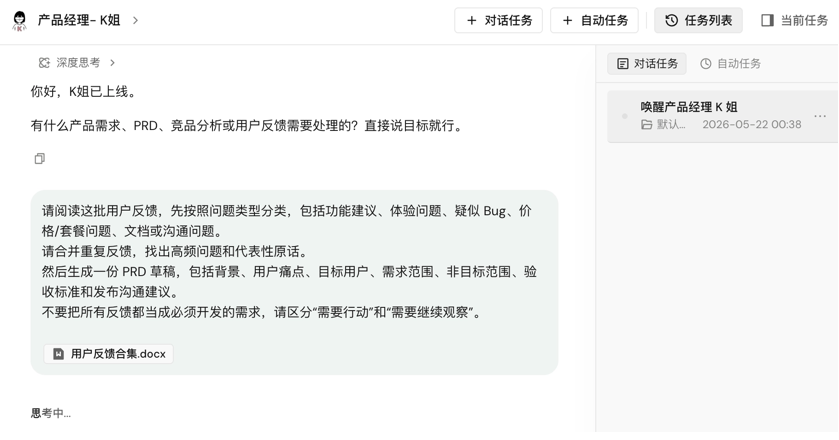
Sister K organized the messy feedback into structured material, and also provided high-frequency issues, requirement priorities, and a PRD draft, greatly reducing the cost of organization and summarization.
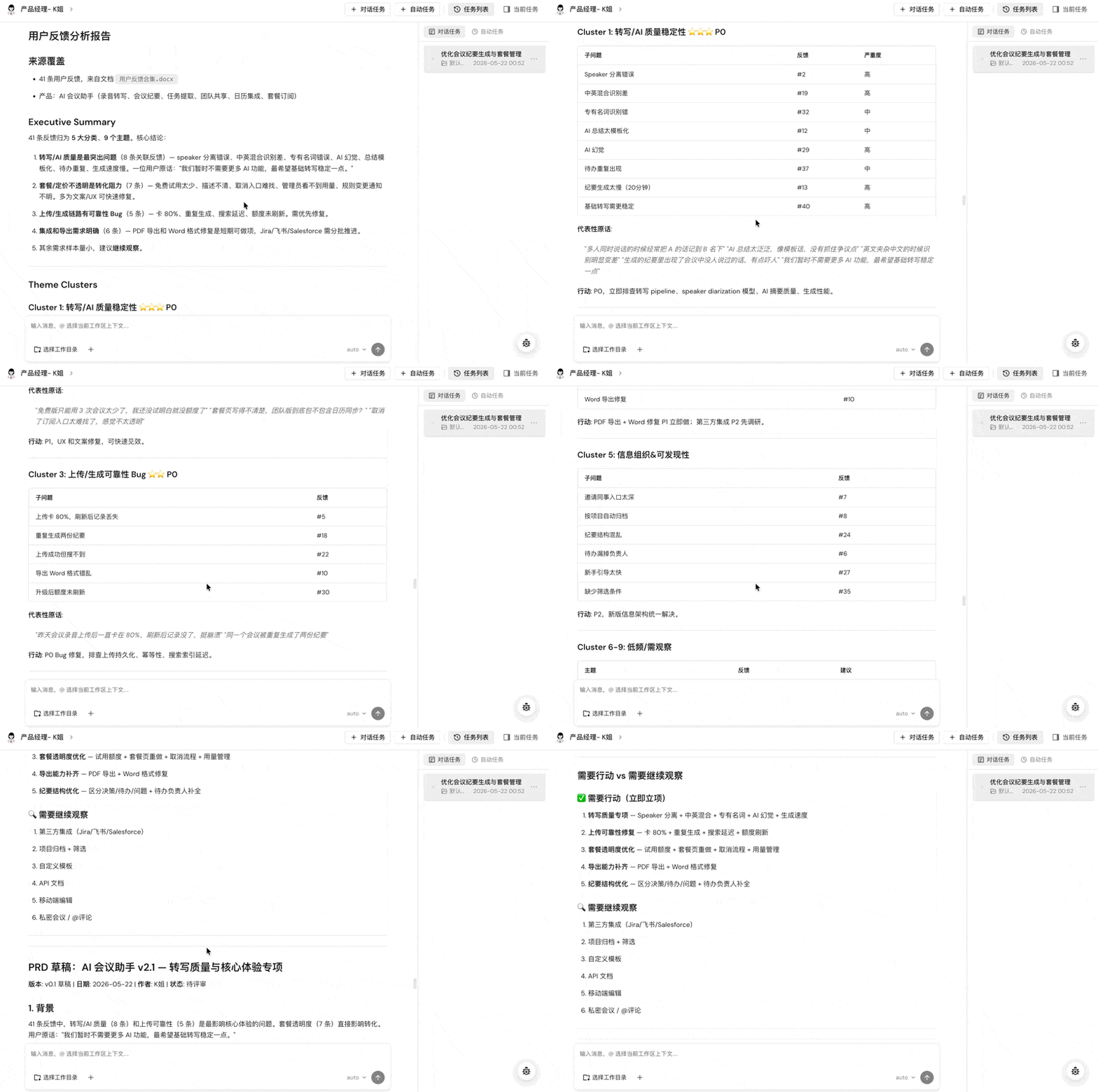
It fully met expectations. The output of this case looks very much like preparation material for a product meeting. Sister K first categorizes the feedback, then merges duplicate expressions, and finally distills several high-frequency issues.
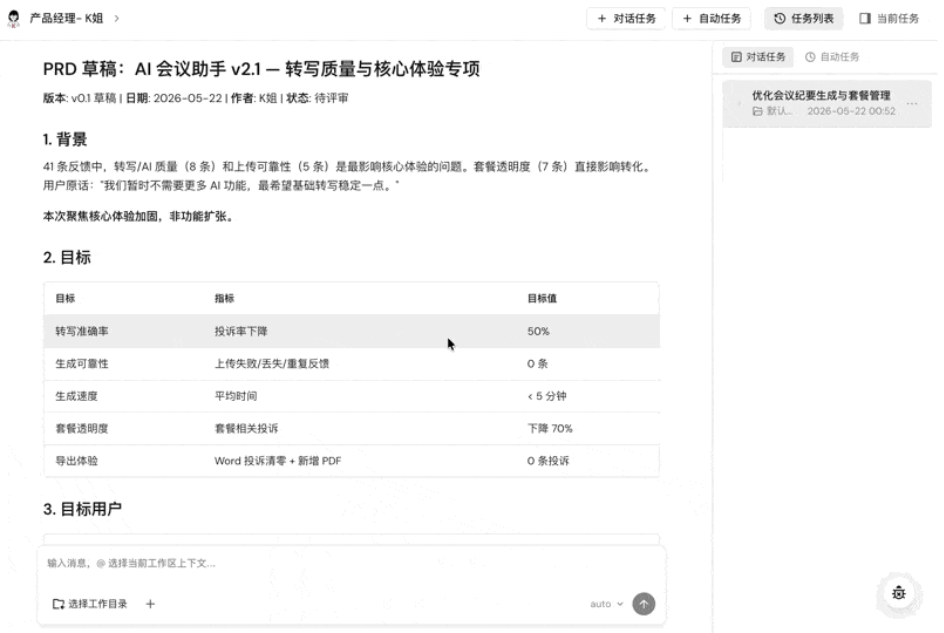
QoderWake is very suitable as a product manager's front-end organizing colleague.
Turning dozens of pieces of messy feedback into discussable material is itself a time-consuming but necessary task. If a digital employee does this step first, people can save their time for judgment and trade-offs.
Case5: Frontend Page Optimization
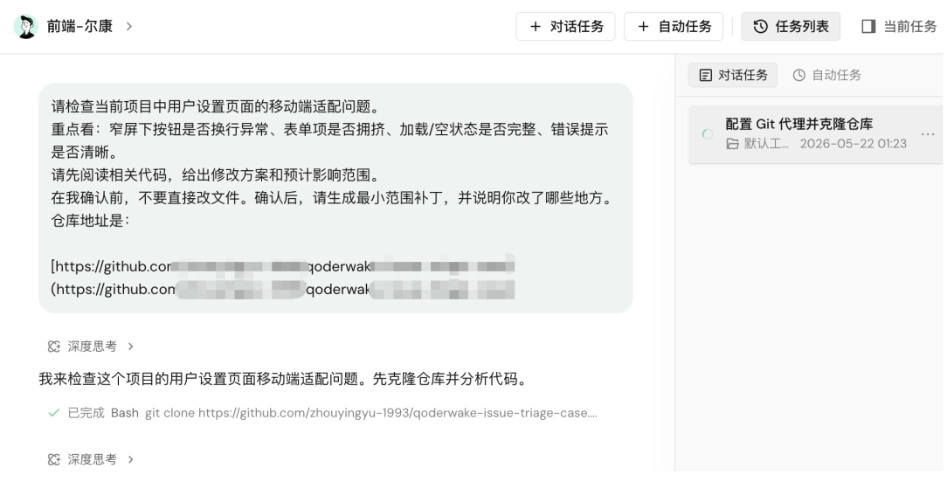
For the last scenario, I used a conversational task to have a frontend engineer employee handle a page adaptation issue.
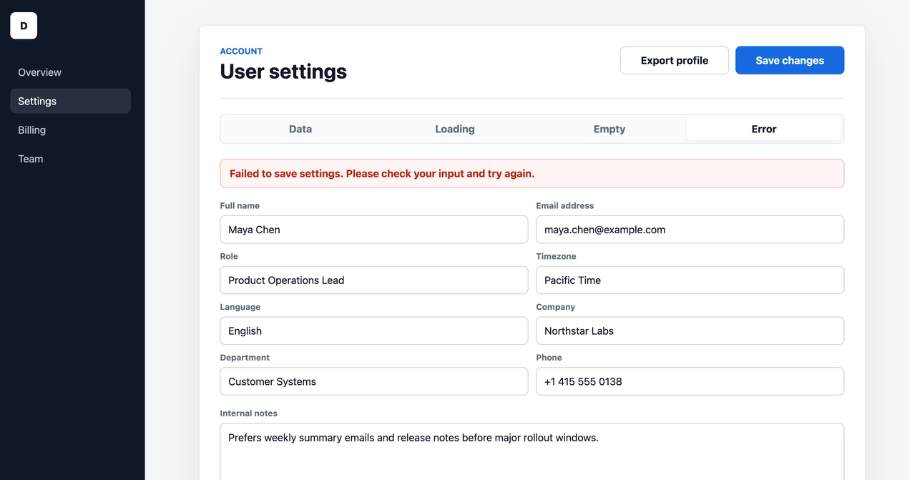
First, let's take a look at what the original frontend page looks like.
Erkang first listed the issues, then immediately provided a complete modification plan, and finally listed the scope of impact.
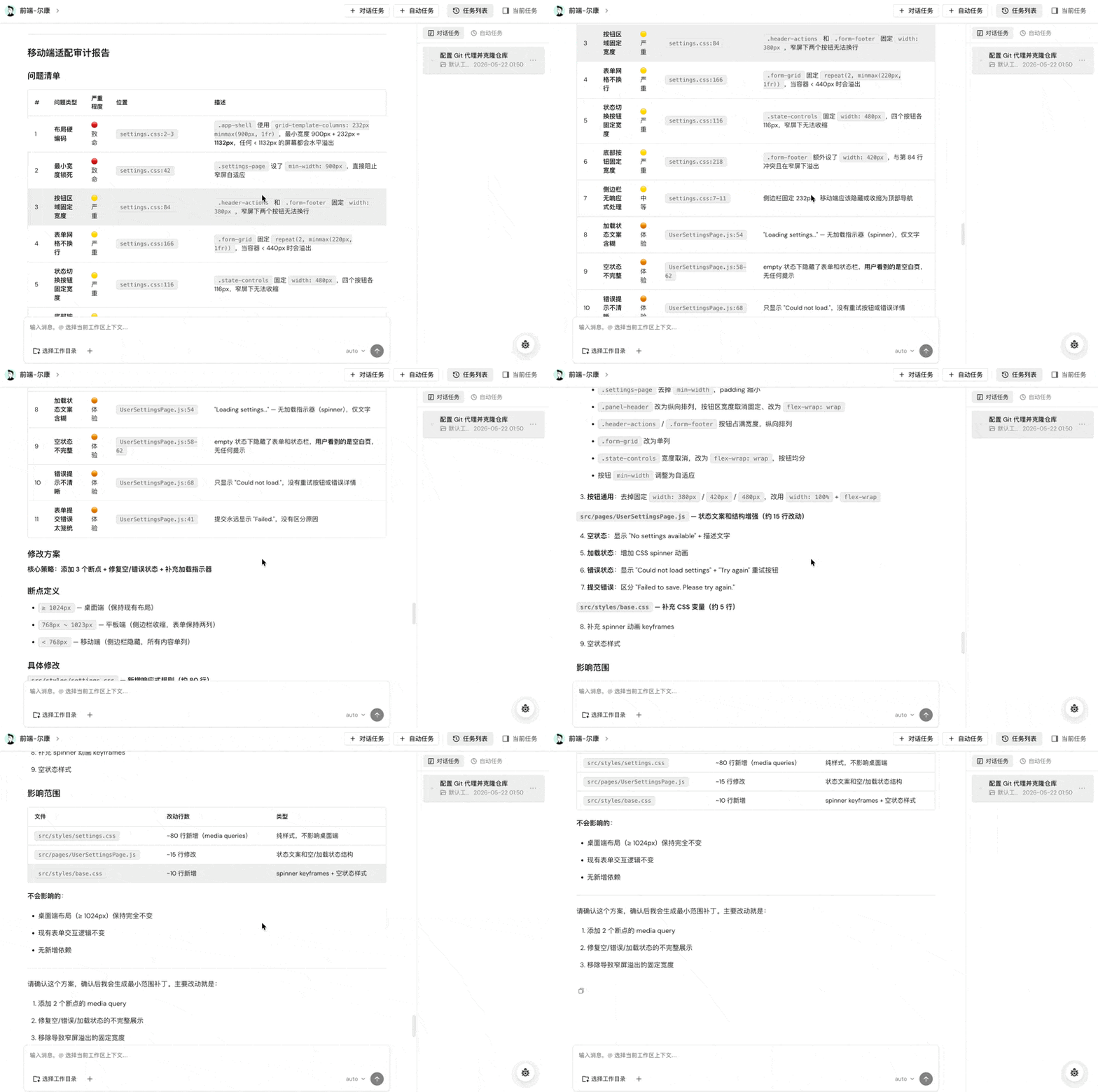
This case had the strongest sense of collaboration. Erkang didn't start modifying immediately; he first found the files, read the component structure, and explained the plan. Only after I confirmed did Erkang help me complete the patch.
After completing the changes, directly report which states were adjusted, such as narrow-screen layout, button arrangement, error prompts, loading states, empty state display, and so on.
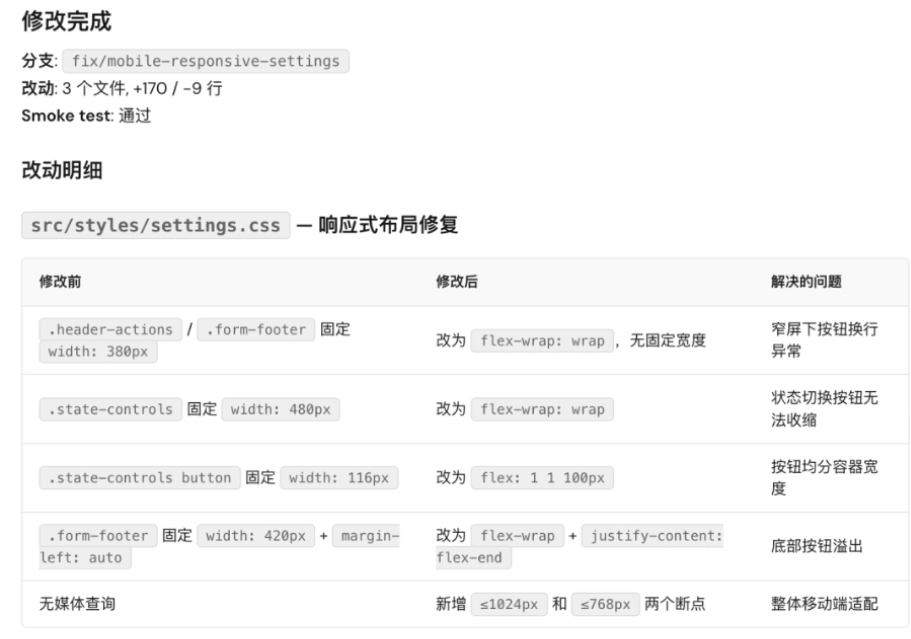
If you are not satisfied with the result, you can make changes. Look at the result after the changes—it is indeed much better.
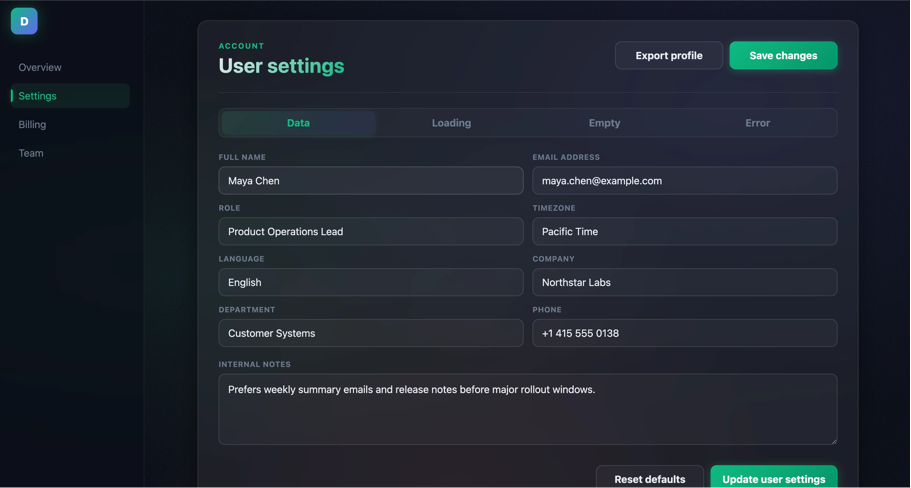
This scenario feels most like working with a "long-term colleague." Step by step, summarize and discover problems, "discuss and talk it over," and after confirming the plan, they execute it, and then you review and accept it.
Currently, it is very suitable as an execution-oriented colleague for front-end engineers, especially for handling clear, small-scope optimizations.
03. Some sharing
After testing these 5 cases, I think QoderWake is like a colleague you can gradually get familiar with.
Collaboration also feels fairly reliable. These digital employees all work on the devices I specify, and permissions, operations that require approval, and task records are all visible. What was done and why it was done—I can know all of it.
QoderWake is not only capable of chatting; it can also connect to GitHub, Jira, and GitLab, and automatically start work based on time or events. It is suitable for handling things that recur repeatedly, have clear boundaries, and have verifiable results.
What is even more interesting is that each employee has their own role and memory, and each project also has separate memory. The longer you use it, the better it understands your project habits.
A truly worry-free digital employee is one that can keep things moving forward even when you are not at the computer.
Of course, we should also look objectively at the stage it is currently in.
QoderWake has launched public beta globally. Come and apply for your first digital employee.
Application entry:qoder.com/qoderwake
Original link:I moved an Alibaba digital employee into my computer to see if it can really go on duty?