
What is Mureka O1
Mureka O1 is the world's first music reasoning large model released by Kunlun Wanwei, and the world's first music model to introduce Chain of Thought (CoT) technology. Mureka O1 incorporates thinking and self-criticism mechanisms during the reasoning process, greatly improving music quality, creative efficiency, and flexibility. It supports pure music generation as well as 10 languages ofAI music creation, covering multiple music styles and emotional expressions, and features song reference and voice cloning functions. Mureka O1 has opened API services and model fine-tuning capabilities, helping developers and music platforms seamlessly integrate AI music generation capabilities.
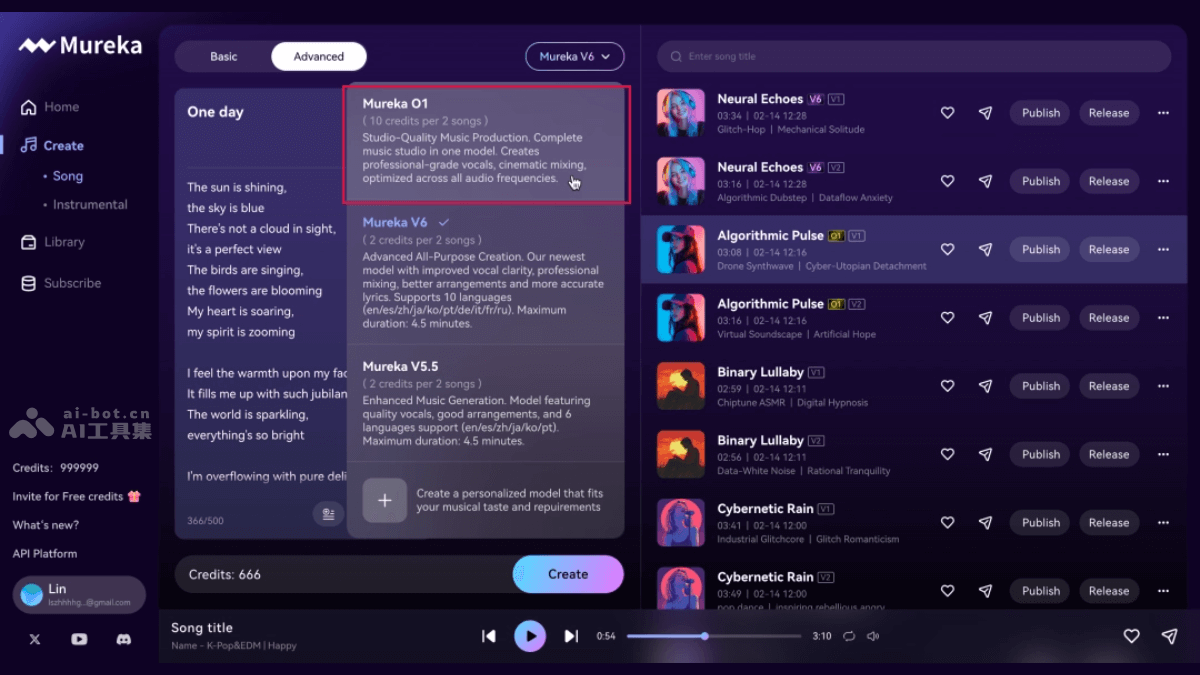
Main Features of Mureka O1
- AI Lyrics Creation: Users input a theme or emotion, and Mureka O1 can generate corresponding lyrics, helping users easily start creating.
- Style Control: Upload reference audio to specify the song style, ensuring the work matches the artistic vision.
- Melody Recording: Users record a melodic motif, and the system generates complete accompaniment based on it, improving creative efficiency.
- Inspiration Stimulation: Provides users with a platform for free expression, stimulating creative inspiration.
- Generate Similar Songs: Upload a reference song, and Mureka O1 can quickly generate a song with a similar style.
- Voice Selection and Cloning: Users can specify the singer's gender and timbre, upload their own voice for AI learning and replication, making the vocal part more personalized.
- Section Adjustment: Supports users in freely adjusting sections such as intro, verse, chorus, etc., through tags.
- Extend or Regenerate Sections: After the song creation is completed, users can extend the current track as needed or regenerate unsatisfactory sections.
- Low-Latency Music Generation: Mureka O1, through deep optimization of AI infrastructure, achieves industry-leading low-latency music generation, providing instant, high-quality user experience.
Technical Principles of Mureka O1
- Chain of Thought (CoT) Technology: Mureka O1 introduces Chain of Thought technology, simulating human multi-step thinking processes, decomposing complex music generation tasks into multiple steps for step-by-step reasoning. This enables the model to engage in deeper thinking and self-optimization when generating music, improving the quality and coherence of the music.
- Multi-Round Reasoning: During the generation process, the model first creates an initial draft, then continuously reviews and optimizes the previous creation results in subsequent rounds, ultimately generating high-quality music works.
- Structured Generation: Unlike traditional autoregressive models that generate audio step by step, Mureka O1 pre-generates the overall music structure before fine-grained audio token prediction. This significantly improves the structural coherence of the generated music and the precision of instrument arrangement.
- Based on CLAP Model: Mureka O1 is based on the CLAP model, which requires no manual annotation and is highly scalable, improving the interpretability and quality of generated music.
- Reinforcement Learning Optimization: Mureka O1 adopts reinforcement learning technology during training, optimizing model performance through continuous validation and error correction. For example, in music generation, the model self-optimizes based on predefined reward functions (such as music quality, style consistency, etc.).
- Policy Optimizer: The model training phase uses a policy optimizer, including techniques such as gradient compression, exploration, and exploitation. These techniques help improve the model's training efficiency and generation quality.
- Diverse Data Sources: Mureka O1's training data includes synthetic data, human expert-annotated data, Chain-of-Thought Dataset (CoT Dataset), and more. These diverse data sources provide the model with rich learning materials.
- Training Phase: In the training phase, the model is optimized through a reinforcement learning environment, while using reward functions (such as verification and human feedback) to guide learning. This enables the model to better adapt to different types of music creation tasks.
How to Use Mureka O1
- Visit the Official Website: VisitMureka's official website and click "Create" to enter the creation interface.
- Register an Account: Register or log in directly using an email or social account.
- Choose a Creation Mode: After entering the creation interface, choose "Simple Mode" or "Advanced Mode".
- Simple Mode: Enter a song description of no more than 300 characters, for example, "a song full of sincere emotions, expressing the feeling of deeply missing a friend," then click "Create".
- Advanced Mode: Provides richer creation options, such as uploading reference songs, choosing singer timbres, and more.
- Select a Model: According to your needs, click to select Mureka O1 orMureka V6and other models.
- Enter Lyrics: Enter the pre-conceived song title and lyrics in the corresponding input box.
- Select Reference Music: You can choose music from the platform's built-in music library, or upload local music as a reference to help the AI more accurately capture the music style and emotion you want.
- Control the Music Style: Use the Style function to choose the music style and mood, such as ancient style, sad, etc., to ensure that the generated music matches your creative intent.
- Generate Music: After completing the above steps, click "Create," and Mureka will generate music.
Application Scenarios of Mureka O1
- Advertising and Film/Television Production: Advertising agencies and film/television production teams can use Mureka O1 to quickly generate background music for projects such as advertisements, short videos, and films, customizing unique soundtracks according to scene requirements.
- Brand Music Creation: Brands can use Mureka O1 to create unique brand music, and event organizers can customize theme music for different occasions.
- Game Development: Game developers can use Mureka O1 to create unique soundtracks and audio assets for video games.
- Music Education: Music education institutions can use Mureka O1 as a teaching tool to help students understand the music creation process, encourage students to engage in music creation, and increase their interest in learning.
- Video and Podcasts: Content creators can use Mureka O1 to generate customized background music for videos, podcasts, or other media projects, enhancing the appeal of the content.