
Recently,MiniMax H3 was open-sourced, and its quality is on par with Seedance, so I wanted to deploy it locally and give it a try. But the full BF16 version is too demanding on hardware—where am I supposed to get an H100!
However, I did find a way to run it on my 3060 12G VRAM, which is to directly use the INT8 version trimmed by the open-source project ComfyUI on GitHub.
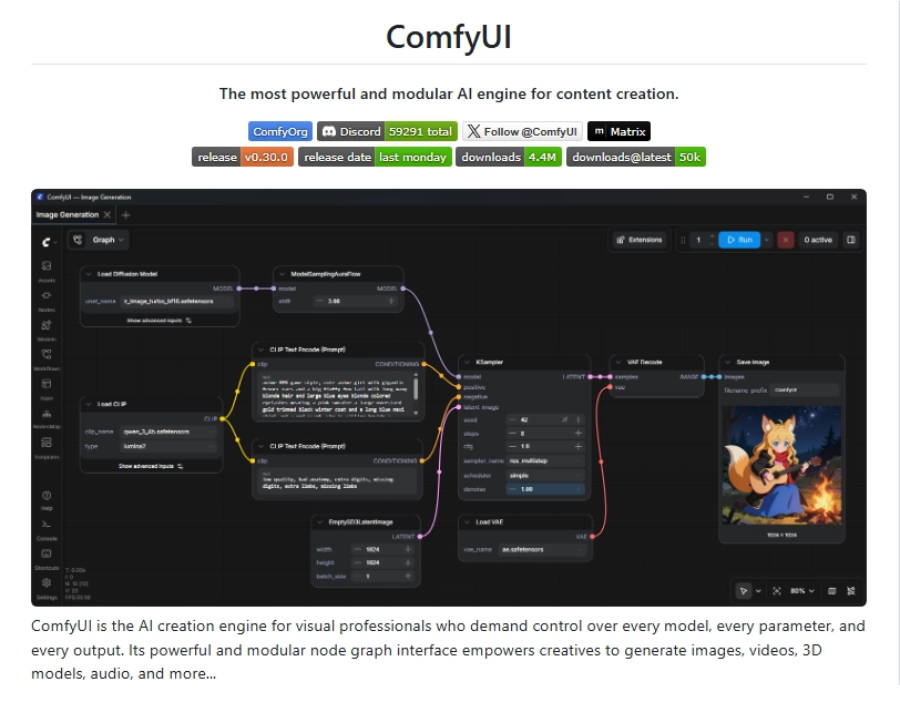
Take a look at the results I got—they're really good:
01. Hands-On Test
Here I recommend going directly to the ComfyUI official website to download ComfyUI Desktop, which better matches everyone's usage habits—it's exactly like installing ordinary software, with no obstacles at all from download to installation.
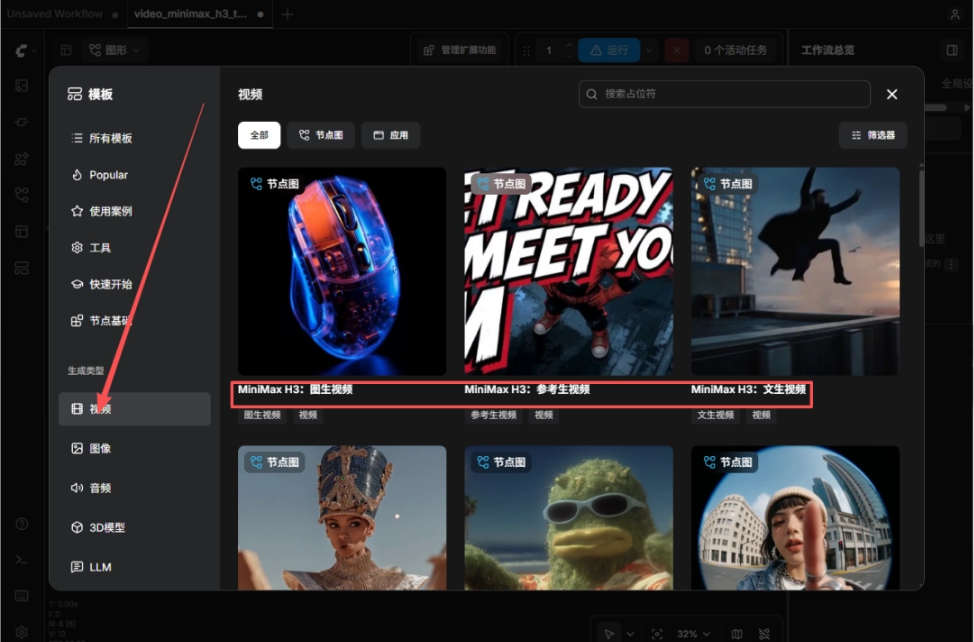
After installing ComfyUI Desktop and opening the template library, you can see the three MiniMax H3 templates. Just click to use them.
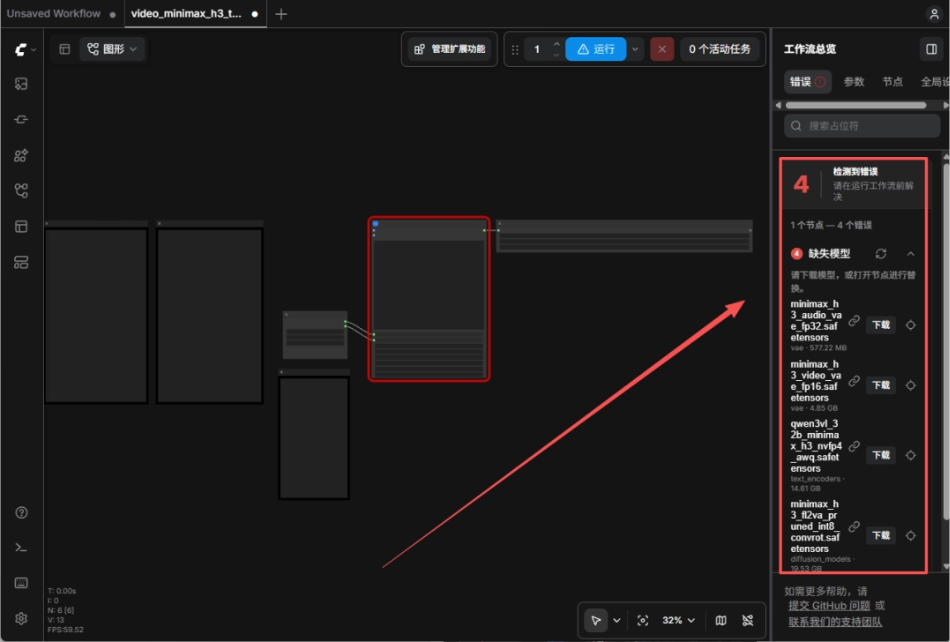
After that, it will remind us that models are missing, and we just download the missing models.
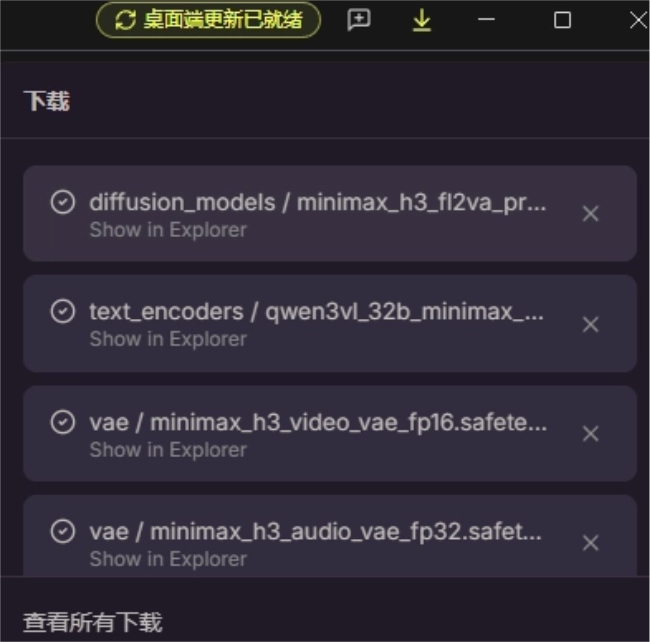
After the download is complete, you need to restart and update before you can use it.
After adjusting various parameters, you can start generating videos. Actually there aren't many parameters, just resolution and such. Fill in the prompt and start generating.
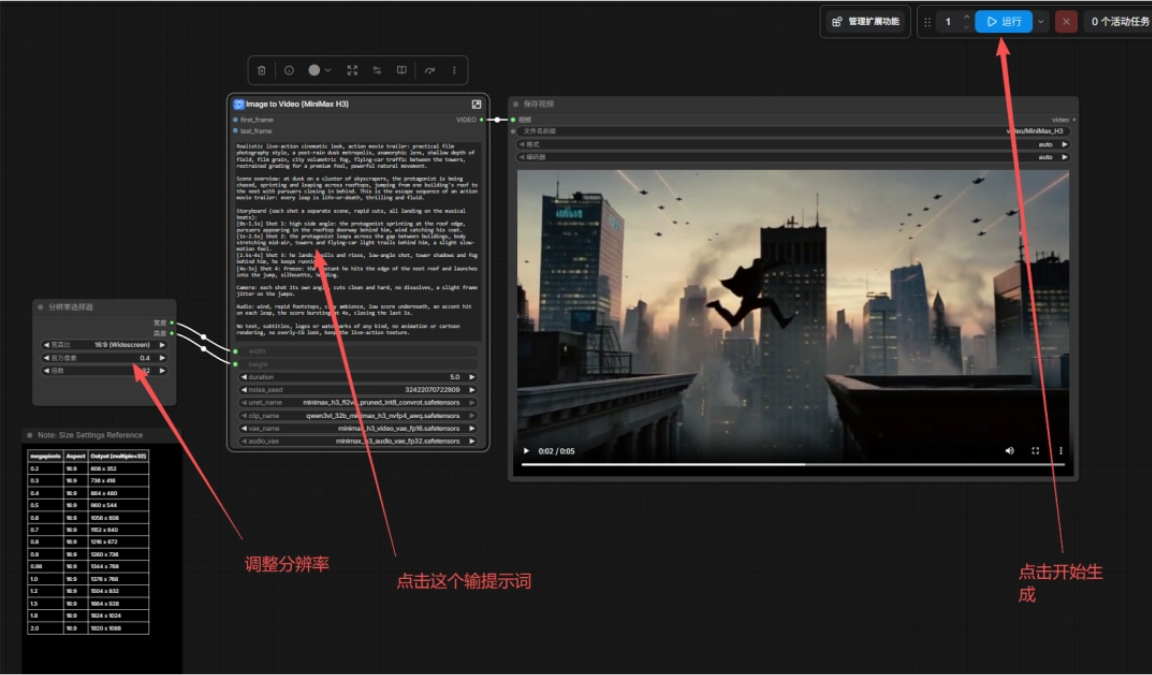
case 1 Built-in test case
Prompt:
Realistic live-action cinematic look, action movie trailer: practical film photography style, a post-rain dusk metropolis, anamorphic lens, shallow depth of field, film grain, city volumetric fog, flying-car traffic between the towers, restrained grading for a premium feel, powerful natural movement.
Scene overview: at dusk on a cluster of skyscrapers, the protagonist is being chased, sprinting and leaping across rooftops, jumping from one building’s roof to the next with pursuers closing in behind. This is the escape sequence of an action movie trailer: every leap is life-or-death, thrilling and fluid.
Storyboard (each shot a separate scene, rapid cuts, all landing on the musical beats):
[0s-1.5s] Shot 1: high side angle: the protagonist sprinting at the roof edge, pursuers appearing in the rooftop doorway behind him, wind catching his coat.
[1s-2.5s] Shot 2: the protagonist leaps across the gap between buildings, body stretching mid-air, towers and flying-car light trails behind him, a slight slow-motion feel.
[2.5s-4s] Shot 3: he lands, rolls and rises, low-angle shot, tower shadows and fog behind him, he keeps running.
[4s-5s] Shot 4: freeze: the instant he hits the edge of the next roof and launches into the jump, silhouette, holding.
Camera: each shot its own angle, cuts clean and hard, no dissolves, a slight frame jitter on the jumps.
Audio: wind, rapid footsteps, city ambience, low score underneath, an accent hit on each leap, the score bursting at 4s, closing the last 1s.
No text, subtitles, logos or watermarks of any kind, no animation or cartoon rendering, no overly-CG look, keep the live-action texture.
This case has a resolution of 864×480 and a duration of about 5 seconds. My 3060 took 8 minutes to run it.
The footage has the texture of a live-action action film, and the rhythm has to follow the music. The final clip is only 5 seconds, but several shots are really gripping.
When the protagonist rushes toward the edge of the rooftop, pursuers appear from the door behind him, his trench coat is lifted by the wind, and the chase relationship is established instantly. The first leap across the gap between buildings is the most beautiful shot in the entire video. The figure turns into a silhouette, with the sunset, city haze, and light trails of flying cars spread behind, and the height and distance of the buildings are also conveyed very clearly.
case 2 960×544 product video
Prompt:
Premium live-action macro product film. A black stainless-steel mechanical wristwatch with no brand name rests on a dark basalt pedestal inside a black studio.
Single continuous shot.
[0s-1.5s] Extreme macro view of the polished bezel and domed glass. A narrow warm light travels slowly across the metal edge.
[1.5s-3.8s] The camera performs a slow clockwise orbit while focus shifts from the front glass to the visible mechanical movement.
[3.8s-5s] The second hand moves smoothly. A soft cool rim light reveals the silhouette of the watch before the camera stops.
Camera: 100mm macro lens, slow precise movement, shallow depth of field, realistic focus breathing, natural optical reflections.
Lighting: warm narrow key light from camera left, soft blue rim light from behind, deep controlled shadows.
Audio: quiet mechanical ticking, one soft metallic click, low studio room tone.
No text, numbers, brand marks, hands, logos or watermarks. No warped watch case, duplicated crown or melting metal.
This case is also about 5 seconds and took 14 minutes to run.
It is much more stable than the previous rooftop chase. The camera slowly moves from the side of the crown to the front, and the lugs, strap, and case remain intact throughout. The brushed and polished edges also hold up to close inspection.
Warm light sweeps across the metal, and the latter half shifts to cool rim lighting, already carrying the feel of a commercial wristwatch ad. The entire video has no sneaky cuts, and the camera movement remains coherent throughout, which is rare.
case 3 9:16 (480×864) portrait
Prompt:
Vertical 9:16 realistic live-action portrait film. After rain at night, an adult Chinese woman stands beneath the awning of a small convenience store. Warm indoor light falls across her face while the street behind her remains cool blue and softly out of focus.
[0s-2s] Medium close-up. She looks toward the rain, breathing naturally. A light breeze moves a few strands of hair.
[2s-4.5s] The camera slowly pushes closer. She turns toward the camera with a restrained, thoughtful expression.
[4.5s-6.5s] A passing car creates a brief moving reflection across the wet street and her face. She remains still as the camera settles.
Keep the same face, hairstyle, clothing and age throughout. Natural blinking, subtle breathing, stable eyes and teeth, no beauty-filter skin.
Camera: slow stabilized push-in, 50mm portrait lens, shallow depth of field.
Audio: soft rain, convenience-store refrigerator hum, one distant car passing, no dialogue and no music.
No text, subtitles, logos or watermarks.
This video is 6 seconds and also took 14 minutes.
What satisfies me most is the facial stability. The character turns from a full profile to nearly frontal, and the facial proportions, age, and hairstyle remain consistent throughout. The eyes and lips do not deform during the turn either. The wind moves the hair, and at the end there is a natural blink. The camera slowly pushes in, and the pacing is very restrained, like the few seconds in a movie before waiting for a character to speak.
case 4 Chinese dialogue and lip sync
Prompt:
Realistic live-action drama scene inside a small late-night noodle shop during heavy rain. Warm tungsten light, steamed windows, restrained cinematic color grading.
Single continuous medium shot. An elderly Chinese male shop owner places a bowl of hot noodles on the wooden counter in front of an off-camera customer.
[0s-1.8s] He walks into frame carrying the bowl. Steam rises naturally.
[1.8s-4.8s] He places the bowl down, looks toward the customer and says in Mandarin exactly: “趁热吃,雨一会儿就停了。”
[4.8s-8s] He gives a small friendly nod, wipes his hands on the apron and turns back toward the kitchen.
Natural Mandarin pronunciation, accurate lip synchronization, one male speaker only, no additional dialogue.
Camera: fixed medium shot with a very slow push-in, no cuts and no camera shake.
Audio: clear close male voice, bowl touching the wooden counter, boiling water from the kitchen, rain against the window, low room ambience. No background music.
No subtitles, text, logos or watermarks. Stable face, hands and clothing.
This video is 736×416, 8 seconds long, and took 11 minutes.
When the character holds the bowl, the fingers, rim of the bowl, and chopsticks basically remain stable, and the action of setting the bowl down also has weight. The face shows no obvious deformation while walking, lowering the head, and speaking. The camera never cuts, only making a slight push-in, and the 8 seconds watch very smoothly.
The lip movements change with the sound, and the voice accurately says the prompt's 趁热吃,雨一会儿就停了. H3 has grasped the timing of speech and the boss's friendly tone.
02. Project Overview
This is a local deployment solution that allows the 60–70 GB-class MiniMax H3 main model to run within an ordinary consumer-grade GPU workflow.
Project address:https://github.com/Comfy-Org/ComfyUI/
For low-spec setups, an RTX 3060 12GB paired with 32GB of RAM works, suitable for generating videos of around 5 seconds at 736×416 or 864×480.
It is recommended to use 16GB of VRAM and 64GB of RAM; generating 960×544 videos of 5–8 seconds will be more stable. To try high-spec videos such as 1344×768, 10 seconds or longer, use an RTX 4090 24GB or RTX 5090 32GB, paired with 96–128GB of RAM.
Although 6GB and 8GB GPUs may barely start via model offloading, both the waiting time and the probability of failure are relatively high. For most enthusiasts, the 3060 12GB is already the starting point for seriously experiencing MiniMax H3.
03. Dig a Little Deeper
AI video is entering production stages such as short videos, e-commerce ads, film and television previsualization, and product showcases.
For individual creators and small teams, visual quality is only the starting point; generation cost, material privacy, parameter control, and modification efficiency also affect whether a tool can be used long-term.
ComfyUI's MiniMax H3 INT8 solution brings camera movement control, character stability, Chinese dialogue, and native audio into the local workflow. After the model download is complete, creators can repeatedly modify prompts and resolutions without uploading internal materials, and can also reduce spending on per-call online services.
H3 can already handle coordination between camera movement, lighting, character actions, and sound, making it suitable for producing product short films, short drama samples, advertising storyboards, and social media content. Creatives can be validated locally first before deciding whether to invest in formal shooting, greatly lowering the cost of early trial and error.
For individual creators, independent studios, and small content teams, this solution is already sufficient to complete proof of concept and produce a small number of finished videos.
When a single RTX 3060 can also generate complete clips with camera movement, sound, and Chinese dialogue on a desktop, local AI video has already begun to enter real content production workflows.
Original link:GitHub racks up 125K Stars, running MiniMax H3 on a 3060