
Look at yesterday afternoon—many friends noticed that DeepSeek's new model quietly started gray-scale testing。
Fortunately, I was gray-scaled right away, and was just about to put out a hands-on review.
Who would have thought that late at night, Zhipu also released a new model—the mysterious model that topped the trending list on the global model service platform OpenRouter a few days ago, Pony Alpha, is precisely Zhipu's new-generation flagship model GLM-5。

The tech world is really celebrating the New Year early...
It's so thrilling—who could still sleep at this point? I stayed up all night doing a round of comparative testing to see who is the true king of programming.
01. GLM-5 and DeepSeek updated at the same time
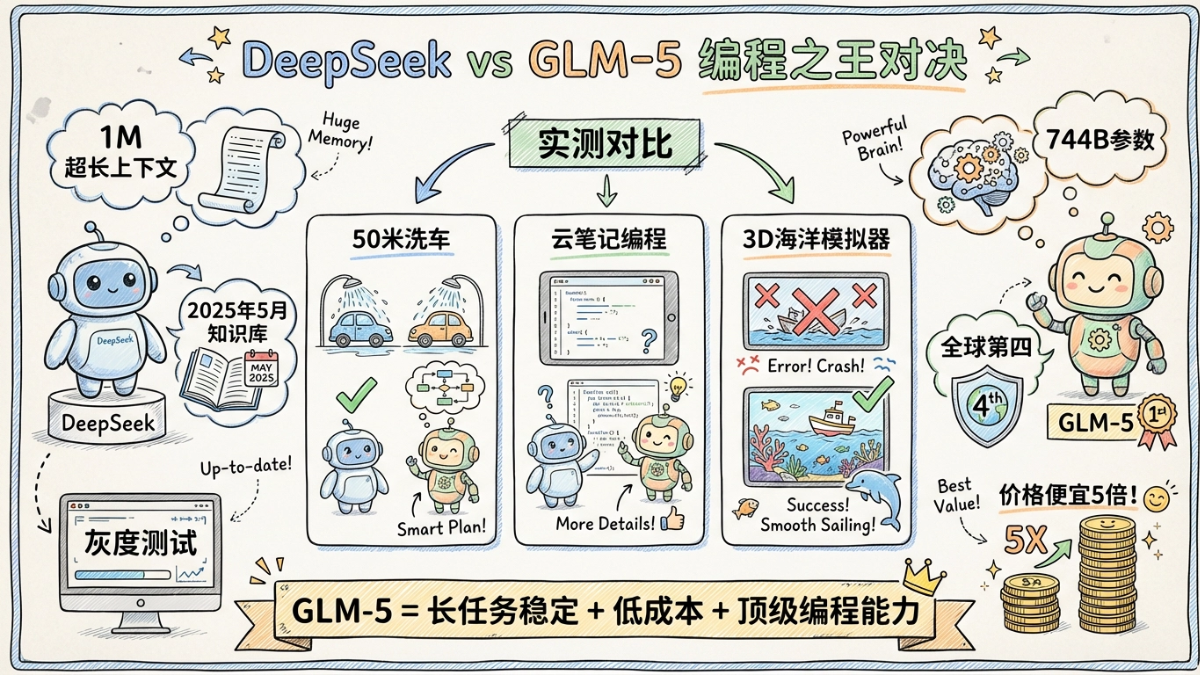
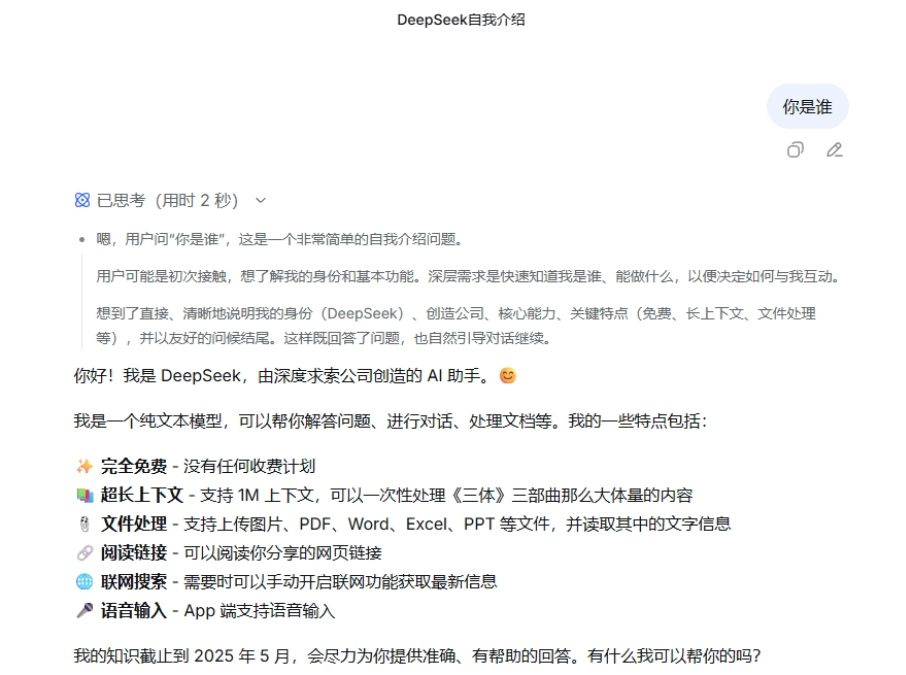
DeepSeek quietly started gray testing, and the most obvious change is that the context length has been directly increased to 1M, so it can now process a million tokens of content at once.
That's equivalent to stuffing the entire Three-Body trilogy or Water Margin into it in one go with no problem.
The knowledge base has also been updated to May 2025.
There were previous rumors that DeepSeek V4 would appear around the Spring Festival. This gray-test version may be an appetizer for V4 or an enhanced version of the V3 series.

Experience address:https://chat.deepseek.com
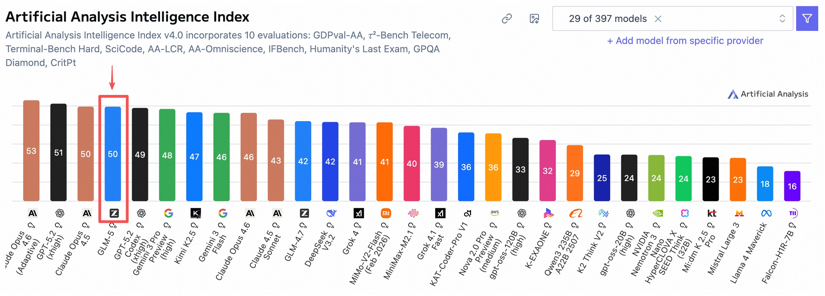
GLM-5 has now been officially released. On the globally authoritative Artificial Analysis leaderboard,GLM-5 ranks fourth in the world and first among open-source models. It is the first open-weight model whose intelligence index exceeds 50。
Experience address:https://chat.z.ai
Performance is comparable to Claude Opus 4.5, but GLM-5's API price is 5 times cheaper!
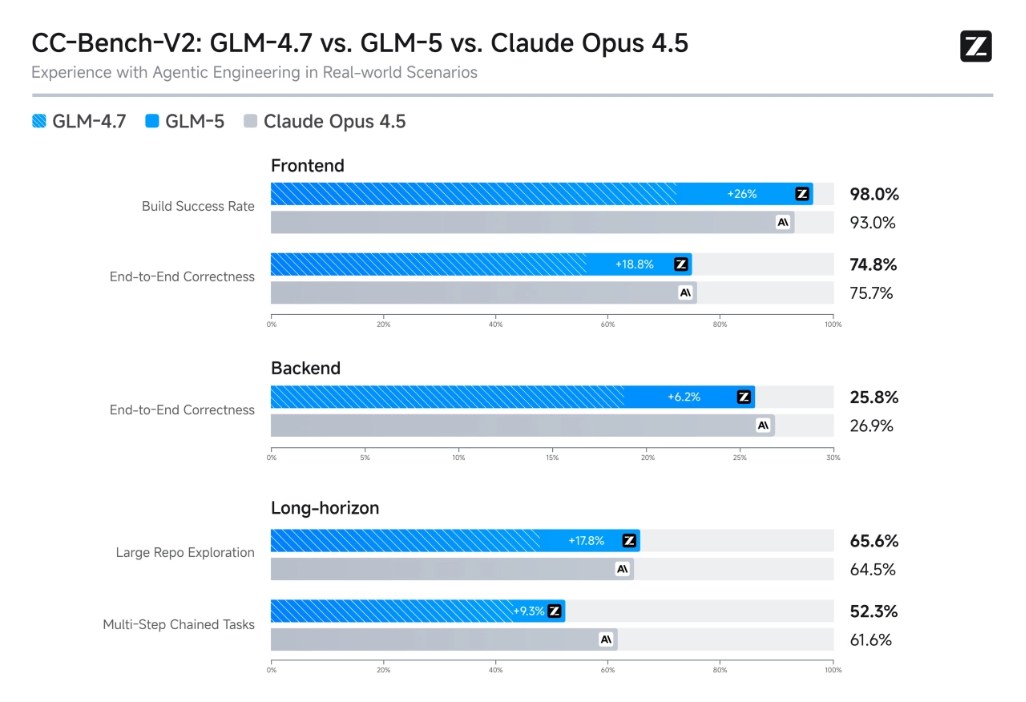
GLM-5's parameter scale has expanded to 744B (40B activated), pretraining data has increased to 28.5 T, and with the integration of DeepSeek's sparse attention, it is more stable in long-chain reasoning and complex task execution.
02. Hands-on comparison
Just looking at benchmark scores is not very interesting. Let's get practical and see how DeepSeek and GLM-5 perform in real tests.
case 1 The 50-meter car wash problem
Recently, AIs have frequently failed on one question:
I want to wash my car. If my home is only 50 meters from the car wash, do you suggest I drive there or walk?
The AIs' answers were all over the place. Even GPT and Claude Opus 5 fell into the language trap and chose to walk...
Let's look at the new DeepSeek model's answer:
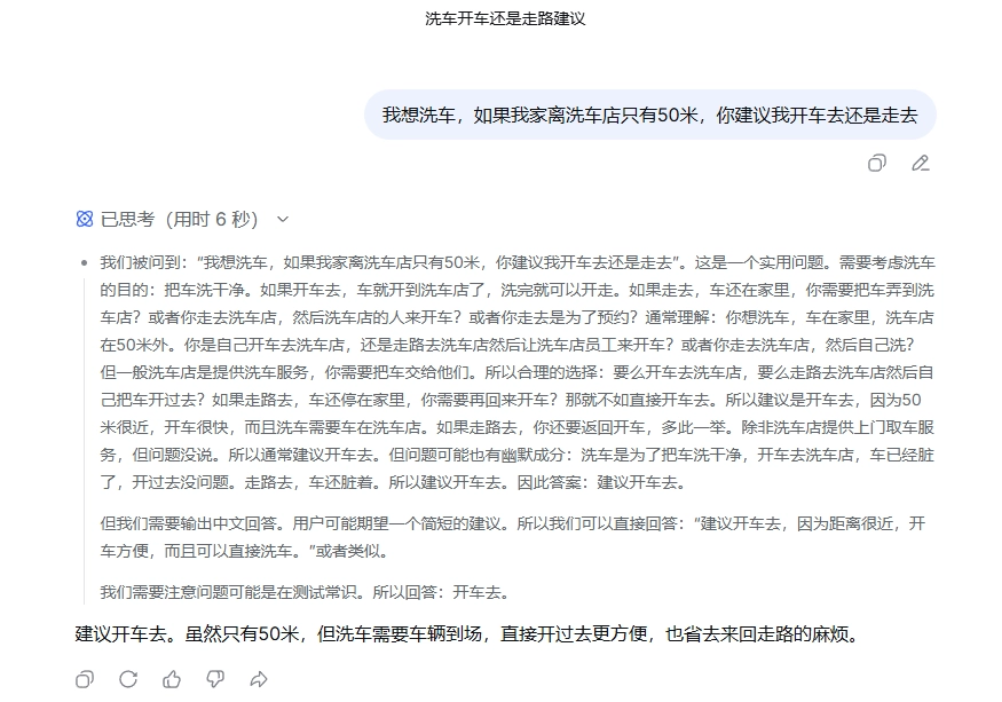
DeepSeek's answer was simple and clear, just one sentence: Although it's only 50 meters, washing a car requires the vehicle to be present, so it's more convenient to just drive over.
GLM-5 also answered correctly. Summary: To get the car clean, the car must be brought to the shop, so you need to drive there.
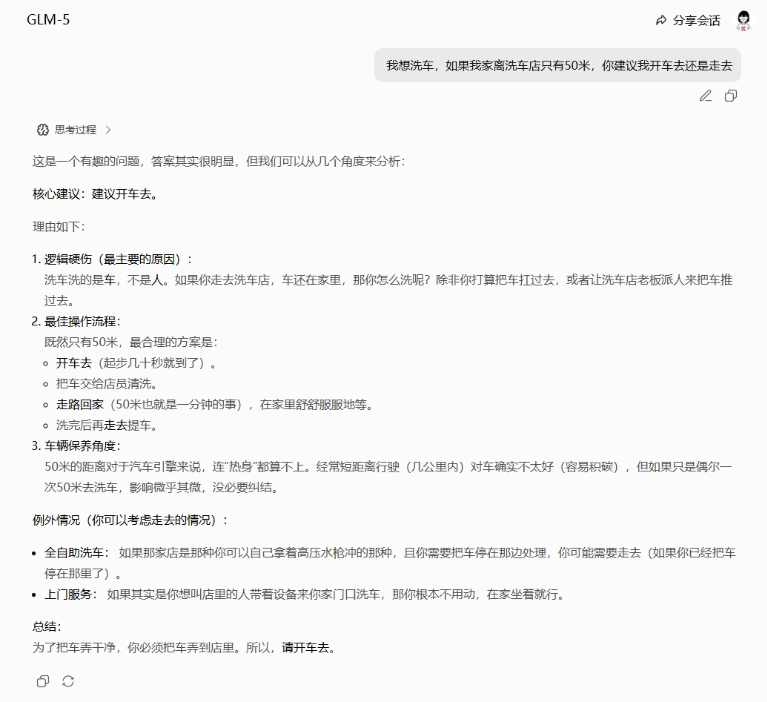
But at the same time, GLM-5 also imagined 2 unexpected situations in which walking there could be considered, such as if we had already parked the car at the car wash, or if the car wash provides door-to-door service, in which case we wouldn't even need to move.
I have to say, GLM-5 thought it through quite thoroughly.
case 2 Personal cloud note-taking service
The information we usually come across is scattered across various platforms, and the cloud note-taking tools on the market either charge fees or cannot satisfy some of the features I want. Let's Vibe Code one ourselves, and send the same prompt to DeepSeek and GLM-5 respectively.
Build a "personal cloud note-taking service" with the following features:
1. User registration and login, including a basic authentication mechanism.
2. Each user can create, read, update, and delete their own notes.
3. Use a lightweight database to persist data.
First, let's look at what DeepSeek generated:
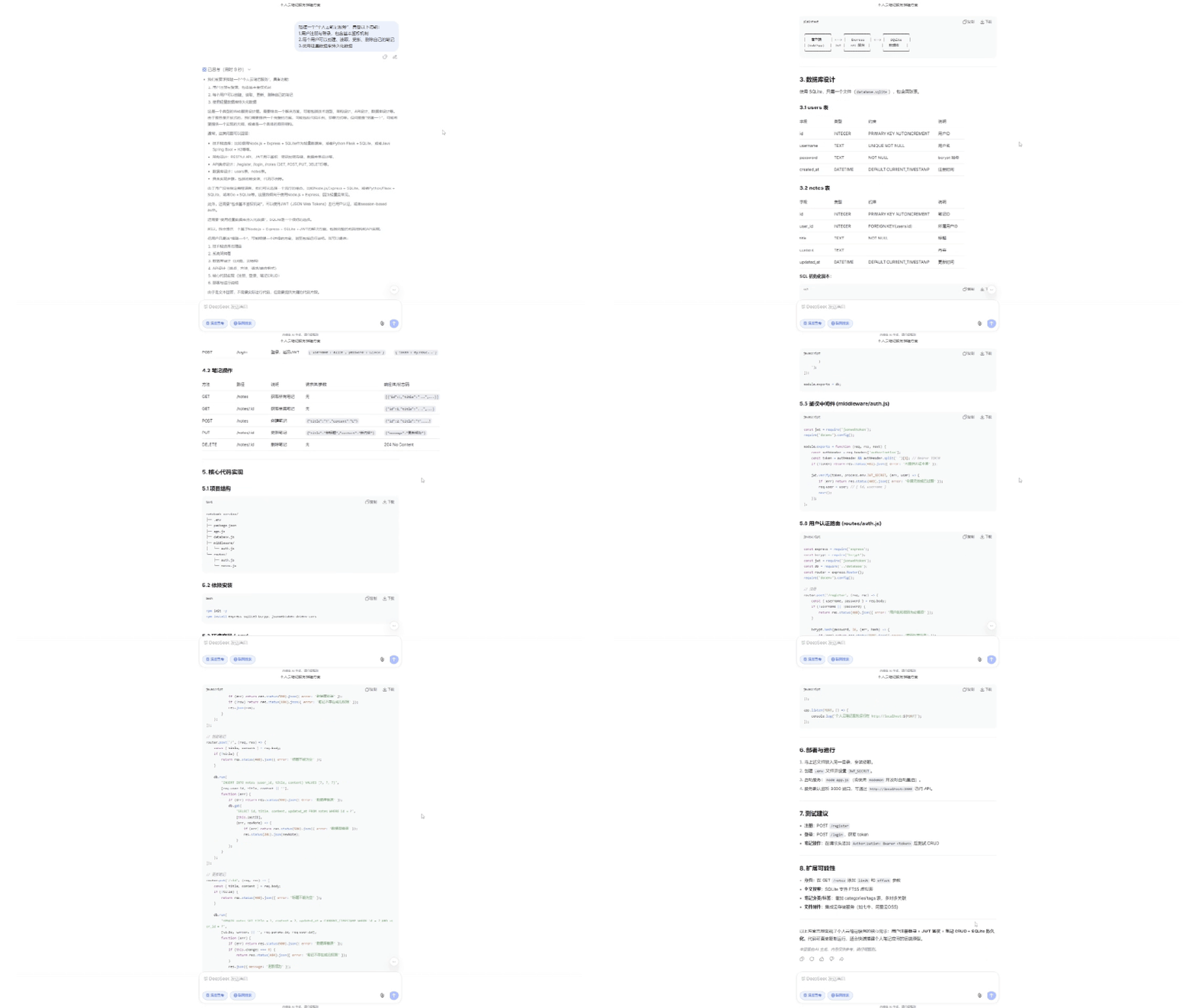
DeepSeek chose a classic small SaaS tech stack, but it only gave me the solution and SQL. As a programming beginner, I was completely confused. I had no idea how to use this code.
Now let's look at what GLM-5 generated:
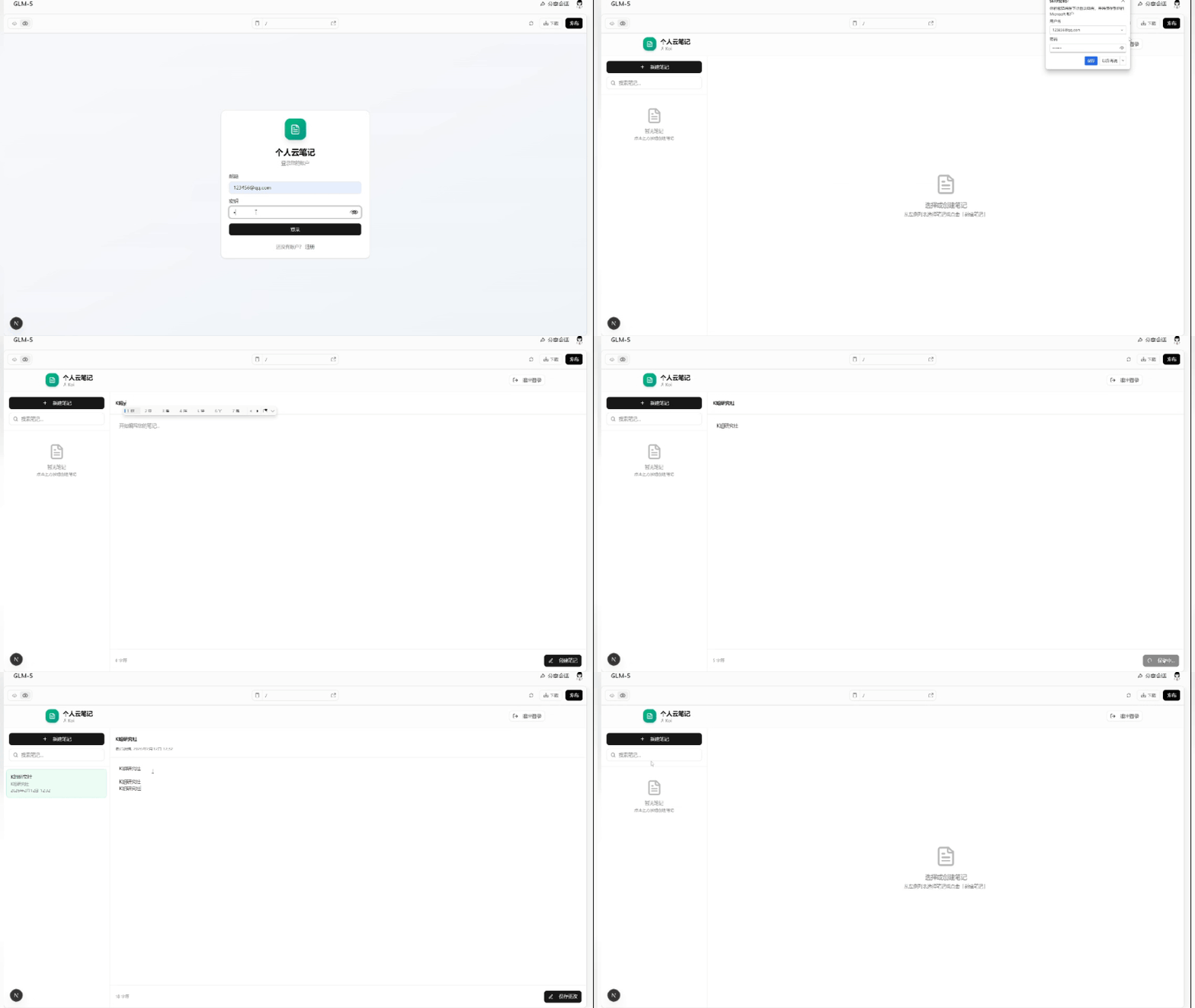
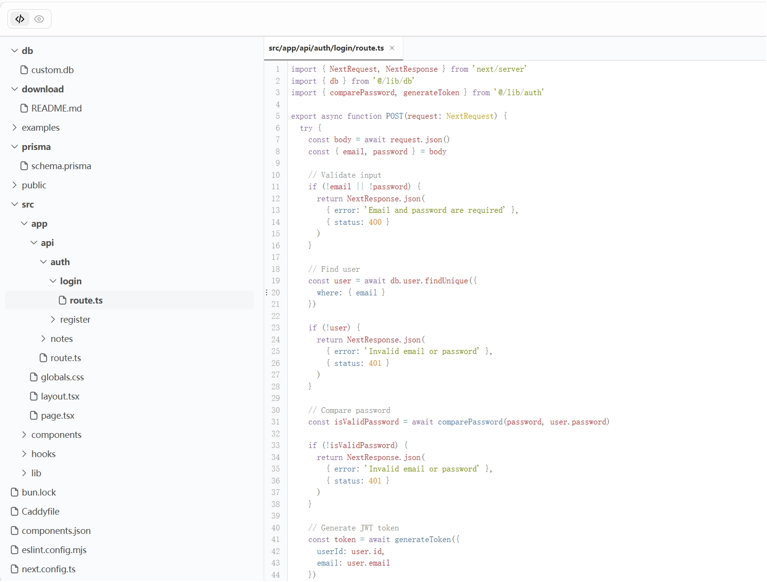
What I wanteduser registration, login functionality, create, update, save, delete note functionality, and lightweight database data persistence are all implemented.。
Let's look at the login API. GLM-5 performs input validation, looks up the user, verifies the password, and generates a JWT. This is a very typical login flow.
case 3 Local file management
Generate a tool program that can run locally and implement the following features:
1. Scan a specified folder
2. Automatically classify and organize by file type and date
3. Handle duplicate file names
4. Generate an organization report
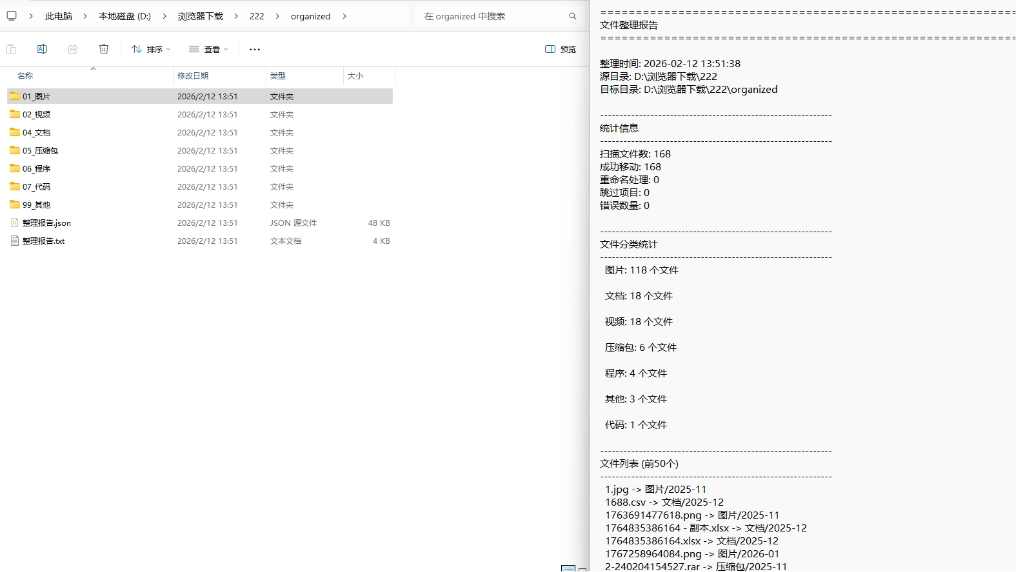
This time, in addition to providing the code, DeepSeek also provided instructions for use:
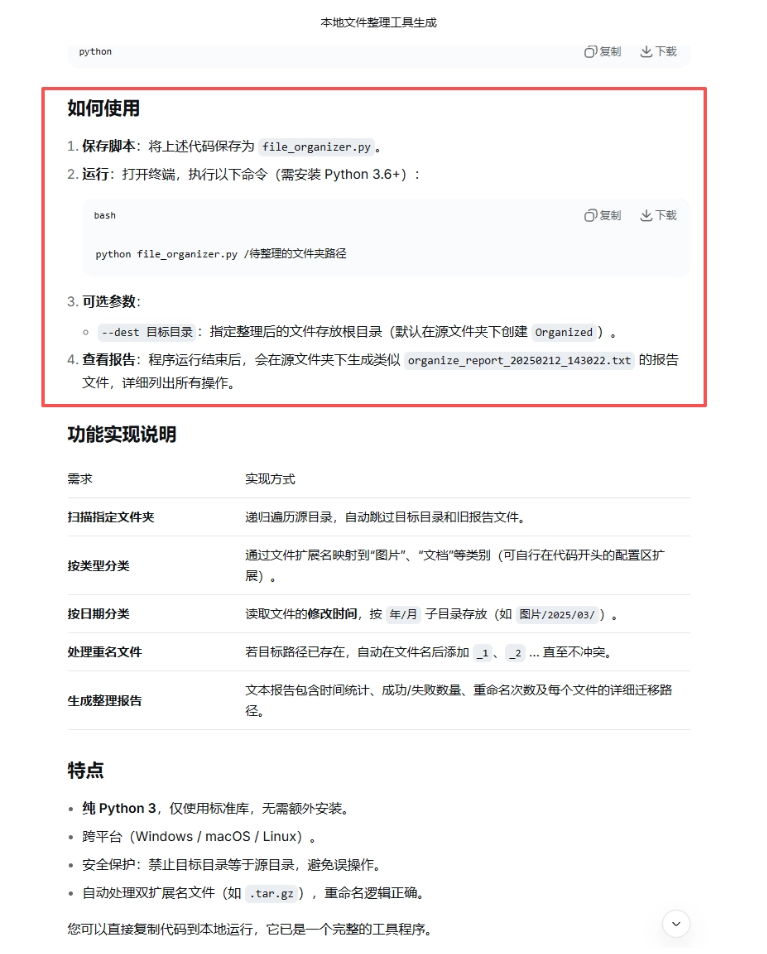
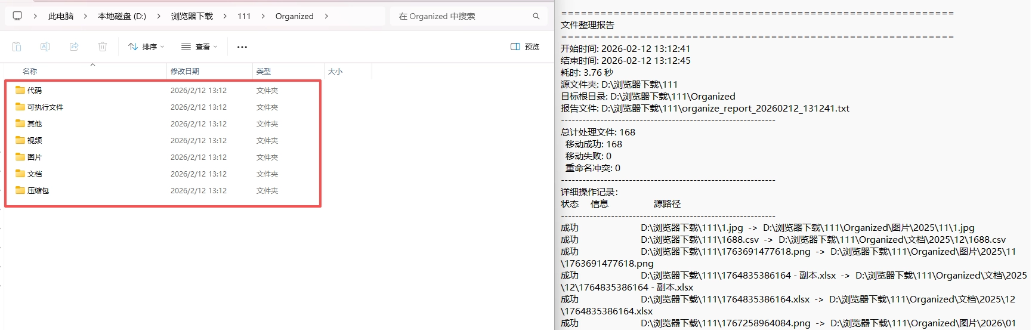
We executed it according to DeepSeek's suggestions. DeepSeek accurately identified all the files in my folder and classified them by code, executable files, videos, images, documents, archives, and others, while also generating a file organization report.
The result generated by GLM-5:
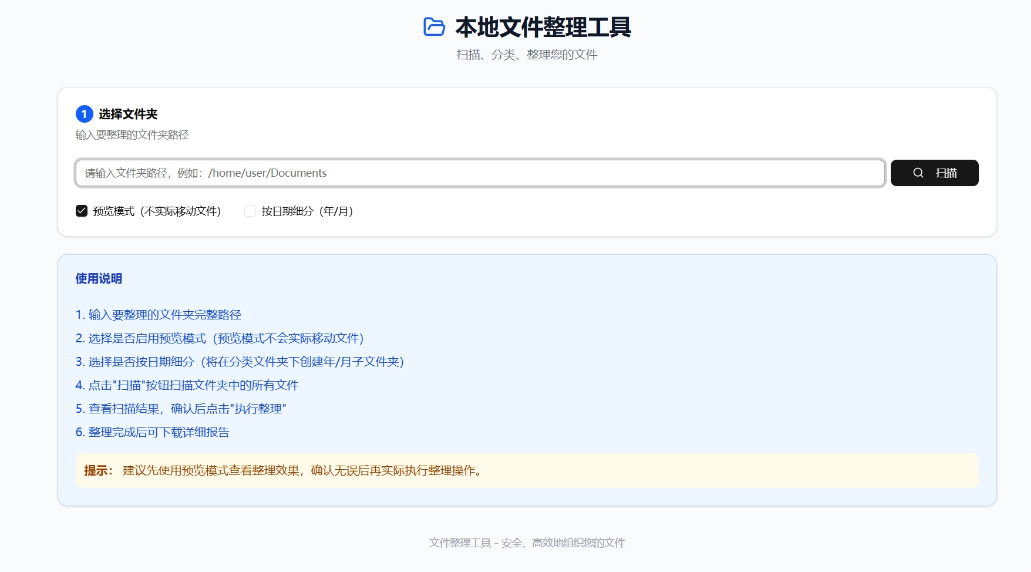
The page is very clean, and the functional structure design is quite good. The organization method is similar to DeepSeek's. The difference is that GLM-5 added apreview mode, so you can preview the organization results before executing.
03. Agentic
The most impressive thing about GLM-5 is its handling of long, difficult, complex tasks. Let's connect to the bigmodel.cn API in Claude Code and test it.
This task can simultaneously test the model's comprehensive capabilities in graphics mathematics, real-time rendering, complex system architecture, and long-range engineering planning. It is very close to a real game-engine-level small system construction challenge. The hardest part is not any single line of code, but keeping the system structure consistent and runnable throughout continuous iteration across thousands of lines of code.
Use Python with PyOpenGL + Pygame and NumPy to develop an interactive 3D ocean simulator. Prebuilt ocean/physics libraries are not allowed. Single Python file.
Core features (required)
- Ocean surface — GERSTNER waves
– Superimpose at least 5 GERSTNER wave components (different amplitudes, wavelengths, directions, speeds)
– Real-time vertex displacement on a 128×128 grid - recalculate normals every frame for correct lighting
– Foam/whitecaps: white patches appear on wave crests when steepness exceeds a threshold
– Horizon fog effect blends distant seawater with the sky color 2. Underwater mode
– Press the "U" key to switch between above-water/underwater camera - underwater effects: blue-green depth tinting, volumetric light beams from the water surface, depth fog (visibility decreases with depth)
– Animated caustic patterns on the seabed
– Procedural seabed terrain using Perlin noise (sandy texture coloring)
- Fish school (BOID algorithm)
– Reynolds flocking: separation, alignment, cohesion
– 2 types of fish with different colors, sizes, and group tightness
– 30-50 fish per group
– Obstacle avoidance (seabed, water surface)
– Fish bodies oriented along the velocity vector
- Coral reef
– 3 procedurally generated coral types (branching, dome, fan), with different colors
– Placed in clusters on the seabed
– Slight swaying animation based on a simple water current vector
- Weather system
– 3 presets: calm/medium/storm — switchable with keys 1, 2, 3
– Smooth transition (5 seconds) affects: wave amplitude, sky darkness, foam density, underwater visibility
– Storm adds: rain streaks (falling line particles above the water surface), occasional lightning flashes (screen flash + brief bright directional light)
- Surface ship
– A sailboat rendered in the ocean
– The ship follows the wave height at its position (samples Gerstner waves)
– Tilt and roll based on the local wave slope
– A V-shaped foam wake forms behind the ship
– Click the sea surface to reposition the ship
Add bonus features where feasible
B1. Shark predator
– The shark patrols the reef area and chases the nearest school of fish when it gets close
– The school scatters when the shark enters its fear range (breaking the school formation)
– Sine-wave body swimming animation
B2. Day-night cycle
– Time slider (0-24 hours) controls the sun position
– Sky color changes (blue → sunset orange → deep blue at night)
– Underwater: corals emit bioluminescence at night
– Night moonlight: faint cool-toned lighting
B3. Split-screen mode
– Press "V" to enable horizontal split screen: the top half is above the water surface, and the bottom half is underwater at the same position
– Both views render simultaneously
– WASD: move, QE: ascend/descend, mouse drag: orientation view
– Scroll wheel: movement speed
– U: toggle underwater mode, R: reset camera
– 1/2/3: weather presets - Spacebar: pause/resume simulation
– S: screenshot (save PNG)
– Bottom bar: FPS, camera depth, current weather status, fish count, wind direction arrow
– Top right: weather indicator icons (sun/cloud/storm)
– Window: 1280×720, target frame rate 30+ - single Python file, using only pygame + PyOpenGL + numpy + standard library - object-oriented structure: OceanSurface, BoidSystem, CoralGenerator, WeatherSystem, Ship, Camera, Scene
– Each class has a docstring
– Starts in calm weather, one school of fish, one sailboat, and with the underwater coral reef visible. Write complete runnable code.
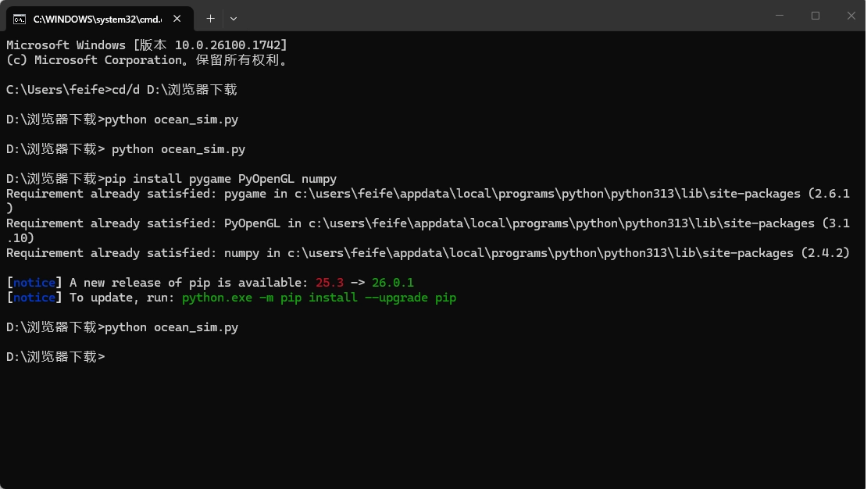
DeepSeek directly generated 1600+ lines of code from the library, but when we downloaded and ran it, an error occurred:
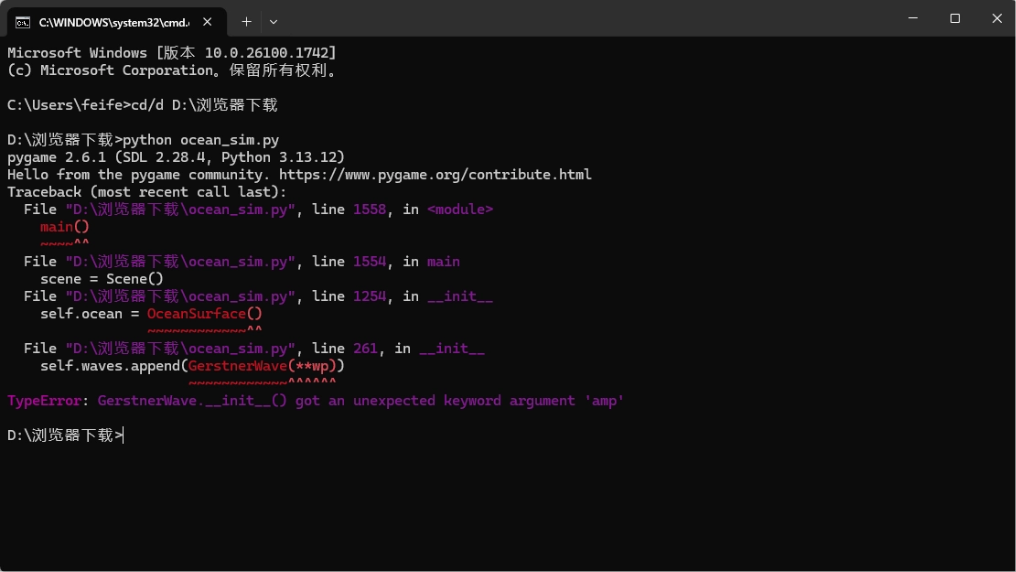
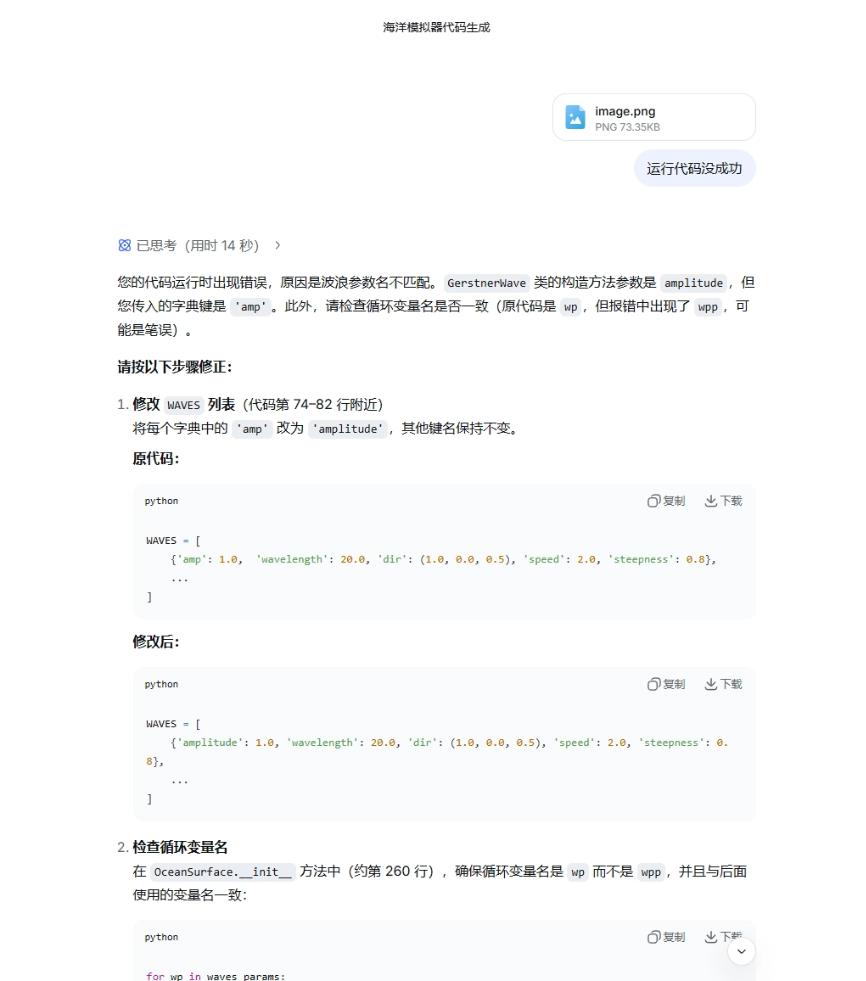
After sending it to DeepSeek, DeepSeek quickly gave modification suggestions:
We tried running the code again after DeepSeek's modifications, and it still errored after two changes:
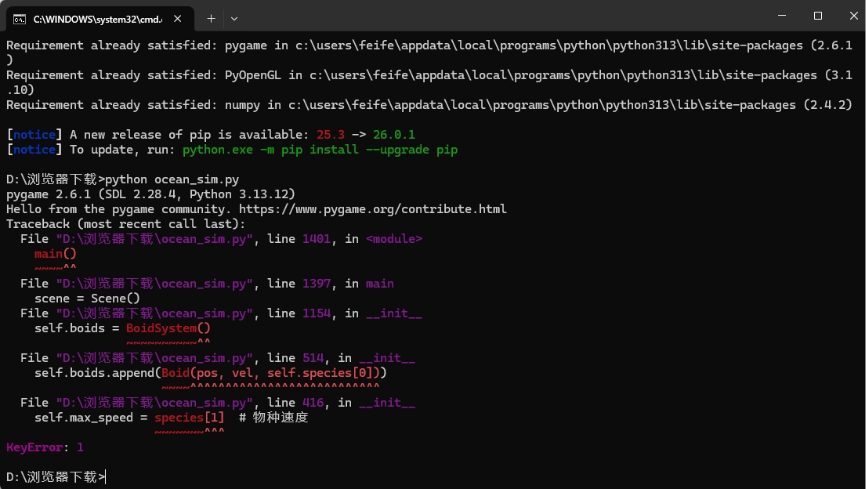
After modifying it again, this time there was no error, but the file also directly wouldn't open... too much hassle, I just gave up...
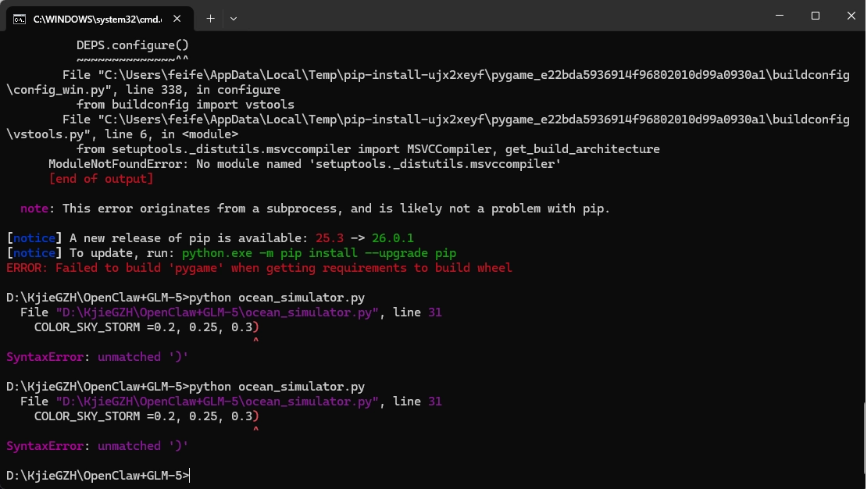
Look at the result generated by GLM-5:
On the first run, the page showed a syntax error:
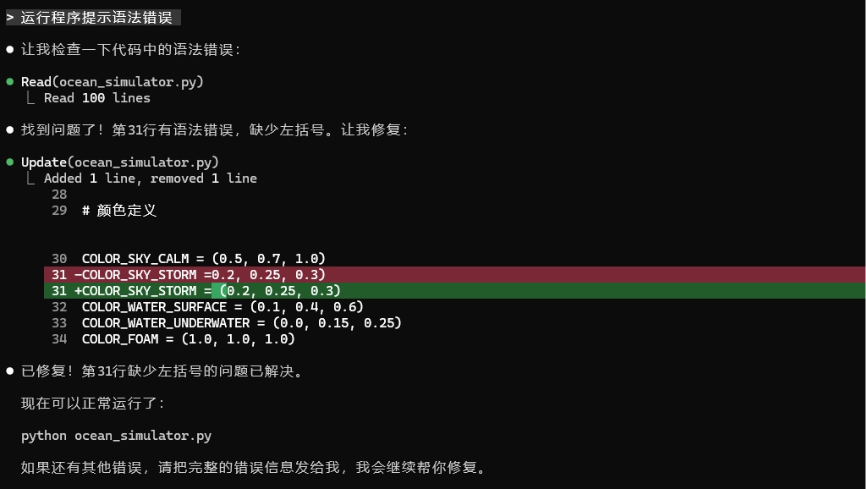
After we sent the error message to GLM-5,GLM-5 quickly located the problem and made modifications。
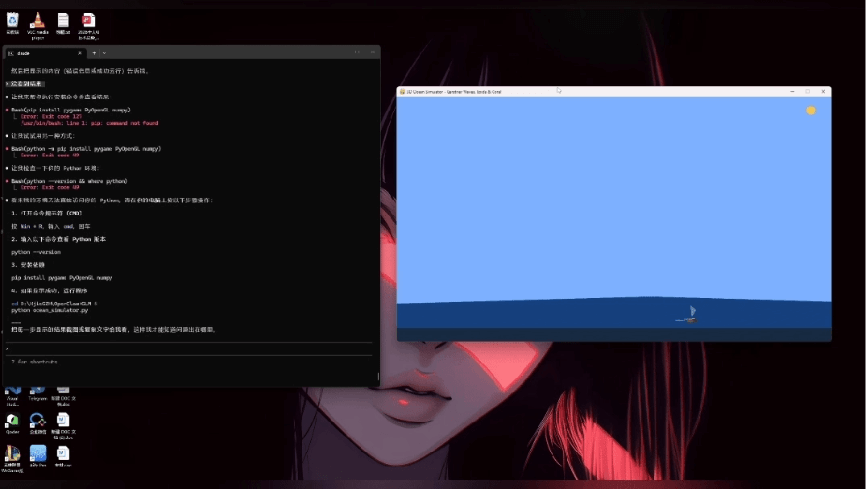
After reopening it, the sky, ocean, and boat all rendered successfully, and I could directly control the boat's movement.
After several rounds of testing, GLM-5's overall programming level is considerably better than DeepSeek's, especially when handling long-horizon tasks, where the difference becomes obvious. Although DeepSeek can also handle small problems, once the business logic gets complex, it fixes one place and misses another, with problems constantly arising.
GLM-5 can independently break down system-level requirements like a senior architect, and when facing complex tasks with long workflows, it can also maintain context coherence and goal consistency.
04. Some sharing
Although DeepSeek's new model has greatly expanded its context, the overall capability improvement is not very obvious; it feels more like laying the groundwork for subsequent versions.
This update to GLM-5 leans more toward engineering-oriented strengthening, mainly centered on long-horizon tasks.。
For many ordinary tasks, it is actually hard to see the gap between top models. When writing a small feature or generating a demo, everyone might perform about the same.
The real dividing line is some highly difficult engineering development. GLM-5 performs much more stably and is also closer to the real needs of team-level development.
Judging from market feedback, this kind of engineering-oriented capability upgrade in GLM-5 has precisely hit developers' pain points. Recently, discussion and adoption of GLM-5 on X have both been rising rapidly.
After GLM-5 was released, GLM Coding Plan issued a price increase announcement and instantly sold out, and only MAX can use it, giving a lively feeling like Seedance queuing to generate videos.
Today Zhipu's stock took off directly. It seems the capital market highly recognizes the technical route Zhipu is taking.
Original link:Just now, GLM and DeepSeek both received major updates at the same time. Who is stronger?