
What is Daybreak
Daybreak is an AI cybersecurity defense tool launched by OpenAI, integrating OpenAI's large model reasoning capabilities with Codex 's Agent extension framework to help defenders discover hidden vulnerabilities across codebases, verify remediation plans, analyze unfamiliar systems, and embed capabilities such as security review, threat modeling, patch verification, and dependency risk analysis into daily development workflows, achieving the shift from vulnerability discovery to proactive defense.
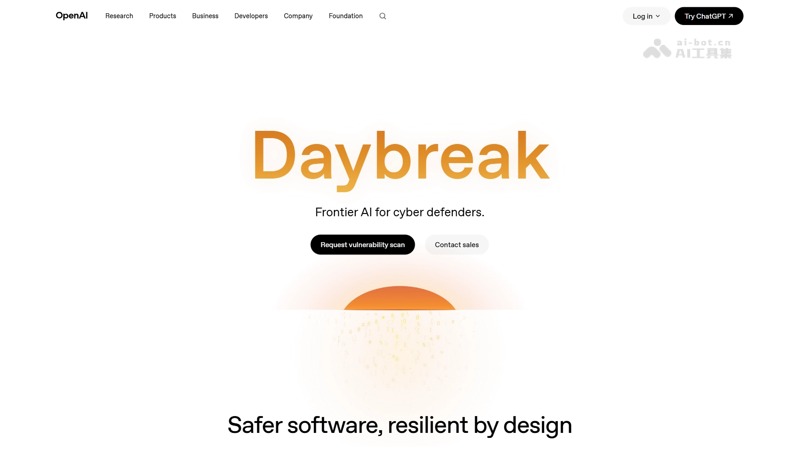
Daybreak's main features
-
Intelligent vulnerability discovery: AI reasoning across codebases to identify hidden vulnerabilities that traditional tools struggle to find.
-
Automated remediation verification: Supports generating and verifying patch plans, accelerating the closed loop from discovery to remediation.
-
Threat modeling: Performs security threat modeling in the early stages of development, moving defense upstream.
-
Dependency risk analysis: Automatically analyzes the security risks of third-party dependency libraries.
-
Detection and response guidance: Provides security incident detection strategies and emergency response recommendations.
-
Trusted access mechanism: Comes with the "Trusted Access for Cyber" system, balancing AI offensive and defensive capabilities through trust, verification, proportional protection, and accountability mechanisms.
How to use Daybreak
Daybreak is currently in a targeted cooperative deployment phase and is not directly available for self-service registration by individual developers or enterprises.
Daybreak's core advantages
-
Secure by design: Advocates building security resilience into the software architecture itself, rather than the traditional "find vulnerabilities then patch" model, reducing risk from the source.
-
AI deep reasoning + Agent automation: Integrates OpenAI large models' cross-codebase reasoning capabilities with Codex's Agent execution framework to achieve an automated closed loop from vulnerability discovery to remediation verification.
-
Full lifecycle coverage: Embeds security review, threat modeling, dependency risk analysis, and detection and response guidance into the entire daily development process, covering design, development, and operations stages.
-
Trusted access and accountability mechanism: Through the "Trusted Access for Cyber" system, balances AI offensive and defensive capabilities with trust, verification, proportional protection, and accountability, ensuring technology is used for good.
-
Ecosystem collaboration network: Works with industry and government partners to build a security ecosystem and accelerate the overall capability upgrade of cyber defenders.
Daybreak's official website address
- Official website:https://openai.com/daybreak/
Daybreak's similar competitors
| Dimension | OpenAI Daybreak | GitHub Copilot Security | Snyk |
|---|---|---|---|
| Positioning | AI-driven full-stack cybersecurity defense platform | Code security assistance tool | Developer security scanning platform |
| Core capabilities | Vulnerability discovery + remediation verification + threat modeling + Agent automation | Code vulnerability detection and remediation suggestions | Dependency scanning + container security + code analysis |
| AI Depth | Large-model deep reasoning + Codex Agent execution | AI-based code suggestions | Rule engine + partial AI assistance |
| Defense Philosophy | Secure by design (built-in resilience) | Detect during development | Fix after detection |
| Applicable Stage | Full lifecycle (design → development → operations) | Coding stage | Development + deployment stage |
Daybreak Application Scenarios
- Intelligent Code Security Review: Embed AI security code review into daily development workflows to automatically identify hidden vulnerabilities and potential risks across codebases.
- Automated Threat Modeling: Perform automated threat modeling during the software design stage to build security-resilient system architectures from the source.
- Patch Verification and Remediation Loop: Automatically verify the effectiveness of vulnerability remediation patches, accelerating the response process from security discovery to closed-loop remediation.
- Supply Chain Dependency Risk Analysis: Conduct in-depth analysis of the security risks of third-party open-source dependency libraries to prevent potential threats at the software supply chain level.
- Security Detection and Incident Response: Provide security operations teams with intelligent detection strategies and incident response guidance to improve the efficiency of handling security incidents.