
What is Claude Code Security
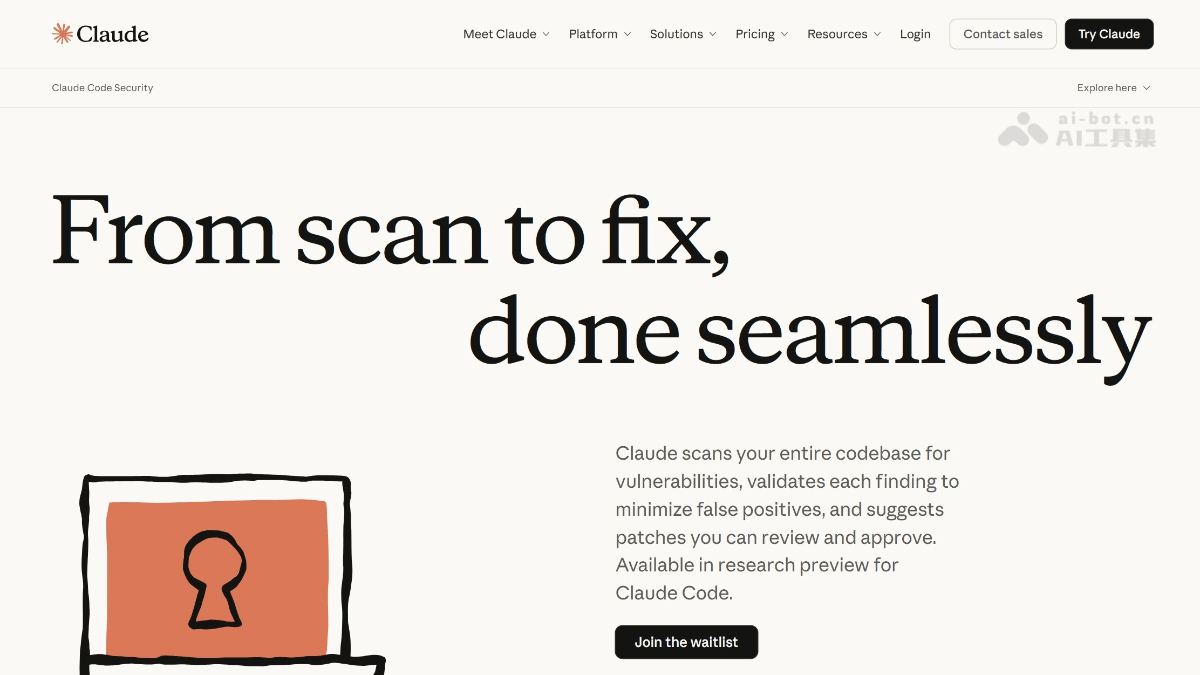
Claude Code Security is an AI code security scanning tool released by Anthropic based on the Claude Opus 4.6 model, available to Enterprise and Teams users as a limited research preview. Unlike traditional rule-based static analysis tools, it uses human-like reasoning to deeply understand code logic, can track data flows, and identify complex vulnerabilities such as business logic flaws and access control bypasses. The tool has helped Anthropic's red team discover over 500 high-severity vulnerabilities in production-grade open-source codebases. Developers can use it in two ways: through the terminal /security-review command or GitHub Actions integration. Scan results are graded by severity and accompanied by natural language explanations, while also providing auto-fix suggestions that can be manually reviewed.
Main Features of Claude Code Security
-
Human-like Code Reasoning: Reads and understands code logic like a human security researcher, tracking the flow paths of data in the application, rather than relying solely on preset rule matching.
-
Complex Vulnerability Detection: Specifically discovers deep security issues missed by traditional static analysis tools, including business logic flaws, access control failures, authentication bypasses, and more.
-
Multi-stage Verification Mechanism: Each vulnerability finding goes through multiple rounds of verification to ensure accuracy and is graded by severity, reducing false positives.
-
Natural Language Explanations: Provides clear natural language descriptions for each detected vulnerability, helping developers understand the nature of the problem and its scope of impact.
-
Auto-fix Suggestions: Provides a "Suggest fix" feature that generates targeted patch solutions for development teams to manually review before deciding whether to apply.
-
Flexible Integration Methods: Supports terminal command
/security-reviewfor instant scanning, and can also automatically detect every Pull Request via GitHub Actions. -
Enterprise-grade Permission Control: Based on Claude Code's security architecture, with read-only permissions by default, explicit authorization required for sensitive operations, and commands executed in a sandbox environment.
Technical Principles of Claude Code Security
-
Based on the Claude Opus 4.6 Large Model: The underlying layer uses Anthropic's latest flagship model, with powerful code understanding and reasoning capabilities.
-
Human-like Security Researcher Thinking: Simulates the audit process of human security experts, analyzing interactions between code components through deep semantic understanding, rather than relying on regular expressions or pattern matching.
-
Data Flow Tracking Technology: Can track the complete lifecycle of sensitive data across functions and files, identifying taint paths from input points to dangerous sinks.
-
Context-aware Analysis: Reasons based on the project's overall architecture and dependencies, understands business logic context, and discovers semantic-level vulnerabilities that rule engines struggle to capture.
-
Multi-stage Verification Pipeline: Uses a layered verification mechanism to cross-validate and assess confidence in preliminary findings, filtering out false positives.
-
Frontier Red Team Practical Training: Optimized based on 500+ high-severity vulnerability cases discovered by Anthropic's frontier red team over more than a year in real production codebases.
-
Sandboxed Isolation Execution: The scanning process runs in an environment isolated from the file system and network, ensuring that analysis activities do not affect the security of the host system.
Claude Code Security project address
- Project official website:https://claude.com/solutions/claude-code-security
Claude Code Security use cases
-
Open source project security audit: Helps open source maintainers quickly discover long-hidden vulnerabilities in codebases. Anthropic has provided free accelerated access for open source project maintainers.
-
Enterprise code baseline review: Performs automated security scanning before code merge, establishes a security baseline, and prevents vulnerabilities from flowing into the production environment.
-
Pull Request security gate: Through GitHub Actions integration, automatically triggers security detection on every PR submission as a necessary part of code admission.
-
Business logic vulnerability discovery: Specifically targets logic flaws in complex business systems such as e-commerce and finance, such as payment bypass, privilege escalation, coupon abuse, etc.
-
Legacy code security assessment: Conducts in-depth security checkups on historical codebases to discover "sleeping" high-risk vulnerabilities missed by traditional tools.
-
Security team efficiency improvement: Assists AppSec teams in expanding audit coverage, freeing expert energy from repetitive scanning work to focus on complex vulnerability analysis.