
What is BlazeSQL
BlazeSQL is AI-drivendata analysis tool, which can transform natural language questions into SQL queries, helping users quickly gain data insights from databases. BlazeSQL supports a variety of databases, provides enterprise-grade security and privacy protection, and supports users in performing complex data analysis without needing an in-depth understanding of SQL. BlazeSQL is based on automated query generation, saving time for technical teams, while also providing personalized dashboards and proactive insight suggestions to improve work efficiency.
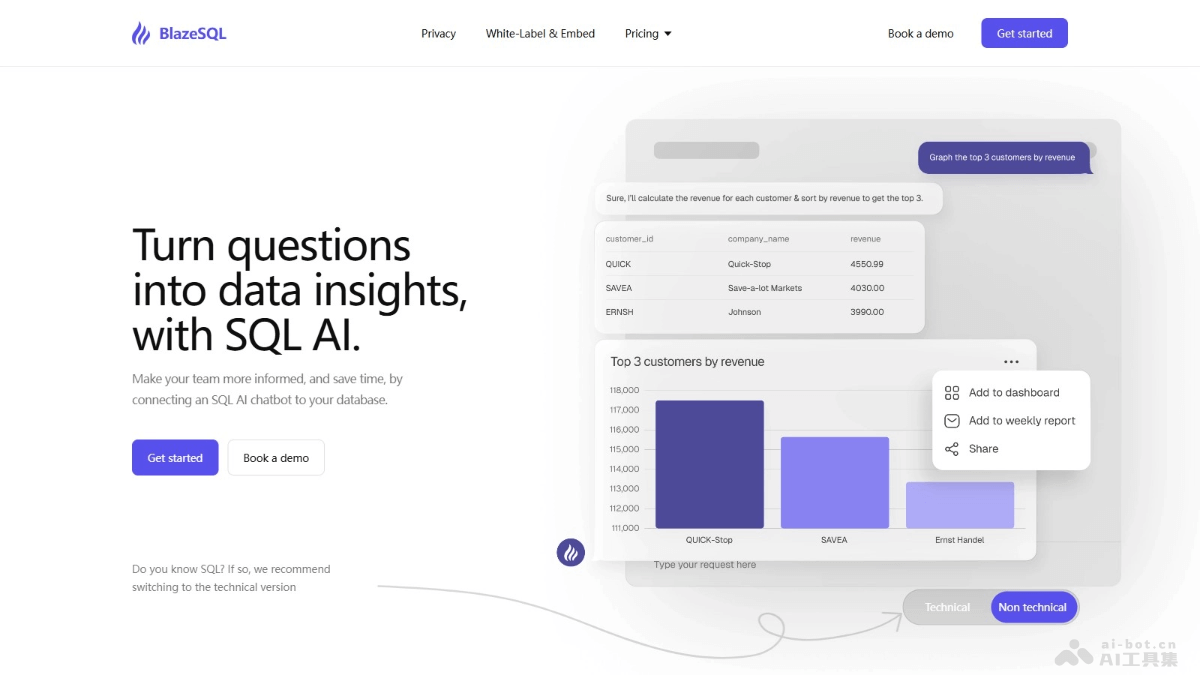
Main Features of BlazeSQL
- Natural Language Processing: Directly converts natural language questions into SQL queries.
- Database Connection: Compatible with a variety of popular SQL databases and data warehouses.
- Technical Work Savings: Allows technical personnel to focus on core work and reduces time spent writing SQL queries.
- Security and Privacy: Only views database metadata, keeping query results local and private.
- Personalized Dashboards: Supports users in creating customized dashboards that meet individual needs.
BlazeSQL Official Website Address
- Official Website Address:blazesql.com
BlazeSQL Product Pricing
- Pro Plan: $39/month, professional AI data analyst, charts and dashboards, desktop version with private database connection.
- Advanced Plan: $99/month, provides the most intelligent AI services, all Pro Plan features, AI-generated report emails, advanced analysis AI (can run Python, public and embeddable dashboards.
- Team Plan:Starting at $149/month, all Blaze Pro Plan features, includes 3 users (additional users require Blaze Pro), shared dashboards, no-code chatbot.
BlazeSQL Application Scenarios
- Business Analysis: Non-technical business analysts use natural language queries to gain insights from sales, marketing, or financial data without writing complex SQL code.
- Data-Driven Decision Making: Management quickly obtains key performance indicators (KPIs) and trend analysis to support decision-making.
- Customer Support and Sales: Customer service and sales teams query customer data to provide personalized service and improve sales efficiency.
- Product Management: Product managers analyze user behavior data to optimize product features and user experience.
- Supply Chain Management: Supply chain teams monitor inventory levels, logistics, and supplier performance to optimize supply chain efficiency.