
What is Airbook
Airbook is an AI-driven GTM (Go-to-Market) data platform designed specifically for enterprisesdata analyticsand operations. It integrates data centralization, intelligent analysis, visualization, and workflow automation into a single platform, supporting connections to various business tools and data sources such as CRM, marketing tools, financial systems, etc., enabling data synchronization and cleaning without complex engineering support. Users can quickly get answers to complex analytical questions through simple English queries, and the platform can automatically generate SQL queries and return results. Airbook offers three modes of operation: SQL IDE, no-code visualization, and AI assistant, meeting the needs of different users, supporting rapid creation of charts and dashboards, and enabling a closed loop from insight to action.
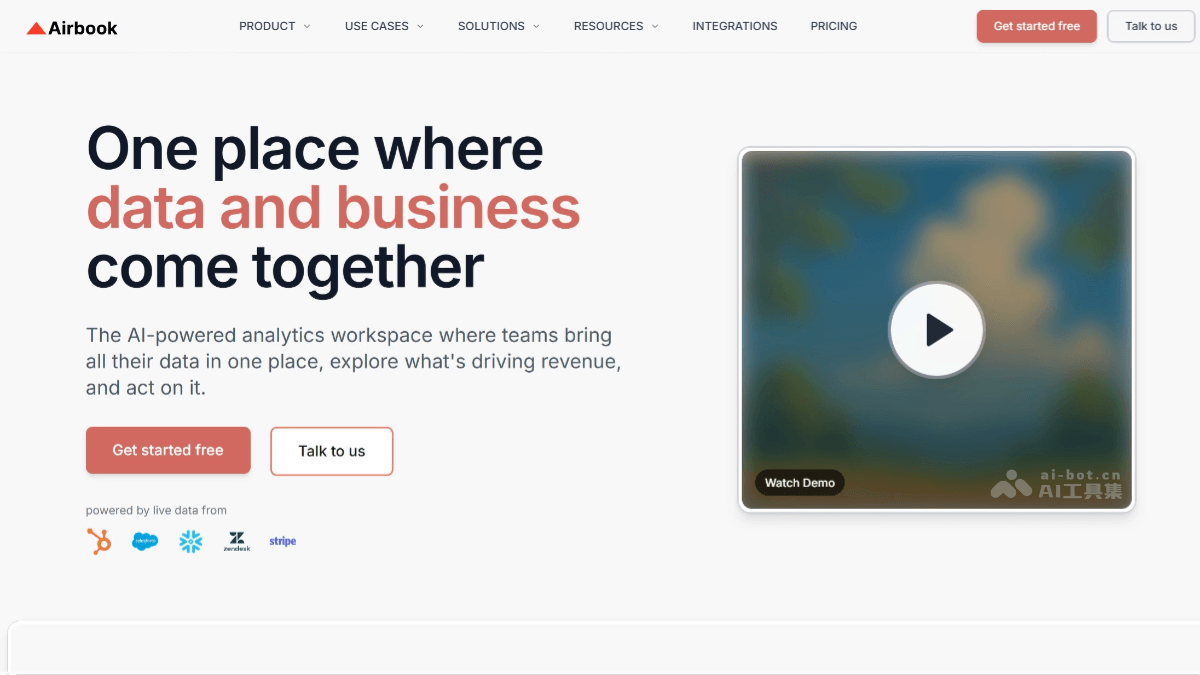
Airbook's Main Features
-
Data Centralization: Connect multiple data sources, centralize data without engineering support, and support data acquisition from CRM, product, marketing, and financial tools, etc.
-
Intelligent Analysis: AI-driven, users can ask questions in English and quickly get answers to complex questions, with support for SQL query generation.
-
Visualization and Dashboards: Easily create charts and dashboards, and analysis results can be converted into dashboards or trigger workflows, enabling a closed loop from insight to action.
-
Workflow Automation: Reduce data preparation time, enable team members to self-serve data, centralize data governance, and reduce repetitive work.
-
Security and Accessibility: Provide precise role and permission controls to ensure data security and comply with the highest security standards.
Airbook's Official Website Address
- Official Website Address:https://www.airbook.io/
Airbook's Application Scenarios
-
Marketing Campaign Effectiveness Evaluation: Analyze the impact of different marketing campaigns on user activation, conversion, and revenue, measure the ROI of each channel, and track the entire process from first touch to successful transaction.
-
Sales and Customer Support Collaboration: Identify deals with high product usage customers closed by sales representatives, find accounts that submitted the most support tickets before churning, and help sales, customer support, and finance teams share data and collaborate.
-
Product Usage and User Behavior Analysis: Understand the usage of product features, analyze user behavior paths, such as which features are most frequently used by customers from the latest paid campaigns, which product-qualified leads come from organic traffic, etc.
-
Customer Lifecycle Management: Analyze the conversion rates of customers from visits to leads to revenue generation, identify key nodes and bottlenecks in the customer lifecycle, and provide personalized services to customers.
-
Business Process Optimization: Through automated data processing and analysis, reduce the time and effort of manual data preparation, improve work efficiency, and optimize business processes.