
DeepSeek from Beginner to Mastery
"DeepSeek from Beginner to Mastery" was written by Postdoctoral Fellow Yu Menglong and his team at the Metaverse Culture Laboratory of the New Media Research Center of Tsinghua University's School of Journalism and Communication. The core content of the document revolves around DeepSeek's technical features, application scenarios, usage methods, and how to improve AI usage efficiency through prompt design, helping users go from beginner to mastery in using DeepSeek.
Site Owner's Recommendation:How to solve DeepSeek server busy issues? 16 free full-power R1 alternatives


Getthe original PDF file of "DeepSeek from Beginner to Mastery", scan the QR code to follow and reply: 20250204
I. Introduction to DeepSeek
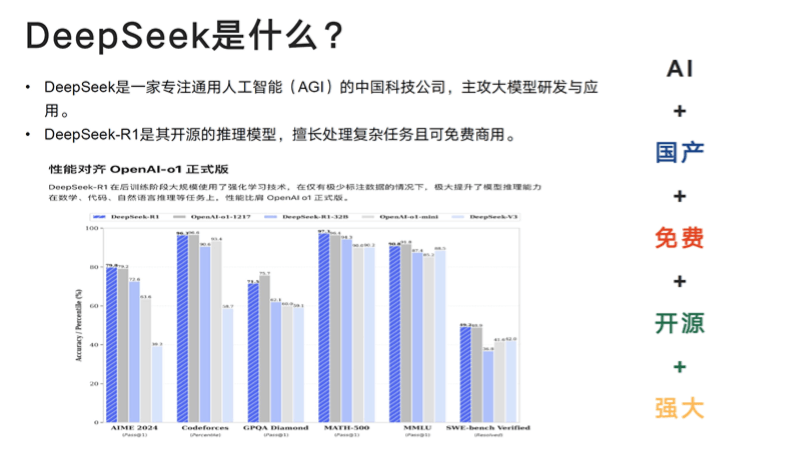
- What is DeepSeek?
- is a Chinese technology company focused on artificial general intelligence (AGI), mainly engaged in large model research, development, and application. DeepSeek-R1 is an open-source reasoning model that excels at handling complex tasks and can be used commercially for free. Main features:AI + Domestic + Free + Open Source + Powerful。
- What can DeepSeek do?
- It directly serves users or supports developers, providing application scenarios such as intelligent dialogue, text generation, semantic understanding, computational reasoning, and code generation and completion. It supports web search and deep search modes, and also supports file uploads, and can scan and read text content from various files and images.
II. How to Use DeepSeek
-
Platform to use: Visit theDeepSeekofficial website.
- Choosing between reasoning models and general models: Choose the appropriate model according to the task type (such as DeepSeek-R1).
-
Reasoning model: Excels at mathematical derivation, logical analysis, code generation, etc., suitable for tasks with high logical density.
-
General model: Excels at text generation, creative writing, multi-turn dialogue, etc., suitable for tasks with high diversity.
-
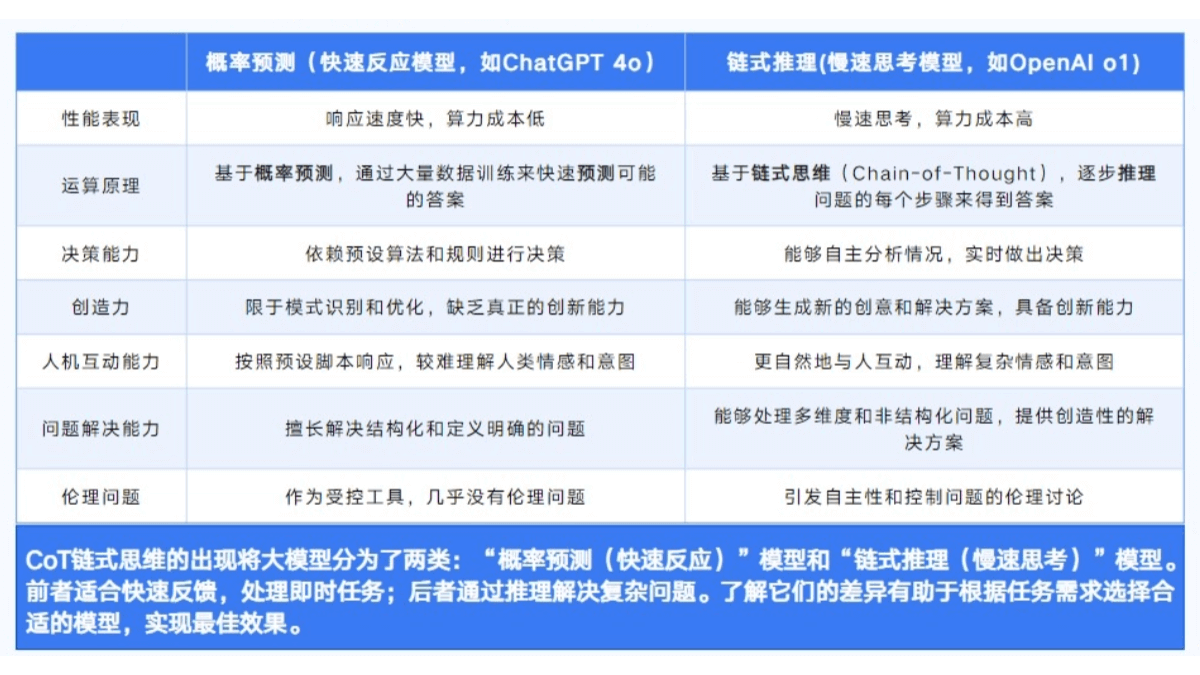
- Fast thinking and slow thinking: Probabilistic prediction models vs. chain-of-thought reasoning models. The difference between fast-response models (such as ChatGPT) and slow-thinking models (such as OpenAI's reasoning models).
III. Prompt Design and AI Interaction
- Definition and types of prompts
- A prompt is an instruction or piece of information input by the user to an AI system, used to guide the AI to generate specific output or perform a specific task. It includes instruction-based, Q&A-based, role-playing, creative, and other types, emphasizing the importance of choosing the appropriate prompting strategy according to the task type.
- Core skills of prompt design
-
Problem restructuring, creative guidance, result optimization, cross-domain integration, systems thinking
-
- Advanced skills of prompt design
-
Contextual understanding, abstraction ability, critical thinking, innovative thinking, ethical awareness
-
IV. The DNA of Prompts and Combination Strategies
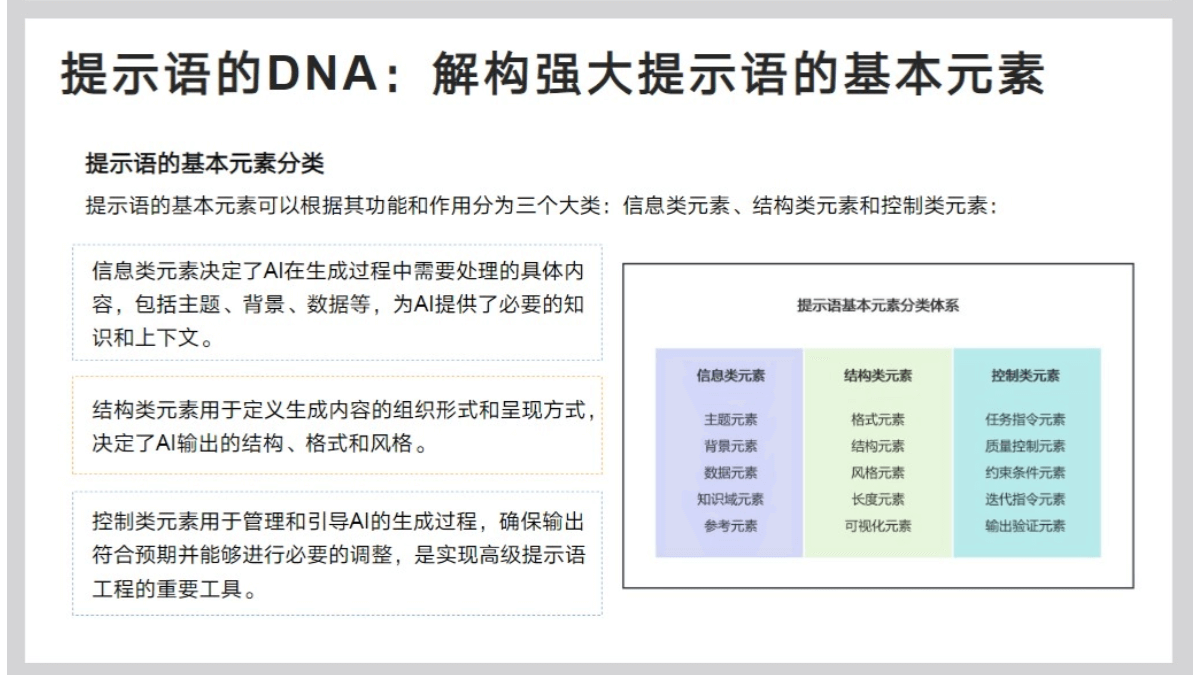
- Classification of basic prompt elements
-
Information type, structure type, control type
-
- Prompt element combination matrix
-
Improve output accuracy, enhance creative thinking, optimize task execution efficiency, etc.
-
- Synergy theory of prompt combinations
V. Secrets for Training AI: Key Strategies and Common Pitfalls
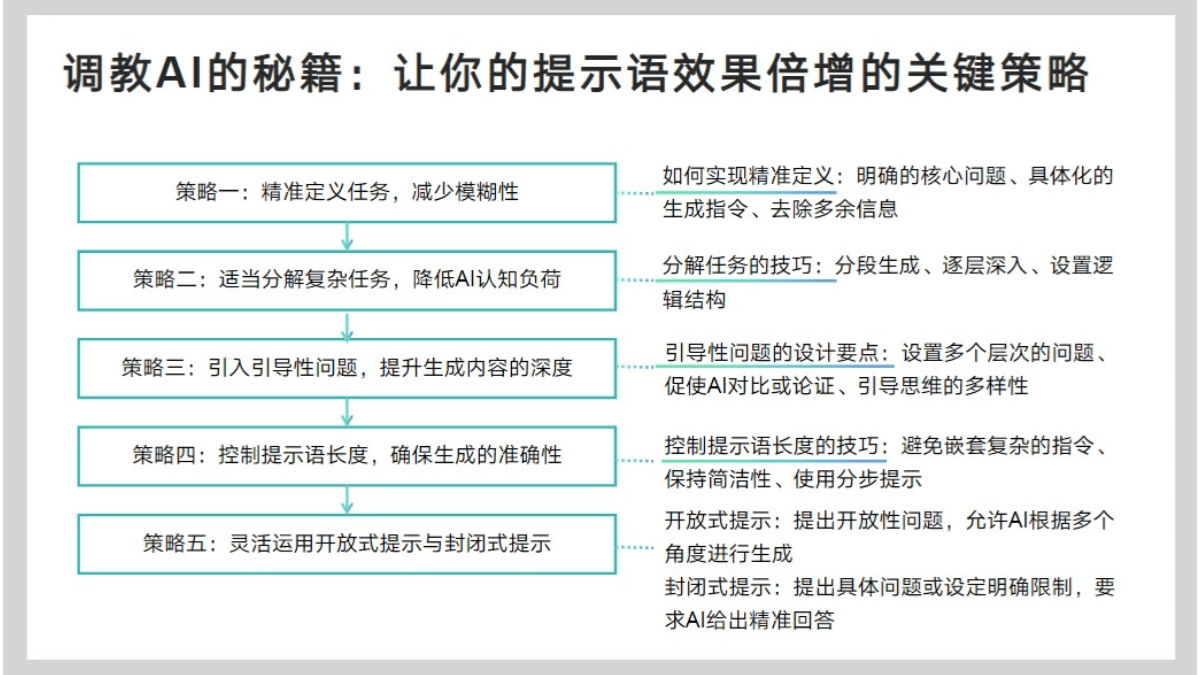
- Key strategies for prompt design
- Strategies such as precisely defining tasks, decomposing complex tasks, and designing guided questions
- Common pitfalls and countermeasures
-
Common pitfalls such as lack of iteration, excessive instructions, assumption bias, hallucination generation, and neglect of ethical boundaries, and countermeasures
-
VI. Ethics and Limitations of AI
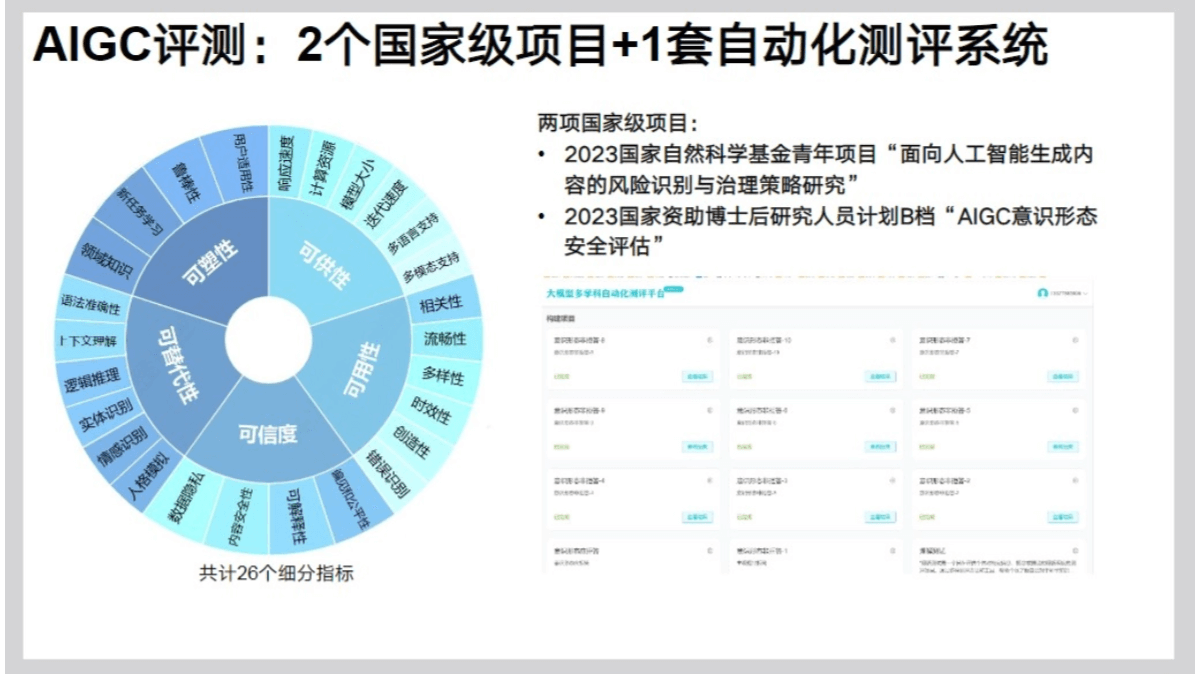
- The AI hallucination phenomenon and its causes
-
Ethical issues that AI may bring, such as privacy protection, fairness, and transparency, along with corresponding response strategies. It mentions the phenomenon of AI hallucinations, where AI generates content that seems reasonable but is actually incorrect, and analyzes its causes and countermeasures.
-
- Potential shortcomings and limitations of AI
- Including explainability, data bias, real-time updates, etc.
- Key points of AI ethical considerations
- Privacy protection, fairness, transparency, etc.
VII. Practical Techniques and Cases
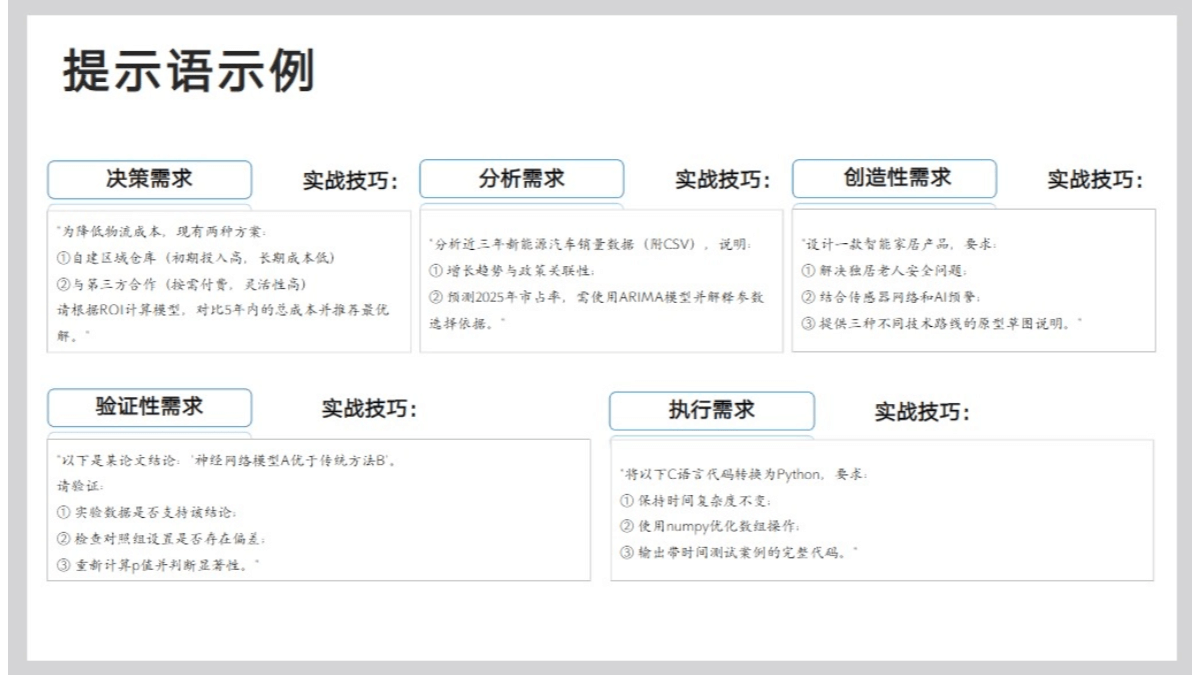
- Prompt design for different types of needs
-
Through multiple practical cases, it demonstrates how to design effective prompts according to different task needs, including prompt design for different need types such as decision-making needs, analytical needs, creative needs, verification needs, and execution needs
-
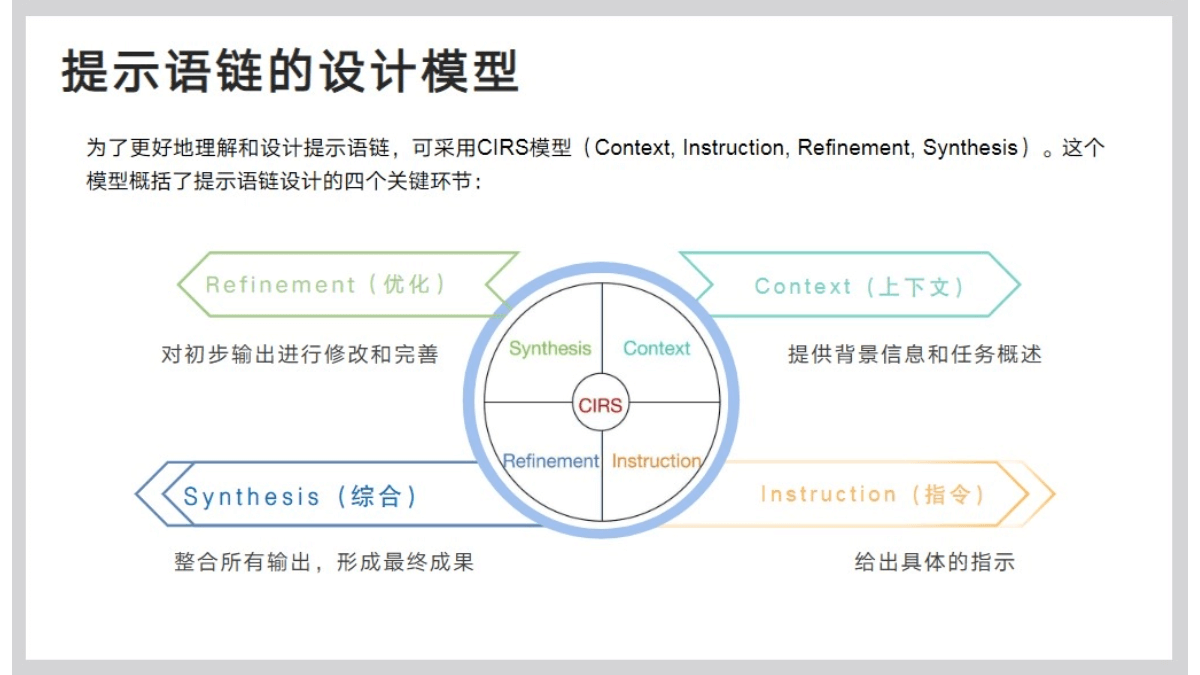
- The concept, mechanism of action, design principles, and models of prompt chains
- It provides detailed prompt examples and practical techniques to help users better understand and apply AI technology.
- Prompt chain optimization strategies
-
Prompt chain optimization strategies such as thinking expansion, convergent thinking, cross-disciplinary thinking, and deep integration
-
VIII. Advanced Prompt Design Methods
- Innovative design strategies
-
Innovative design strategies such as the abstract-concrete cycle method, reverse design thinking, contradictory thinking method, and emergent thinking model
-
- Practical applications of prompt chains
-
Complex task decomposition, multimodal information processing, quality control, etc.
-
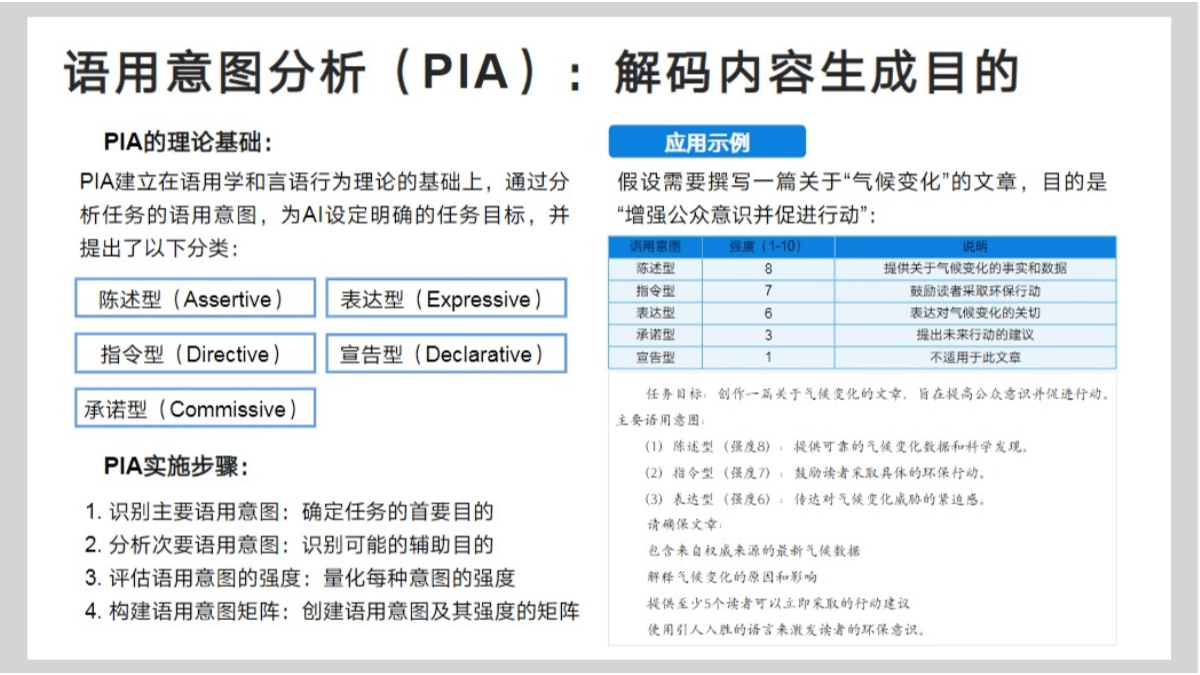
- Advanced techniques (PIA, TFM, DES, etc.)
- Advanced techniques such as Pragmatic Intent Analysis (PIA), Topic Focus Mechanism (TFM), and Detail Enhancement Strategy (DES)
IX. Prompt Design for Specific Application Scenarios
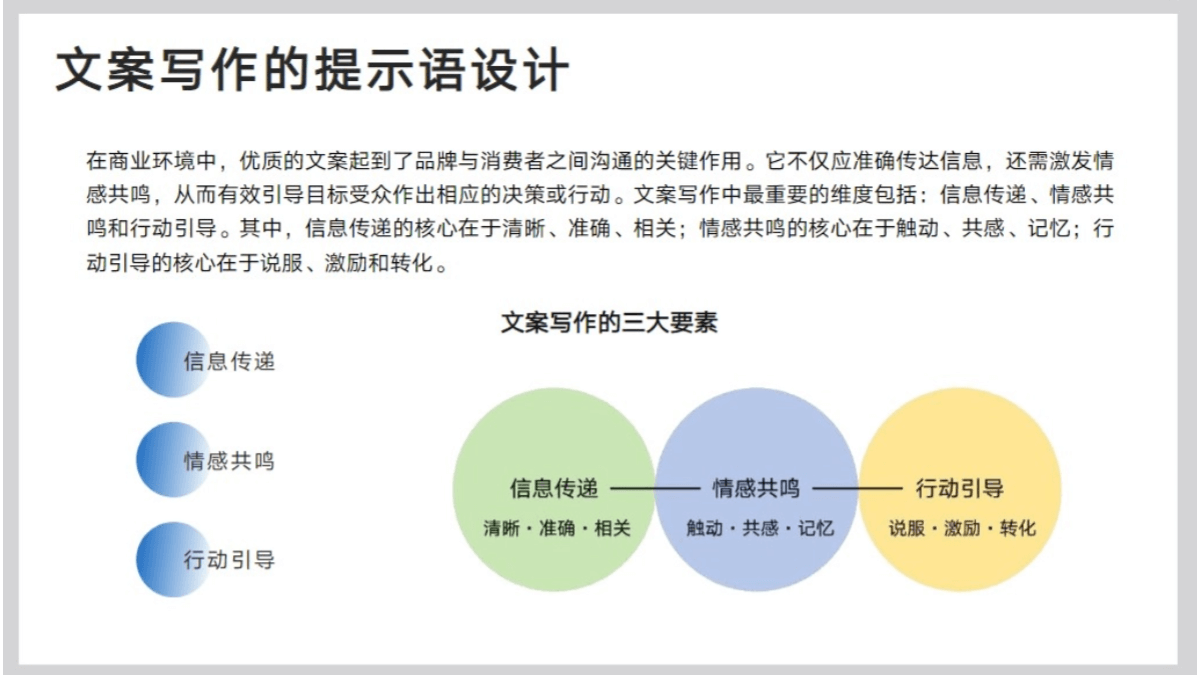
- Copywriting: information transmission, emotional resonance, action guidance
- Marketing planning: creative concepts, communication strategies, execution plans
- Brand stories: brand positioning, value proposition, future vision
- Year-end summary: performance review, achievement display, future planning
- Social media content creation: WeChat Official Account, Weibo, Xiaohongshu, Douyin
X. Human-Machine Symbiosis and Capability Development
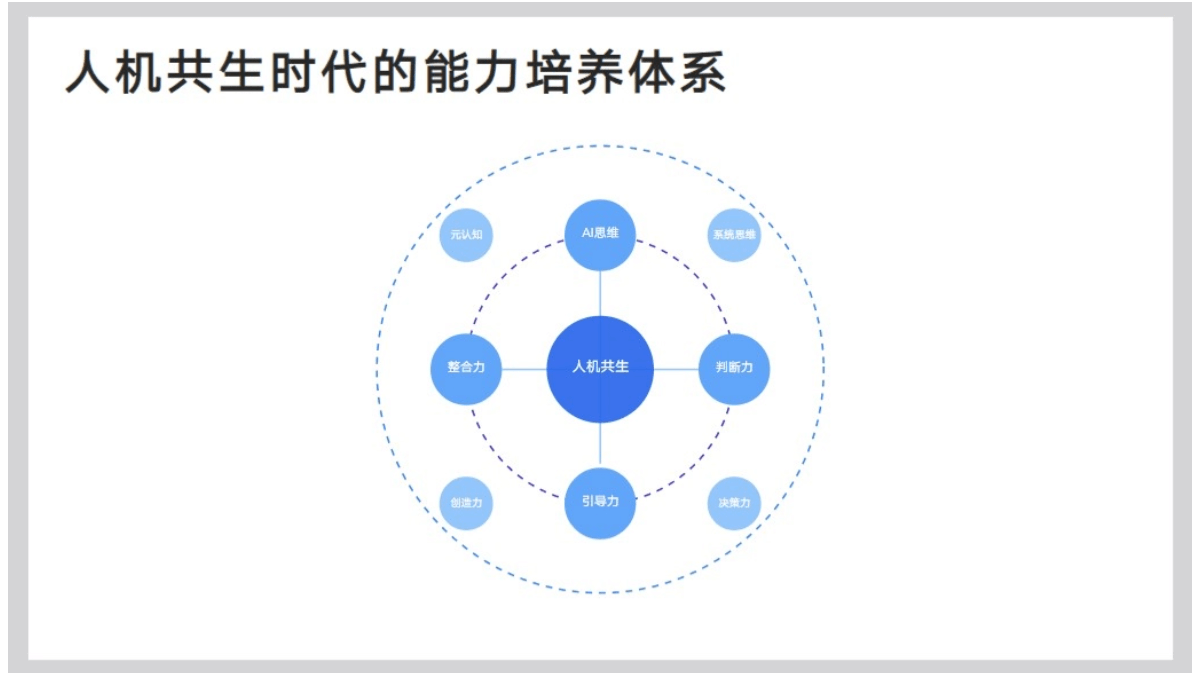
- The capability development system in the era of human-machine symbiosis
- Four core capabilities: AI thinking, integration ability, guidance ability, and judgment ability
- Prompt engineering and prompt frameworks
- TASTE、ALIGN
- The path of advancement from "user" to "innovator"
- Knowledge awakening, AI-assisted brainstorming; knowledge integration, AI-assisted association analysis; knowledge innovation, forming structured prompts
- Levels of AI use and paths to breakthrough
- Basic use, advanced use, innovative use; establish a prompt system, design collaboration processes, develop innovative methods, and build personal characteristics
XI. Summary and Outlook
AI technology will in the future develop toward improved model performance, multimodal integration, ethical and sustainable development, deep industry integration, and closer human-AI collaboration.
As a key link in human-computer interaction, prompt design is important because it can accurately convey user needs, improve AI performance, and avoid misunderstandings and bias, while its continuous optimization requires adjusting according to task needs, iterating based on AI feedback, and continuously learning the latest research results to achieve cross-domain innovation.
Human-AI collaboration has enormous potential, as it can improve work efficiency, accelerate innovation, promote knowledge sharing and personalized services, but at the same time it also faces challenges such as building trust, clarifying responsibilities, updating skills and knowledge, and addressing ethical and legal issues.
When everyone can use AI, how do you use it better and more brilliantly?
Getthe original PDF file of "DeepSeek from Beginner to Mastery", scan the code to follow and reply: 20250204