
In 2024, a startup team from Singapore named Butterfly Effect received an acquisition offer from ByteDance. ByteDance offered $30 million, intending to integrate the team into the Doubao system and shore up its then-weakness in the general-purpose Agent field. However, the deal ultimately fell through; the founding team refused a fate of being “swallowed up,” citing a valuation that was too low.
In March 2025,Butterfly Effect launched the world's first general-purpose agent product, Manus, and the AI agent capabilities it demonstrated quickly blew up online.
By the end of 2025, Manus put Butterfly Effect in the spotlight again, and Meta would acquire Manus at a valuation of several billion dollars.
Dramatically, just 9 days later, the Ministry of Commerce stated: it will conduct an assessment of Meta's acquisition of Manus.
On the other side,after ByteDance missed out on Manus, early this year it launched an AI product focused on office scenarios—AnyGen. Many people see it as a Manus alternative, but is that really the case?
Today, K-jie is going to test them out to see what exactly is different between them and which is more suitable for us workers.
01. The right office buddy
In office scenarios, the eternal task is writing all kinds of documents and PPTs.
PPT generation
Prompt: Help me plan a 7-day trip departing from Beijing to Iceland in May 2026. Requirements: include aurora viewing (even though it's off-season, still try), Blue Lagoon geothermal spa booking, car rental price comparison (prefer a four-wheel-drive SUV), and check the latest Schengen visa policy. Finally, generate a PPT with a budget table.
AnyGen's form pre-selection interaction made me go “huh?” for a moment~
It's the first time I've seen this kind of interaction—it doesn't just execute immediately, but ratherlets the user choose and supplement some information it thinks is missing。
It's stillpre-checked, so users only need to confirm and adjust.
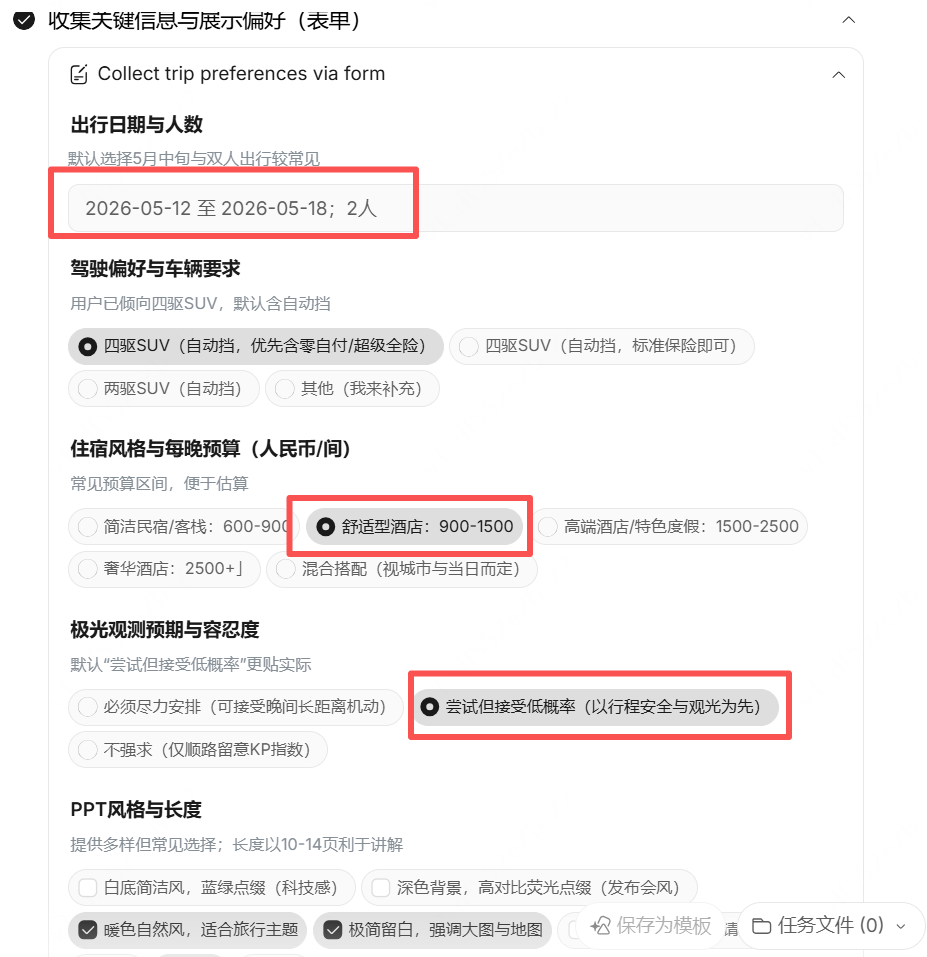
If we don't modify anything, that's fine too; there's a countdown submission time, and it submits automatically when time is up. This avoids the interface just sitting there motionless after you submit a request and then switch away.
AnyGen has many novel points in the user experience, creating a sense of contrast with tools on the market…
Let's look at the final result. To be honest, it's pretty good~
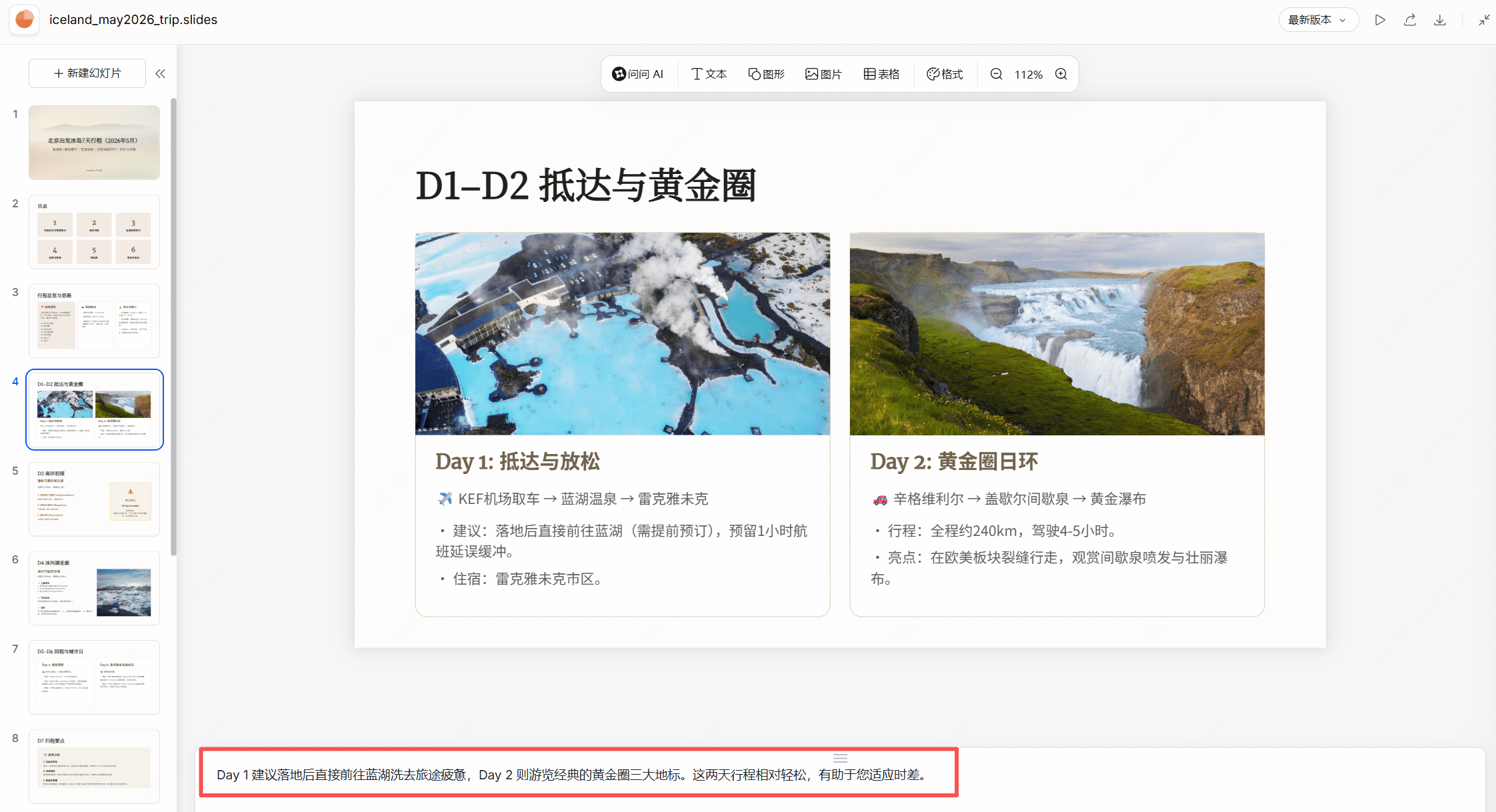
The layout is clear, with no redundant text.
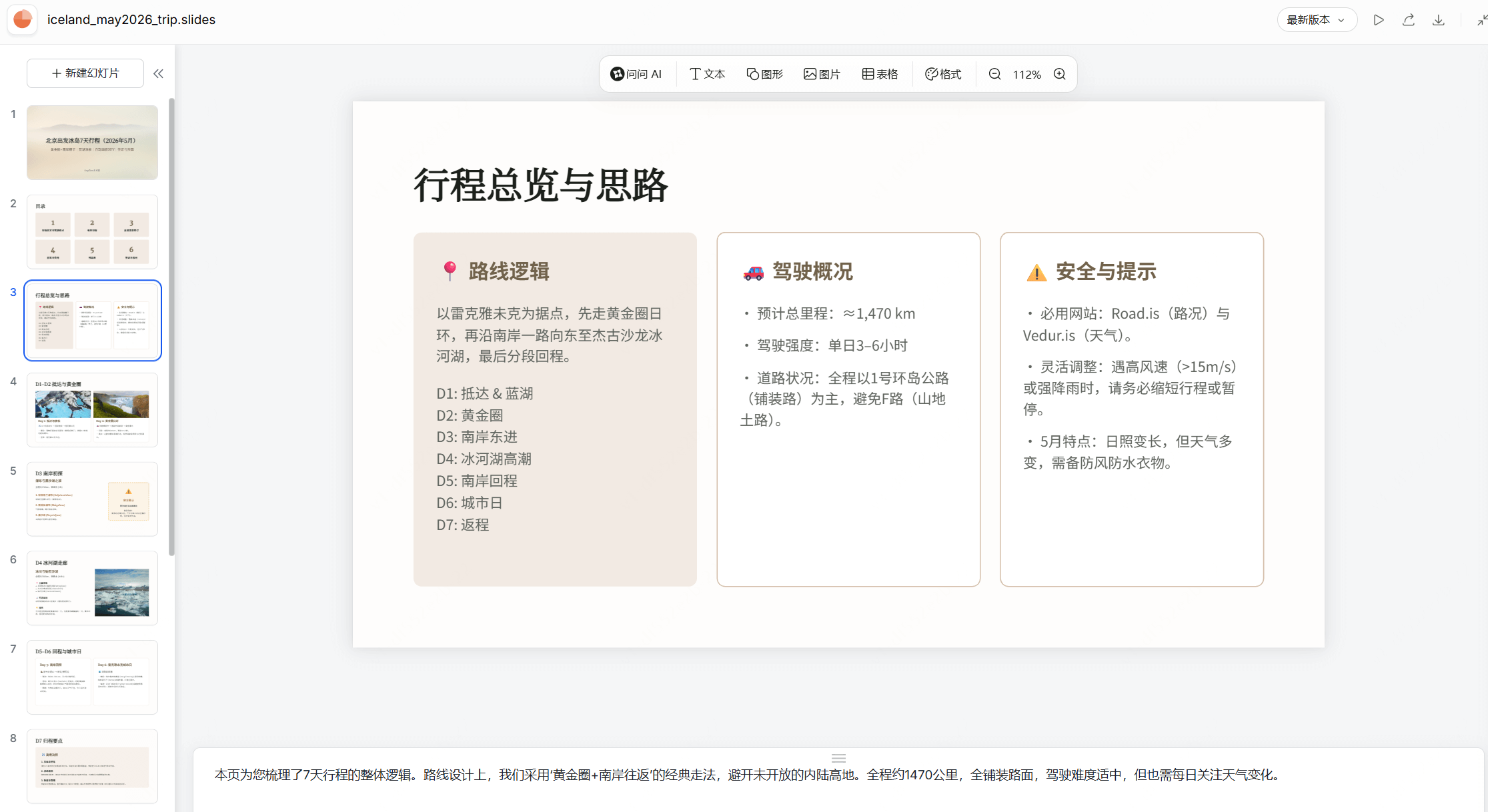
At the bottom of each page, it also provides key points to focus on, and the descriptions don't have an AI flavor at all.
It also gave me an organized budget table:
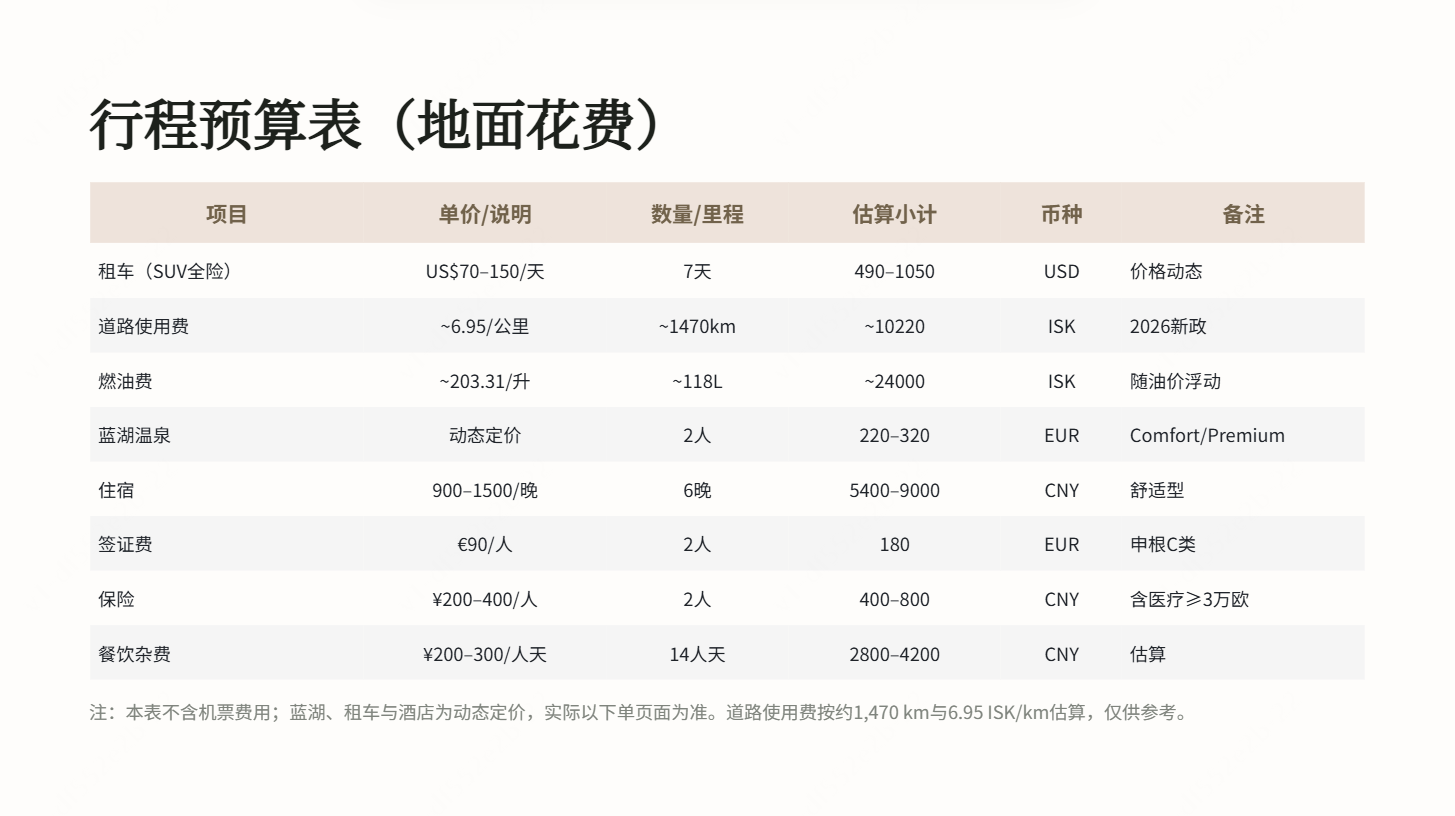
But it's not as excellent as Manus.
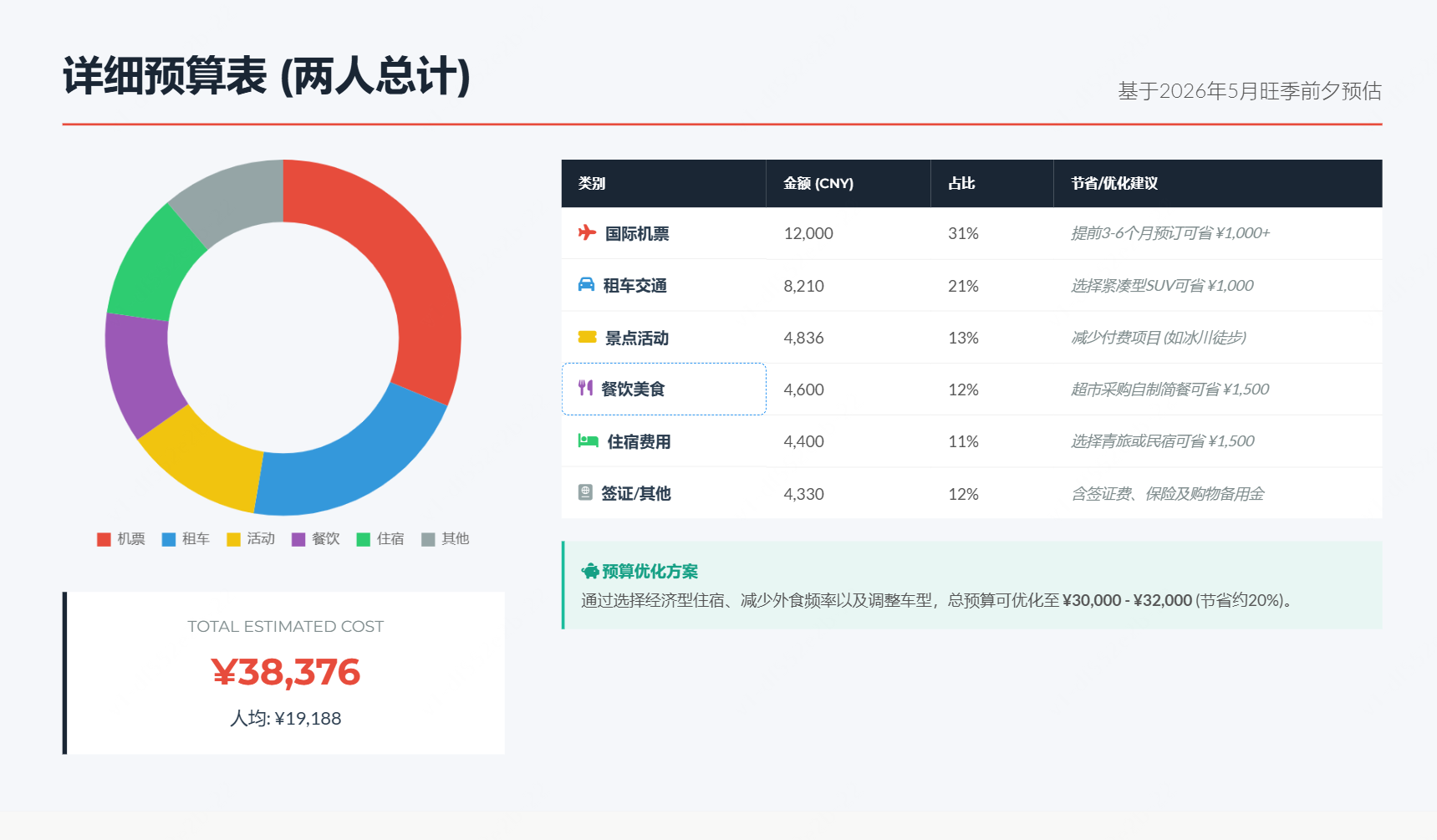
In the budget table, Manus gave money-saving suggestions for each item and also output a visualized pie chart, making it clear at a glance where the bulk of the spending is.
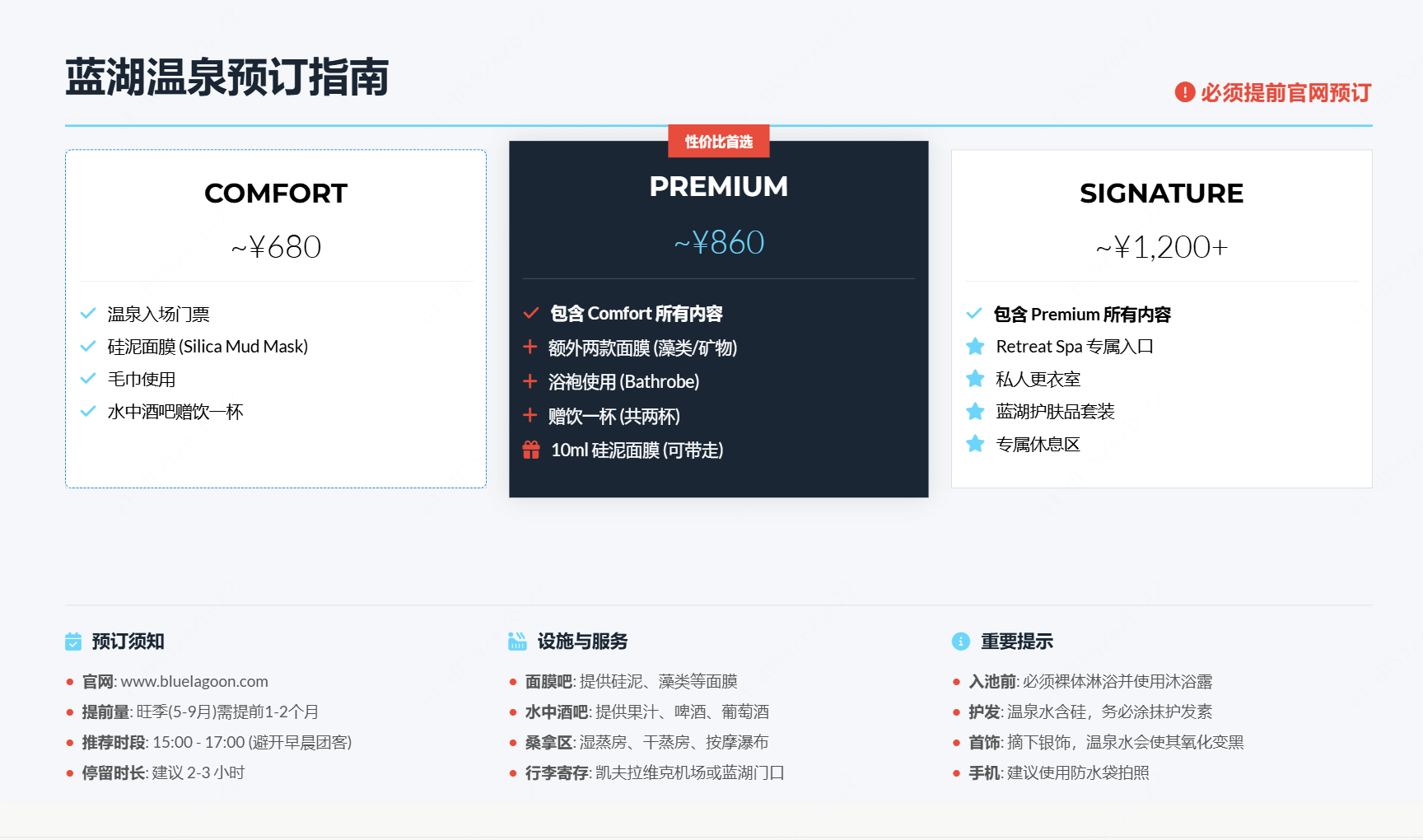
For entertainment items, it provided multiple options and highlighted the most cost-effective one.
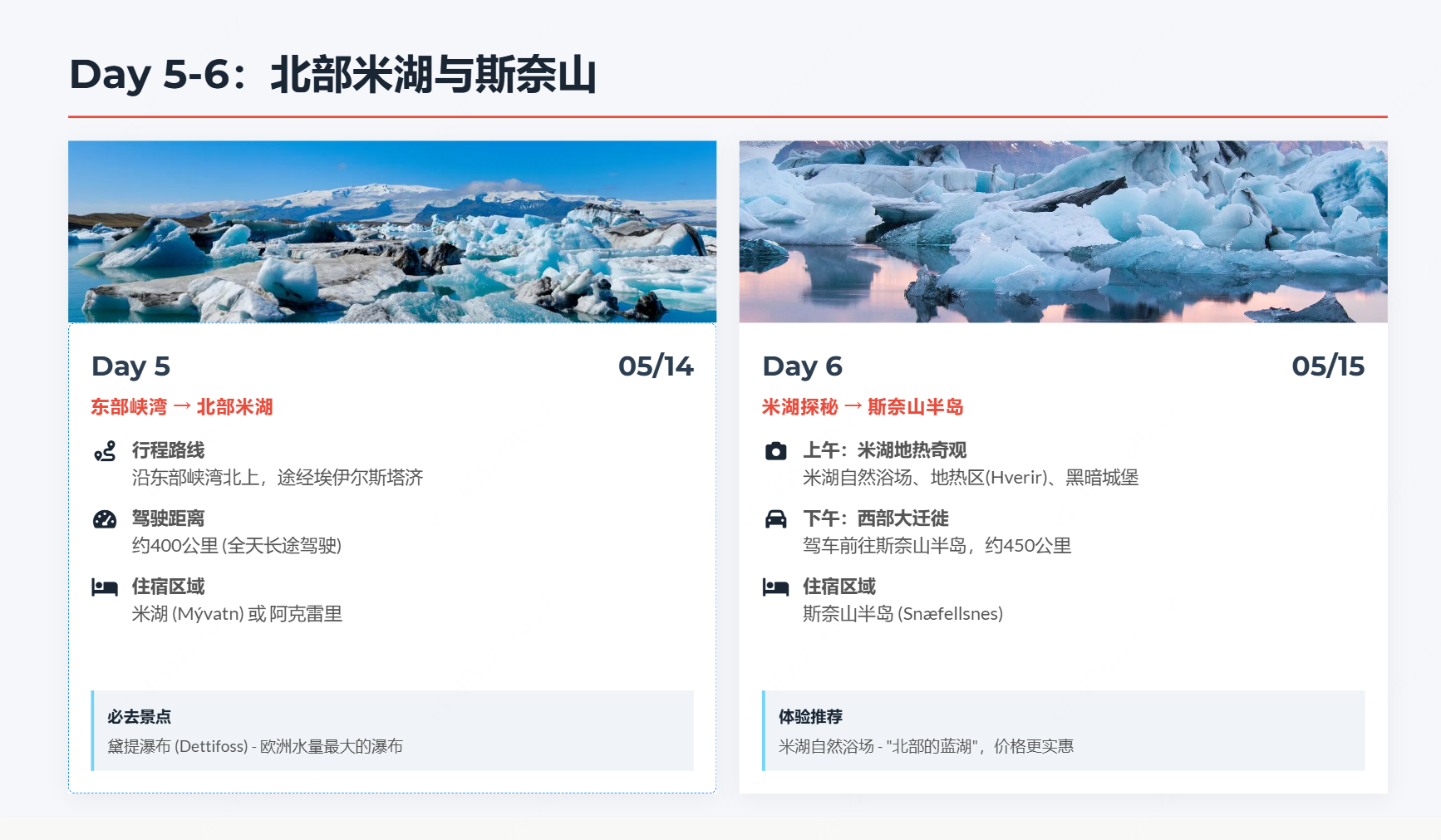
The daily itinerary is also specific down to what to do in the morning, noon, and afternoon:
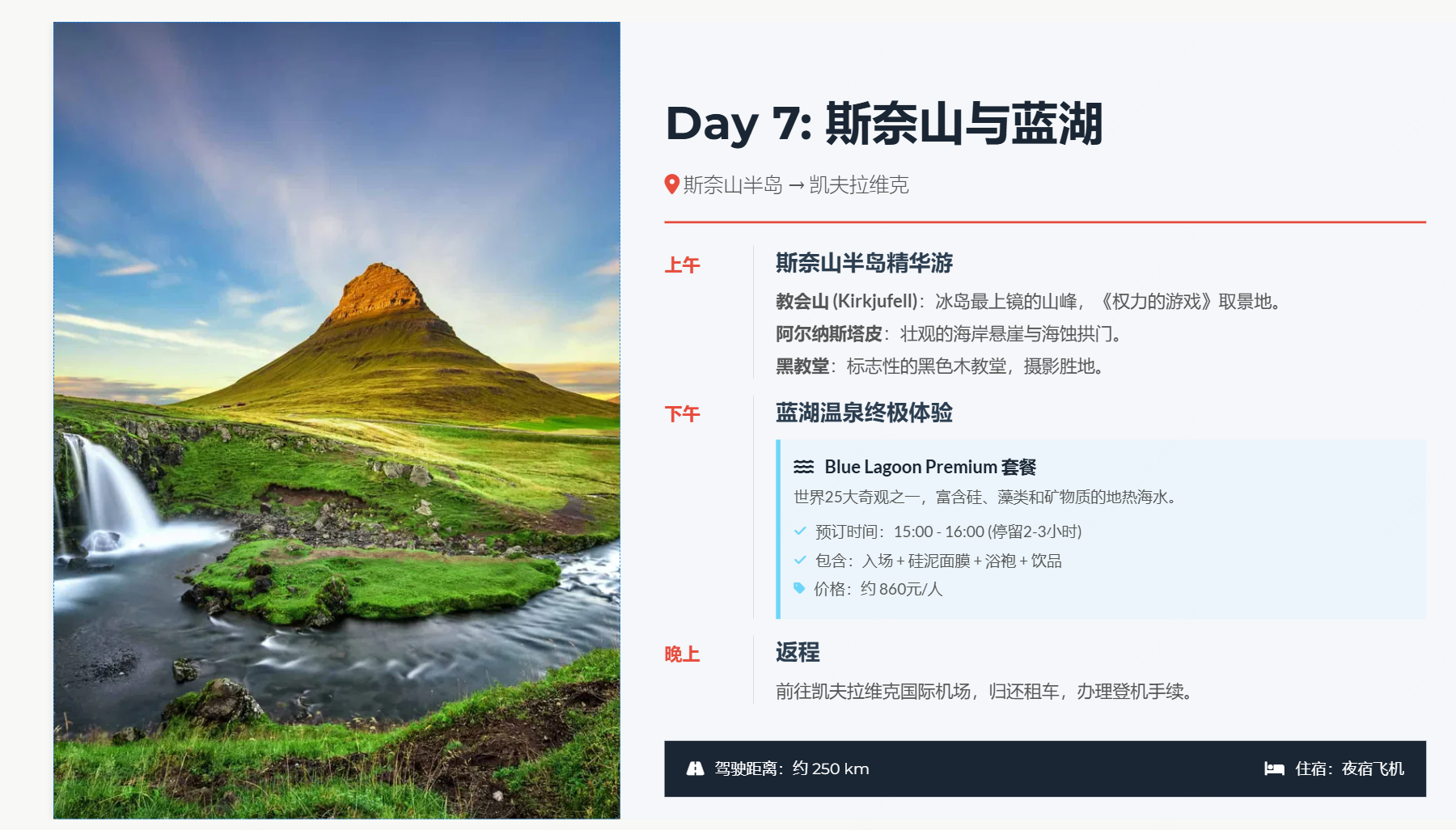
With Manus, after entering the prompt, I really did nothing at all, and it output 12 pages in total. The overall style is minimalist and elegant, perfectly fitting the travel scenario.
Every element supports direct editing and modification, and layout adjustments.
In one word: awesome!
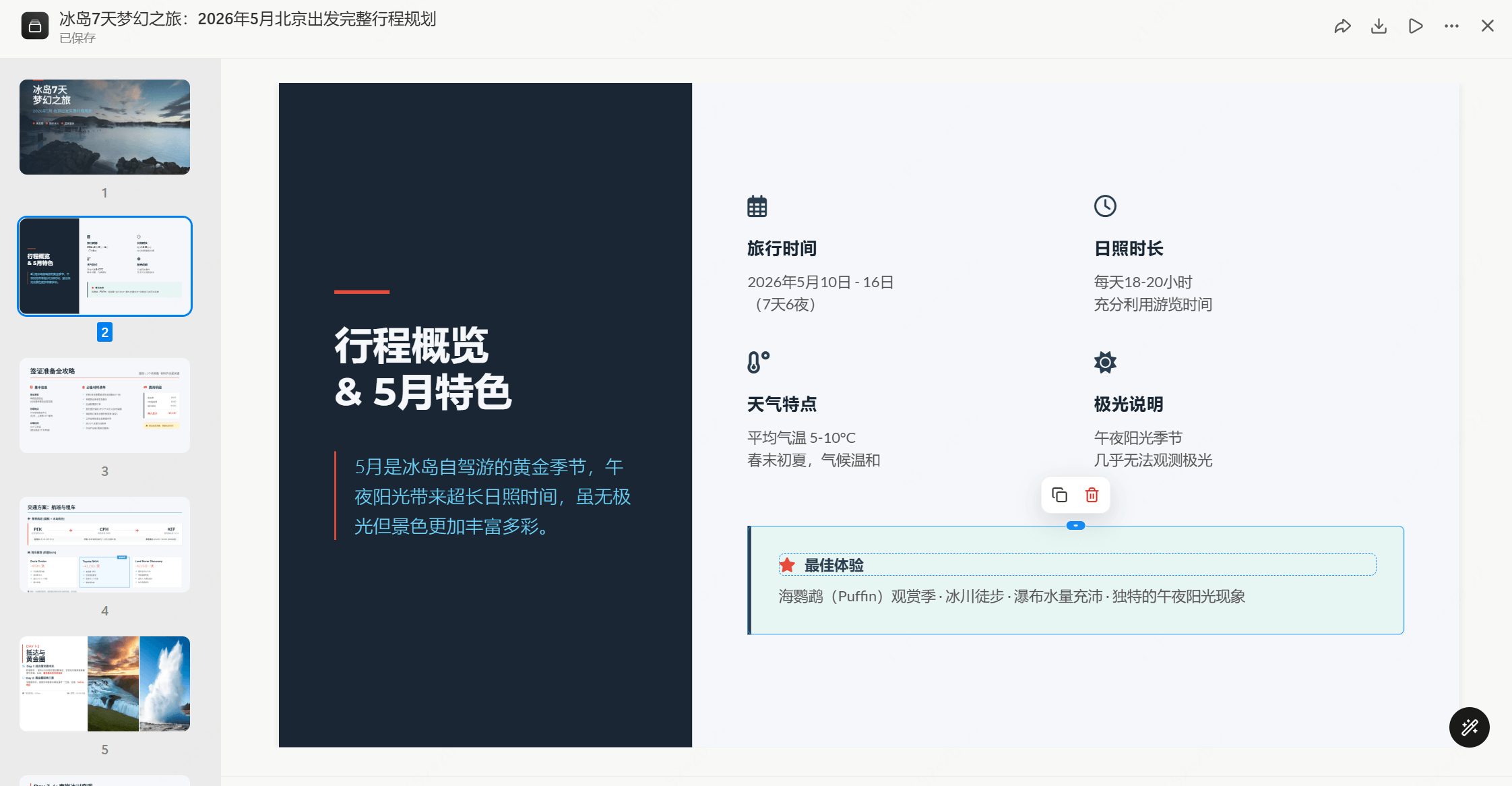
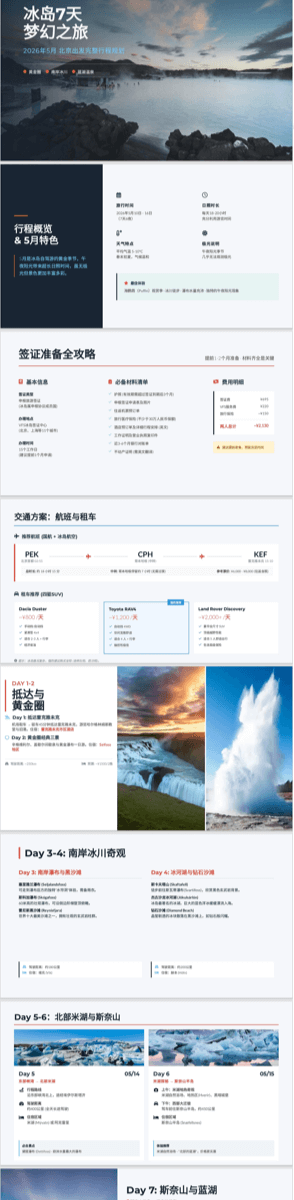
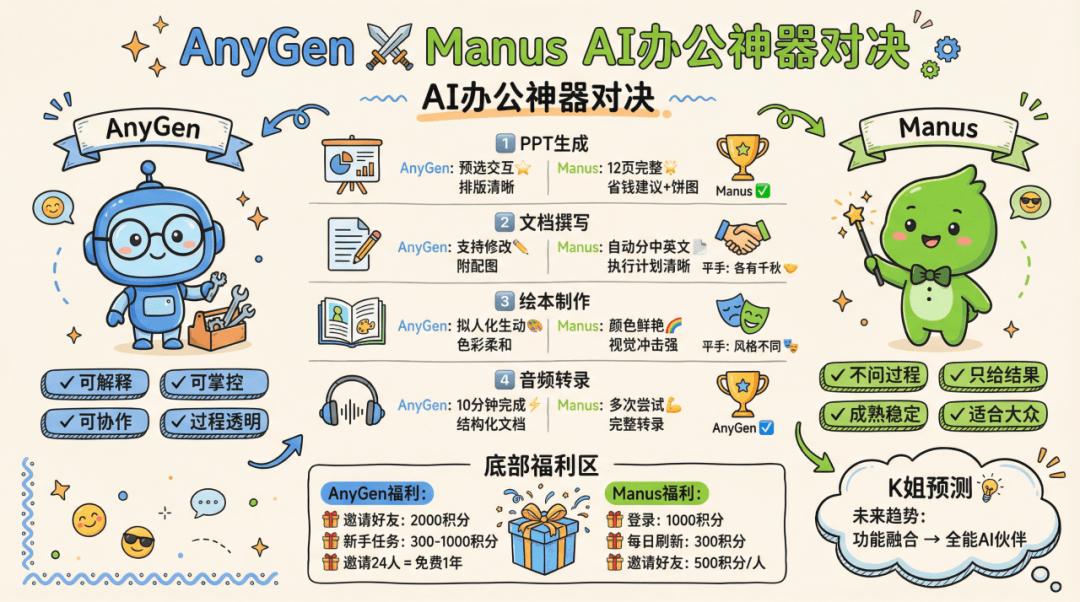
I have to say, AngGen and Manus are evenly matched.
Document writing
Prompt:https://ai-bot.cn/ Help me write a product introduction marketing document for this website; it needs to be in both Chinese and English.
Manus started by listing an execution plan. Letting the user see the plan first can greatly increase their sense of reassurance.
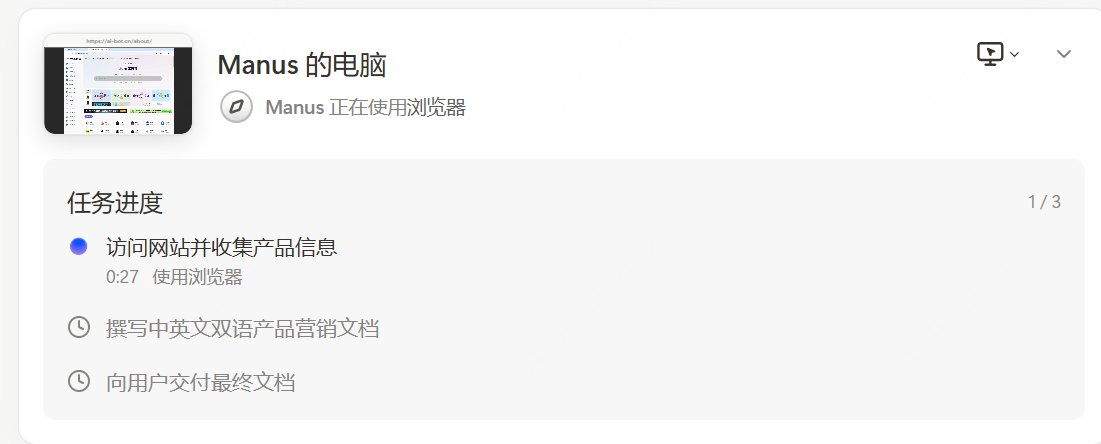
Needless to say, the result was as steady as ever, automatically split into two versions of the document, one in Chinese and one in English.
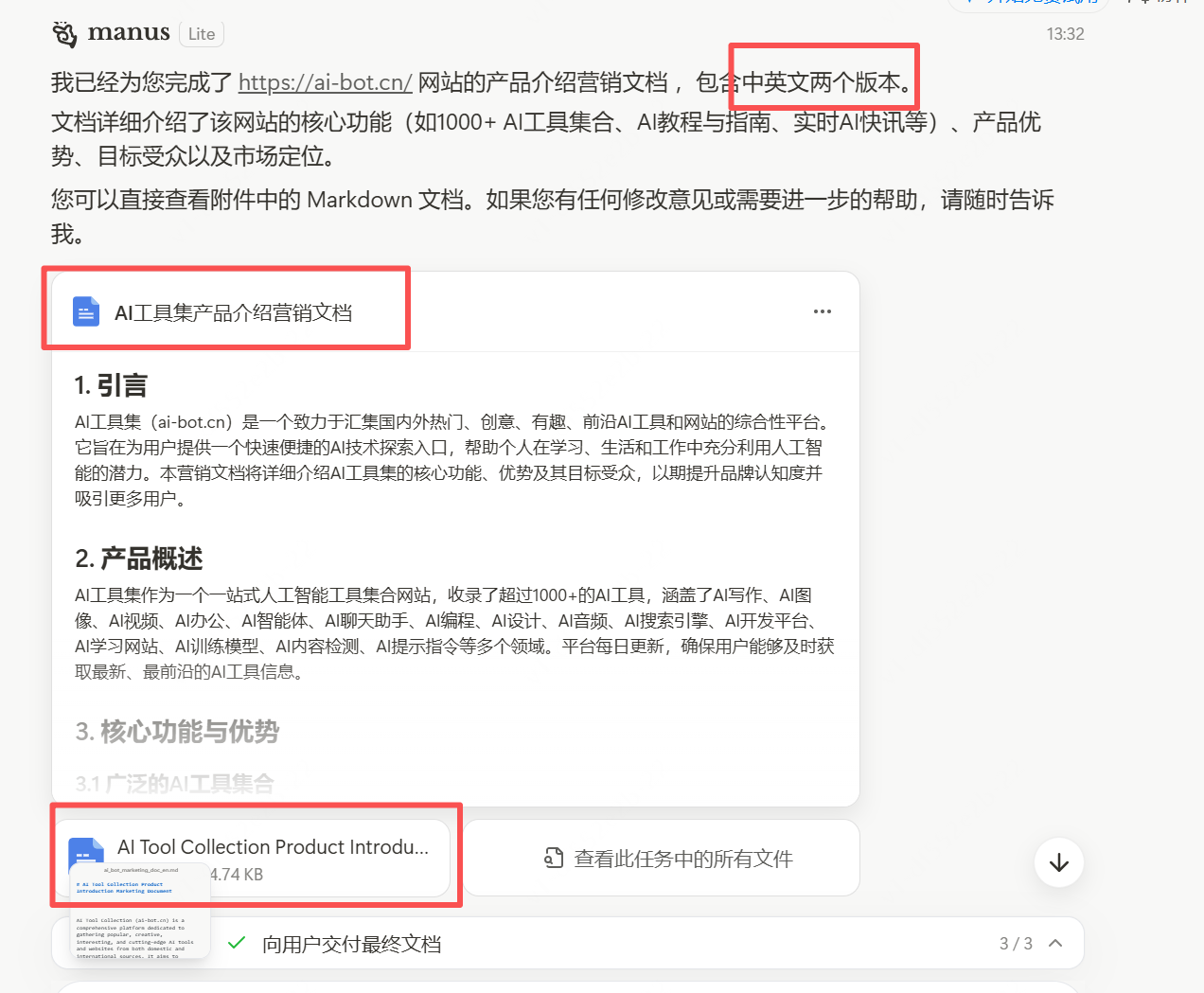
But AnyGen did not, with Chinese and English interspersed in a single document, which looked a bit messy...
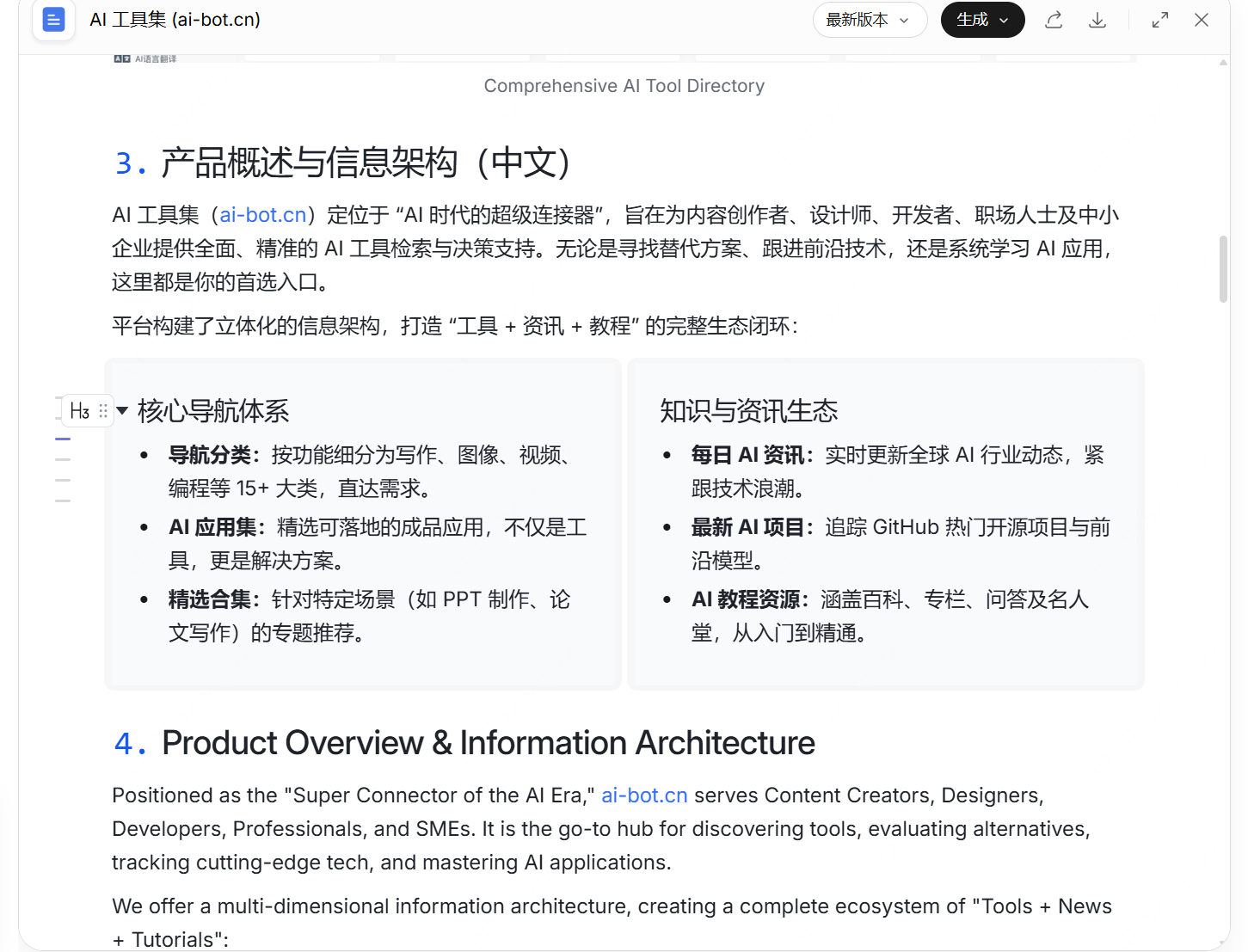
It needed to be adjusted again through prompts to obtain two documents.
But AnyGen can directly modify content you are not satisfied with。
It also supportsusing AI-assisted modification, which is equivalent to your intern writing you a first draft, and with some revisions here and there you can hand it in directly.
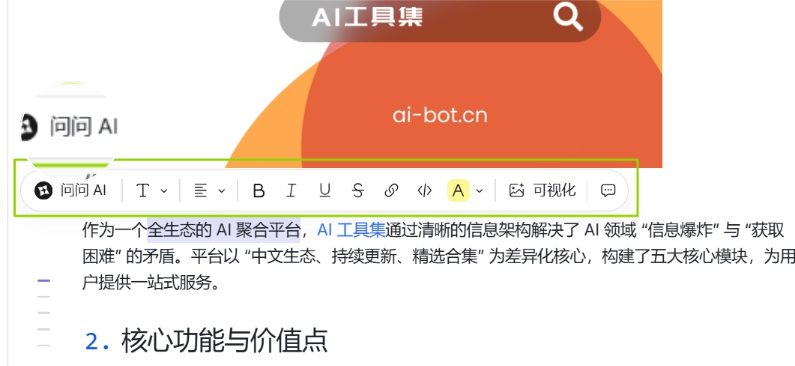
The content also included a product introduction image (albeit an old version).
These two points of AnyGen are better than those of Manus. Manus does not support modification, nor does it have website images.
It would be great if the two could be combined.
Picture Book Creation
Prompt: I want to explain photosynthesis. Help me make an interesting and educational storybook.
The illustrations generated by AnyGen are so vivid, with every object personified.
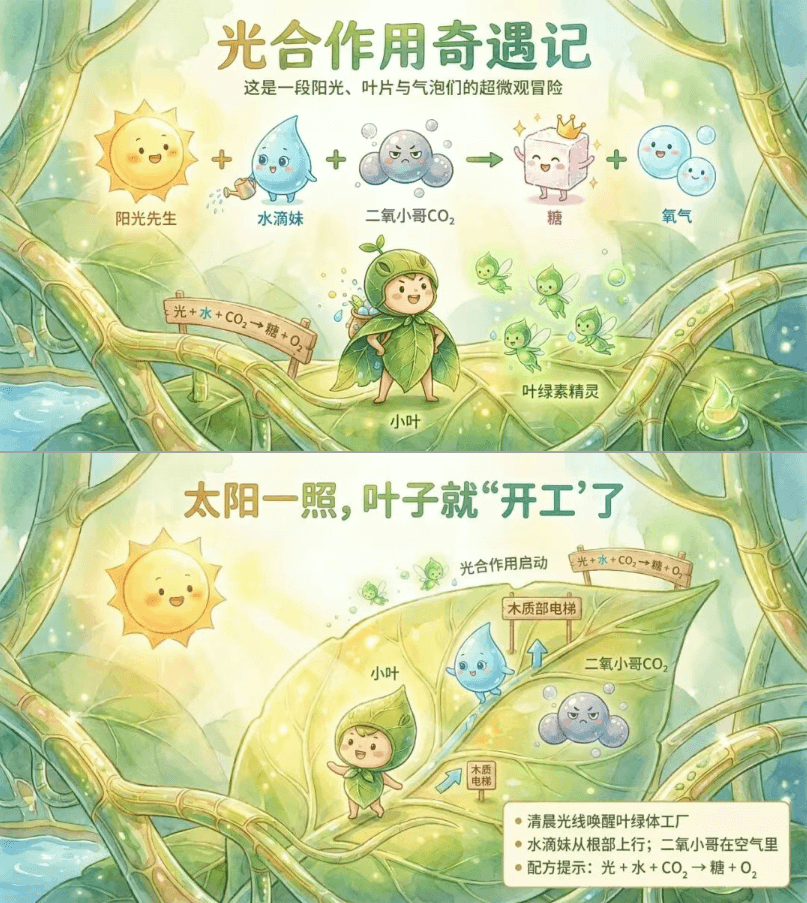
The text content of the picture book is a bit sparse, and the transitions between each page are not very natural.
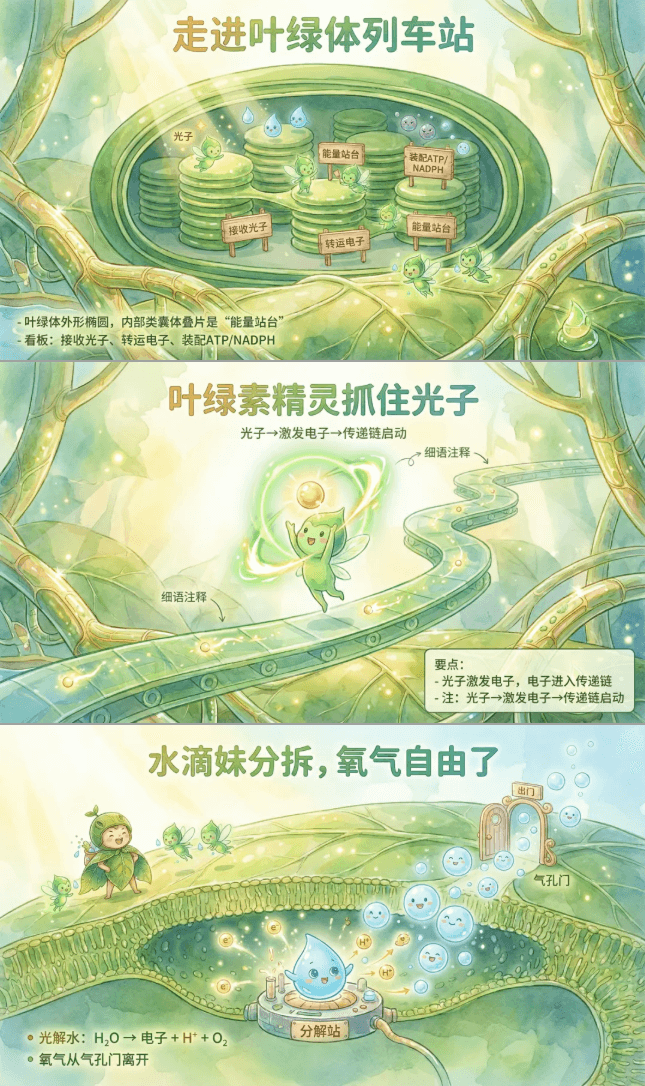
But if a teacher were holding such a picture book, plus the teacher's spoken explanation, I guess the kids would all be asking to extend the class~
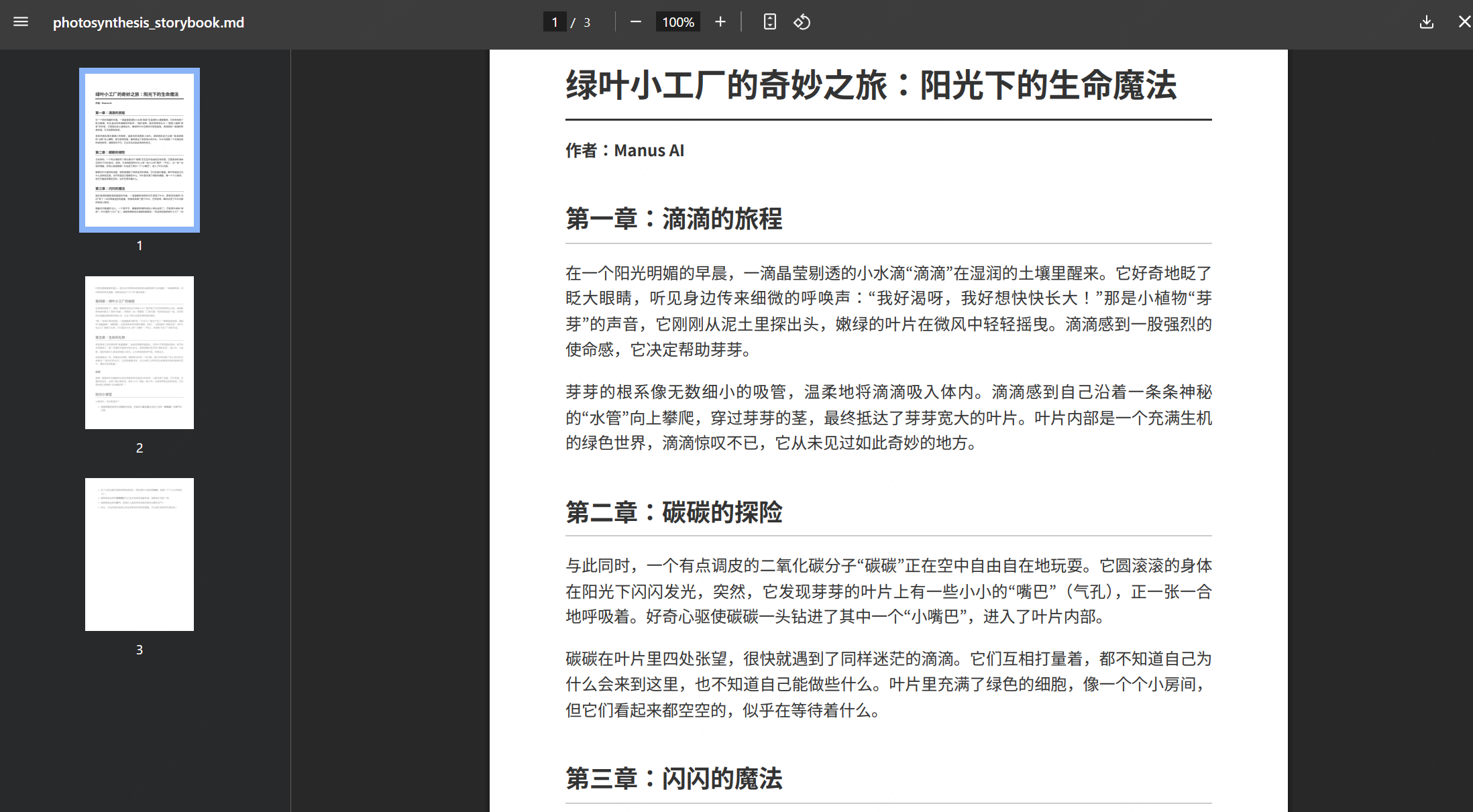
Manus is interesting: it split the story part and the drawing part into two sections.
The story content was generated as a PDF, also through personified characters:
The drawing part is somewhat similar to AnyGen, but Manus's colors are more vibrant and visually striking.

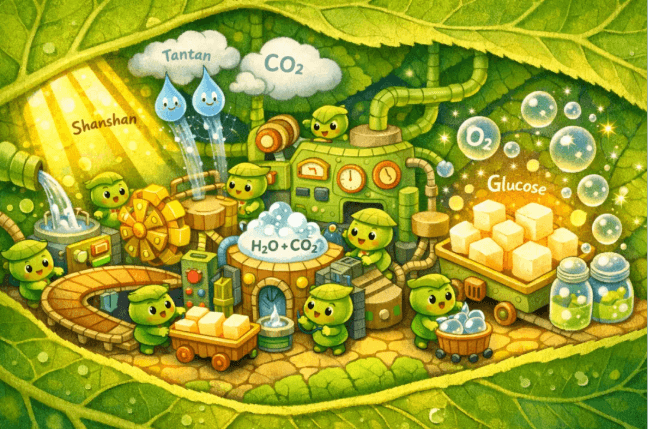
There is almost no accompanying text, so it is still difficult for children to understand.
Audio Transcription/Summary
Last weekend, AI bigwigs such as Tang Jie, Yang Qiang, Lin Junyang, and Yao Shunyu rarely appeared on the same stage in Beijing. I got the audio from the scene and asked AnyGen to summarize it.
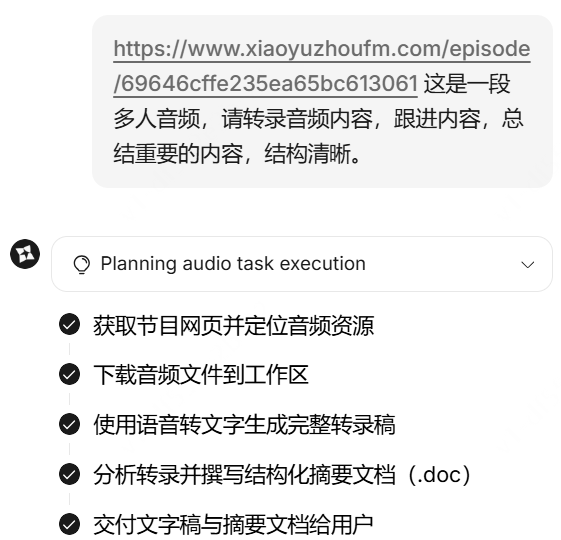
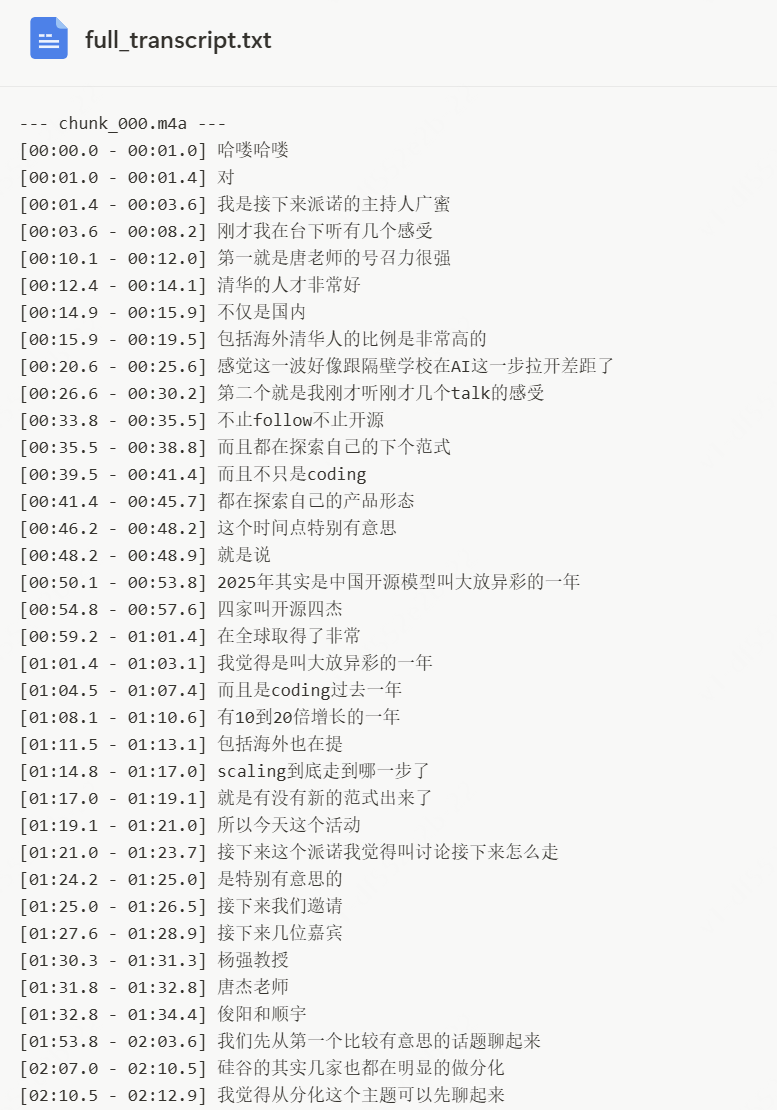
AnyGen was faster than expected. For an audio clip of more than an hour, it was processed in less than 10 minutes, not only with a complete transcription but also generating a structured document, and the content of the document was very comprehensive.
Quick Overview of Core Conclusions:
- The inevitability of divergence: The bottleneck for 2C applications lies in context rather than pure intelligence, while 2B scenarios are willing to pay a high premium for top-tier reasoning capabilities.
- Signal of a new paradigm: 2026 will be a key window for "autonomous learning" and "Active Learning." AI is expected to achieve self-evolution through interaction with the environment, rather than relying solely on being fed human data.
- Qualitative change in Agents: Expect Agents to evolve from handling minute-level tasks to independently taking on long-horizon tasks equivalent to "1-2 weeks of workload," with the model itself being the product.
- China's AI odds: The computing power gap (1-2 orders of magnitude) forces "innovation by the poor" (Efficiency). The key to victory lies in whether there is a risk-taking, "non-consensus" spirit of exploration.
- Overall assessment: The critical point of linear technological development and exponential leaps in experience has arrived. 2026 will be a year that tests not only computing power but also "imagination" and the "ability to define problems."
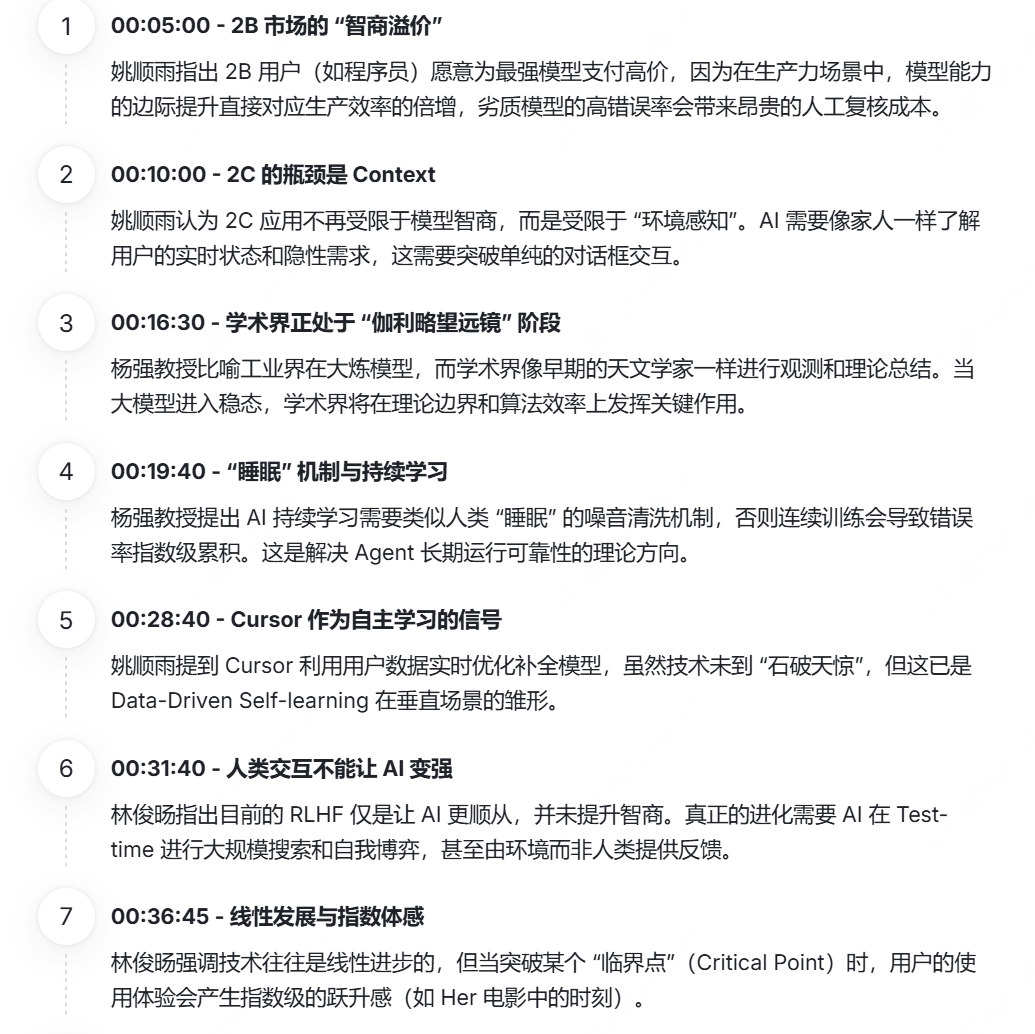
AnyGen'sinstruction-following ability is quite strong. It not only output a clearly structured document but also provided minute-by-minute interpretations of key segments.
As for Manus, I thought it would ultimately end in failure
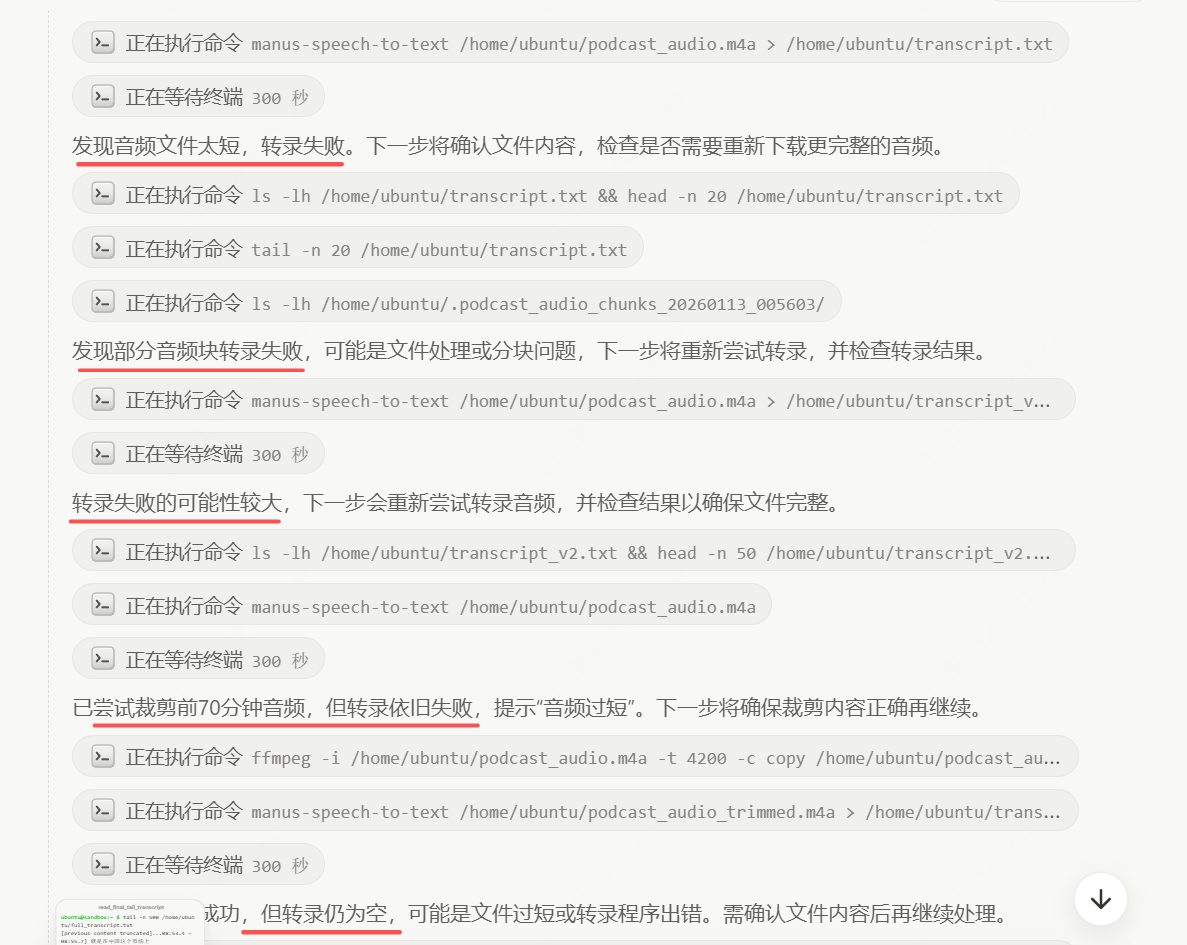
Unexpectedly, no matter how many times it failed, Manus could still step by step find solutions. In the end, it completed the task.
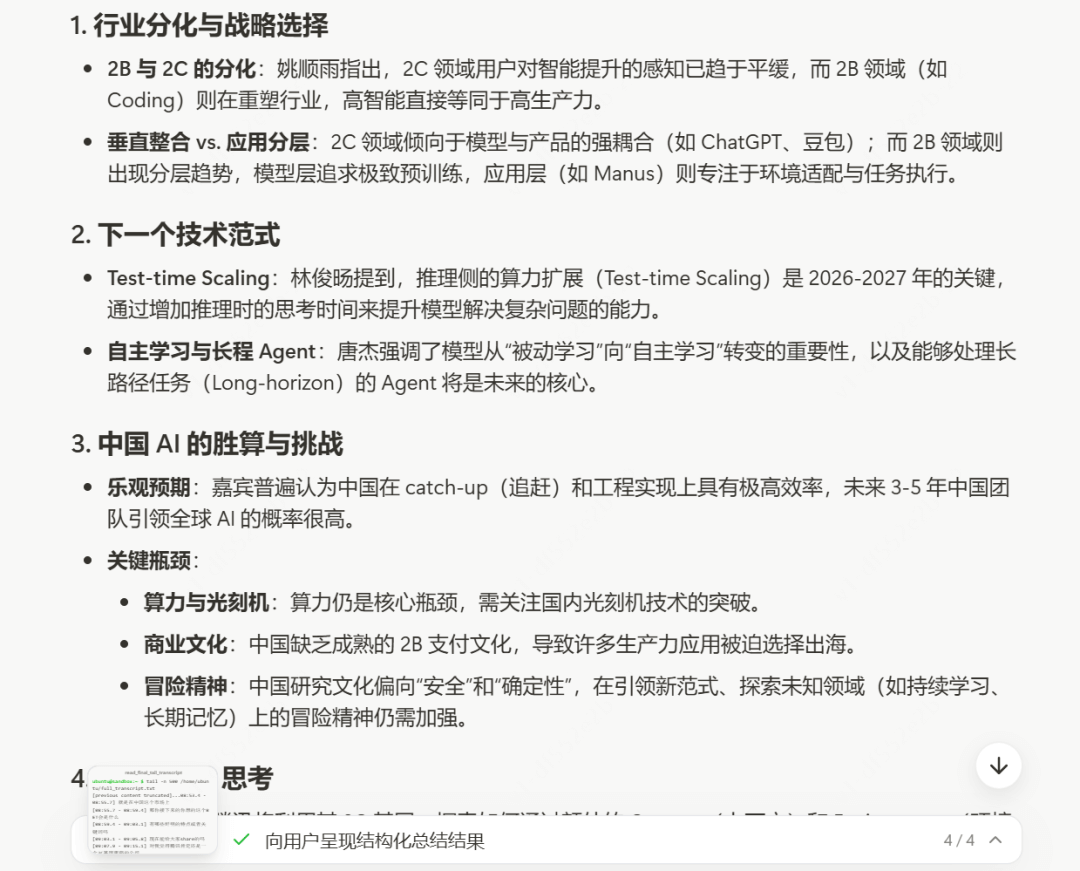
Although there is no structured document output, the key content is summarized consistently with AnyGen.
A detailed and complete transcript is also attached.
02. Earn points for free
All the tests above not only did not consume points, but I actually earned some. The value for money is unbeatable.

I have also organized the methods for getting points and membership benefits for free:
AnyGen
Official website:https://www.anygen.io
Earn 2,000 points by sharing and inviting friends!
Complete different beginner tasks to earn between 300 and 1,000 points;
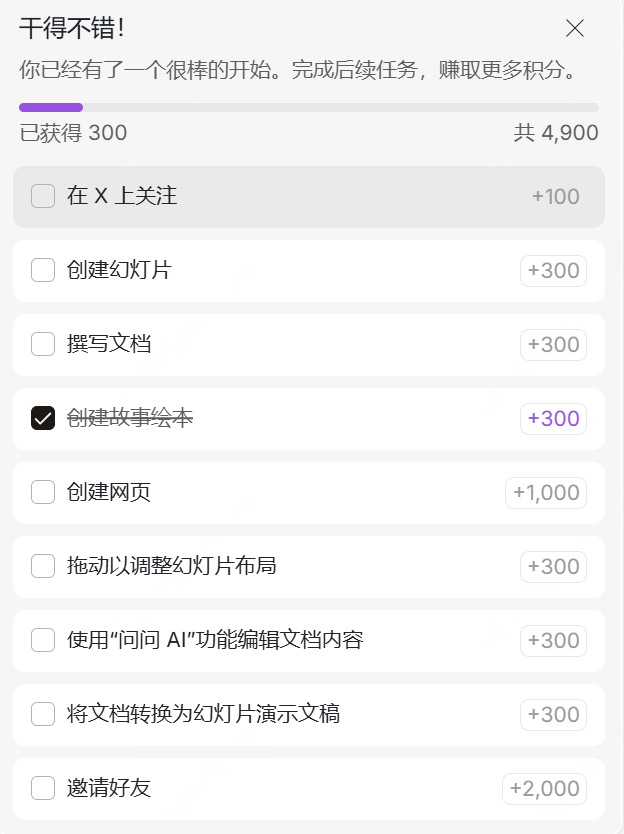
The New Year reward task that was launched is even better:Every time you invite 2 friends, you unlock 1 month of Pro benefits. You can stack and claim up to 12 months, worth $348.
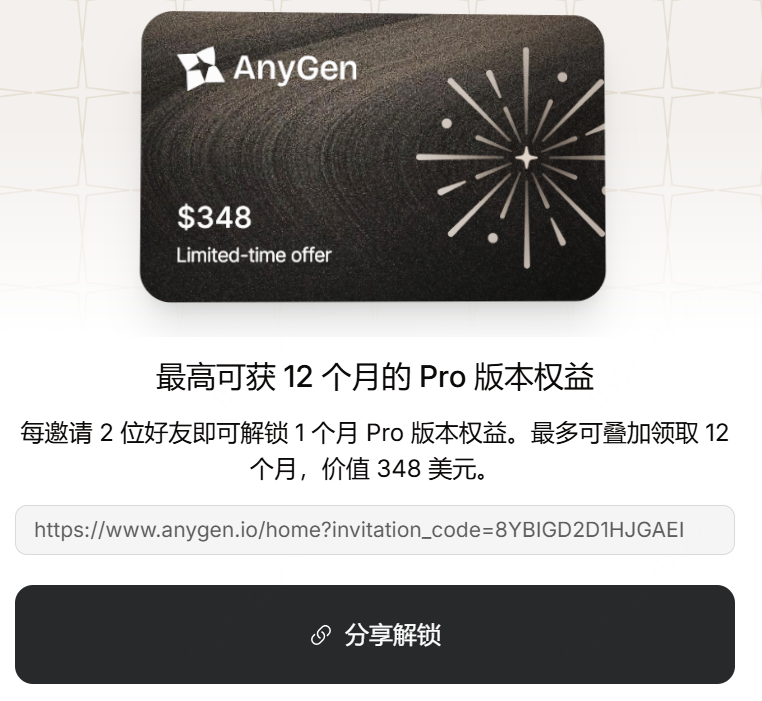
That means you only need to invite 24 friends touse it for free for 1 year。
This is too good to miss. Never mind whether you will use it or not, who does not have 24 friends? Grab it first and talk later (covering mouth and laughing.jpg)
Manus
Official website:https://manus.im
Log in to get 1,000 points for free; refresh daily to get 300 points; share the link with friends, and each person can get 500 points.

With points in hand, friends, let us get hands-on together~
03. Some sharing
After testing overall, Manus is still the most mature, stable, and mass-market-friendly general Agent in my mind.
Manus is like an "all-inclusive colleague" that wants us to completely let go. We set the goal, and Manus handles everything from planning to execution in one go. The risk lies in the uncontrollability of the process.
AnyGen is more like a partner co-creating with us. We have the core decision-making power, while the tedious and grueling middle steps are taken over by AnyGen.
So, the competitive relationship between Manus and AnyGen is actuallyvery weak. It is more about complementary ecological niches. In actual work, I am more willing to use them together。
Manus's core value is its end-to-end advancement capability, especially suitable for tasks such as research, information integration, and draft proposal writing that require breadth and initiative. AnyGen focuses more on structured expression and detail polishing. It is more suitable for tasks such as PPTs, explanatory documents, and product drafts that require repeated adjustment and alignment.
The Agent track most likely will not have only one path. Different types of Agents will first divide the work, each deepening their own advantages, and then collaborate in real workflows. All-inclusive Agents raise the upper limit of efficiency, while co-creation Agents are more likely to enter organizational processes.
In the future, these two product directions may gradually merge.AI Agent They can also seamlessly switch between all-inclusive and co-creation modes according to task complexity and user preferences, becoming our all-around partner.
Original link:After ByteDance missed Manus, the AnyGen it launched is not competition but complementarity