
"Build in Public" (in Chinese, "public building" or "public entrepreneurship") is an entrepreneurial or development philosophy, meaningdevelopers/entrepreneurs openly and transparently show the process of building a product or project. Simply put, when working on a project, you share your progress, problems encountered, thoughts, and experiences in real time through social platforms such as Weibo, Twitter, and WeChat official accounts, and even disclose revenue data and user metrics, rather than developing quietly behind closed doors. This approach can bring founders closer to users and the community, letting the outside world "build the car along with you." It is both a way to show work progress and a way to build connections and trust.

What Is Build in Public
Building in public(Build in Public) is an entrepreneurship and creation strategy, in which entrepreneurs or creators openly share the development process, challenges, and achievements of their product or project, forming an open and transparent growth trajectory. By recording progress in real time through social media, blogs, or community channels, the public can see the story and data behind the project.
The practice originates from the transparent entrepreneurship philosophy of the early 2010s: for example, the social media tool Buffer publicly shared information such as company revenue, users, and employee salaries as early as 2013; the founder of the blog platform Ghost also announced in 2014 that he would follow Buffer in opening up financial data and progress. Entrepreneurs such as Nomad List founder Pieter Levels followed suit, making indicators such as company revenue and traffic public, attracting hundreds of thousands of followers. Building in public "builds a company or product and transparently shares the process and behind-the-scenes information, such as successes, challenges, and business metrics"; it stands in opposition to the traditional "secret entrepreneurship" model, and leans more toward takingtransparencyas its core value.
In the build-in-public model, entrepreneurs' support groups and potential customers often gather and participate at the same time. Openly sharing the process can bring together followers and users, providing entrepreneurs with feedback and motivation while also deepening users' trust in and recognition of the product. This characteristic makes building in public not only a marketing strategy, but also an effective way to strengthen the connection between the brand and users.
The Core Philosophy and Principles of Build in Public
The core of building in public lies intransparency and opennessandcontinuous interaction. Several key principles and benefits:
- Transparency and trust: Entrepreneurs openly share project progress, financial data, decision-making processes, and team stories, showing users and supporters their true situation and building trust. As Bitget news says, transparency is the primary principle of building in public and can deepen trust relationships with audiences; it lets users see the founder's efforts and challenges, increasing brand loyalty.
- Early feedback and rapid iteration: Through building in public, teams can obtain suggestions from users and the community early in product development. A timely feedback loop helps teams quickly adjust product direction and achieve rapid product-market fit. For example, openly soliciting user opinions can let users participate in product building; when they see their suggestions adopted, they feel more invested in the project.
- Community participation and word-of-mouth spread: Building in public encourages the formation of an active community around the project. Community members not only provide suggestions, but also promote the project. The power from the community can bring a company a large amount of word-of-mouth传播 and user loyalty."
- Sense of responsibility and goal management: Publicly committing to goals and timelines will make the team more motivated to complete the plan. It prevents procrastination and enables more efficient execution.
- Personal Brand and Influence: Founders who persist in building in public often become opinion leaders in their field. When founders continuously publish content and connect it to hot industry topics, they can enhance their personal professional influence. For example, the founder of Failory has long publicly shared startup failure cases, and whenever someone discusses related topics, they naturally mention him.
- Attracting Talent and Resources: Continuous public exposure will let more talent, investors, and partners learn about the project. Building in public can "provide companies with a platform to interact with potential users and build trust, and also provide them with opportunities to collect real-time feedback and iterate quickly," attracting talent interested in a culture of transparency.
Applicable Scenarios for Build in Public
Building in public is not suitable for all projects, but it is especially effective for the following scenarios:
- Internet and Technology Startups: For startups targeting internet users, building in public can quickly focus on the target group. For example, many well-known entrepreneurs attract users on social media through Build in Public: technology companies such as Buffer, CopyAI, and Nomad List used this strategy to gain early attention.
- Independent Developers and Open Source Projects: Individual developers or open source teams often promote their products out of their own needs and often interact with the community by making progress public. For example, Adam Wathan, the author of Tailwind CSS, adopts a transparent development approach and continuously shares progress on new versions and design ideas. The open source community itself advocates openness, and building in public is highly consistent with the open source spirit, making it easier for projects to gain contributors and users.
- Content Creation and Personal Branding: Many content creators and knowledge bloggers use building in public to build a personal brand and audience. For example, Justin Welsh, who shares creative insights on LinkedIn, has more than 165,000 followers as of now. He makes his digital product development process public, attracting hundreds of customers. Publicly documenting the creative process forces output of content, cultivates habits, and also gives creators feedback and recognition.
- Learning and Growth-Oriented Projects: Students or self-learners can accumulate learning resources and connections by publicly documenting study notes, project progress, and so on. For example, some people share programming study logs or open source assignments, which on the one hand promotes personal growth, and on the other hand can get feedback from peers and seniors, forming a learning community. Although there are relatively few specific cases of "learning and growth" in the materials, publicly sharing the learning process is an extension of the "building in public" mindset and can help individuals accumulate writing and expression skills over the long term.
- Entrepreneurship in Non-Technology Fields: Even in traditional industries, building in public can still play a role. For example, Clayton Mooney, the founder of the indoor agriculture company Nebullam, publicly shares the company's latest progress on LinkedIn, and both his personal and company accounts update in sync. This shows that as long as the target audience is active on a certain platform, building in public can be used to expand attention and trust.
Advantages and Challenges of Build in Public
Building in public has obvious benefits, but also risks that need attention.
Advantages:
- Obtaining Early Feedback: Openly sharing development progress allows users and supporters to offer suggestions in a timely manner, avoiding discovering product shortcomings only at the end.
- Quickly Accumulating Users and a Sense of Recognition: When fans see that they have an impact on the product, they are more willing to follow, use, and even invest, bringing buying momentum to the project.
- Building trust and brand authority: A transparent attitude makes users feel respected and involved, enhancing trust.
- Becoming a domain expert: Long-term public sharing of experience in a specific niche will make the community see you as an expert.
- Attracting talent and investment: Highly transparent teams are more likely to win the favor of job seekers and investors. Public data and processes can bring additional exposure and opportunities to the project.
Challenges:
- Competitive risk: Once ideas and strategies are made public, competitors may quickly imitate them. It is necessary to pay attention to "how much to disclose" and avoid exposing core business secrets.
- Psychological pressure: Continuously making the process public brings external scrutiny and expectations. If progress is slow or failures occur, developers may bear considerable pressure, and it may even affect their emotions and motivation.
- Over-reliance on feedback: Publicly obtaining feedback has many benefits, but it may also cause the team to constantly follow user opinions and lose direction. It is necessary to stay true to the original intention and not blindly compromise on user suggestions.
- Information overload and time cost: Frequent updates consume extra time, and excessive sharing may fatigue the audience. Entrepreneurs need to balance the time invested in sharing and actual development.
- Prerequisite requirements: Some authors point out that successful building in public usually requires having a minimum viable product first before starting to publish progress; the team needs to ensure it can respond quickly to feedback, and the founder already has a certain level of influence in the community.
- Handling negative feedback and criticism: Making things public will inevitably invite criticism, and even malicious attacks. Having a strong mindset, learning to filter constructive opinions, and keeping distance from negative emotions are crucial.
- Risk of ideas being copied: This is the primary concern of many people. But the reality is that execution is far more important than ideas. The community, brand, and trust built through building in public are moats that competitors find hard to replicate.
Building in public is a double-edged sword: it can help a project gain more attention and trust, but it also requires being prepared to be seen and managing risk.
Case sharing of Build in Public
- Copy.ai (AI writing platform): Copy.ai founder Paul Yacoubian firmly practices the building in public strategy. According to reports, he publicly shares the team's development process on Twitter, shares product updates, shares team culture and views on AI, and attracts early users and fans. Paul announces key data and milestones in real time, for example, he once publicly shared the process of Copy.ai's monthly recurring revenue (MRR) growing from $6 to $1 million. This sincere sharing makes users feel trust and a sense of participation. He also often launches polls on Twitter, and the team quickly iterates based on feedback, so that the product continuously meets user needs. Public recruiting also brought excellent talent to Copy.ai: their first three employees were found on Twitter. Through the above methods, Copy.ai quickly accumulated tens of thousands of followers and paying users, verifying the effectiveness of building in public.
- Ghost (open-source blogging platform): Since its founding, the Ghost project has embraced openness and transparency. In the 2014 annual report, the founder announced following in Buffer's footsteps by disclosing company operating data, and began regularly publishing key information such as revenue and traffic on Ghost's "Open Startup Profile" page. As an open-source nonprofit organization, Ghost has won the community's trust and support by publicly sharing financial and development plans. Its transparency strategy has helped Ghost build a loyal user base, allowing it to secure a place in the highly competitive blogging platform market.
- Nomad List (digital nomad community): Pieter Levels, the founder of Nomad List, is a typical figure in building in public. As early as 2018, he announced on Twitter that he would build in public, creating dedicated pages for each of his projects (such as Nomad List and Remote OK) to share data including revenue and traffic. He has kept this up to this day and has attracted more than 130,000 Twitter followers. His ongoing public process has not only brought traffic and revenue to his projects, but also made Pieter a well-known figure in the open startup field (known as the "CEO of building in public").
- Tailwind CSS (front-end framework): Although Tailwind CSS is not a startup in the traditional sense, its developer Adam Wathan has made the technical evolution process transparent through blog posts, Twitter, and other channels, publicly sharing the development process and design thinking. This approach has accumulated a great deal of developer community support for Tailwind, enabling the open-source project to grow rapidly.
A beginner's practical guide to Build in Public
If you want to try "Build in Public," where should you start? Whether you want to develop a small tool, write a book, or document the process of learning a new skill, the following steps provide clear guidance.
📌Step 1: Choose your "stage" (platform selection)
Your sharing needs a medium. Which platform to choose depends on where your target audience gathers and which content format you are personally most accustomed to.
- Social media platforms: This is the most mainstream choice.
- Twitter (now X) / Weibo / Jike: Suitable for posting short, high-frequency updates, such as daily progress, flashes of inspiration, and problems encountered.
- LinkedIn / Maimai: More oriented toward professional fields, suitable for sharing business thinking, industry insights, and project milestones.
- Xiaohongshu / Instagram: Focused on visual content, suitable for sharing product design sketches, behind-the-scenes photos, or short video stories.
- Content and community platforms:
- Personal blog / WeChat Official Account / Zhihu column: Suitable for publishing longer, more in-depth articles, systematically recording your thoughts, reviews, and summaries.
- YouTube / Bilibili / WeChat Channels: Through video, you can more vividly showcase product demos, development logs (Devlog), or team stories.
- Discord / Slack / WeChat groups: Used to build a core fan base and conduct more private, in-depth interaction and feedback collection.
Suggestion: In the beginning, don't try to do too much; choose 1-2 platforms you are most familiar with and where your target users are most concentrated to start.
📌Step 2: Plan your "script" (content planning)
Being public does not mean exposing everything without reservation. You need to plan what to share and what not to share.
- Content you can share:
- Progress and milestones: "This week we completed the user login feature!"
- Data and Metrics: Public revenue, user numbers, website traffic, etc. (for example, Buffer's salary calculator is a famous case of radical transparency.
- Challenges and Failures: "The server was down for 3 hours today, and we learned..."
- Behind-the-Scenes Stories: The evolution of design drafts, code snippets, interviews with users.
- Decision-Making Process: "We're torn between options A and B, what does everyone think?".
- Content That Requires Caution:
- Core Business Secrets: Unique algorithms or business strategies that cannot be easily replicated.
- User Privacy Data: Any content involving users' personal information must absolutely not be made public.
Suggestions: Don't pursue perfection; start small. Your first update can be very simple, such as "I have an idea, I want to build a..., and this is my first-step plan".
📌Step 3: Keep "Updating" (Update Frequency)
Consistency is key!Irregular updates will cause the attention you worked so hard to accumulate to slip away. Set an achievable update frequency and strive to stick to it.
- High Frequency (Daily/Every Few Days): Suitable for sharing small progress on platforms such as Twitter.
- Medium Frequency (Weekly): Suitable for publishing weekly reports through blogs, email lists, or videos to summarize the gains and losses of the week.
- Low Frequency (Monthly): Suitable for publishing monthly summary reports, sharing key data and future plans.
📌Step 4: Interact with the "Audience" (Collect Feedback)
"Build in Public" is not a one-way broadcast, but a two-way dialogue.
- Ask Questions Proactively: Ask your audience questions directly in your shares and invite them to participate in decision-making.
- Use Tools: Systematically collect feedback through tools such as social media polling features and online surveys.
- Thank and Respond: Thank users who provide feedback and let them know how their suggestions have influenced your product. This will make them feel more involved and accomplished.
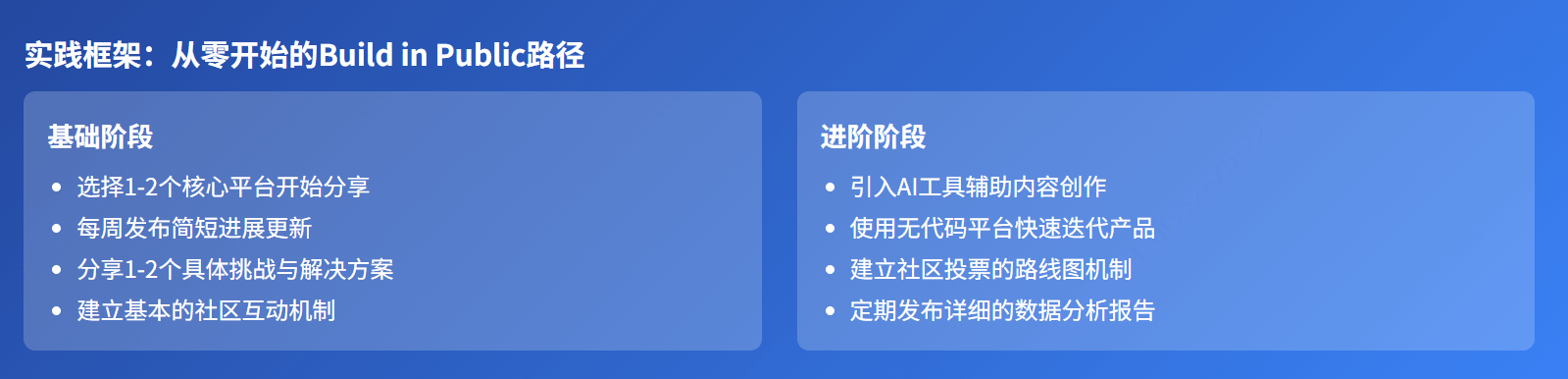
"Build in Public" is far more than a marketing technique; it is a modern business philosophy about openness, trust, and co-creation. It transforms the traditional one-way value delivery into a two-way interactive journey of growing together with users.
For ordinary users, whether your goal is to launch a grand entrepreneurial project or simply to record your own process of learning guitar, you can draw strength from the concept of "Build in Public." It can bring you unexpected feedback, support, and opportunities.
In this increasingly connected era, choosing to "build behind closed doors" may mean missing out on the whole world. It is better to bravely open the door, build publicly in the sunlight, and invite the world to move forward with you.