
AIGC (Artificial Intelligence Generated Content) refers to the use of artificial intelligence technology to automatically generate entirely new, original digital content by learning patterns, features, and rules from data. Content can cover multiple forms such as text, images, audio, video, 3D models, code, and virtual scenes.

Definition and Core Overview of AIGC
What Is AIGC
AIGC, short for Artificial Intelligence Generated Content, refers to methods that use artificial intelligence technology, especially deep learning and natural language processing, to enable computers to automatically generate content in multiple modalities such as text, images, audio, and video.
Core Objectives
To improve the efficiency of content creation, significantly reduce the human and time costs in the creation process, expand the boundaries of content creation, and generate more diverse and innovative works.
Compared with traditional content creation methods, AIGC has advantages such as high production efficiency, relatively low cost, scalable customization, and the ability to explore entirely new creative spaces.
For example, in text generation, AIGC can write news releases, novels, poetry, code, and more; in image generation, it can create paintings, design posters, and generate photo-realistic images; in audio generation, it can compose music, synthesize speech, and produce sound effects; in video generation, it can create animations, edit videos, and generate virtual scenes, among others.
Development History
In the early stage (1950s-1990s), AIGC mainly took the form of simple content generation based on rules and templates, such as the early chatbot ELIZA and poetry generation programs.
In the development stage (early 21st century-mid-2010s), with the rise of machine learning, especially statistical learning methods, AIGC began to handle more complex tasks, such as machine translation and preliminary image generation, but the realism and diversity of the generated content still had significant limitations.
In the explosive stage (late 2010s to the present), revolutionary advances in deep learning, especially the emergence of Generative Adversarial Networks (GANs, 2014), the Transformer model (2017), and Diffusion Models (in recent years), have greatly improved the capabilities of AIGC.
Differences and Connections Between AIGC and Traditional AI
Traditional AI focuses more on analysis, understanding, and decision-making, such as image recognition, speech recognition, and recommendation systems. Its core capability lies in processing existing data and recognizing patterns to assist humans in completing specific tasks.
The core capability of AIGC lies in "generating" entirely new, original content. AIGC, especially technologies based on generative models (such as GANs, VAEs, and Diffusion Models) and large language models (such as GPT), focuses more on learning potential distributions from data and using this learned knowledge to create new data samples, such as new text passages, images, and music fragments.
Technical Principles of AIGC
The technical foundation of AIGC (Artificial Intelligence Generated Content) mainly comes from deep learning and generative models. The core idea is to train models based on large-scale datasets, learn the potential distributions and patterns of data, and generate entirely new content that is similar to but not exactly the same as the training data. The implementation of AIGC depends on a variety of key technologies, among which Generative Adversarial Networks (GANs), Variational Autoencoders (VAEs), and Transformer models are the most important and widely used technologies. These technologies each have their own characteristics and play key roles in different types of AIGC applications.
GANs perform excellently in the field of image generation;
VAEs have advantages in data generation and dimensionality reduction;
Transformer models have achieved breakthrough progress in natural language processing and sequence data generation.
Generative Adversarial Networks (GANs)
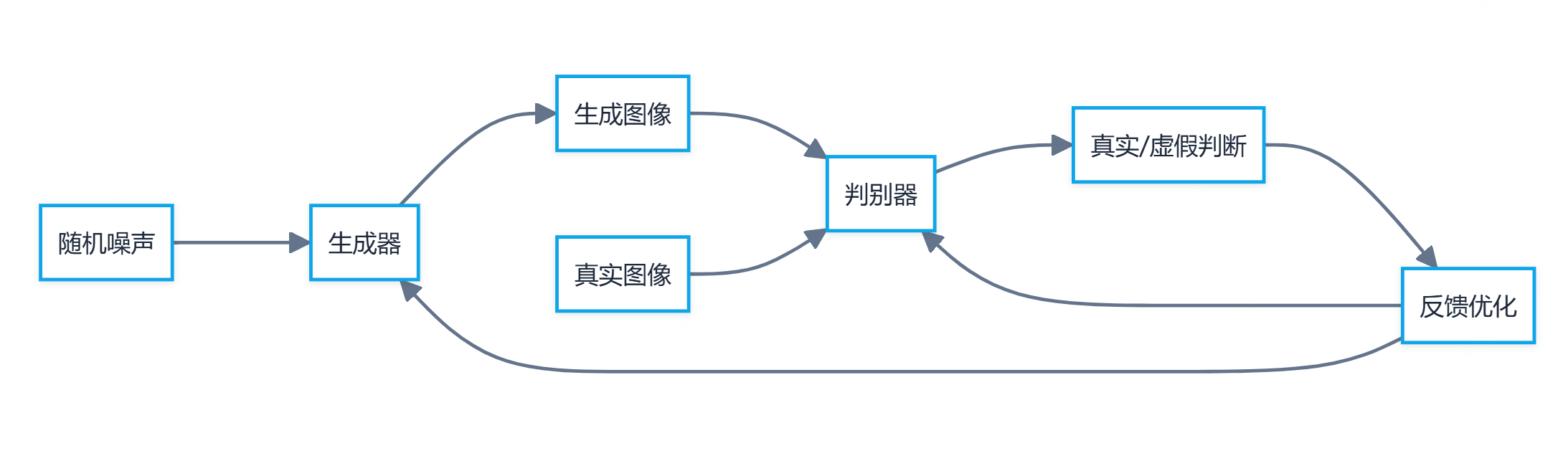
Generative Adversarial Networks (GANs) were proposed by Ian Goodfellow and others in 2014. They are a deep learning framework that learns through the mutual competition of two neural networks. The core idea of GANs is to construct a generator and a discriminator, and conduct adversarial training under a "zero-sum game" framework.
The task of the generator is to learn the distribution of real data and try to generate new data samples as similar as possible to real data, such as images, text, or audio.
The task of the discriminator is to determine whether the input it receives comes from the real dataset or is fake data generated by the generator.
During the training process, the generator continuously tries to generate more realistic samples to fool the discriminator, while the discriminator continuously improves its ability to distinguish authenticity. This adversarial training mechanism enables the generator to gradually learn the complex features and distribution of the data, ultimately generating high-quality, highly realistic content.
- How GANs Work
- First, the generator receives a random noise vector (usually sampled from a Gaussian distribution or a uniform distribution) as input, and converts it into a data sample through a series of neural network layers (such as fully connected layers, deconvolution layers, etc.).
- Then, the generated sample is fed into the discriminator together with samples from the real dataset. The discriminator is also a neural network that receives an input sample and outputs a scalar value representing the probability that the sample is real data.
- In the early stage of training, the quality of the samples generated by the generator is poor, and the discriminator can easily distinguish real samples from generated samples.
- As training proceeds, the generator continuously adjusts its parameters through backpropagation algorithms and optimizers (such as Adam, SGD, etc.) based on the discriminator's feedback, generating more realistic samples. The discriminator also adjusts its own parameters based on the accuracy of its judgments, improving its discrimination ability.
- The process will continue to iterate until an equilibrium point is reached, that is, the generator can generate samples very close to the real data distribution, and the discriminator cannot effectively distinguish real samples from generated samples, with its judgment accuracy approaching 50%.
Variational Autoencoders (VAEs)
Variational Autoencoders (VAEs) are another important type of generative model, combining the advantages of deep learning and probabilistic graphical models to learn latent representations of data and generate new data samples. Unlike traditional autoencoders (Autoencoder, AE), which mainly focus on data compression and reconstruction, the core goal of VAEs is to learn the probability distribution of data, especially the distribution of latent variables, and to be able to sample from that distribution and generate new, diverse data.
VAEs assume that data is generated by some unobserved latent variables, and these latent variables follow a certain prior distribution, which is the standard normal distribution. The model achieves data generation and reconstruction by learning a mapping from latent space to data space (i.e., the decoder), as well as a mapping from data space to latent space parameters (mean and variance) (i.e., the encoder).
- Structure of VAEs
- Encoder: The encoder is responsible for mapping the input data
xto the latent space, but it does not directly output the latent variablez, instead outputting the parameters of the latent variable distribution, usually the meanμand varianceσ^2(or log variancelog_var), assuming the latent variablezfollows a Gaussian distributionN(μ, σ^2). To samplezfrom this distribution while maintaining the differentiability of backpropagation, VAEs use the **"reparameterization trick"**。 - Decoder:receives the
zsampled from the latent distribution, and attempts to reconstruct it into the original input datax'. The training objective of VAEs is to minimize the reconstruction error (i.e., the original inputxand the reconstructed outputx', such as mean squared error or cross-entropy) as well as the KL divergence (Kullback-Leibler divergence) between the distribution of the latent variables and the prior distribution (usually a standard normal distribution). The KL divergence term acts as a regularization, encouraging the latent distribution learned by the encoder to be close to the prior distribution, making the latent space more continuous and structured, which facilitates subsequent interpolation and the generation of new samples.
- Encoder: The encoder is responsible for mapping the input data
Transformer Models
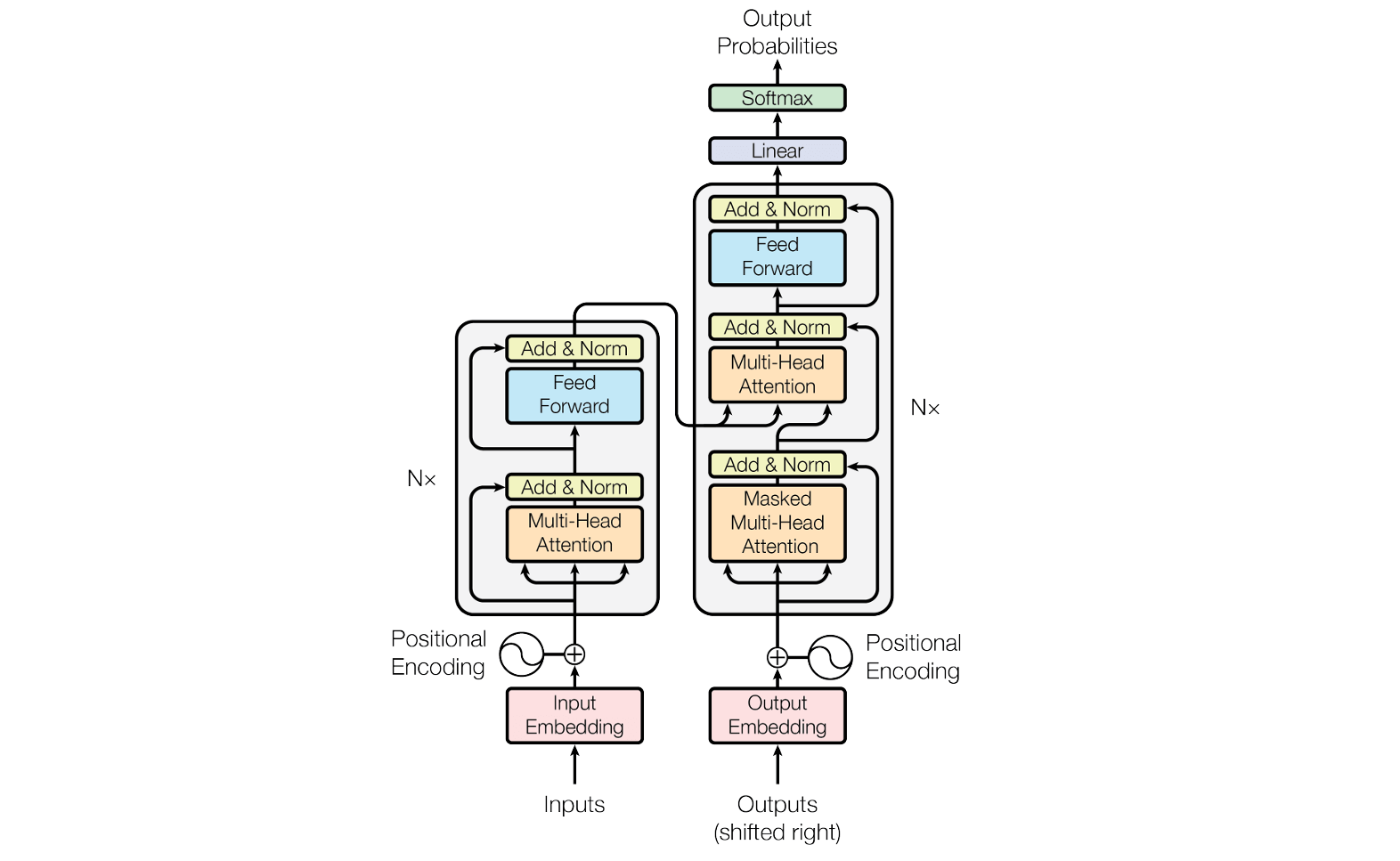
The Transformer model was originally proposed by Vaswani et al. in the 2017 paper "Attention Is All You Need". It was initially applied to machine translation tasks and quickly became the mainstream architecture in the field of natural language processing (NLP), demonstrating powerful capabilities in the field of AIGC, especially in text generation, code generation, and multimodal content generation.
The core innovation lies in relying entirely on the self-attention mechanism (Self-Attention Mechanism) to capture dependencies between different positions in the input sequence, abandoning the inherent deficiencies of traditional recurrent neural networks (RNNs) and convolutional neural networks (CNNs) when processing sequence data, such as the difficulty of parallel computation and long-range dependency problems in RNNs, and the limitations of CNNs in capturing long-distance dependencies.
Diffusion Models
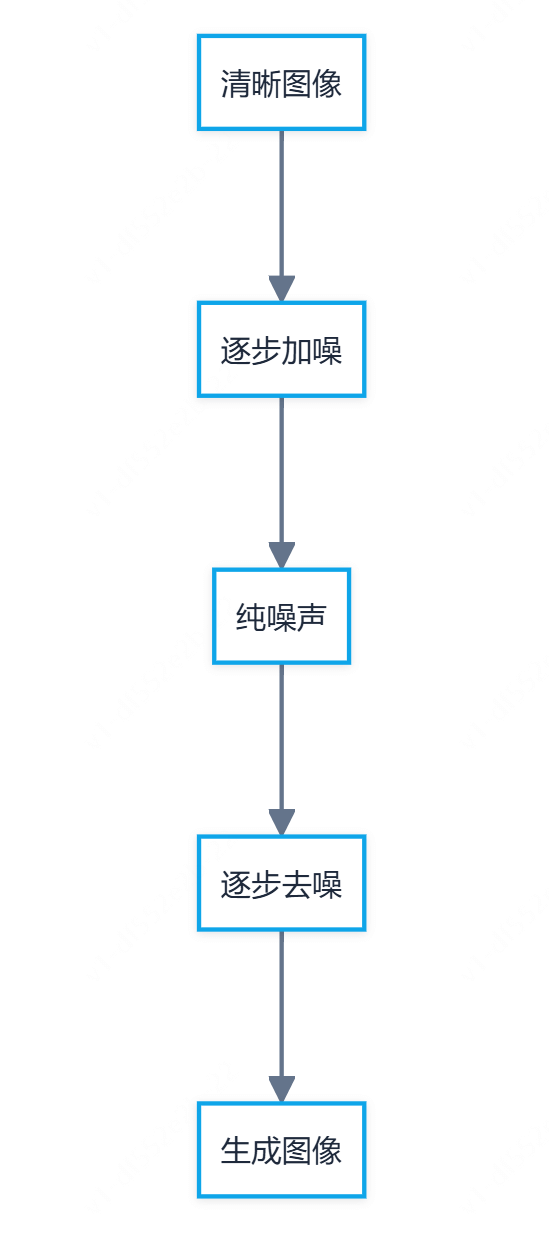
Diffusion Models are a class of models that have achieved breakthrough progress in the field of generative artificial intelligence in recent years, especially excelling in image generation, even surpassing traditional generative adversarial networks (GANs) on certain metrics. The core idea of diffusion models is inspired by non-equilibrium thermodynamics: through a forward process of gradually adding noise, real data (such as images) are gradually transformed into pure noise, and then a reverse denoising process is learned to gradually recover high-quality data samples from the pure noise. This reverse process is a generative model that learns to remove a small amount of noise at each step, ultimately generating new samples consistent with the original data distribution.
Key Technologies of AIGC
Autoregressive Models
Autoregressive models are another important type of generative model, assuming that each element in a sequence depends on the elements before it. In AIGC, autoregressive models are often used for the generation of sequence data, such as text, audio, and video. For example, early language models such as RNNs and LSTMs, as well as some Transformer-based models (such as the decoder part of the GPT series), all adopt an autoregressive approach for generation. They predict the next element in the sequence one by one, using the prediction result as the input for the next step, until the complete sequence is generated.
The advantage of autoregressive models is that they can generate coherent and well-structured sequences, but the disadvantage is that the generation process is serial, relatively slow, and it is difficult to capture long-distance global dependencies (although Transformers have improved in this regard).
Reinforcement Learning (RL)
Reinforcement learning is used in scenarios that require interaction with the environment and users, or that require optimizing a specific objective function. For example, in dialogue systems, reinforcement learning can be used to optimize the relevance, fluency, and interestingness of generated responses. Reinforcement Learning from Human Feedback (RLHF) is one of the key technologies for fine-tuning current large language models (such as ChatGPT). It trains a reward model by collecting human preference data on model-generated content, and then uses this reward model to guide the reinforcement learning process, enabling the model to generate content that better aligns with human expectations.
Multimodal Learning
With the deepening of AIGC applications, content generation in a single modality can no longer meet the demand, and multimodal AIGC that can process and generate content in multiple modalities (such as text, images, audio, and video) has become an important development direction. Multimodal learning technology enables models to understand the associations between data of different modalities and achieve cross-modal content generation and conversion. For example, the CLIP (Contrastive Language-Image Pre-training) model maps text and images into the same embedding space through contrastive learning, making similar texts and images close to each other in that space, providing a powerful foundation for tasks such as text-to-image generation. Due to its powerful representation ability, the Transformer architecture is also widely used to build multimodal models.
Model Compression and Optimization Techniques
Advanced AIGC models have an enormous number of parameters and place high demands on computational resources and storage space, limiting deployment on edge devices and in resource-constrained environments. Model compression and optimization techniques, such as Knowledge Distillation, Pruning, and Quantization, are crucial for reducing the model's computational overhead and inference latency and improving deployment efficiency. On the premise of basically maintaining model performance, they reduce model size and accelerate inference speed.
Large-scale Pre-training
The tremendous success currently achieved by AIGC is largely attributed to large-scale pre-training technology. By pre-training on ultra-large-scale unlabeled or weakly labeled data, models can learn general knowledge and powerful feature representation capabilities. After pre-training is completed, the model can quickly adapt to various downstream tasks through Fine-tuning. This 'pre-training-fine-tuning' paradigm has greatly promoted the development and widespread application of AIGC technology.
AIGC System Architecture
General System Architecture
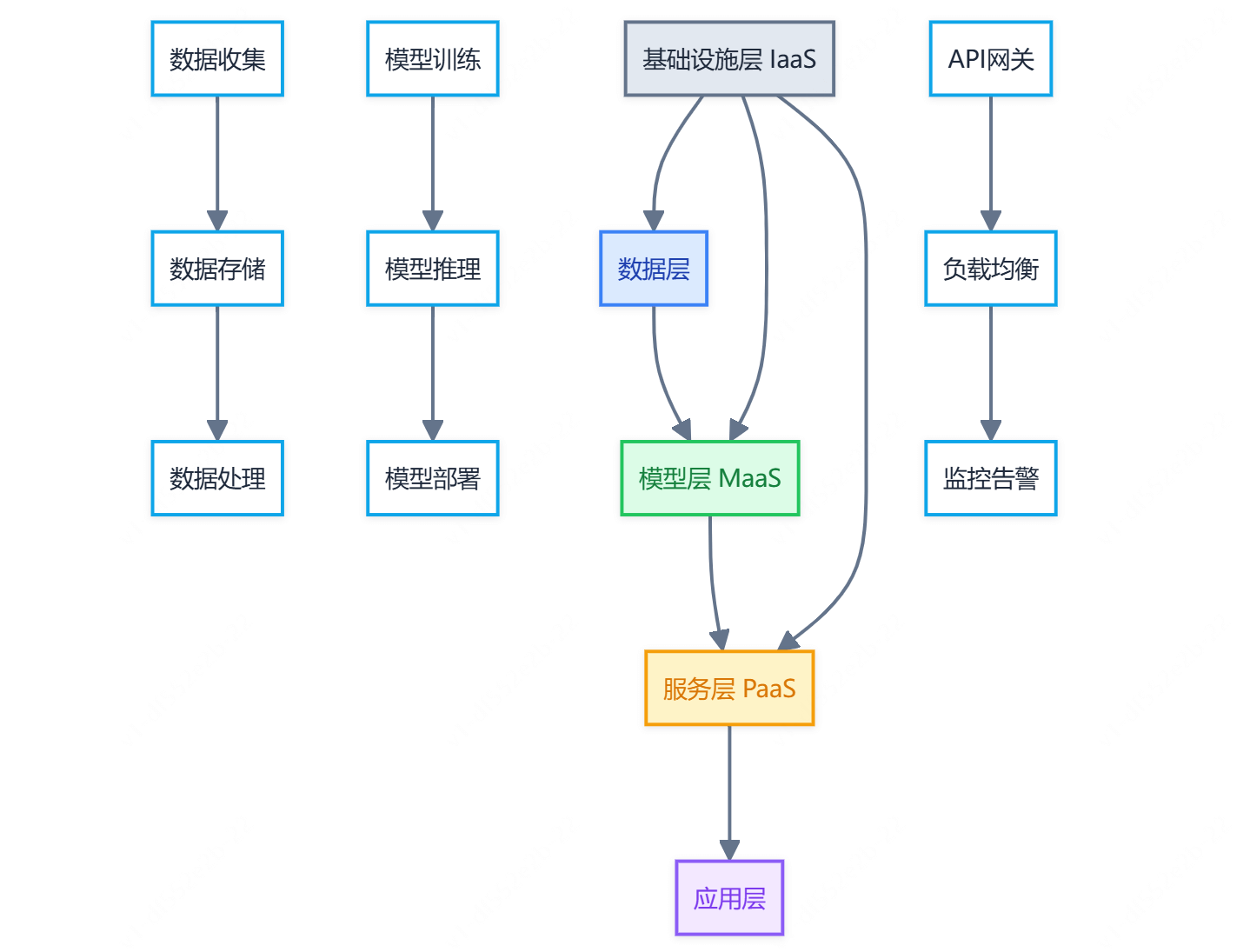
The general AIGC system architecture can be divided intothe data layer, model layer, service layer, and infrastructure layer. These layers collaborate with one another to jointly support the development and operation of AIGC applications.
- Data Layer: It is the foundation of the AIGC system and is responsible for data collection, processing, storage, and management. It needs to support access to multi-source heterogeneous data, including structured data (such as databases and streaming data) and unstructured data (such as text, images, audio, and video), and be compatible with multiple data storage protocols and interfaces, such as NFS, HDFS, S3, etc.
- Data Governance: One of the core functions of the data layer, including metadata management, data cleaning, data annotation, data augmentation, and structured integration, ensuring data quality and consistency and meeting the needs of real-time and offline scenarios. The diversity and scale of data directly determine the quality and accuracy of generated content, so the data layer occupies a crucial position in the AIGC system. For example, when training a text generation model, the data layer needs to provide a large-scale, high-quality text corpus and needs to perform preprocessing operations such as tokenization, removal of stop words, and part-of-speech tagging.
- Model Layer (MaaS – Model as a Service) : It is the core of the AIGC system, responsible for model training, tuning, inference, deployment, and management. It covers the full lifecycle management of models, including version control and iterative optimization. Based on the specific AIGC task (such as text generation, image generation, multimodal generation), the model layer selects and applies appropriate generative models, for example, the GPT series for text generation, Stable Diffusion for image generation, CLIP and Flamingo for multimodal generation, etc. Model training can use pretrained models for fine-tuning to adapt to specific business scenarios. Model optimization techniques, such as knowledge distillation, model pruning, and quantization, are also applied at this layer to reduce the model's computational overhead and inference latency. The model layer provides service-oriented capabilities through APIs or SDKs, lowering the technical threshold on the business side and enabling rapid model integration and invocation.
- Service Layer (PaaS – Platform as a Service) : Provides the general services and data services required for the operation of the AIGC system. General services include user management, log management, middleware services (such as databases, object storage, and API gateways), and security services (such as identity authentication, permission control, and transmission encryption). Data services are implemented based on the data bus to enable cross-system data exchange and support data analysis and business decision-making.
- Inference Service Layer: An important component of the service layer, responsible for deploying trained models to the production environment and providing users with real-time or batch content generation services. This includes providing generation capabilities through APIs or front-end and back-end integration, and optimizing inference speed to reduce latency, especially ensuring service stability and availability in high-concurrency scenarios. Resource scheduling, model version management, and continuous integration and continuous deployment (CI/CD) of models are also key functions of the inference service layer.
- Infrastructure Layer (IaaS – Infrastructure as a Service) : Provides the underlying computing, storage, and network resources for the AIGC system. Through resource pooling and unified scheduling, it supports the system's elastic scaling and high availability. Storage diversity is also something the infrastructure layer needs to consider, for example, compatibility with different storage media such as HDDs, SSDs, and tapes, to adapt to the tiered storage requirements of hot and cold data. For compute-intensive AIGC tasks, especially the training and inference of deep learning models,specialized hardware accelerators such as GPUs and TPUsare indispensable. For example, in the AIGC solution that Amazon Cloud Technology designed for Haier, Amazon EC2 G4dn instances were used, equipped with NVIDIA T4 GPUs, which can provide efficient machine learning model deployment and graphics processing capabilities.
Text Generation System Architecture
The text generation system includesa user interaction interface, a request processing module, a natural language understanding (NLU) module, a text generation model, a post-processing module, and a data storage module。
- User Interaction Interface: It can take forms such as a web interface, API endpoint, or chatbot plugin, and is responsible for receiving the user's text input (prompts, instructions, etc.) and returning the generated text.
- Request Processing Module:Performs preliminary validation, parsing, and formatting of user input, converting it into a format suitable for processing by subsequent modules.
- Natural Language Understanding (NLU) Module: In complex text generation systems, it is responsible for deeply understanding the user's intent, extracting key information, identifying sentiment tendencies, etc. For example, in a dialogue system, the NLU module needs to understand the user's question or instruction and convert it into a machine-executable representation. In content creation scenarios, NLU can help analyze the topics, style requirements, etc. provided by the user.
- Text generation model:It is the core of the entire system, using a large language model (LLM) based on the Transformer architecture, such as the GPT series. The model is pretrained on large-scale text data and has powerful language understanding and generation capabilities. The system loads the pretrained model as needed and, based on user input and possible contextual information, calls the model's generation interface to produce text. The model's inference process involves complex parameter settings, such as temperature, top-k sampling, top-p sampling, etc., which control the diversity, creativity, and relevance of the generated text.
- Post-processing module:It further processes the raw text generated by the model, including text formatting, grammar correction, sensitive word filtering, content summarization, style adjustment, etc. For example, if code is generated, post-processing may include code formatting; if a long article is generated, paragraphing and layout may be required.
- Data storage module: Responsible for storing user data, model configuration, generation logs, and possible feedback data. Feedback data is crucial for the continuous optimization and iteration of the model. The system can collect user evaluations of generated content for subsequent model fine-tuning. Text generation systems need to consider scalability, concurrency handling capability, and response latency. For example, system performance can be optimized through technologies such as model parallelism, request queues, and caching mechanisms. A simplified text generation module implementation, such as using the Hugging Face Transformers library to load the GPT-2 model, can directly receive user prompts and call the model's
generatemethod, returning the decoded text. More complex systems will include more refined module division and more complete process control.
Image Generation System Architecture
Similar to the general AIGC architecture, image generation systems also usually include a data layer, model layer, service layer, and infrastructure layer, but in specific implementations they are adjusted to the characteristics of image data and the requirements of generation tasks.
Video Generation System Architecture
Video generation is a more challenging direction in the AIGC field, because video not only contains spatial information (each frame image) but also includes continuity and dynamic changes in the temporal dimension. The architecture design of a video generation system needs to be able to handle this spatiotemporal complexity and generate coherent, high-quality video content. Its architecture also follows a layered design, but it is optimized for the characteristics of video data.
- Data layer:It needs to handle large-scale video datasets, including raw videos, text descriptions, audio tracks (if audio-video joint generation is involved), and possible motion capture data, scene layout information, etc.
- Model layer:The core of the video generation system, where various video generation models are deployed. The models can be divided into several categories:
- Video generation models extended from image generation models(such as extending diffusion models to the video domain, generating frame by frame or predicting key frames and then interpolating)
- Video generation models based on 3D convolution or Transformer(directly processing the spatiotemporal cube data of video)
- Generative models that combine optical flow estimation and motion models
- Service layer:Provides the services required for video generation. The user interface is used to receive user requests, such as text prompts, initial videos, style references, etc.
- Infrastructure layer:This places higher demands on video generation systems. More powerfulGPU clustersare needed, as well as higher-speed storage systems (such as NVMe SSDs) to meet the read and write requirements of large-scale video data.
Multimodal Generation System Architecture
Multimodal AIGC systems process and generate content involving multiple data modalities (such as text, images, audio, video, 3D models, etc.), and can achieve cross-modal understanding, conversion, and generation. The architecture design of such systems is more complex and needs to effectively fuse information from different modalities and coordinate the generation processes of different modalities.
- Data layer:It needs to manage and process heterogeneous data from different modalities.
- Model layer:The core of the multimodal generation system, where advanced multimodal models are deployed.
-
Encoder-decoder structure: Inputs from different modalities are each converted into a unified representation through their respective encoders, and then a shared decoder or multiple decoders working collaboratively generate content in the target modality.
-
Attention-based fusion: Attention mechanisms are used to dynamically capture the correlations between features from different modalities and achieve effective information fusion. The Transformer architecture performs excellently in this regard.
-
Contrastive learning pretrained models: such as CLIP (connecting text and images), ImageBind (connecting multiple modalities), etc., which use contrastive learning to map data from different modalities into the same shared embedding space, so that similar semantic content has similar representations across different modalities.
-
- Service layer:Provides services for multimodal content generation and interaction.
- Infrastructure layer:It needs to provide comprehensive computing, storage, and network support for multimodal systems.
Applications of AIGC in Daily Life
In the field of text generation
It provides users with powerful intelligent writing assistants and unlimited creative inspiration. Represented byChatGPT, Tongyi Qianwen, Wenxin Yiyanand other large language models, it can quickly generate various types of text content based on simple user prompts, including but not limited to articles, reports, emails, stories, poems, social media posts, advertising copy, etc.
In the field of programming
AI code generation tools can automatically complete code based on natural language descriptions or code snippets, or generate complete functions or modules, helping developers improve programming efficiency and reduce repetitive work.
In the field of image generation
Represented byMidjourney、Stable Diffusion、DALL-Eand other AI painting tools, through advanced generative models (such as Diffusion Model) and powerful text understanding capabilities (such as CLIP model), they can generate high-quality images based on user-input text descriptions (Prompt). Users only need to use their imagination to describe the desired picture content, style, atmosphere, etc. in words, and AI can transform it into a specific image in a short time.
In the field of audio generation
AI music generation tools, such as Suno, Yinfeng, etc., can automatically create original music clips of different styles and moods according to users' needs and preferences, including melody, harmony, rhythm, and even orchestration. Users do not need professional music theory knowledge or performance skills; they only need to use a text description (for example, "a light-hearted jazz piece with the feeling of a summer beach") or select a preset style template, and AI can generate a piece of music that meets the requirements in a short time.
In terms of speech synthesis
Traditional speech synthesis technology often sounds stiff and unnatural. Modern speech synthesis technology based on deep learning, such asWaveNet、Tacotron, can generate speech that is very close to real human pronunciation and full of emotion and expressiveness. Different speakers, speaking rates, and intonations can be selected to customize personalized speech solutions.
In the field of video generation
Represented bySora、Dreamina、Viduand other AI video generation tools can automatically generate dynamic video content based on text descriptions, static images, or even simple scene instructions input by users. AI video generation tools can generate entirely new video content and can also intelligently edit existing videos, such as automatic editing, adding special effects, adjusting colors, background replacement, etc., improving the efficiency of post-production video work.
Applications of AIGC in work and study
Content creation automation: reports, emails, marketing copy
Traditional text creation often requires investing a great deal of time and energy in information collection, conception, writing, and revision. AIGC tools, such asChatGPT, Wenxin Yiyan, Kimi, can quickly generate drafts or complete text content based on keywords, topics, or brief instructions provided by users. For example,
when writing a work report, users can input core data and key results into AI, and AI can generate a draft report with a clear structure and standardized language; users only need to revise and improve it on this basis.
For everyday business emails, AI can help users quickly generate appropriate and professional email content, saving the time spent repeatedly weighing wording.
In marketing copy creation, AIGC can analyze a large number of successful marketing cases and user data, learn excellent copywriting techniques and popular trends, and generate marketing copy that matches the brand tone and accurately reaches the target audience, such as advertising slogans, social media posts, product descriptions, etc.
Knowledge acquisition and organization: intelligent summaries and information extraction
It can help users more efficiently extract core content from massive amounts of information, generate intelligent summaries, and carry out effective information extraction. Such asChatGPT、Kimi, can quickly read and understand long documents and generate concise and clear summaries according to users' needs.
Personalized learning tutoring: adaptive learning paths and answering questions
In personalized learning tutoring, it can provide students with adaptive learning paths and real-time question answering, improving learning efficiency and effectiveness. The traditional "one-size-fits-all" teaching model is difficult to satisfy the learning needs and cognitive levels of different students. AIGC can analyze students' learning data (such as answer performance, learning progress, interest preferences, etc.) to tailor personalized learning plans and resource recommendations for each student. For example,
The Open University of Chinaused AI technology to develop a personalized smart teaching system, including an intelligent English speaking training and an intelligent essay grading system. These systems can provide timely feedback and personalized learning support for large-scale learners.
Beijing Institute of TechnologyThe constructed smart teaching system, with a knowledge graph at its core, provides students with customized learning resources and paths through intelligent question answering and recommendation systems, enabling intelligent delivery of teaching content.
Shanghai Jiao Tong UniversityApply AIGC technology to assist students with preview and review, improving learning efficiency through intelligent interaction.
Design and Creative Assistance: Rapid Prototyping and Solution Iteration
In the field of design creativity, AIGC technology can help designers and creative workers quickly generate prototypes, inspire ideas, and carry out efficient solution iteration, improving design efficiency and innovation. Traditional design processes often require lengthy stages such as ideation, sketching, modeling, and rendering, while AIGC tools can automate some of the repetitive or basic work. By learning from a large number of design drafts, they can intelligently recommend the use of colors, fonts, and layouts. Designers only need to input keywords such as "tech feel" or "minimalist style," and the tool can recommend corresponding color schemes and layout arrangements, quickly generating preliminary design solutions.
For example,designtools.aiIt can quickly generate high-quality design prototypes, icons, and interface elements, helping designers and non-professionals quickly realize creative ideas.
Challenges Facing AIGC
Technical Level
- Model Generalization Ability: Although large pre-trained models perform well on specific tasks, their generalization ability in different domains or on unseen data still needs improvement. Models may perform poorly in new scenarios, or the generated content may lack diversity and innovation, resulting in "hallucination," that is, generating content that appears reasonable but is inconsistent with facts or meaningless.
- Data Bias Issues: AIGC models generate content by learning patterns in large-scale datasets. If the training data itself contains biases (such as gender bias, racial bias, cultural bias, etc.), the model may learn and amplify these biases, generating discriminatory or stereotypical content.
- Computing Resource Requirements: Training and deploying advanced AIGC models (especially large language models and diffusion models) requires enormous computing resources, including high-performance GPU/TPU clusters and large amounts of storage space.
- Quality and Controllability of Generated Content: Ensuring the high quality, authenticity, consistency, and controllability of AIGC-generated content is an ongoing challenge. For example, text generation models may produce grammatical errors, factual errors, or logically incoherent content; image generation models may generate distorted objects or objects that do not conform to physical laws.
Application Level
- Content Authenticity and the Spread of False Information: AIGC technology can generate large amounts of realistic text, images, audio, and video content at extremely fast speeds, facilitating the creation and spread of false information. For example, "Deepfake" technology can generate fake but realistic-looking images or videos of people for malicious defamation, fraud, or political manipulation. Distinguishing AIGC-generated content from real content is becoming increasingly difficult, posing a serious threat to the information ecosystem and social trust.
- Copyright and Intellectual Property Issues: The copyright ownership of AIGC-generated content is a complex and not yet fully clarified legal issue. When AI models are trained on copyrighted data and generate new content, to whom should the copyright of this new content belong?
- Ethical and Moral Risks: The application of AIGC may trigger a series of ethical and moral issues, including generating discriminatory, hateful, or violent content, infringing on personal privacy (such as generating false images of others), and negatively affecting social values.
- User Trust and Acceptance: Users' trust in and acceptance of its generated content still need to be improved. Users may worry about the authenticity, reliability, security, and potential bias issues of the generated content. Building users' trust in AIGC technology requires improving the transparency and interpretability of the generated content, for example, by providing explanations of content sources or the generation process.
Business Level
- Exploration of Business Models: Although AIGC technology shows huge potential, a sustainable business model is still being explored. At present, some companies profit by providing AIGC-related API services, SaaS products, customized solutions, or content creation tools. How to effectively integrate AIGC technology into existing business processes, create unique commercial value, and form a stable source of revenue is a challenge faced by many enterprises.
- Cultivation of Market Acceptance: Overall market acceptance still needs to be improved. Some users may be skeptical about the quality, originality, and reliability of AIGC-generated content, or worry about its impact on traditional jobs. Cultivating market acceptance requires continuously demonstrating the practical value of AIGC technology, providing high-quality, trustworthy products and services, actively communicating with users, and addressing concerns.
- Uncertainty of Return on Investment: The research, development, and application of AIGC technology require substantial upfront investment, including data collection and processing, model training and optimization, and talent recruitment and cultivation. There is uncertainty in the commercial return cycle and profitability. When investing in AIGC projects, enterprises need to carefully evaluate their potential risks and returns, and formulate clear business goals and measurement standards.
- Rapid Changes in the Industry Competitive Landscape: The pace of technological iteration in the AIGC field is extremely fast, with new models and algorithms emerging one after another, causing the industry competitive landscape to change rapidly. Startups, tech giants, and traditional industry players are all actively positioning themselves in AIGC, and market competition is becoming increasingly fierce. Enterprises need to maintain technological sensitivity, continuously invest in research and development, respond quickly to market changes, and build their own core competitiveness in order to remain invincible in fierce competition.
Development Trends of AIGC
Technology Development Trends: Smarter, More General, More Controllable
In terms of "smarter," future AIGC models will possess stronger understanding, reasoning, and creative capabilities. AI will be better able to understand users' intentions and context, carry out deeper logical reasoning and knowledge association, and generate higher-quality, more insightful, and more original content.
In terms of "more general," AIGC models are developing toward multimodality, able to simultaneously understand and generate multiple types of content such as text, images, audio, and video, and to perform smooth conversion and fusion between different modalities. Users can control multiple output contents through one input method (such as voice or text), greatly expanding the application scenarios and creative possibilities of AIGC.
In terms of "more controllable," with technological progress, human control over the AIGC generation process will become more precise and in-depth. Users will be able to more accurately control the style, theme, details, emotional tendency, and values of the generated content, ensuring that AIGC output meets expectations and effectively avoiding the generation of harmful, false, or inappropriate content.
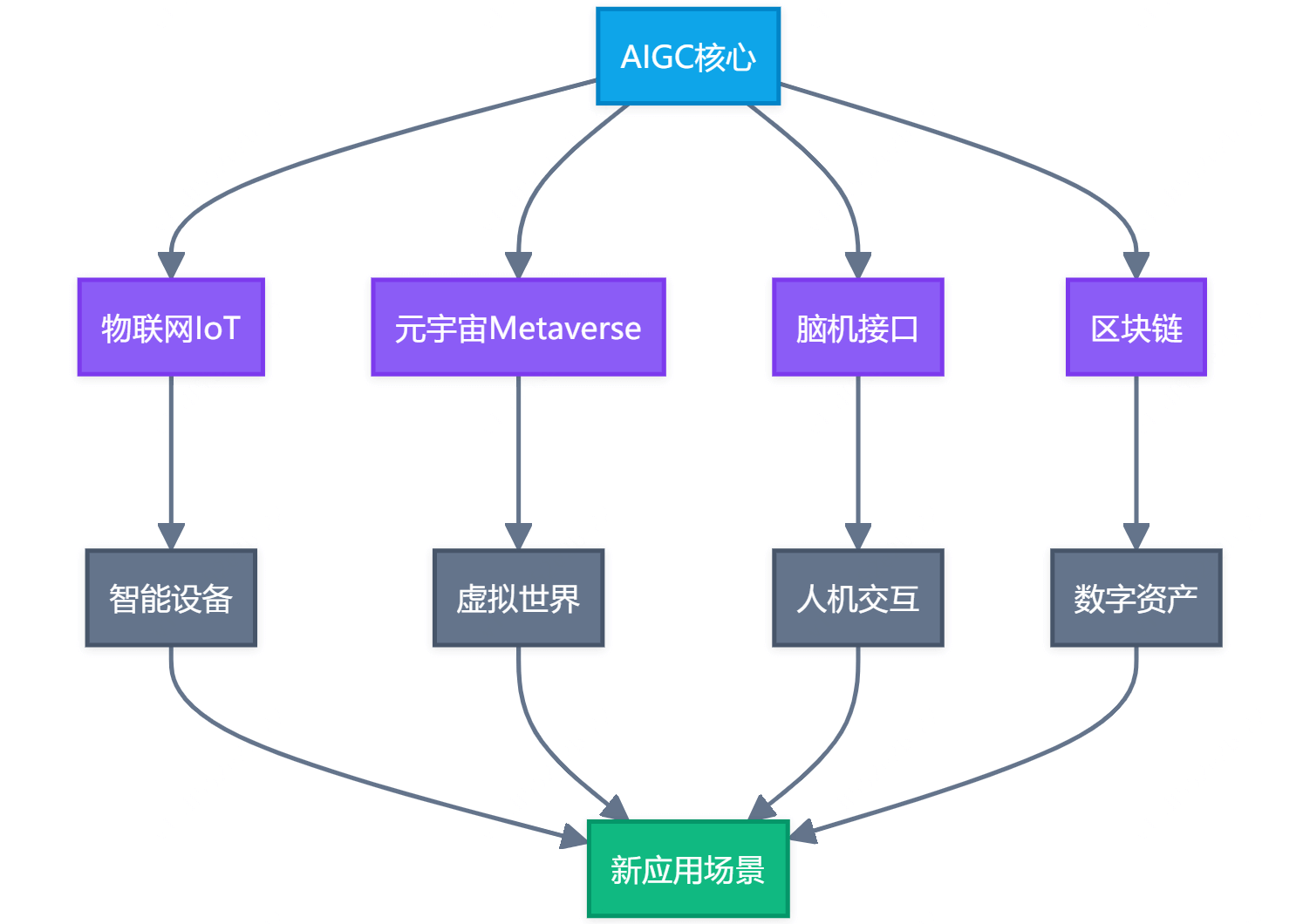
Ethical and Social Impacts: Copyright, Privacy, and Employment Challenges
On the issue of copyright, AIGC models require large amounts of data for training, and this data may contain copyrighted works. If such data is used without authorization to train models and generate content similar to the original works, it may lead to complex copyright disputes. How to define the copyright ownership of AIGC-generated content (does it belong to the AI developer, the user, or the AI itself?), and how to protect the rights and interests of original creators, are legal and ethical issues that urgently need to be resolved.
In terms of privacy, AIGC applications (such as deepfake technology, Deepfake) may be misused to create false information, infringe on personal reputation, conduct fraudulent activities, or spread harmful content, posing a serious threat to personal privacy and social trust.
In terms of employment, the automation capabilities of AIGC may have an impact on certain positions that rely on repetitive content creation, such as junior copywriters, graphic designers, customer service representatives, and some programming and news writing work. Society is required to think about how, through retraining and education, to help workers adapt to the new employment situation, explore new models of human-machine collaboration, and bring out the unique value of humans in creative work.
Embracing the AIGC Era: Improving Literacy and Making Good Use of Tools
To improve AIGC literacy, it is necessary to understand the basic principles, capability boundaries, and potential risks of AIGC. Users need to learn to distinguish the authenticity and quality of AI-generated content, understand its possible biases and limitations (for example, AI may generate information that seems reasonable but is actually incorrect), cultivate critical thinking, and not blindly trust AI output.
It is necessary to learn to make good use of AIGC tools to improve the efficiency and quality of work, study, and life. Treat AIGC as a powerful auxiliary tool, rather than a complete replacement for human intelligence and creativity. We should actively explore and try different AIGC applications, find the tools that best suit our needs, and learn how to interact efficiently with AI through effective prompting to obtain better results.
The popularization of AIGC will promote the democratization of content creation, enabling more people to create and innovate at lower cost. It provides a new platform for personal expression and the display of talent, encouraging users to actively participate in the creation and experience of AIGC, and jointly explore and shape the future of intelligent creation. Society also needs to strengthen the regulation and guidance of AIGC technology, formulate corresponding ethical guidelines and industry standards, and ensure that AIGC technology develops in a responsible and sustainable direction, truly benefiting human society. By improving the AIGC literacy of the whole population, we can better harness this powerful technology and make it a positive force for social progress and personal development.