
What is Webscrape AI
Webscrape AI is an intelligent web data collection tool that requires no coding skills. It uses AI technology to automate data collection from the internet and simplifies the manual crawling process. Users only need to enter the target URL and the required data items, and the AI crawler can automatically complete data collection. It features user-friendliness, high efficiency, high accuracy, and customizability. It is suitable for businesses of all sizes and helps users save time and improve the efficiency of data collection. Webscrape AI offers multiple subscription plans, including Basic, Professional, and Bulk, to meet the needs of different users.
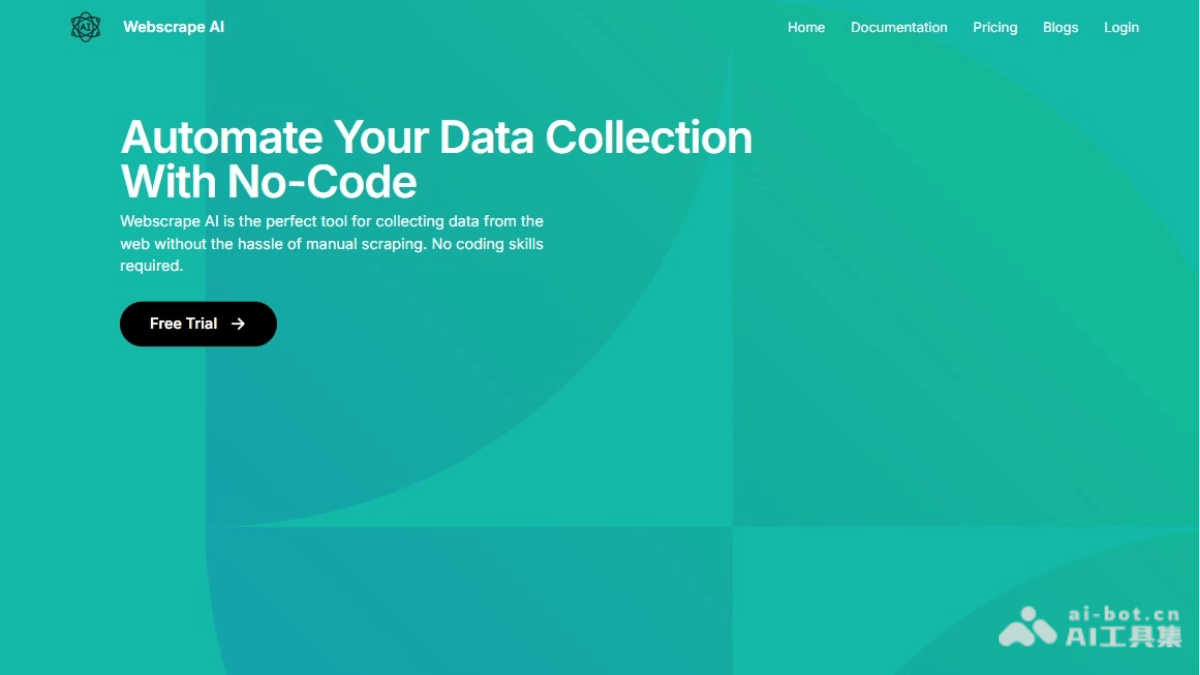
Main features of Webscrape AI
- Easy to use: Users only need to enter the URL and the data items to be scraped, and the AI crawler will automatically complete data collection.
- Accurate data collection: Uses advanced algorithms to ensure the accuracy of data collection and provide reliable results.
- Save time: Automates the data collection process, allowing users to spend time on other tasks.
- Customizable: Allows users to adjust data collection preferences and settings as needed.
- Cost-effective: Provides affordable solutions suitable for businesses of different sizes.
- Fast data collection: Uses the latest technology to ensure fast data collection.
Webscrape AI official website
- Official website:webscrapeai.com/
Webscrape AI pricing
- WebScrapeAI:The price is $27 per month, $270 per year.The features are 250 URLs per month, no coding required.
- WebScrapeAI Pro: The price is $47 per month,$470 per year.The features are 500 URLs per month, no coding required, and proxy support.Wait for loading/JavaScript execution. There areadditional crawling features.
- WebScrapeAI Bulk:The price is $87 per month, $870 per year. The features are 500 URLs per month, batch URL extraction, no coding required, pagination support, and proxy support. Wait for loading/JavaScript execution. There are additional crawling features.
Webscrape AI use cases
- Market research: Collect data such as competitors' prices, product information, and customer reviews to analyze market trends and formulate strategies.
- Price monitoring: Automatically track price changes for specific goods or services for price optimization and inventory management.
- Customer feedback analysis: Collect customer feedback from websites and social media platforms for sentiment analysis and satisfaction surveys.
- Supply chain management: Collect supplier information, inventory data, and logistics tracking to optimize supply chain processes.
- Content aggregation: Collect news, articles, and other content from multiple sources for content aggregation websites or applications.
- Data enrichment: Collect additional data to enrich existing databases, such as adding social media links or contact information.