
What is Wan2.2-Animate
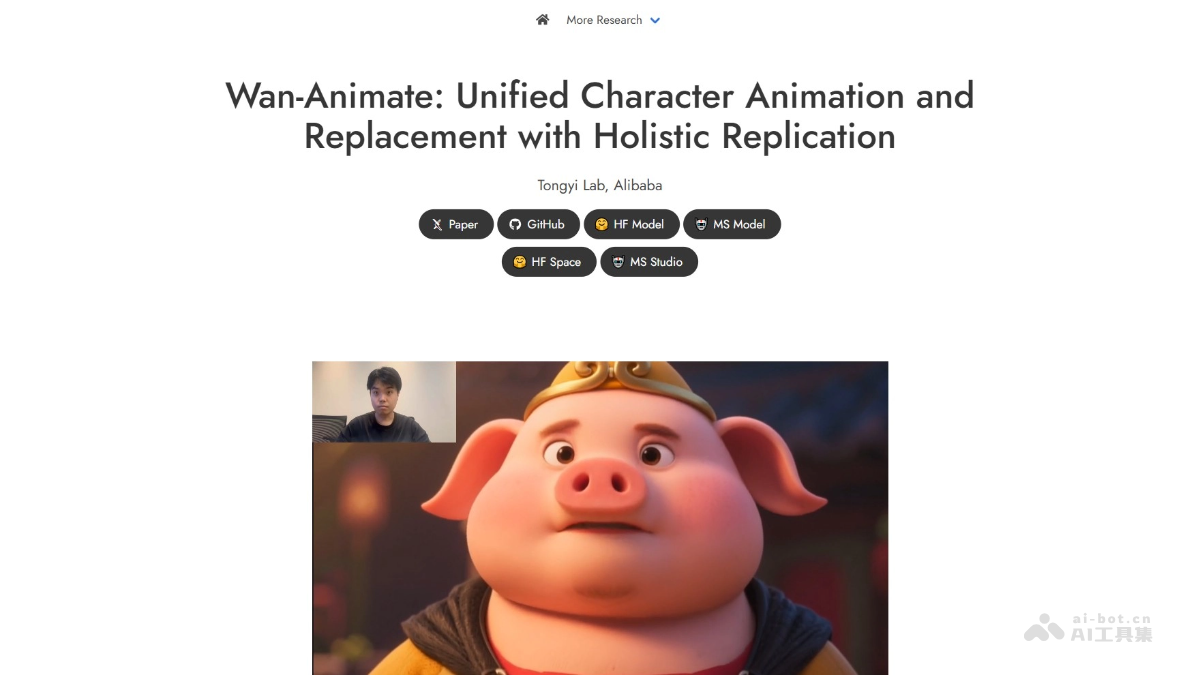
Wan2.2-Animate is a motion generation model launched by the Alibaba Tongyi team. The model supports both motion imitation and character role-playing modes. Based on a performer's video, it can precisely replicate facial expressions and movements to generate highly realistic character animation videos. The model can seamlessly replace animated characters into the original video, perfectly matching the scene's lighting and color tone. Built on the Wan model, it controls limb movements through spatially aligned skeletal signals and reproduces expressions using implicit facial features extracted from the source image, achieving highly controllable and expressive character video generation. Now you canTongyi WanxiangExperience the Wan2.2-Animate model directly online on the official website.
Main Features of Wan2.2-Animate
- Motion Imitation : Input a character image and a reference video. The model transfers the movements and expressions of the character in the reference video to the input image character, giving the static image character dynamic expressiveness.
- Character Replacement : While preserving the movements, expressions, and environment of the original video, replace the character in the video with the character from the input image, achieving seamless integration.
Technical Principles of Wan2.2-Animate
- Input Paradigm: Modify the input paradigm of the Wan model to unify reference image input, temporal frame guidance, and environmental information into a common symbolic representation, adapting to the needs of character animation tasks.
- Limb Movement Control: Replicate body movements using spatially aligned skeletal signals. Skeletal signals can precisely describe the character's limb movements, and by combining the signals with the character image, precise control of the character's limb movements is achieved.
- Facial Expression Control: Reproduce expressions using implicit facial features extracted from the source image as driving signals. Implicit features can capture subtle expression changes on the character's face, achieving highly realistic expression reproduction.
- Environment Integration: To enhance integration with the new environment during character replacement, an auxiliary Relighting LoRA module was developed. The module can match the character with the lighting and color tone of the new environment while maintaining the consistency of the character's appearance, achieving seamless environmental integration.
How to Use Wan2.2-Animate
-
Visit the Tongyi Wanxiang Official Website: Visit theTongyi Wanxiangofficial website and log in to the platform.
-
Upload Image and Video: Upload a character image and a reference video.
-
Select Mode: Choose motion imitation or character replacement mode.
-
Generate Animation: Click the generate button, and the model will automatically process and output the result.
Project Addresses of Wan2.2-Animate
- Project Official Website:https://humanaigc.github.io/wan-animate/
- HuggingFace Model Repository:https://huggingface.co/Wan-AI/Wan2.2-Animate-14B
- arXiv Technical Paper:https://arxiv.org/pdf/2509.14055
Application Scenarios of Wan2.2-Animate
- Video Editing: In video editing, replace the human character in the video with an animated character, and it can perfectly integrate into the original video's environment, achieving seamless visual effects.
- Game Development: In game development, generate character animations in real time based on the player's motion capture data, making the game character's movements more natural and smooth, and enhancing the game's immersion and interactivity.
- Virtual Reality and Augmented Reality: In virtual reality (VR) and augmented reality (AR) applications, create realistic virtual characters to achieve natural interaction with users, providing users with a more realistic and immersive experience.
- Education and Training: In the field of education, create animated characters as teaching assistants, attract students' attention through the characters' facial expressions and movements, and improve the fun and interactivity of teaching.