
What is Veo
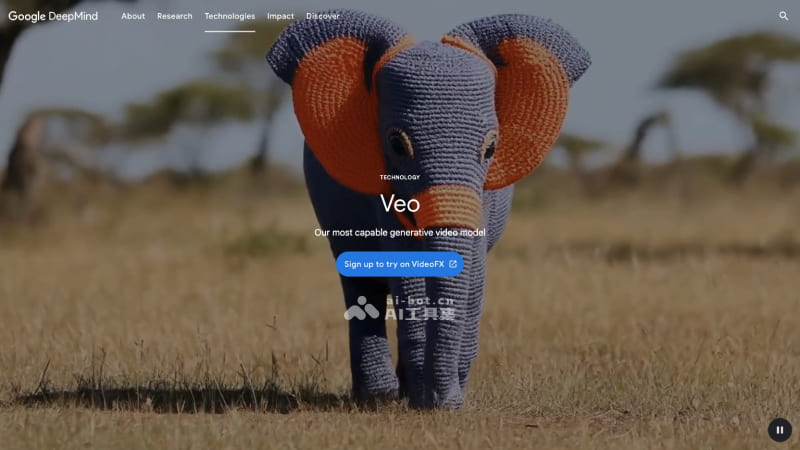
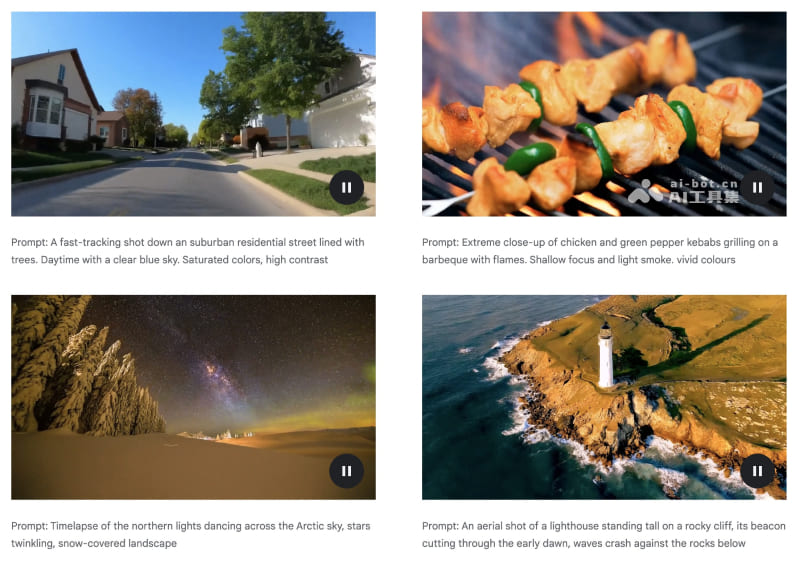
Veo is a video generation model developed by Google DeepMind. Users can guide it to generate desired video content through text, image, or video prompts, and it can generate high-quality videos over one minute long at 1080P resolution. Veo has a deep understanding of natural language and can accurately capture and execute various filmmaking terms and effects, such as time-lapse photography or aerial shots. The videos generated by Veo are not only more visually coherent and consistent, but also more realistic in the movements of people, animals, and objects. Veo was developed to make video production more accessible, so that professional filmmakers, emerging creators, and educators alike can use this tool to explore new ways of storytelling and teaching.
Main features of Veo
- High-resolution video output: Veo can generate high-quality 1080p resolution videos, and these videos can be over one minute long, meeting the production needs of long-form video content.
- Deep natural language processing: Veo has a profound understanding of natural language and can accurately parse users' text prompts, including complex filmmaking terms such as "time-lapse photography," "aerial shots," and "close-up shots," thereby generating video content consistent with the user's description.
- Broad style adaptability: This model supports a variety of visual and cinematic styles, from realism to abstract styles, and can create based on the user's prompts.
- Creative control and customization: Veo provides an unprecedented level of creative control. Users can finely tune all aspects of the video through specific text prompts, including scenes, actions, colors, and more.
- Masked editing functionality: Allows users to edit specific areas of the video, such as adding or removing objects, enabling more precise modifications to video content.
- Reference image and style application: Users can provide a reference image, and Veo will generate a video based on the style of that image and the user's text prompt, ensuring that the generated video remains visually consistent with the reference image.
- Editing and extension of video clips: Veo can receive one or more prompts, edit video clips, and smoothly extend them to longer durations, or even tell a complete story through a series of prompts.
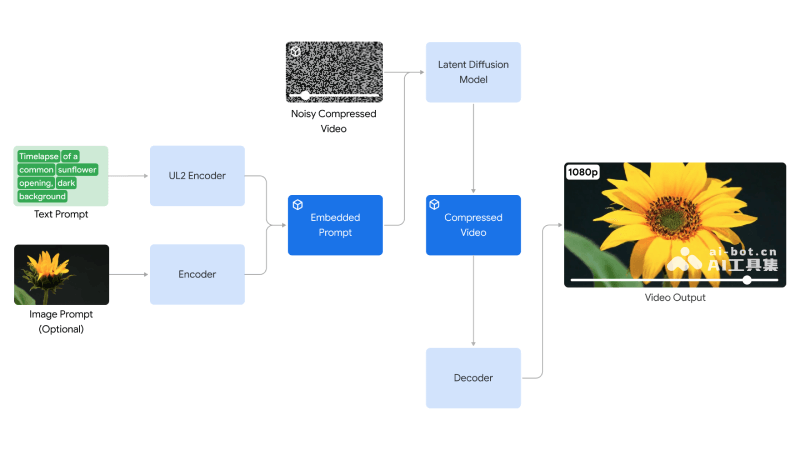
- Visual coherence between video frames: By using advanced latent diffusion transformer technology, Veo can reduce inconsistencies between video frames and ensure that the people, objects, and scenes in the video remain coherent and stable during transitions.
Veo's technical principles
The development of Veo was not achieved overnight, but based on Google's years of research and experimentation in the field of video generation, including in-depth analysis and improvement of multiple previous models and technologies.
- Advanced generative models: Veo is built on a series of advanced generative models, such as Generative Query Network (GQN), DVD-GAN, Imagen-Video, Phenaki, WALT, VideoPoet, and Lumiere, among others. These models provide the technical foundation for Veo to generate high-quality video content.
- Transformer architecture: Veo adopts the Transformer architecture, a model architecture that performs excellently in natural language processing and other sequence tasks. The Transformer architecture, through its self-attention mechanism, can better capture the subtle differences in text prompts.
- Gemini model: Veo also integrates the technology of the Gemini model, which has advanced capabilities in understanding visual content and generating videos.
- High-fidelity video representation: Veo uses high-quality compressed video representations (latents), which are able to capture the key information of a video with a smaller amount of data, thereby improving the efficiency and quality of video generation.
- Watermarking and content identification: Videos generated by Veo will be watermarked using advanced tools such as SynthID to help identify AI-generated content, and through safety filters and memory checking processes to reduce privacy, copyright, and bias risks.
How to use and experience Veo
Veo technology is still in the experimental stage and is currently only open to selected creators. If ordinary users want to experience it, they need toregister on the VideoFX websiteand join the waitlist to get an early opportunity to try Veo. In addition, Google plans to integrate some of Veo's features into YouTube Shorts, which means that in the future users can use Veo's advanced video generation technology when making short videos.
If you want to learn more about Veo, please check its official website introduction:https://deepmind.google/technologies/veo/
Veo's application scenarios
- Film production: Veo can assist filmmakers in quickly generating scene previews, helping them plan actual shooting, or simulating high-cost shooting effects when budgets and resources are limited.
- Advertising creativity: The advertising industry can use Veo to generate attractive video ads, quickly iterate creative concepts, and test different advertising scenarios at lower cost and with higher efficiency.
- Social media content: Content creators can use Veo to produce engaging video content for social media platforms, increasing fan interaction and improving view rates.
- Education and training: In the field of education, Veo can be used to create educational videos, simulate complex concepts or historical events, and make the learning process more intuitive and interesting.
- News reporting: News organizations can use Veo to quickly generate video summaries of news stories, improving the appeal of reports and the audience's understanding.
- Personalized videos: Veo can be used to generate personalized video content, such as birthday greetings, commemorative videos, etc., providing customized experiences for individuals.