
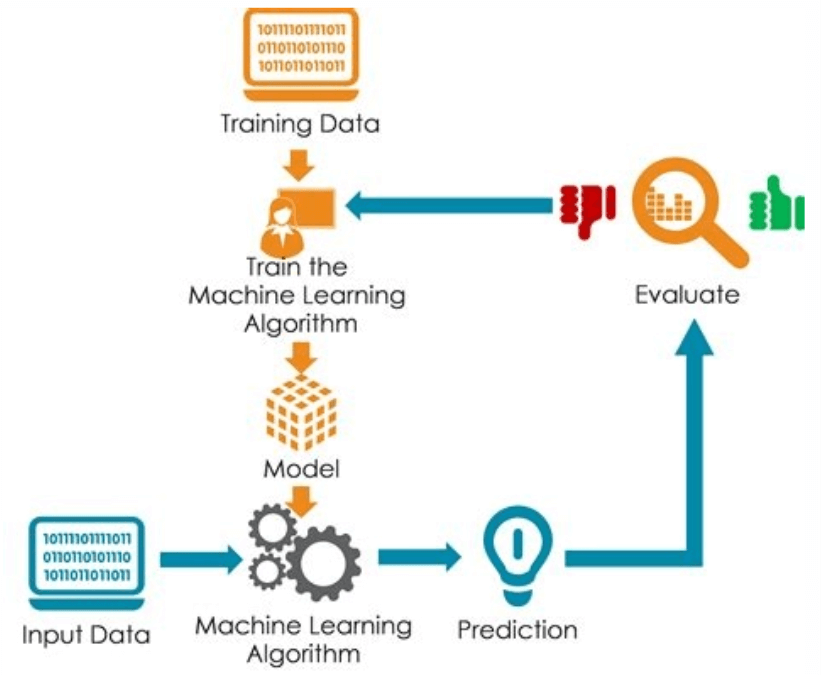
In the machine learning model development process, the rational division of datasets is a core step in ensuring model generalization ability. The training set (Training Set), validation set (Validation Set), and test set (Test Set) form a ternary structure of data allocation, in which the functional differences between the validation set and the test set are often confused. The validation set is used for hyperparameter tuning and model selection during training, while the test set serves as an independent judge of final generalization ability. Confusing the two may lead to "Data Leakage," causing inflated evaluation of model performance. This article will systematically analyze the essential differences between the two, covering theoretical foundations, division methods, practical cases, and cutting-edge trends, providing a reusable evaluation framework for academia and industry.

Theoretical Foundations
Core Definitions and Differences in Objectives
- Validation Set: As a "debugging tool" in the development process, it is used to adjust hyperparameters (such as learning rate and regularization coefficient), select algorithm architectures (such as the number of neural network layers), and monitor overfitting (such as implementing early stopping strategies). For example, in deep learning training, terminating training when the validation set loss has not decreased for 5 consecutive epochs is a typical application of the validation set.
- Test Set: It plays the role of the "ultimate judge," used only once after all development is completed, to evaluate the model's true performance on unseen data. The results directly affect model deployment decisions, such as whether the sensitivity of a medical diagnosis system meets the standard, which must be confirmed using the test set.
Mathematical Principles and Statistical Independence
From the perspective of statistical learning theory, the essential difference between the two is reflected in data independence. Let the dataset DD be divided into mutually exclusive subsets Dtrain,Dval,DtestDtrain,Dval,Dtest, then:
- Validation set error ϵvalϵval is used to minimize structural risk:
h^=argminh∈H[L^(h,Dtrain)+λ⋅Ω(h)]h^=argh∈Hmin[L^(h,Dtrain)+λ⋅Ω(h)]
where,L^L^ is the empirical risk, andΩ(h)Ω(h) is the regularization term.
- Test set error ϵtestϵtest approximates the generalization error ϵgenϵgen:
ϵtest=E(x,y)∼Ptest[ℓ(h(x),y)]ϵtest=E(x,y)∼Ptest[ℓ(h(x),y)]
where PtestPtest is the test data distribution.
Statistical Independence Requirementsinclude two aspects:
- Independence of Data Division: The three subsets are mutually exclusive at the sample level.
- Independence of Information Flow: Test set information cannot be leaked into the training and validation process in any form.
In practical applications, independence requirements must be guaranteed through strict protocols. Taking Kaggle competitions as an example, the function of the Public Leaderboard is similar to a validation set, allowing participants to submit repeatedly to view results; the Private Leaderboard corresponds to the test set and is only revealed at the end of the competition, effectively preventing overfitting caused by "tuning on the public leaderboard."
Roles in the Bias-Variance Tradeoff
Under the framework of the bias-variance tradeoff, the validation set and test set play different roles:
- The validation set is mainly used to control variance, preventing overfitting through regularization and early stopping.
- The test set is used to evaluate total error, reflecting the combined effect of bias and variance.
- Validation set performance optimization often focuses on reducing variance, while test set performance reflects the true level of generalization ability.
Methodology: Key Techniques for Data Division
Traditional data division usually follows empirical rules, such as a 7:2:1 or 6:2:2 proportional allocation. In practical applications, fixed ratios need to be dynamically adjusted according to specific scenarios.
In small-data scenarios (sample size less than 10,000), data scarcity is the main challenge. In this case, k-fold cross-validation methods (such as 5-fold or 10-fold cross-validation) should be preferred, as this approach maximizes data utilization and improves evaluation stability. It should be noted that even in cross-validation, an independent test set still needs to be retained for final evaluation.
Conversely, in big-data scenarios (sample size exceeding 1,000,000), data is abundant and different strategies can be adopted. The validation set proportion can be appropriately reduced to 2%-5%, while the test set still needs to remain above 10% to ensure statistical significance. In this scenario, an 85:5:10 split ratio can achieve good results.
Advanced Splitting Techniques
| Method | Applicable Scenario | Implementation Points | Precautions |
|---|---|---|---|
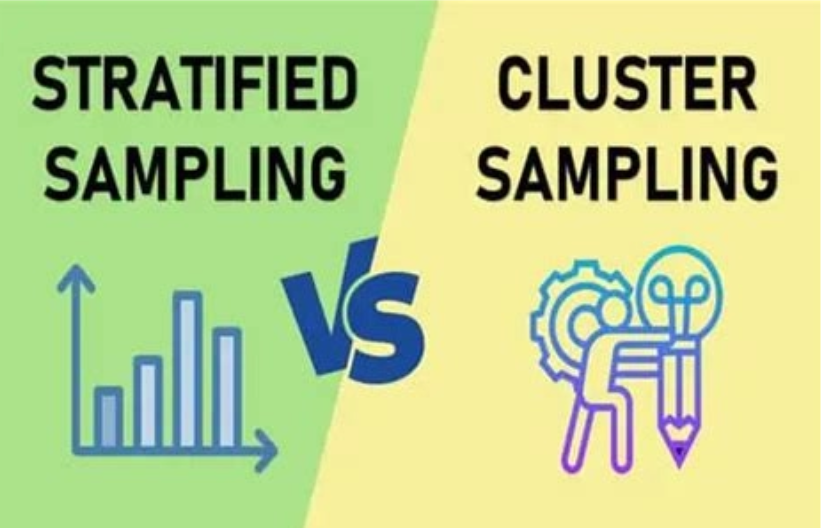
| Stratified Sampling | Class-imbalanced data | Keep the proportion of each class consistent across subsets | Need to ensure each class has enough samples |
| Time Series Splitting | Financial forecasting, weather forecasting | Split strictly in chronological order | Avoid future information leakage and preserve temporal dependencies |
| Group Splitting | Medical imaging, user behavior analysis | Data from the same group appears only in the same subset | Differences between groups may introduce bias |
| Spatial Splitting | Geographic information systems, environmental monitoring | Consider spatial autocorrelation | Need to verify the uniformity of spatial distribution |
- Stratified Sampling: Especially important in class-imbalanced scenarios. For example, in tumor diagnosis, the ratio of benign to malignant samples may reach 1:9, and random splitting may cause a subset to lack malignant samples. Stratified sampling ensures that each subset represents the overall characteristics by preserving the original distribution.
- Time Series Splitting: Of special importance in the financial field. Taking stock price prediction as an example, if data from January to June 2020 is used for training, July to August data for validation, and September to October data for testing, the actual trading environment can be better simulated.
- Group Splitting: Applied in multiple fields. Multiple scans of the same patient in medical imaging, and historical behavior of the same user in recommendation systems, should be assigned to the same subset to prevent the model from learning group-specific patterns.
Practical Case: The Real Cost of Confusing the Distinction
Evaluation Pitfalls of Medical Diagnostic Systems
- Case Background: A research team developed a pulmonary nodule detection model using a dataset containing 10,000 CT images. It achieved 98% accuracy on the validation set, but performance dropped sharply to 75% in actual testing.
- Problem Analysis: After in-depth investigation, it was found that the dataset contained multiple scan images from 500 patients. During the random splitting process, different images from the same patient were assigned to the training set, validation set, and test set. This caused the model to learn patient-specific imaging features (such as scanning parameters and positional characteristics), rather than general features of pulmonary nodules.
- Solution: Adopt a group splitting strategy based on patient ID:
- Sort by patient ID to ensure all images from the same patient are in the same subset.
- The training set contains 400 patients, the validation set 50, and the test set 50.
- After retraining, the test set performance stabilized at 92%.
- Lessons Learned: In medical data involving repeated measurements, the group structure of the data must be considered. Simple random splitting breaks the assumption of statistical independence, leading to severely distorted performance evaluation.
Temporal leakage in financial anti-fraud models
- Case background: A bank credit card anti-fraud system uses transaction data from the past three years to build a model. With random splitting, the validation set AUC reached 0.95, but after deployment the actual AUC was only 0.62.
- Root cause of the problem: Random splitting causes future transaction patterns to leak into the training process. The model has already "seen" future fraud patterns during training and cannot truly generalize to new fraudulent behavior.
- Corrective plan: Strictly split the data in chronological order:
- Training set: Transaction data from January 2020 to June 2022.
- Validation set: Data from July 2022 to December 2022.
- Test set: Data from January 2023 to March 2023.
- Business impact: This temporal splitting strategy was subsequently incorporated into the bank's standard development process for risk control models, significantly improving the success rate of model deployment.
Domain adaptation issues in natural language processing
- Case background: In a social media sentiment analysis project, a sentiment classifier trained on news corpora showed a sharp decline in performance on Twitter data.
- Problem analysis: Both the validation set and the test set came from the news domain. Although the data split was correct, the inconsistent domain distribution led to distorted evaluation.
- Solution:
- Training set: Mixed news and social media data.
- Validation set: Pure social media data.
- Test set: Held-out social media data.
Frontier trends: AutoML and validation strategies for complex scenarios
Modern AutoML platforms have significantly improved model development efficiency through automated validation strategies. Reinforcement learning hyperparameter tuning methods model hyperparameter optimization as a reinforcement learning problem, using validation set performance as the reward signal to intelligently explore the hyperparameter space. Meta-learning techniques predict the best validation strategy based on experience from historical tasks, including automatic determination of the validation set ratio and adaptive adjustment of the number of cross-validation folds. Multi-fidelity optimization techniques perform rapid validation using partial data or simplified models, and use full validation only on configurations that perform well, greatly reducing computational cost.
- Few-shot learning scenarios: Traditional validation strategies face severe challenges. Researchers have proposed the concept of meta-validation sets, evaluating the model's rapid adaptation ability by constructing multiple meta-tasks. Cross-domain validation methods validate the model's transfer ability on data from related domains, and synthetic data validation generates additional validation samples through data augmentation techniques. These innovative methods provide a reliable evaluation framework for few-shot learning.
- Distributed learning paradigms such as federated learning: Validation strategies require corresponding innovation. Federated validation sets obtain global evaluation by aggregating validation metrics across multiple clients, and the introduction of differential privacy techniques makes it possible to perform model validation under the premise of protecting data privacy. Personalized validation methods conduct specific evaluations according to the data distribution of different clients, providing more accurate performance estimates for personalized models.
Evaluation metric systems: a comprehensive perspective beyond accuracy
Although the validation set and the test set use the same evaluation metrics, there are significant differences in their focus and interpretation. Validation set metrics are mainly used as a compass for the training process, including monitoring loss curves, analyzing gradient statistics, observing activation distributions, and evaluating confidence calibration. Metrics can help developers gain a deeper understanding of the model's learning dynamics and adjust training strategies and model architecture in a timely manner.
In contrast, test set metrics should be directly tied to business value and application requirements. In scenarios such as spam filtering, precision is the core metric, with the goal of minimizing false positives; in applications such as disease screening, recall is more important, and it is necessary to ensure as few missed diagnoses as possible; in class-imbalanced tasks such as fraud detection, the F1 score provides a balanced perspective on precision and recall; the AUC-ROC metric is suitable for scenarios such as credit scoring that require good ranking ability; in applications where positive samples are scarce, PR-AUC often provides a more accurate evaluation.
| Metric | Applicable Scenario | Example Threshold |
|---|---|---|
| Precision | Spam filtering (low false positives) | >99% |
| Recall | Disease screening (low missed diagnoses) | >95% |
| F1 score | Class imbalance (such as fraud detection) | Maximize |
| AUC-ROC | Ranking ability of credit scoring models | >0.85 |
| PR-AUC | Scenarios with scarce positive samples | Focus on AP value |
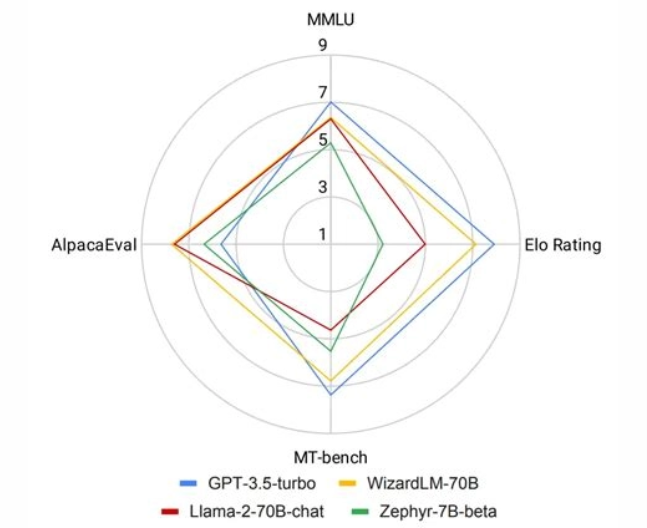 Modern machine learning systems need to establish a multidimensional evaluation framework. In addition to traditional accuracy metrics, it should include efficiency metrics (inference speed, resource consumption), robustness metrics (out-of-distribution generalization, adversarial robustness), and fairness metrics (group fairness, individual fairness). A comprehensive evaluation system ensures the practicality and reliability of models in real environments.
Reproducibility Practices: Standardized Evaluation Process
To avoid non-reproducible results, the following specifications should be followed:
- Data version control: Use DVC (Data Version Control) to track dataset changes and ensure test set consistency.
- Code repository management: Store code in GitHub/GitLab and lock the experimental environment through Git hash values.
- Random seed fixing: Set
np.random.seed(42)etc. to ensure data splitting is reproducible. - Test set isolation protocol: Establish a "test set access log" and allow reading only during final evaluation.
Conclusion and Outlook
The correct use of validation sets and test sets is built on several core principles. The principle of functional separation requires a clear distinction between the participatory role of the validation set and the adjudicative role of the test set; the principle of independence ensures independence across multiple dimensions such as data splitting, time series, and domain distribution; the one-time principle safeguards the single use of the test set through institutional measures, maintaining the unbiasedness of evaluation.
Based on theoretical analysis and practical experience, we propose a series of best practice recommendations. In terms of data splitting strategies, cross-validation should be prioritized in small-data scenarios, time series data should be strictly split in chronological order, and group data should be split by group. The evaluation process needs to establish a standardized pipeline, achieve automated metric calculation, and conduct regular model audits. In terms of organizational processes, it is necessary to establish standardized evaluation procedures, implement strict test set management protocols, and cultivate the team's correct evaluation awareness.
Future research will unfold around several important directions.
- Research on automated validation strategies focuses on meta-learning-based adaptive splitting, multi-objective trade-off optimization, and balancing computational efficiency.
- Privacy protection evaluation focuses on exploring distributed testing in federated learning, evaluation theory under differential privacy, and secure multi-party computation applications.
- Cross-domain generalization evaluation requires establishing test set standards for domain generalization, transfer learning evaluation methods, and a zero-shot learning performance evaluation framework.
- Interpretability evaluation is dedicated to developing new methods such as verification of model decision consistency, reliability evaluation of interpretation methods, and quantification of the degree of human alignment.
The correct use of validation sets and test sets is a technical issue, and even more a comprehensive manifestation of engineering practice and organizational management. Only by working simultaneously at the three levels of theoretical understanding, technical implementation, and process assurance can we build truly reliable machine learning systems and promote the responsible application and development of artificial intelligence technology in various fields.