
What Is UniToken
UniToken is a novel autoregressive generative model designed specifically for multimodal understanding and generation tasks. By combining discrete and continuous visual representations, it constructs a unified visual encoding framework that can simultaneously capture high-level semantics and low-level details of images. This enables UniToken to seamlessly support visual understanding and image generation tasks, providing multi-dimensional information for different tasks.
Main Features of UniToken
- Image-Text Understanding: UniToken can efficiently handle image-text understanding tasks, such as image captioning and visual question answering (VQA).
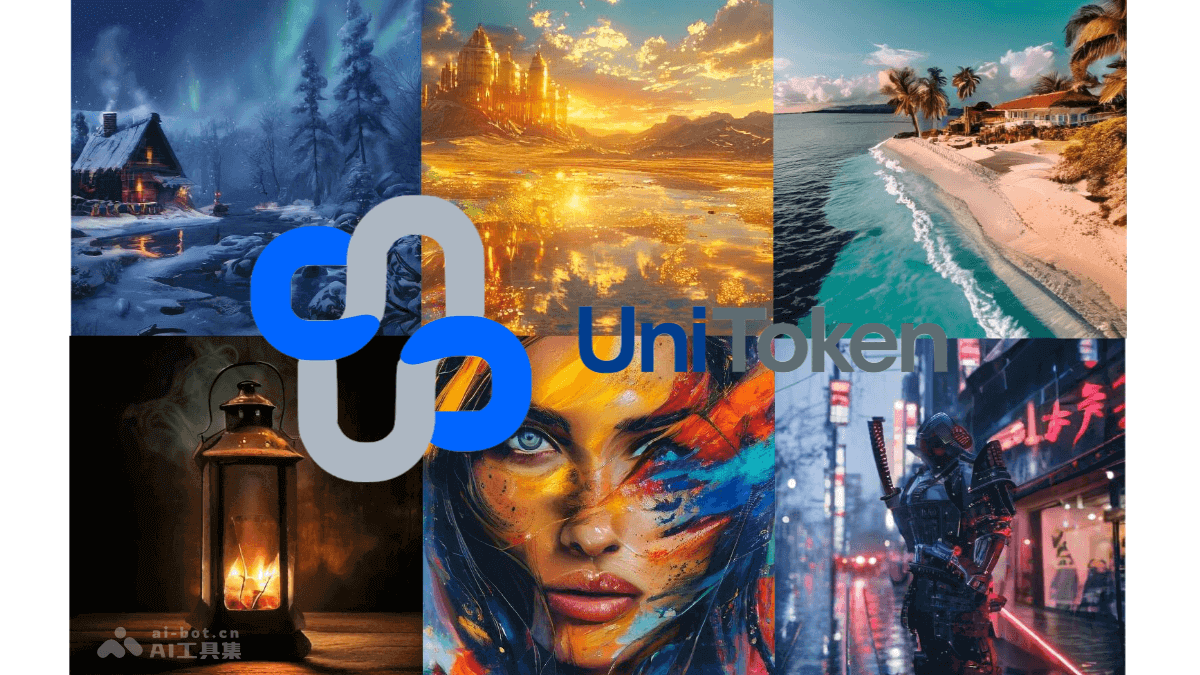
- Image Generation: UniToken supports high-quality image generation tasks, including generating images from text descriptions, image editing, and story generation.
- Multimodal Dialogue: In multimodal dialogue scenarios, UniToken can generate natural language responses based on input text and image information, supporting more complex interactive tasks, such as explaining image content or generating new images based on image and text instructions.
- Complex Instruction Following: Through instruction-enhanced fine-tuning, UniToken can better understand and execute complex multimodal instructions, such as generating images with specific layouts given text descriptions and images.
- Fine-Grained Visual Tasks: With technologies such as AnyRes and end-to-end ViT fine-tuning, UniToken can process high-resolution images, enhancing its perception of image details, making it suitable for tasks requiring high-precision visual processing.
- Task Generality: UniToken can seamlessly integrate multimodal understanding and generation tasks, supporting various complex tasks such as image-text understanding, image generation, image editing, and story generation, demonstrating powerful general generation capabilities.
Technical Principles of UniToken
- Unified Visual Encoding: UniToken uses continuous and discrete dual encoders, combining the discrete encoding of VQ-GAN with the continuous representation of SigLIP to generate visual encodings that possess both high-level semantics and low-level details, providing complete visual information for multimodal large models.
- Multi-Stage Training
- Visual-Semantic Space Alignment: Based on Chameleon as the base, the language model (LLM) is frozen, and only the SigLIP ViT and Adapter are trained to align continuous visual encoding with the language space.
- Multi-Task Joint Training: Joint training on large-scale image-text understanding and image generation datasets, balancing and improving the model's performance on understanding and generation tasks by controlling data proportions.
- Instruction-Enhanced Fine-Tuning: Introducing high-quality multimodal dialogue and fine-grained image generation data to further enhance the model's ability to follow complex instructions.
- Fine-Grained Visual Enhancement: UniToken supports technologies such as AnyRes and end-to-end ViT fine-tuning, enhancing fine-grained perception of high-resolution images while avoiding model collapse and adapting to a wide range of task scenarios.
UniToken Project Address
- Github Repository:https://github.com/SxJyJay/UniToken
- arXiv Technical Paper:https://arxiv.org/pdf/2504.04423
Application Scenarios of UniToken
- Content Creation and Design: UniToken can generate high-quality images based on text descriptions, helping designers quickly generate creative sketches or concept images, saving design time and effort.
- Intelligent Customer Service and Virtual Assistants: In multimodal dialogue scenarios, UniToken can understand the text and image information input by users and generate natural language responses.
- Education and Learning: UniToken can be used in the education field to help students better understand and learn complex concepts. For example, by generating images related to scientific experiments, historical events, or literary works, UniToken can enhance students' visual memory and comprehension abilities.
- Healthcare and Health: In the healthcare field, UniToken can be used to generate medical images or interpret medical imaging.
- Autonomous Driving and Traffic Management: UniToken can be used for visual question answering (VQA) tasks in autonomous driving scenarios. For example, vehicles can upload road images in real time, and through UniToken generate natural language descriptions of information such as road conditions and traffic signs, assisting autonomous driving systems in making more accurate decisions.