
Currently, we are standing at a critical turning point in the development of artificial intelligence (AI). After experiencing explosive growth in recent years represented by large language models, AI technology is penetrating every aspect of the economy, society, and personal life from laboratories and cloud data centers with unprecedented depth and breadth. Future development will unfold around three core technology engines, two popularization paths, and one key social issue. Together, these directions outline a grand blueprint for AI evolving from an auxiliary tool into ubiquitous "intelligent infrastructure".
Core Technology Engines: Three Foundational Breakthroughs Driving the Future
The leap in AI capabilities over the next five years will be mainly driven by the following three interrelated and mutually reinforcing technology directions. They are AI's "brain", "senses", and "nervous system".
Foundation Models: More Powerful and More General "Digital Brains"
Since the concept of "foundation models" was proposed in 2021, we have witnessed the rise of large general-purpose pretrained models represented byGPT-4, Gemini 1.5, Claude 3, andLLaMA 3. In the next five years, this trend will continue to deepen:
- Formation of the cognitive core: These "foundation models" will no longer be merely chatbots or content generation tools; they are evolving into the core cognitive foundation of future artificial general intelligence (AGI) systems. They will possess stronger capabilities for knowledge generalization, logical reasoning, and rapid learning of new tasks, becoming the underlying operating system for autonomous AI agents.
- Continuous expansion of capabilities: Model scale and efficiency will continue to be optimized, enabling them to handle more complex tasks and understand more subtle human intentions. This will provide unprecedented intelligent power for various applications, from scientific research to personal assistants.
- Core challenges: The power of foundation models also comes with risks. How to effectively control and eliminate biases, misinformation, and harmful content that may spread in models will be one of the core challenges for research and application over the next five years.
Multimodal Learning: Giving AI More Complete "World Senses"
If foundation models are AI's "brain", then multimodal learning is AI's "eyes" and "ears". It is dedicated to enabling AI systems to process and correlate data from multiple information sources at the same time, such as text, images, audio, video, and even EEG and genomic data, just like humans.
- More natural interaction: Multimodal AI will completely change the way we interact with machines. Future software and devices will be able to understand our language, expressions, and gestures, thereby providing a truly seamless and natural user experience and greatly improving the usability and accessibility of software.
- Deep insights: In professional fields, the rise of multimodal AI will bring revolutionary breakthroughs. For example, in the medical field, by deeply integrating brain images, genomic data, and clinical indicators, AI can diagnose neurodegenerative diseases more accurately, which is beyond the reach of a single data modality.
- Application prospects: From home robots that can understand instructions and recognize objects to diagnostic assistants that can analyze medical images and medical records, multimodal AI will spawn a large number of innovative applications in the next five years.
Neuromorphic Computing: Simulating the Brain's "Efficient Nervous System"
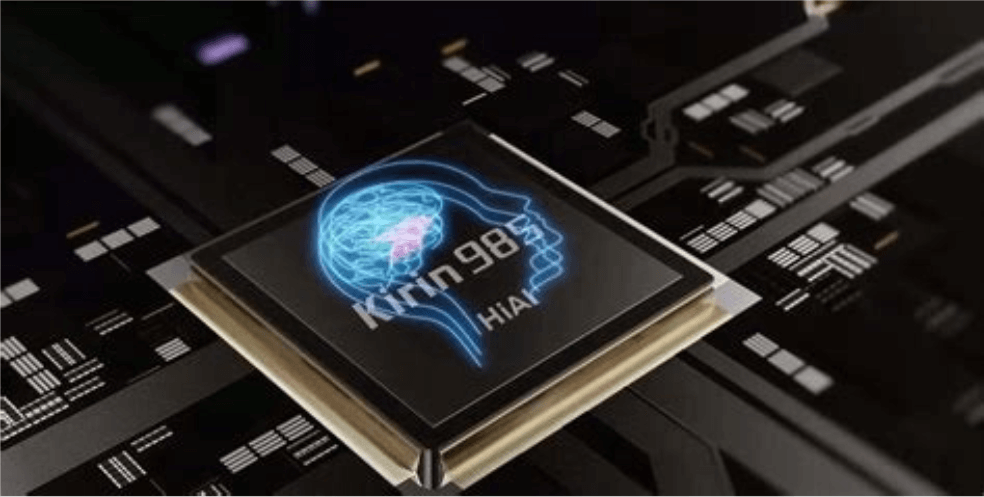
To support increasingly powerful AI models, we need a hardware revolution. Neuromorphic computing is at the core of this revolution. It aims to design chips and computer architectures by mimicking the neural structure of the human brain to achieve ultra-high energy efficiency and processing speed.
- Solving the energy consumption bottleneck: Current AI computing, especially the training and inference of large models, consumes enormous amounts of energy. Through event-driven, spike-based signal processing, neuromorphic computing is expected to improve energy efficiency by several orders of magnitude, making it a key technology for achieving sustainable AI development.
- From experiment to application: In the next five years, neuromorphic computing is expected to gradually develop from the laboratory prototype stage into an important component of next-generation AI infrastructure. It is widely regarded as a transformative technology for AI hardware architecture and will play a key role in robots, autonomous systems, and edge computing devices.
- Long-term impact: Some predict that within the next five to ten years, neuromorphic computing will become the AI foundation driving autonomous decision-making in machines, powering truly intelligent autonomous devices.
The path to AI ubiquity: from the cloud to you and me
The ultimate value of technological breakthroughs lies in their applications. In the next five years, AI will integrate into our daily lives and work at an unprecedented pace along two main paths.
Edge AI and the hardware revolution: injecting intelligence into everything
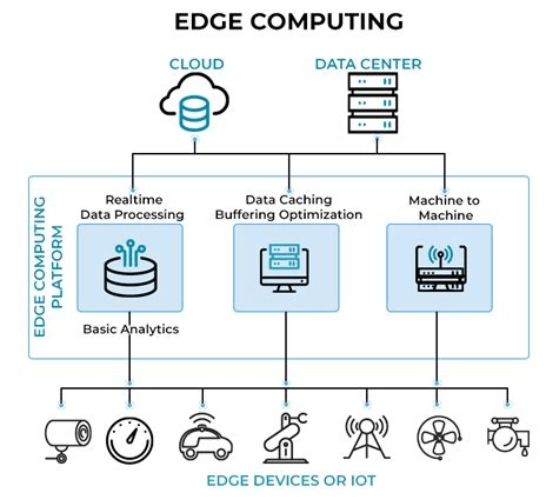
For a long time, powerful AI capabilities have been mainly concentrated in cloud data centers. However, thanks to the rapid development of AI chip technology, computing is shifting on a massive scale to the "edge"—that is, the devices around us.
- The spread of dedicated AI chips: By 2029, it is expected that 95% of laptops will have dedicated AI chipsets built in. Likewise, the smartphones in our pockets have long integrated powerful AI processing units. This means that in the future, many of our AI tasks (such as real-time translation, image processing, and smart assistant responses) can be completed on local devices.
- The advantages of edge AI: This shift brings three major benefits:Low latency(faster response),privacy protection(sensitive data does not need to be uploaded to the cloud), andhigh reliability(no dependence on network connectivity). This is crucial for critical tasks such as autonomous driving, industrial automation, and personal health monitoring.
- Explosive market growth: The global edge computing and edge AI hardware markets are experiencing rapid growth. It is predicted that by 2032, the global edge computing market will grow to 360.6 billion USD, while the edge AI hardware market may reach 54.7 billion USD as early as 2029.
The explosion of consumer applications: AI becomes a personal "intelligent companion"
As AI capabilities are embedded in everyday devices, our digital life experience will be reshaped. Two-thirds of people believe that AI will have a significant impact on their daily lives within the next 3-5 years.
- Proactive AI agents (AI Agent): In the next five years, the most mainstream consumer AI applications will be intelligent virtual assistants and AI agents. They will no longer be tools that passively wait for instructions, but will be able to proactively learn your preferences and habits, manage your schedule, plan trips, monitor health, and handle emails for you, becoming a true "personal intelligent companion".
- Ultra-personalized experience: Whether in entertainment, shopping, or learning, AI will provide unprecedented personalized experiences. From recommending movies and music tailored to you, to using augmented reality (AR) technology to let you try on clothes at home, AI will make everyone's digital world unique.
- Smart Homes and Health Monitoring: Your home will become smarter and more considerate. AI-powered refrigerators will automatically generate shopping lists, and wearable devices will continuously monitor your health and provide early warnings when abnormalities are detected.
Deep Industry Integration: AI Reshapes Key Sectors
Beyond the consumer sector, AI will also deeply empower key industries over the next five years, becoming a core driver of economic growth and social progress.
Smart Healthcare: Moving Toward Precision and Inclusiveness
Healthcare will be one of the areas where AI is applied most deeply and delivers the most significant value. The global healthcare AI market is expected to reach $155.3 billion by 2030, maintaining an astonishing compound annual growth rate of 35.5%.
- Precision Diagnosis and Personalized Treatment: AI will play a huge role in medical imaging recognition, disease risk prediction, and the formulation of personalized treatment plans, and is expected to increase treatment efficiency by more than 30% while reducing medical costs by about 20%.
- Accelerated Drug Development: AI can greatly shorten the cycle and cost of new drug development, bringing new hope for conquering stubborn diseases such as cancer and Alzheimer's disease.
- Market Potential: It is predicted that by 2025, the healthcare industry alone will account for one-fifth of the global AI application market, with a total value exceeding $100 billion.
Financial Technology (FinTech): Smarter and Safer Financial Services
AI is bringing revolutionary innovation to risk control and customer service in the financial industry.
- Intelligent Risk Control and Anti-Fraud: AI can analyze massive amounts of transaction data in real time, accurately identify potential fraudulent behavior and credit risks, and greatly enhance the security of the financial system.
- Personalized Financial Services: From robo-advisors to personalized insurance products, AI will provide every user with tailored financial solutions.
- Market Outlook: It is expected that over the next five years, the market size of AI applications in the financial industry will grow to $70 billion, and the financial industry is expected to achieve tens of billions of dollars in annual cost savings and new revenue growth as a result.
Safeguarding and Challenges: Building a Responsible AI Future
As AI technology becomes increasingly powerful and deeply integrated into society, the ethical, security, and governance challenges it brings have also become unprecedentedly important. Over the next five years, how to establish "safeguards" for AI's development will be key to determining whether it can develop healthily and sustainably.
Formation of a Global Regulatory Framework: In order to address the potential risks brought by AI, countries and international organizations around the world are accelerating the formulation of relevant laws, regulations, and ethical guidelines. Regulations represented by the EU AI Act are intended to manage AI applications through risk classification, ensuring that their development follows the principles of transparency, fairness, and accountability. Enterprises must adapt to increasingly strict compliance requirements.
Public Communication on AI Safety and Ethics: Building public trust is a prerequisite for the widespread application of AI technology. In the future, technology companies will need to communicate more transparently with the public about the capabilities, limitations, and safety measures of their AI products. For example, clearly informing users when they are interacting with AI systems, and providing clear explanations and solutions for issues such as algorithmic bias and data privacy, will become industry standards.
Addressing social challenges: The proliferation of AI will also bring profound social challenges regarding employment, the spread of disinformation, and more. Open and sustained social dialogue, as well as multi-stakeholder collaboration among governments, enterprises, and the public, are crucial to ensuring that AI develops in a direction that benefits all of humanity.
In the next five years (2025-2030), we will witness artificial intelligence evolve from a powerful technical tool into an ubiquitous, deeply integrated intelligent era. Driven byfoundation models, multimodal learning, and neuromorphic computingthree major technology engines, AI will, throughedge computingandconsumer-grade applicationstwo paths, become fully integrated into our lives, work, and society. It will create tremendous economic value and social benefits in key industries such ashealthcare and finance.
This journey toward an intelligent future is not without challenges. Strongglobal regulatory and ethical safeguard systemsmust be established in tandem, and public trust must be built through open and transparent communication. For every ordinary user, embracing change, continuously learning, and actively participating in social discussions about the future of AI will be key to welcoming this exciting new era. The next five years will be a decisive period determining how we coexist, co-create, and co-prosper with increasingly powerful AI.