
What is SynthID
SynthID is a technical tool launched by DeepMind that helps identify content by embedding digital watermarks in AI-generated content. The watermarks are imperceptible to humans but can be detected by machines, promoting trust in information. SynthID is suitable for multiple content forms such as text, music, images, and video, and can remain detectable after content is modified or compressed. SynthID is currently in the testing phase and is gradually being integrated into various products to support people and organizations with AI-generated content. By adjusting probability scores in generated text or adding watermarks to audio waveforms, image pixels, and video frames, SynthID ensures the originality and authenticity of content without affecting quality or creativity.
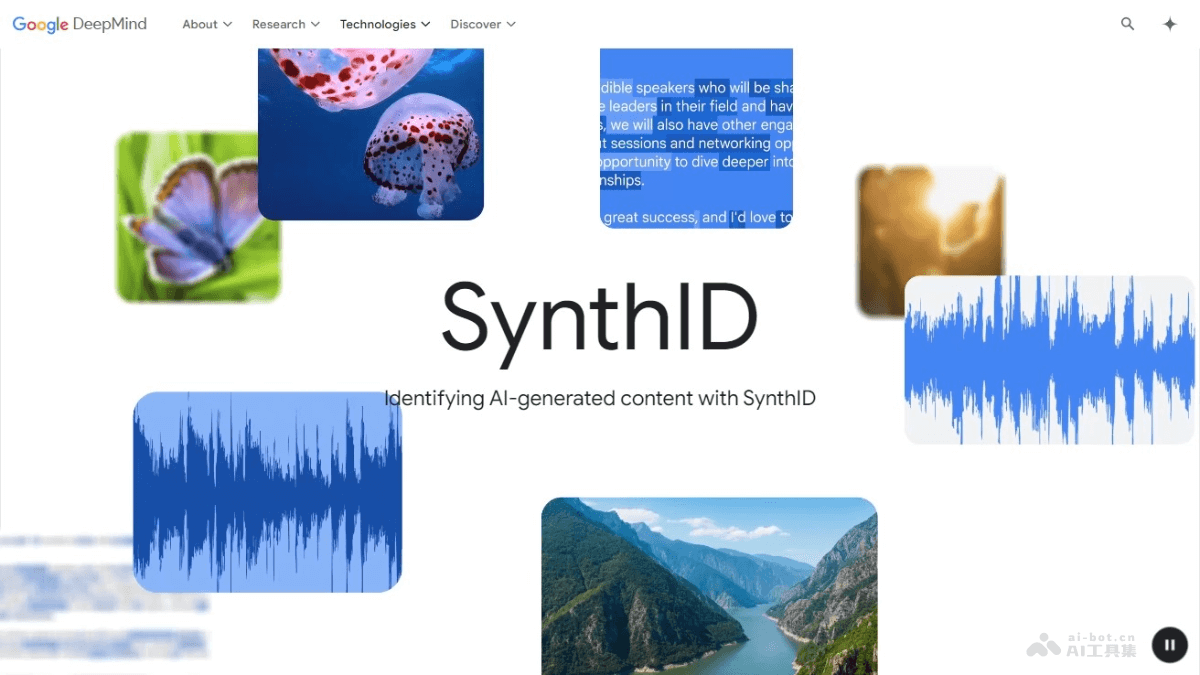
Main features of SynthID
- Watermark embedding: Embeds digital watermarks directly into AI-generated content, such as text, music, images, and video, without compromising the quality of the original content.
- Content identification: Scans various media forms to detect whether digital watermarks exist, helping users confirm whether content was generated by AI tools.
- Cross-media application: Suitable for different media types, including text, music, still images, and video, providing a wide range of application scenarios.
- Modification resistance: Watermarks are designed to remain detectable even after content undergoes modifications such as cropping, adding filters, color adjustment, frame rate changes, or lossy compression.
- Enhanced trust: By identifying AI-generated content, it helps improve the credibility of information and combats misinformation and improper content attribution.
Technical principles of SynthID
- Deep learning models: Uses deep learning models and algorithms to embed and identify watermarks.
- Probability adjustment(for text): During the text generation process, adjusts the probability scores of the next tokens predicted by the language model to embed watermarks, without affecting the coherence and quality of the text.
- Spectrogram processing(for music): Converts audio waveforms into spectrograms, adds watermarks, and then converts them back into waveforms, ensuring the watermarks are inaudible to humans.
- Pixel-level embedding(for images and video): Embeds watermarks directly into image pixels or video frames, maintaining detectability after various modifications.
- Robustness design: Watermark design takes various possible content modifications into account, ensuring reliable detection under different conditions.
SynthID project address
- Project official website:deepmind.google/technologies/synthid
Application scenarios of SynthID
- Content verification: In the news and media industry, verifies whether news images, videos, or audio are AI-generated, ensuring the authenticity of reporting.
- Copyright protection: For artists and content creators, embeds watermarks to protect the copyright of works and prevent unauthorized use and distribution.
- Education and research: In academic research, helps identify whether research materials are AI-generated, ensuring the reliability and validity of research.
- Law and compliance: The legal industry detects whether evidence materials have been tampered with by AI, safeguarding judicial fairness.
- Social media: On social media platforms, helps users identify and filter out fake news or misleading content generated by AI.