
What is StepAmoo
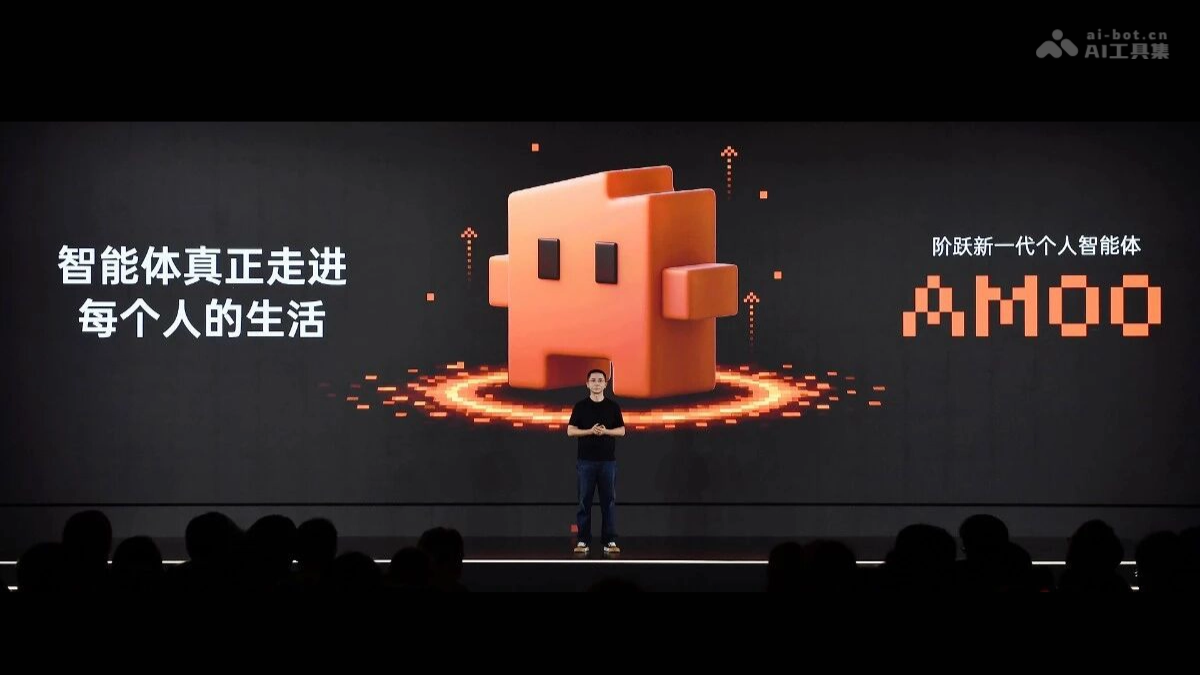
StepAmoo is a new generation personal agent launched by StepFun, built on the Step AOS agent-native operating system and possessing an operating-system-level identity. StepAmoo has five core capabilities: perception, memory, planning, connection, and execution. It adopts a dual-domain, three-step memory structure and can continuously understand user habits and preferences. Through end-cloud collaborative routing, StepAmoo can schedule atomic services across applications, complete complex task loops, and seamlessly continue across multiple devices.
StepAmoo's Main Features
-
Multimodal Perception: Understands user intent and environmental status through natural means such as voice, vision, and text.
-
Dual-Domain Memory Accumulation: The user domain records personal information and preferences, while the agent domain accumulates vertical-domain knowledge and experience.
-
Autonomous Task Planning: Breaks down user intent into executable steps and autonomously formulates cross-application action plans.
-
Atomic Service Connection: Invokes system and application capabilities through the atomic capability engine to complete cross-service loops.
-
End-Cloud Collaborative Execution: Dynamically selects the device-side fast-response path or the cloud-side deep-reasoning path based on task complexity.
-
Result Interaction and Delivery: Users only need to express intent, and the agent completes the full chain and proactively feeds back results.
-
Four-Dimensional Security Governance: Trustworthy operations, visible processes, controllable permissions, and reversible behavior, fully auditable throughout.
StepAmoo's Technical Principles
-
Agent-Native System: Rebuilt based on Step AOS, allocating hardware resources to agents and scheduling system capabilities, rather than adding an AI entry point on top of a traditional OS.
-
Dual-Domain, Three-Step Memory: The user domain stores facts, episodes, and profiles, while the agent domain accumulates knowledge, cognition, and methods; through the "record-organize-recall" three-step chain, memory extraction, evolution, and retrieval are achieved.
-
End-Cloud Collaborative Routing: Dynamically switches among Fast Path (device-side loop), Deep Path (cloud-side reasoning), and Hybrid Path (end-cloud relay) based on task complexity, intent confidence, network status, and privacy level.
-
Cascaded Model Scheduling: Adopts the Step model Cascade architecture, with device-side Step Edge (300M-10B) responsible for real-time response, and cloud-side Step Flash (200B-400B) and Step Pro (1.5T+) handling complex reasoning.
-
Atomic Capability Engine: Breaks down system and application capabilities into minimal atomic units, opened through protocols such as MCP, A2A, and CLI for agents to freely orchestrate and invoke.
-
Unified Semantic Data Layer: Processes perception, behavior, and personal data into unified semantic files, and with a high-speed hybrid database enables extremely fast transmission and retrieval.
How to Use StepAmoo
StepAmoo is not yet publicly available and is in the early co-creation and internal testing stage.
StepAmoo's Core Advantages
-
Operating-System-Level Identity: Natively embedded in Step AOS, with system-level permissions, not an AI entry point added afterward.
-
Dual-Domain, Three-Step Memory: The user domain and agent domain are separated, accumulated through the record-organize-recall chain, with memory recall in as fast as 15 milliseconds.
-
End-Cloud Collaborative Routing: Dynamically switches between device-side fast response, cloud-side deep reasoning, or end-cloud relay mode based on task complexity.
-
Atomic Capability Orchestration: Decompose system and application services through the atomic capability engine, and freely orchestrate cross-application task loops.
-
Four-Dimensional Security Governance: Trustworthy, visible, controllable, and reversible, with the entire operation process auditable and permissions granted on demand and revoked once used.
Comparison of StepAmoo with Similar Competitors
| Dimension | StepAmoo | Traditional Voice Assistants (such as Siri / Xiao Ai Tongxue) |
|---|---|---|
| System Identity | Operating system-level native agent with system-level permissions | Pre-installed application or feature entry point on the system, with limited permissions |
| Memory Capability | Dual-domain three-step memory, accumulating user preferences and experience over the long term | Short-term instruction memory, with no sustained contextual understanding |
| Cross-Application Orchestration | Atomic service orchestration, capable of completing long-chain closed-loop tasks | Limited invocation of specific Apps, making cross-application collaboration difficult |
| Device-Cloud Collaboration | Dynamic routing relay between fast on-device responses and deep cloud inference | Mainly relies on a single processing path, either cloud or device |
| Security Mechanism | Four-dimensional security system, with auditable and revocable operations | Basic permission management, lacking an agent-level governance framework |
StepAmoo Application Scenarios
-
One-Stop Smart Travel: Users only need to state their destination and preferences, and StepAmoo automatically completes a cross-application loop of flight search, hotel booking, ride-hailing, and route navigation.
-
Cross-Application Office Efficiency: Links WPS, Calendar, and Email applications, automatically organizing to-do items from meeting minutes and syncing them to the schedule, achieving a seamless connection from document editing to task distribution.
-
Local Life Services: Based on user taste preferences and historical orders, automatically completes food delivery ordering on Meituan and plans a pickup route on Amap, handling life's trivial matters with one sentence.
-
Content Creation Assistance: Invokes creation tools such as CapCut, automatically searches album materials, generates video drafts, and publishes them to Weibo, connecting the complete chain from inspiration to publication.
-
Personalized Schedule Management: Identifies user habits based on long-term memory, proactively reminds about meetings at appropriate times, recommends today's outfit, and books commuting vehicles, becoming an all-weather personal assistant.