
What Is Skild Brain
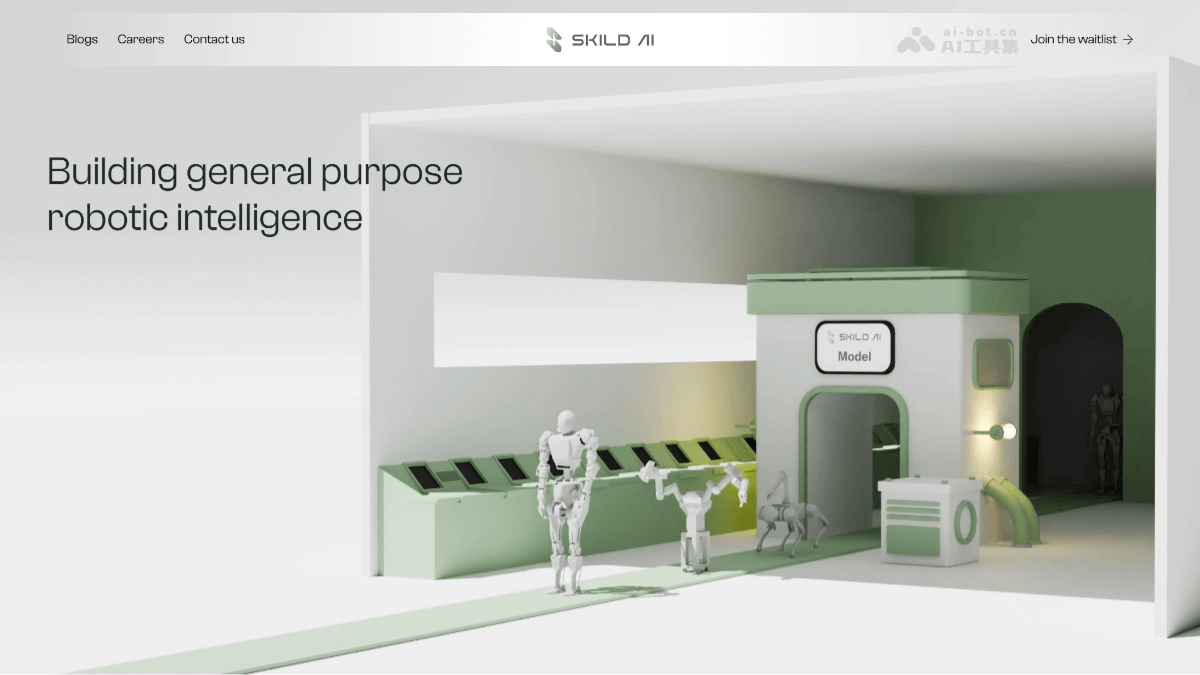
Skild Brain is the embodied intelligence foundation model launched by Skild AI, serving as a shared general-purpose brain for multiple robots and tasks. It can adapt to different hardware and tasks and has strong generalization capabilities. It can be integrated into any type of robot and can perform multiple tasks in complex environments, such as object manipulation, navigation, and visual inspection. Skild AI's technical advantage lies in the model's generalization capability and large-scale data training, with 1000 times more training data points than competitors.
Skild Brain's Main Features
- Object Manipulation: Skild Brain can control robots to perform precise object manipulation tasks, such as grasping, moving, and placing items.
- Motion and Navigation: Robots can autonomously navigate in complex environments, avoid obstacles, and reach designated locations.
- Environmental Adaptation: The model has strong adaptive capabilities and can operate flexibly in dynamic and unpredictable environments, such as construction sites, factories, or home environments.
- Emergent Behavior: Skild AI's model exhibits "emergent capabilities" and can perform some actions that do not appear in the training data, such as catching a slipping object or rotating an object to the correct orientation.
- Mobile Manipulation Platform: Skild AI provides a mobile manipulation platform based on Skild Brain, enabling developers to develop robot applications through simple API calls.
- Security/Inspection Robot Platform: Skild AI provides a full-stack robot solution for automated visual inspection, data collection, or patrolling.
- Quadruped Robot Platform: Used for tasks under harsh physical conditions, such as climbing steep slopes and bypassing obstacles.
Skild Brain's Official Website Address
- Official Website Address:skild.ai
Skild Brain's Application Scenarios
- Industrial Automation: In manufacturing, robots can perform tasks such as assembly, handling, and inspection to improve production efficiency.
- Logistics and Warehousing: Robots can automatically complete cargo sorting, handling, and storage, optimizing logistics processes.
- Healthcare: It can be used for medical tasks such as assisting surgery, patient care, and drug delivery.
- Home Services: Home robots can perform tasks such as cleaning, caregiving, and companionship.