
What is Scribenote
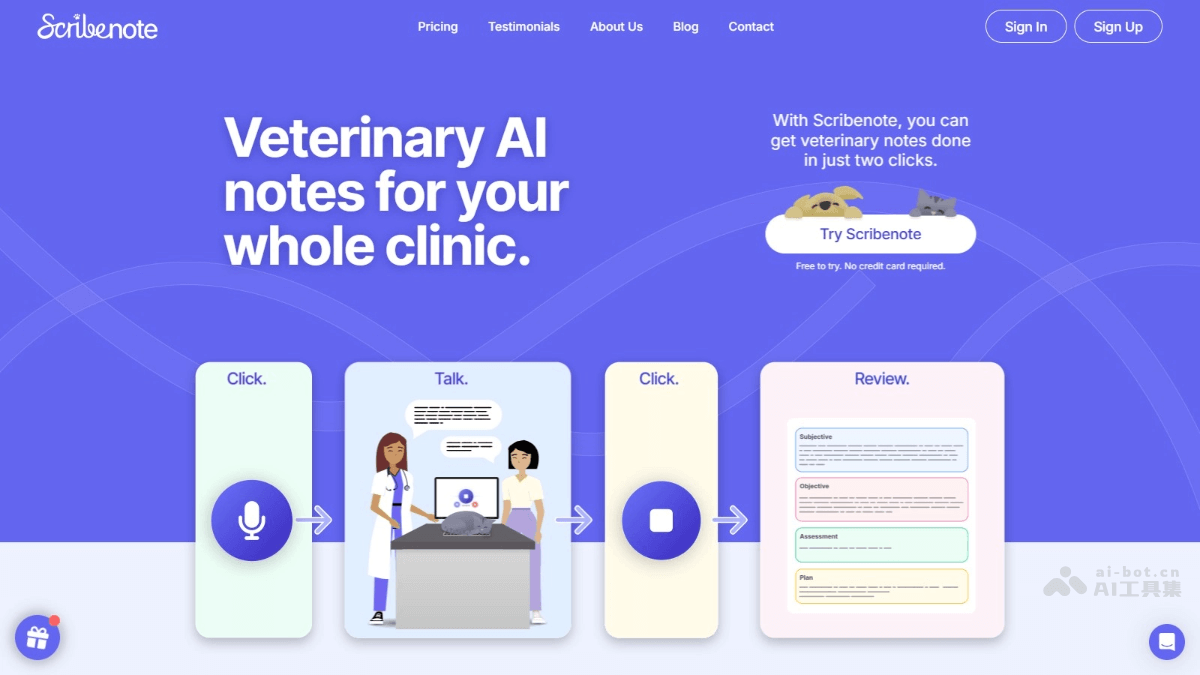
Scribenote is an AI documentation assistant designed for veterinarians. Based on natural language processing and machine learning technologies, it captures audio and transcribes it into easy-to-read notes, including SOAP-format notes, attachments, and client communication. Scribenote can reduce the time veterinarians spend on paperwork, improve documentation accuracy, and allow veterinarians to focus more on patient care. Scribenote supports a variety of workflows and provides students with free AI documentation and SOAP note tools.
Scribenote's Main Features
- Automated Documentation: Converts veterinarians' verbal records into structured medical records, reducing the need for manual input.
- SOAP Notes: Generates standardized SOAP (Subjective, Objective, Assessment, Plan) format notes, a commonly used format in veterinary documentation.
- Multi-Pet Records: Supports generating SOAP notes for multiple pets at once, improving efficiency.
- Client Communication: Improves communication with pet owners, and automated documentation reduces communication time.
- Integration with Practice Information Management Systems (PIMS): Supports users in quickly copying completed records into any PIMS.
Scribenote's Official Website Address
- Official Website Address:scribenote.com
Scribenote's Product Pricing
- Student / Intern: Free, unlimited free medical records within 6 months after graduation, star-level support.
- Monthly Plan (Monthly): $249/DvM/month, unlimited free medical records, star-level priority support, team mode multi-user collaboration.
- Annual Plan (Yearly): $165/DvM/month, unlimited free medical records, star-level priority support, team mode multi-user collaboration.
Scribenote's Use Cases
- Daily Clinical Records: Veterinarians record pets' medical information during diagnosis and treatment, including medical history, examination results, diagnosis, and treatment plans.
- Surgical Records: During surgery, veterinarians record surgical steps, medical instruments used, surgical results, and postoperative care instructions.
- Emergency Handling: Helps veterinarians quickly record key information when handling emergencies, ensuring that important details are not missed during intense treatment.
- Remote Consultation: Veterinarians record the content of remote consultations with pet owners, including pets' symptoms, owners' concerns, and recommended treatment plans.
- Case Discussion and Consultation: When discussing cases or consulting with other veterinarians, it helps record key discussion points and consensus, facilitating follow-up and treatment.