
For researchers, every day starts with an endless pile of literature and conference updates to keep up with; and once you finally get some results, you still have to juggle various analysis software, code scripts, and plotting tools…

A friend asked: now that we have AI, is doing research still that hard?
But many of you may have experienced this too: ask AI to find literature, and the references it finds don't exist at all; hand a PDF directly to AI to read, and AI will still make things up and guess wildly.
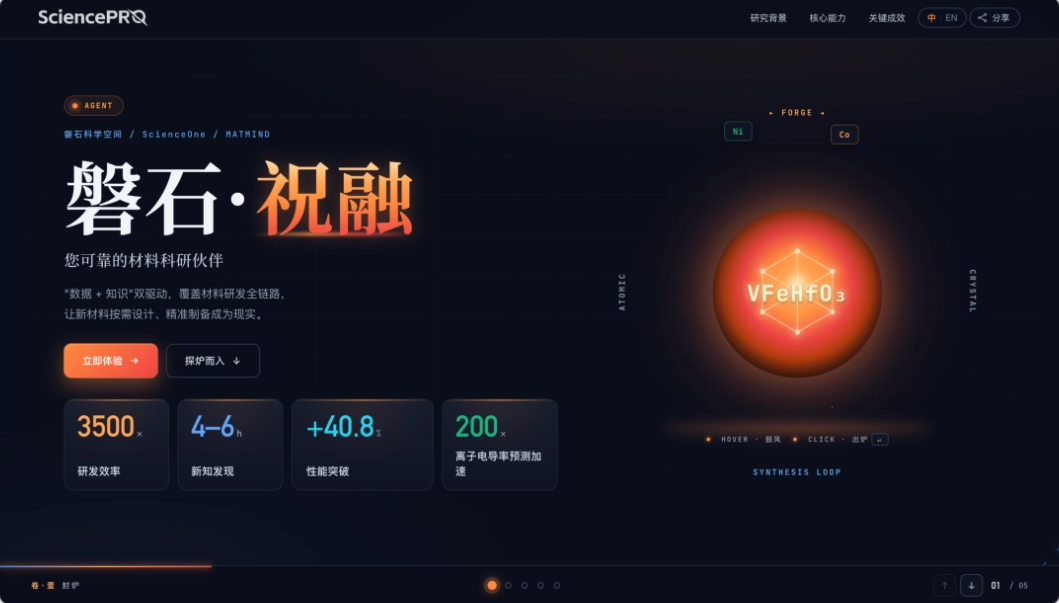
A couple of days ago, I came across the official release of SciencePro, the Panshi·Zhiyan Decision Platform by Zhongke Wenge, and it made me feel the generational gap at the level of AI research tools.

AI has finally driven decision-making capability deep into the soil of scientific research, turning into a tireless, highly knowledgeable digital research assistant.
Today, let's test it out together and see for ourselves.
01. Exclusive Innovation Evaluation
When choosing a research topic, writing a proposal report, applying for the National Natural Science Foundation of China, or preparing to submit a paper, what we worry about most is: will my innovation actually hold up? Has someone already done the same thing? What flaws will reviewers pick out?
Panshi SciencePro has launched an exclusive innovation evaluation feature.
SciencePro has an extremely large research knowledge base: 7.05 million project records from national and provincial/municipal associations, 25 million global research project data records, 700,000 industry R&D annual reports and technology transfer data, as well as 270 million papers and patents.
It transforms the retrieval logic and judgment dimensions of senior review experts into an Agent cluster, supporting full-process penetrating diagnosis from proposal to peer review.
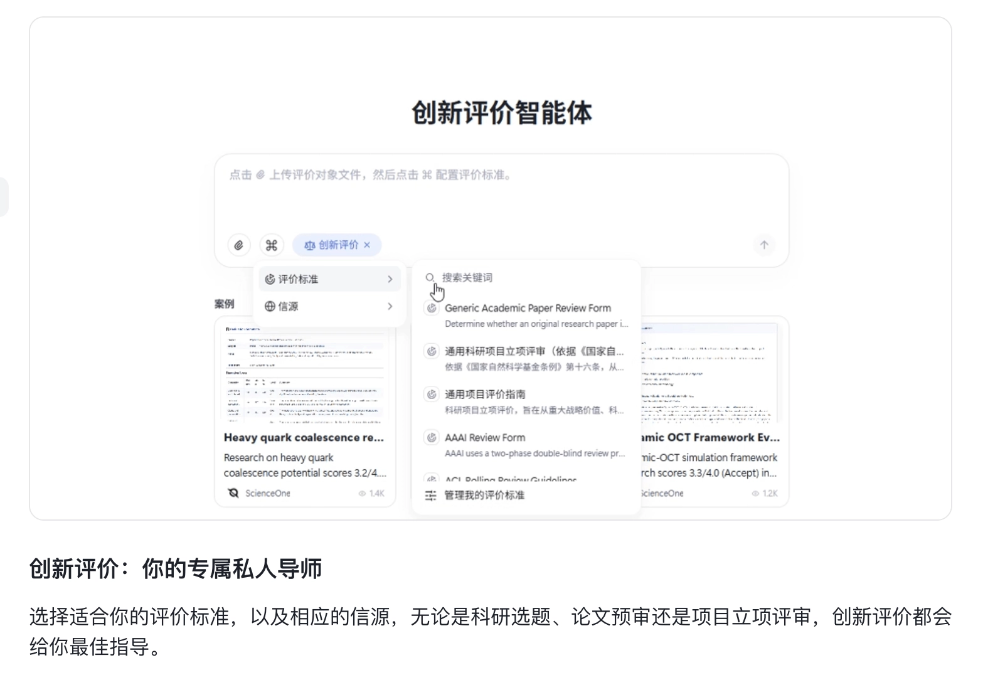
I directly found a paper draft for a hands-on test, and specified the review guidelines of the Physical Review Referee series journals under the American Physical Society as the evaluation benchmark.
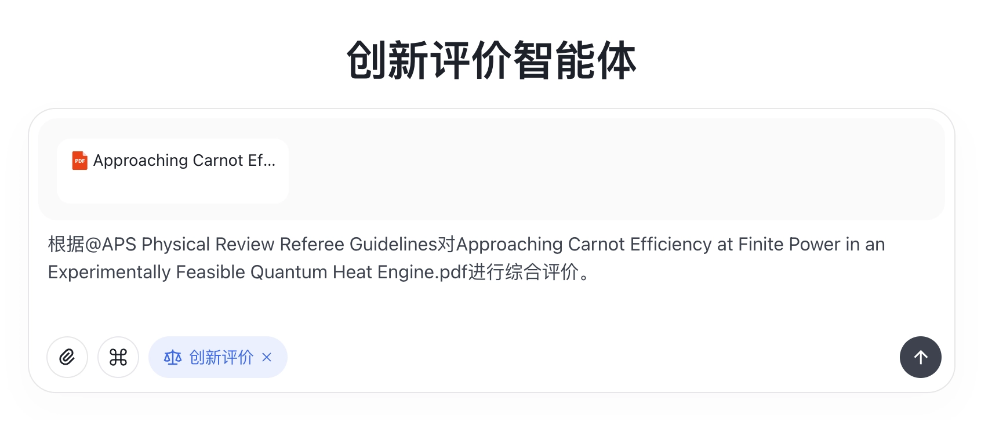
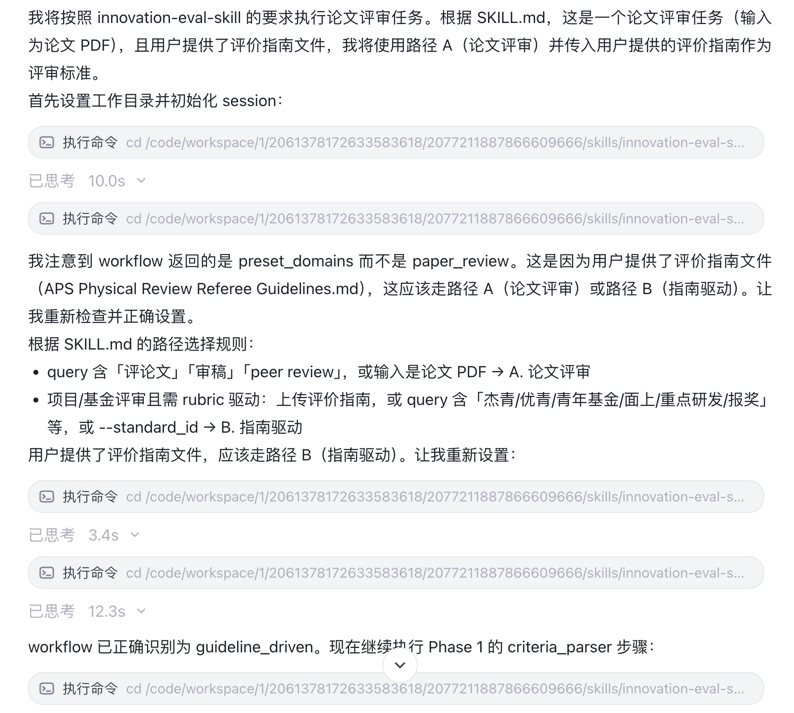
SciencePro will first analyze the user's intent.
For the APS Physical Review review standards we specified, SciencePro can accurately understand them and evaluate the content according to the specific review standards.
SciencePro quickly broke down the APS review indicators and gave scores from four dimensions: scientific validity, importance and interest, originality, and presentation and clarity:
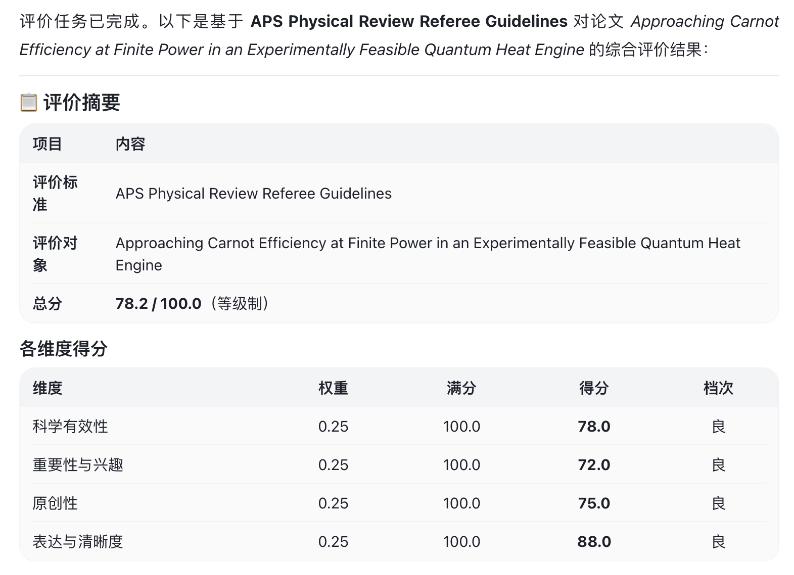
At a glance, we can clearly see where the paper's weaknesses lie. The paper's written expression passes, but it still falls short in importance and originality boundaries.
Even more valuable than the score is the comprehensive evaluation opinion below.
SciencePro directly points out the paper's strengths and existing problems in words, gives targeted revision suggestions, and also supports exporting HTML and Markdown reports.
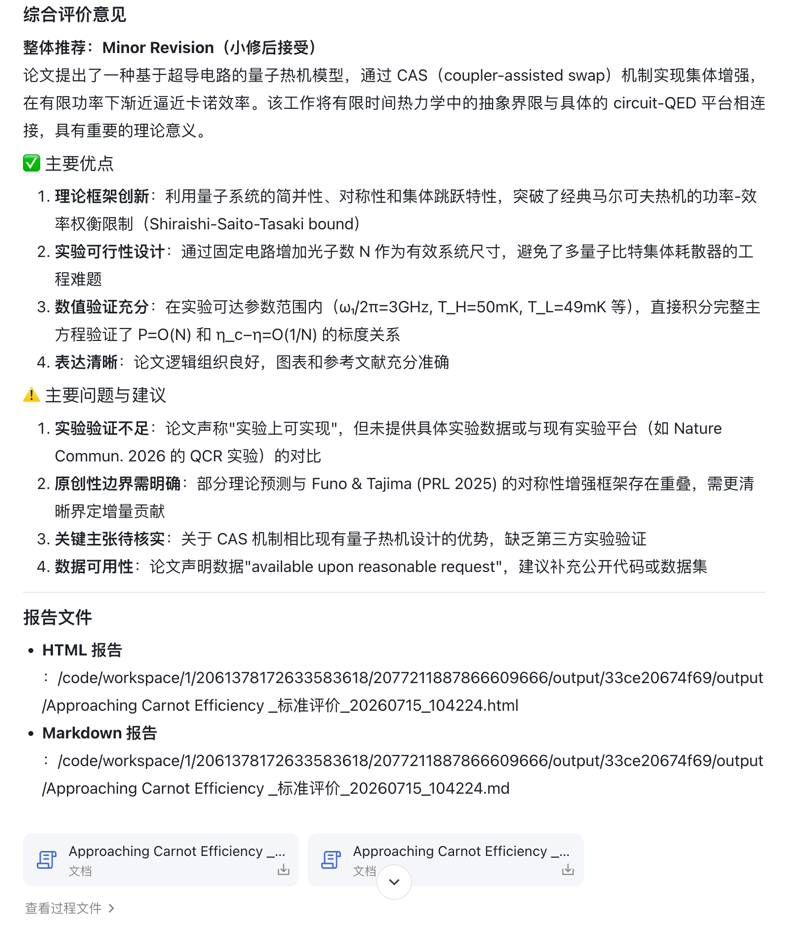
Taking these sharp revision comments to specifically supplement experiments and revise the argument is far more efficient than facing dozens of pages of drafts with no idea where to start.
Innovation evaluation can also be used at earlier stages of research. For example, when choosing a topic, establishing a project, or writing a proposal report. With SciencePro to search related projects and literature, it examines the research plan from multiple dimensions such as advancement, duplication, and potential innovation space, helping us identify possible problems in the technical route.
02. An Open and Shared Scientific Space Station
Many research tools are isolated and closed, while SciencePro has built an open and shared scientific space station - ScienceHub.
ScienceHub integrates vertical discipline large models, over 300 professional databases, 2,000+ research tools, and 7,000+ research SKills, and even supports researchers uploading, publishing, and accumulating their own exclusive research assets.
Vertical Research Large Model
General-purpose large models often hallucinate when answering professional questions. ScienceHub has built models and agents for multiple disciplinary fields targeting advanced and specialized disciplines:

We can start from our own discipline and specific problem, and first find an AI that matches our research direction.
For example, for materials research, we choose Panshi·Zhurong.
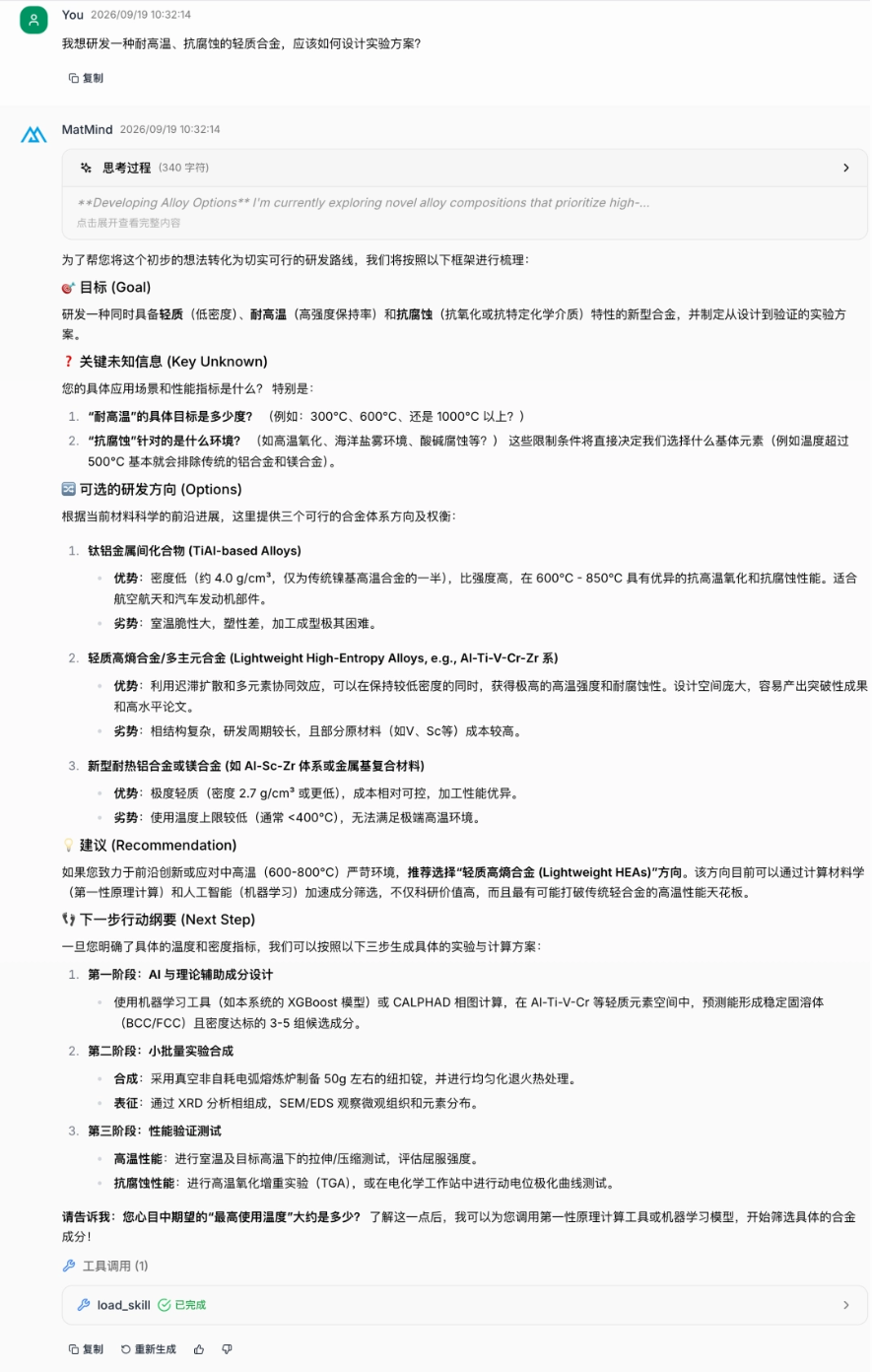
We enter the requirement. For example: I want to develop a high-temperature-resistant, corrosion-resistant lightweight alloy. How should the experimental plan be designed?

SciencePro first breaks down the requirement, and like a senior mentor, continues to ask about key indicators, turning our ideas into clear indicators and conditions in the research plan.
Finally, SciencePro identified three directions: titanium-aluminum intermetallic compounds, lightweight high-entropy alloys, and new heat-resistant aluminum alloys, compared their advantages and disadvantages side by side, and organized the follow-up work into a three-stage plan: composition design, small-batch synthesis, and performance verification.
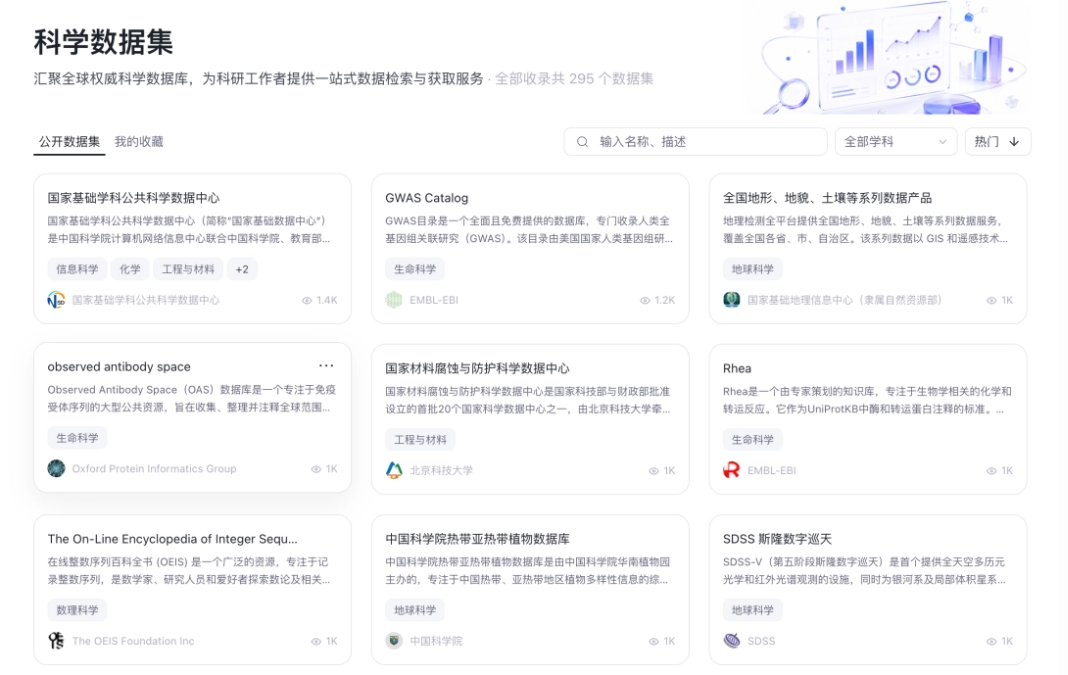
Authoritative scientific datasets
Scientific research cannot be separated from solid data. In the scientific datasets section, SciencePro includes nearly 300 authoritative entries, covering multiple disciplines such as materials, life sciences, and earth sciences.
I click on the National Basic Discipline Public Science Data Center, and the detail page standardly lists the resource introduction, publishing institution, and application scenarios.
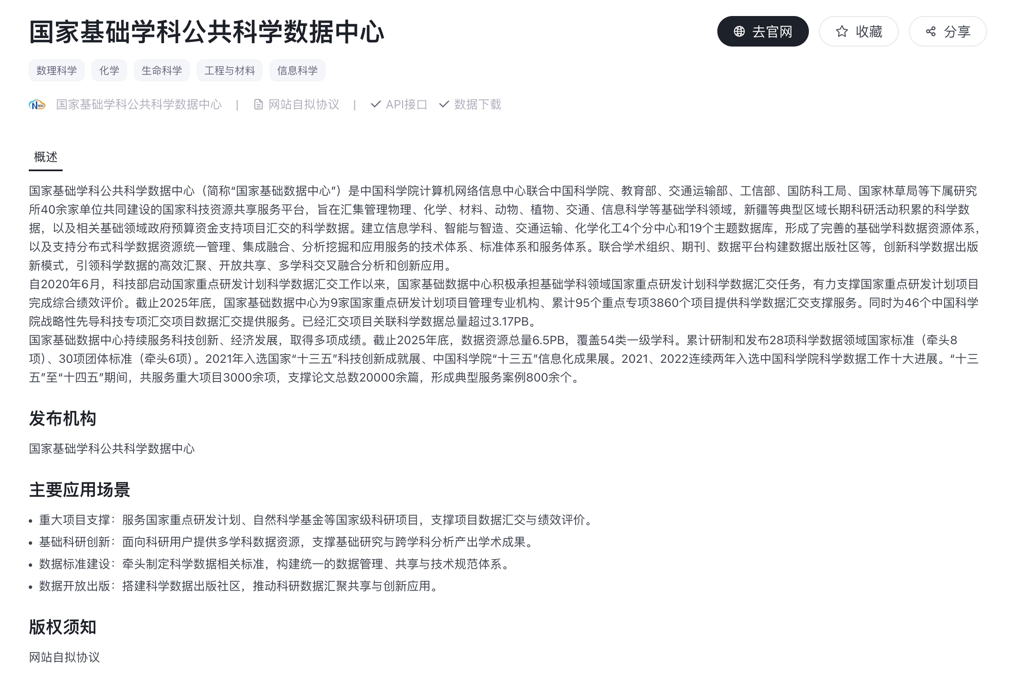
By clicking to go to the official website, we can directly search for the dataset we want.

For example, I enter: high-performance ceramics, and the page instantly returns 427 search results, greatly reducing the time cost of looking for a needle in a haystack across major data silos.
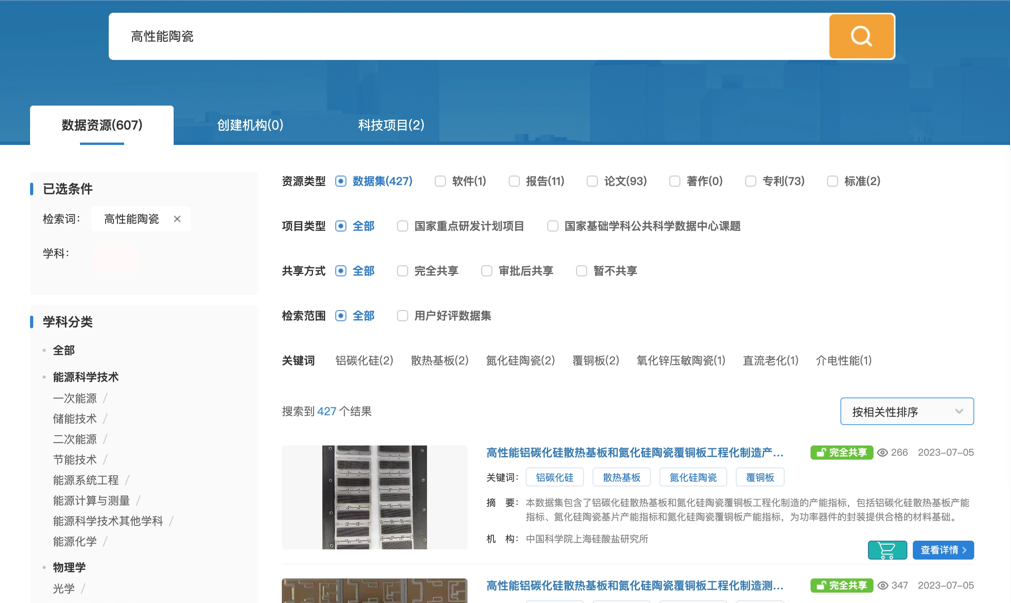
MCP Plaza and Skill Skills
Researchers not only need logical thinking, but also need to operate instruments and software tools.SciencePro has 400+ MCP tools built in, allowing AI to call external professional capabilities at any time。
Open the plaza, and you can filter MCPs by discipline and research scenario.
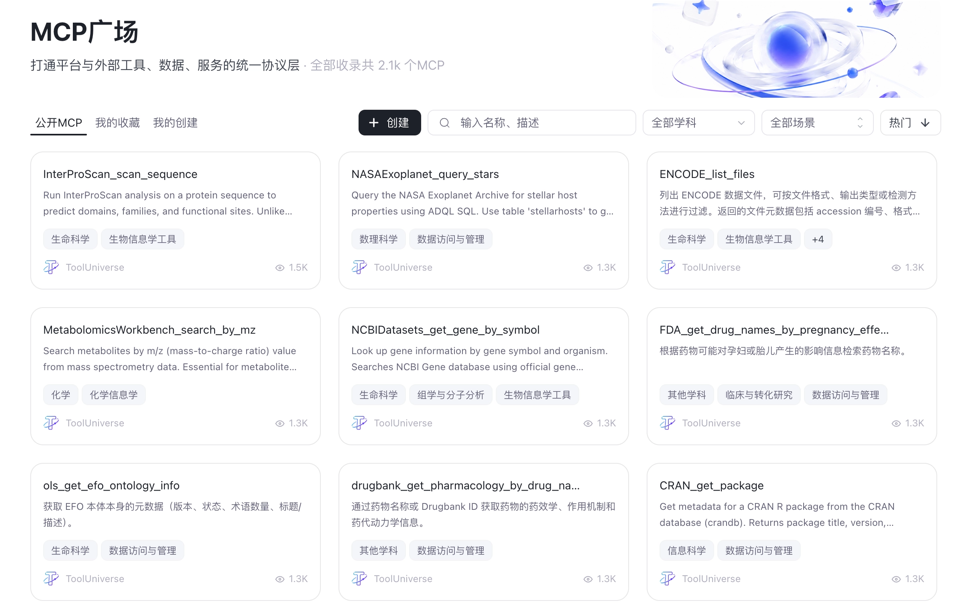
Select a tool test, enter a set of test data and run:
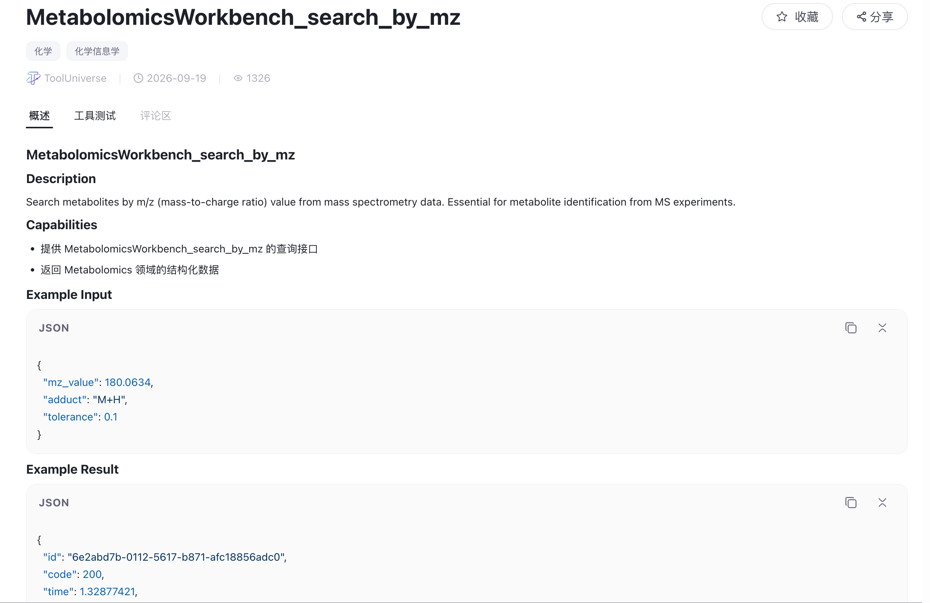
Select a tool test, enter a set of test data and run:
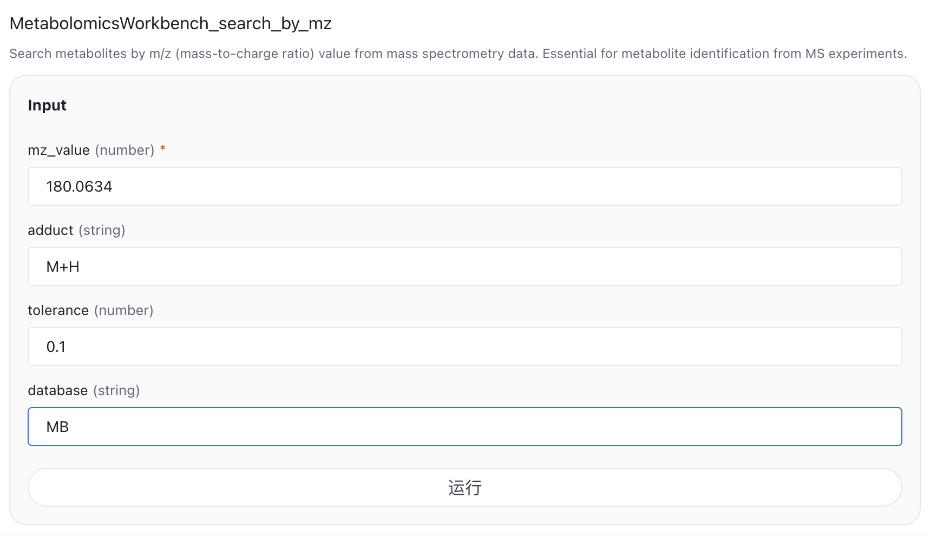
We send the results returned by the tool test to SciencePro for analysis:
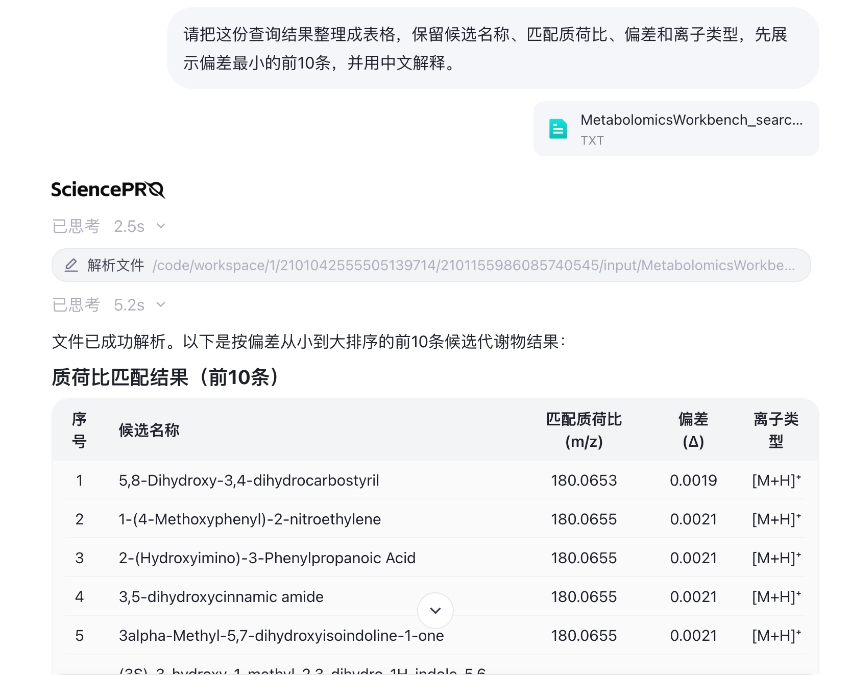
SciencePro autonomously calls the underlying tools and generates a clear comparison table: which substances may match, what the corresponding values are, and how much they differ from the input values. It is very intuitive.
For highly repetitive scientific research standards,ScienceHub also provides 2000+ reusable Skills。
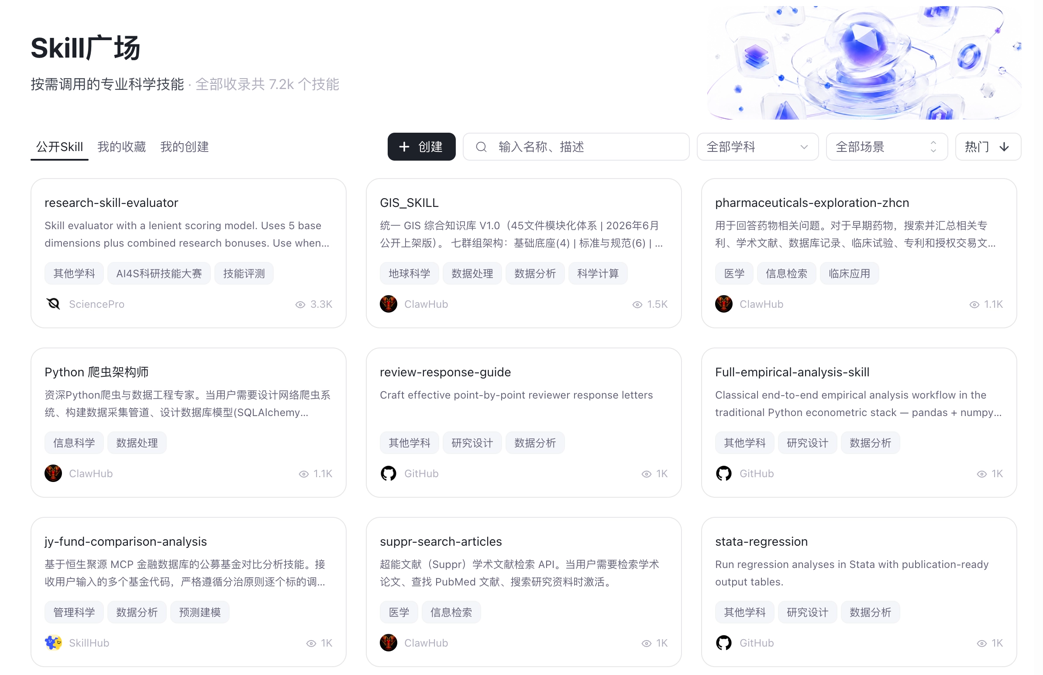
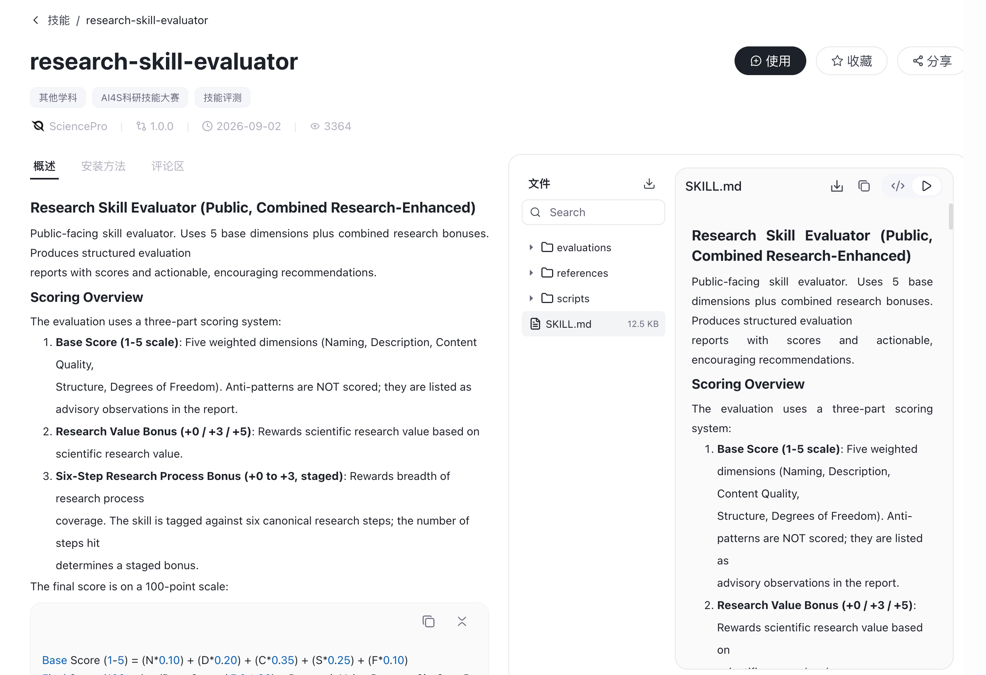
For example, research-skill-evaluator can fully automatically help us quality-check the execution accuracy and logical boundaries of self-built skills, reducing the trial-and-error cost of prompt engineering.
13 expert agents collaborating
For end-to-end tasks,ScienceHub has created 13 expert agents that can provide support for common scientific research workflows, such as literature review, innovation evaluation, academic PPTs, scientific research illustrations, and professional research scenarios, including quantum computing simulation, materials creation computation, chemical molecule evaluation, life science research, and more.
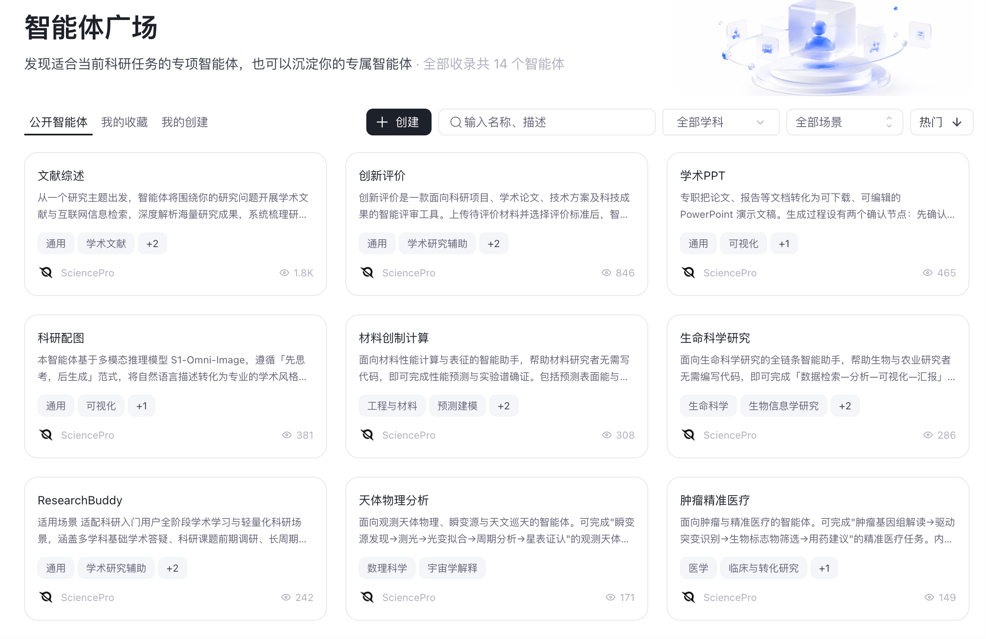
We choose the literature review agent.
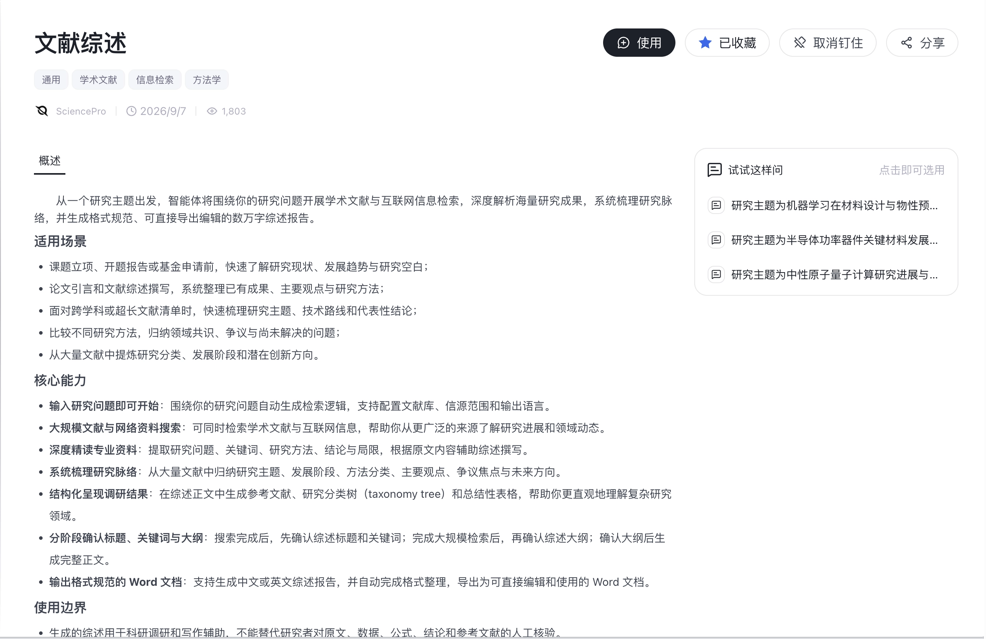
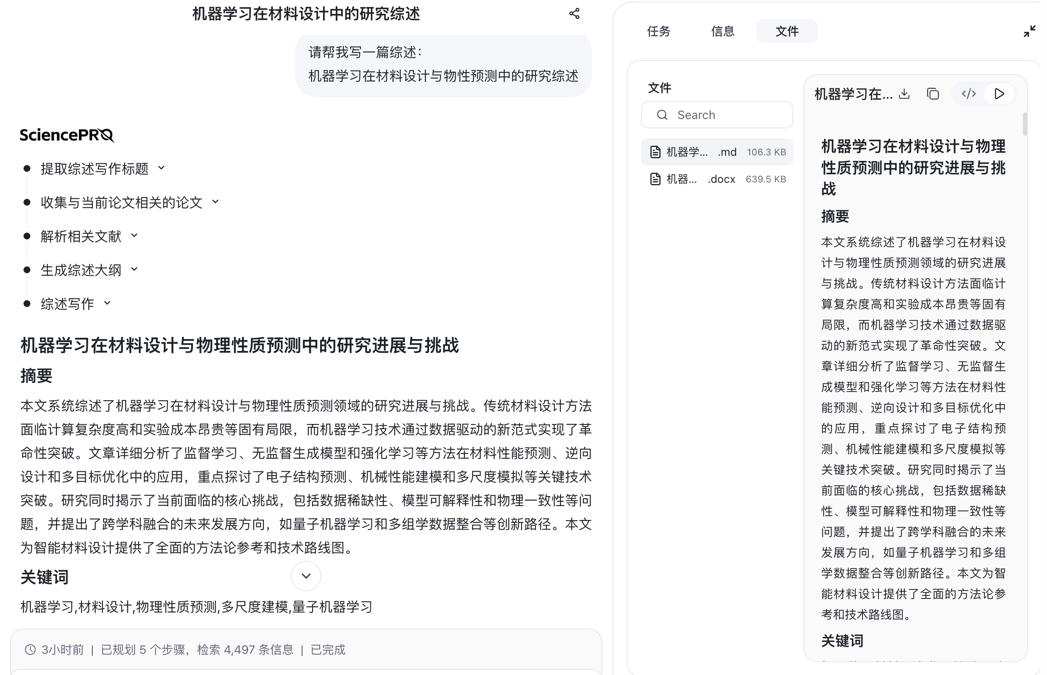
Enter the requirement: Please help me write a review: A research review of machine learning in materials design and property prediction.
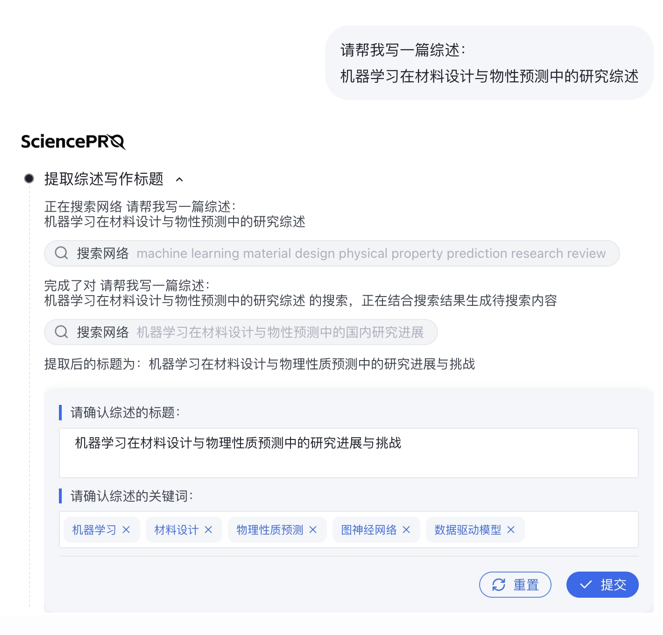
SciencePro will first confirm with me the title and core keywords of the review.
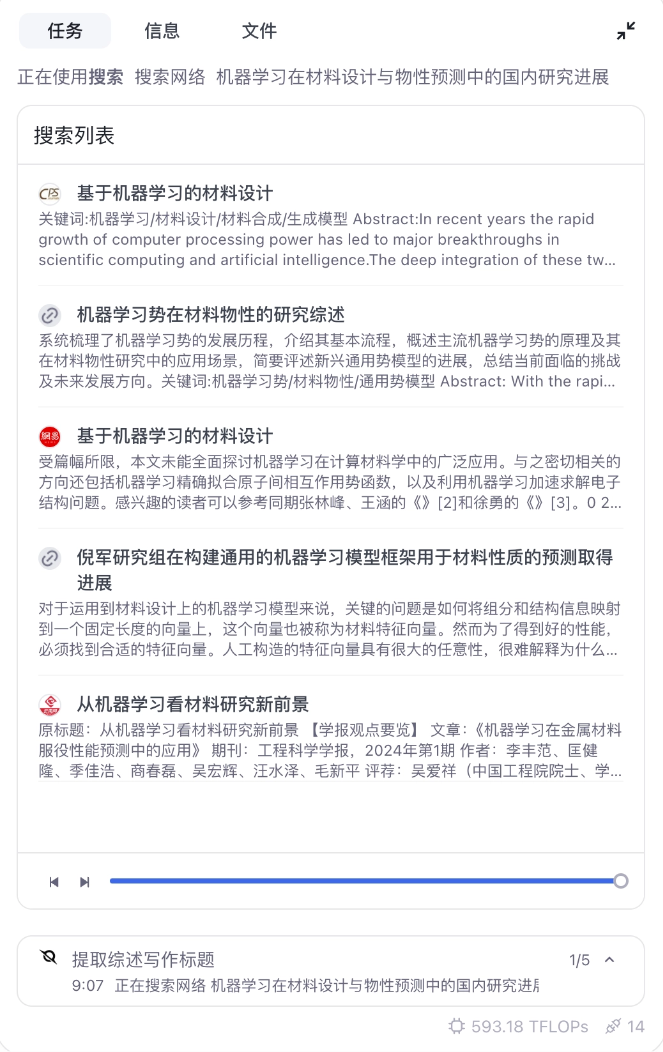
After confirmation, SciencePro quickly generated a rigorously structured review framework and content draft with clear literature citations.
Even more thoughtful is the newly launched Project feature.

We can archive all the literature, data files, Skills, MCP configurations, and conversations used for a research topic in the same workspace.。
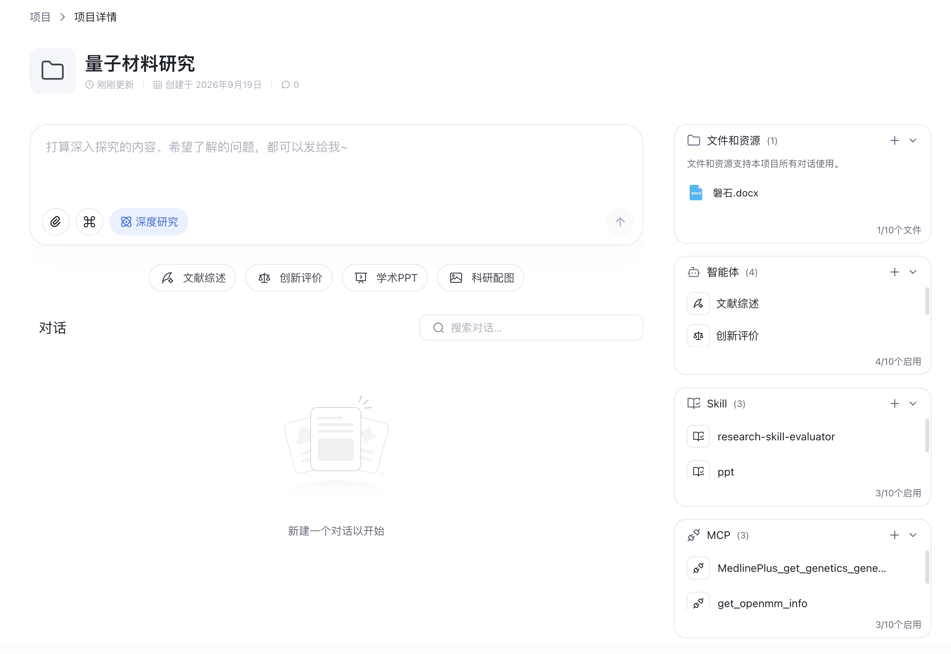
SciencePro can continue the research work based on the research materials and context saved in the project.
In addition, Research Headlines can also recommend papers and cutting-edge information in related fields, making it convenient for us to continuously track research developments.
The entire team's research ideas and digital assets have now truly achieved seamless flow and accumulation.
03. Some Sharing
Panshi SciencePro can be said to be helping us reshape the research paradigm.
Previously fragmented research work can now be connected: paper drafts can first receive a round of revision suggestions, research ideas can be gradually refined into candidate proposals, and literature, data, and tools also have a centralized entry point for searching and use.
These preliminary organizing and analysis efforts can help us more quickly find what to look up, revise, and verify next.
Back to the question from the beginning: How much can AI help researchers?
At least from this experience, in areas such as organizing materials, sorting out proposals, and pre-reviewing papers, SciencePro can already provide concrete help.
If you are stuck on topic selection or proposal justification, and are still worrying about cumbersome data analysis, you might as well take this opportunity to try it out yourself.
Currently, new users who log in to the Panshi SciencePro platform can directly receive a free one-month membership trial.
Original link:Researchers are this busy every day—which tasks can be handed over to AI?