
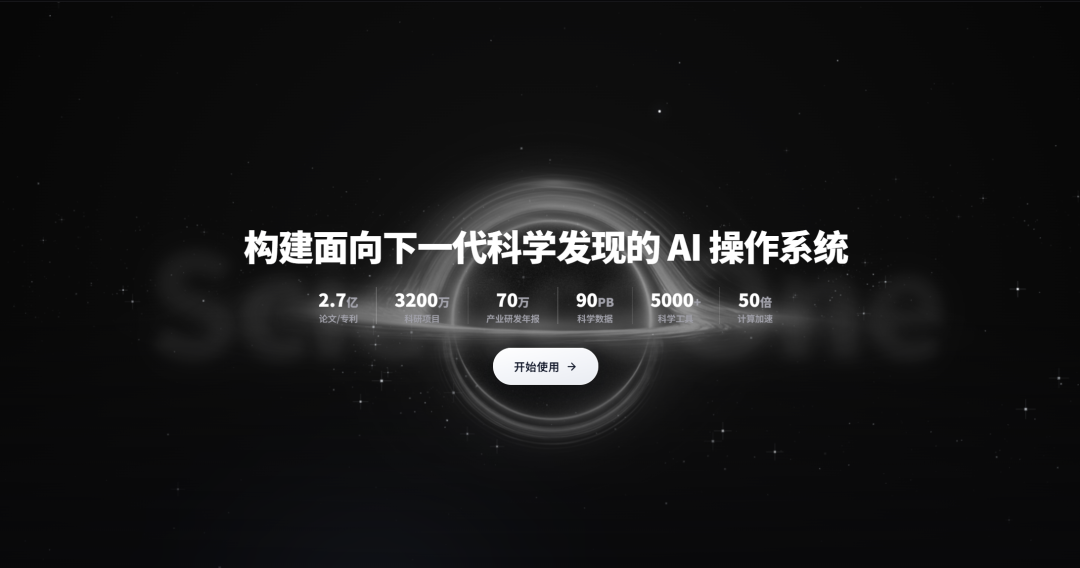
Recently, at the World Artificial Intelligence Conference, the Zhongke Wenge Panshi ScienceOne team unveiled two trump cards at once:
-
A scientific multimodal unified reasoning model dedicated to deep understanding, prediction, and generation in scientific scenarios — S1-Omni;
-
an intelligent service platform built on the S1-Omni foundation and spanning the entire research lifecycle — ScienceOne。

Friends who do research have endless new papers to read every day; an experimental direction requires repeated trial and error; they frequently have to switch between different tools; and even after finally producing results, writing papers, adding citations, and reformatting still take a huge amount of time.
The Institute of Automation, Chinese Academy of Sciences, led the technical攻关 for Panshi 2.0 (S1-Omni),Zhongke Wengefocused on large model training, bringing these capabilities into the ScienceOne research intelligence platform, so that AI large models truly enter the research workflow, and all researchers can have a 24-hour online academic assistant.
In the latest tests, S1-Omni demonstrated extremely powerful performance:Across all evaluations, 95.5% of tasks outperformed GPT-5.5, and 83.3% beat Gemini-3.1-Pro。
Focusing on the 18 highly challenging ADMET (drug toxicity and physicochemical property prediction) assessments in drug development,S1-Omni performed noticeably closer to specialized SOTA models,among which 6 metrics even surpassed traditional specialized SOTA models, achieving the best single-item results。
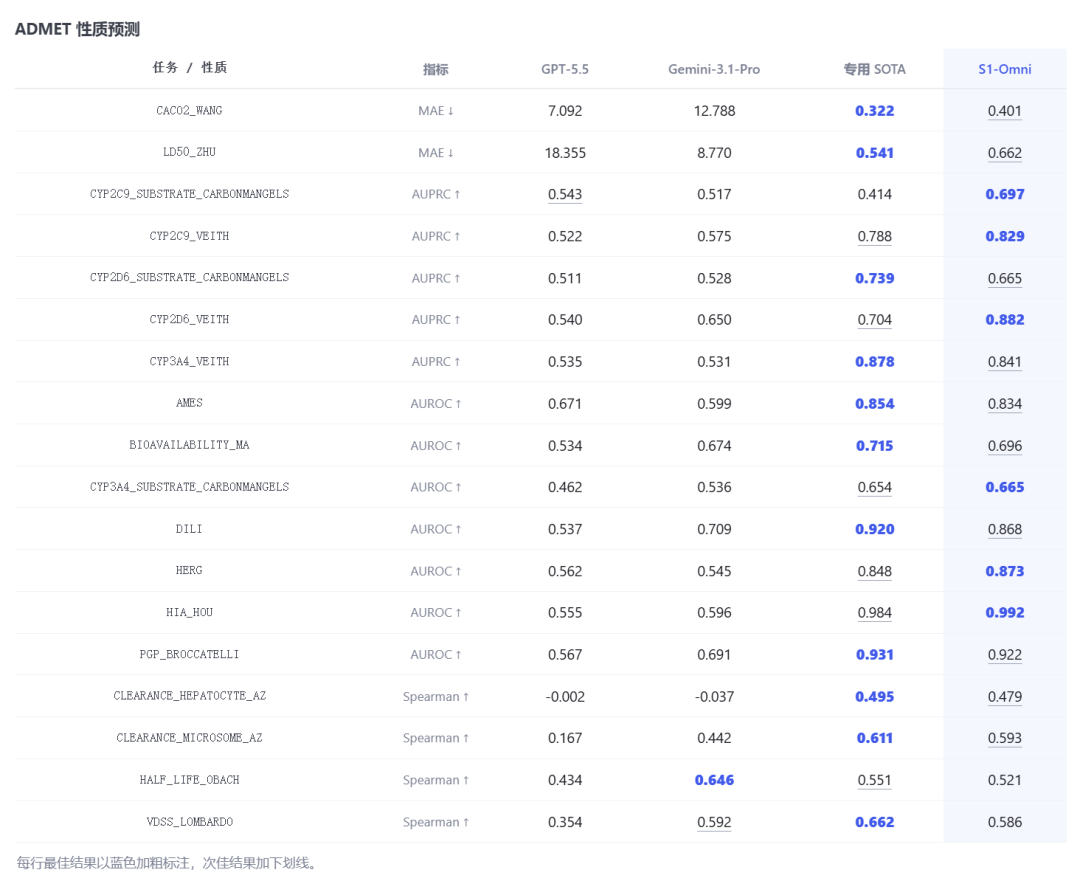
▲ Comparison of ADMET results between S1-Omni and GPT-5.5, Gemini-3.1-Pro, and specialized SOTA. Bold blue indicates the best single-item result, and underline indicates the second best.
This means that in the future we may no longer need to separately train and deploy those cumbersome specialized large models for individual research tasks.
Backed by the Chinese Academy of Sciences, first released at WAIC, and leading in comprehensive evaluations, it sounds indeed very impressive. So, in real daily research scenarios, how does S1-Omni actually perform?
Today let's experience together how S1-Omni helps researchers get work done.
01. How S1-Omni Does Research
We opened the ScienceOne platform built on S1-Omni, and in plain language we can have AI assist us with reading news, choosing topics, searching papers, experiments, presenting results, creating figures, peer review…
Deeply Research a Topic
We entered a topic we were interested in:

Prompt: Review four representative achievements in the United States in the past 3 years in the field of early diagnosis biomarkers for Alzheimer's disease, including directions such as novel blood biomarkers and imaging markers.
If we searched manually ourselves, we would need to search papers and official announcements, understand and distinguish technical routes such as blood biomarkers, medical imaging, and AI prediction, and also verify research dates, institutions, samples, and key indicators one by one, slowly exploring across dozens of web pages.
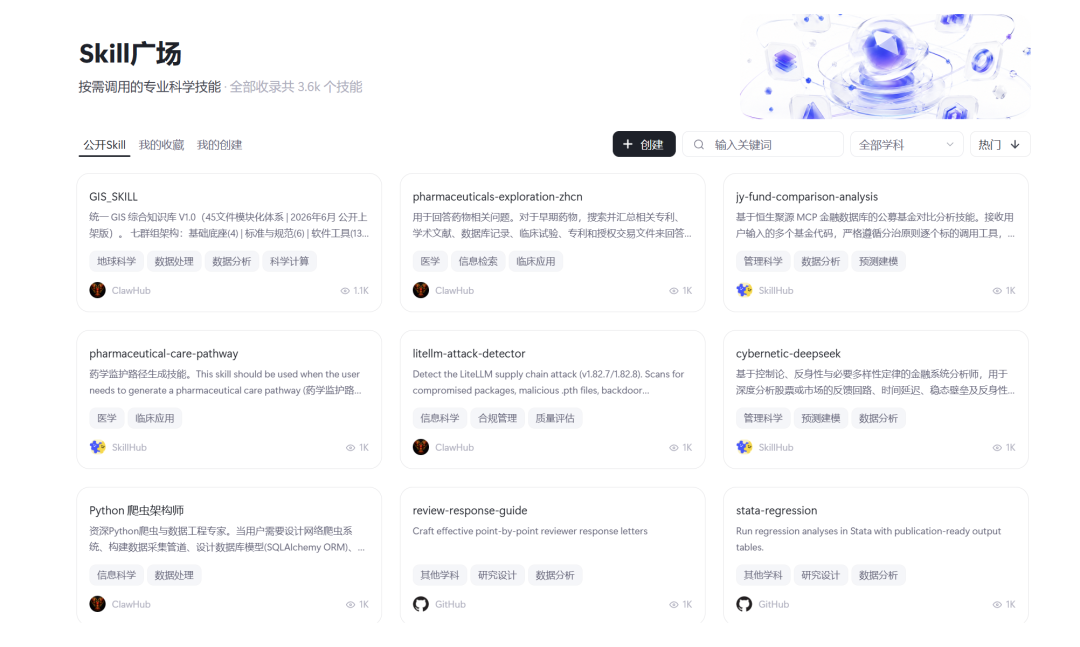
ScienceOne has built in 2000+ Skills, 2000+ MCP plugins, and nearly 300 professional databases, and can intelligently and autonomously call the most matching skills and tools in the conversation to complete research tasks.
ScienceOne first thinks according to our needs and refines the search keywords.In the first round, it conducts a broad search to quickly grasp the direction. After discovering clues, it performs a second search to fill in key information.
This process is very similar to doing our own investigation: first search broadly to find a direction, then follow the clues to investigate further.
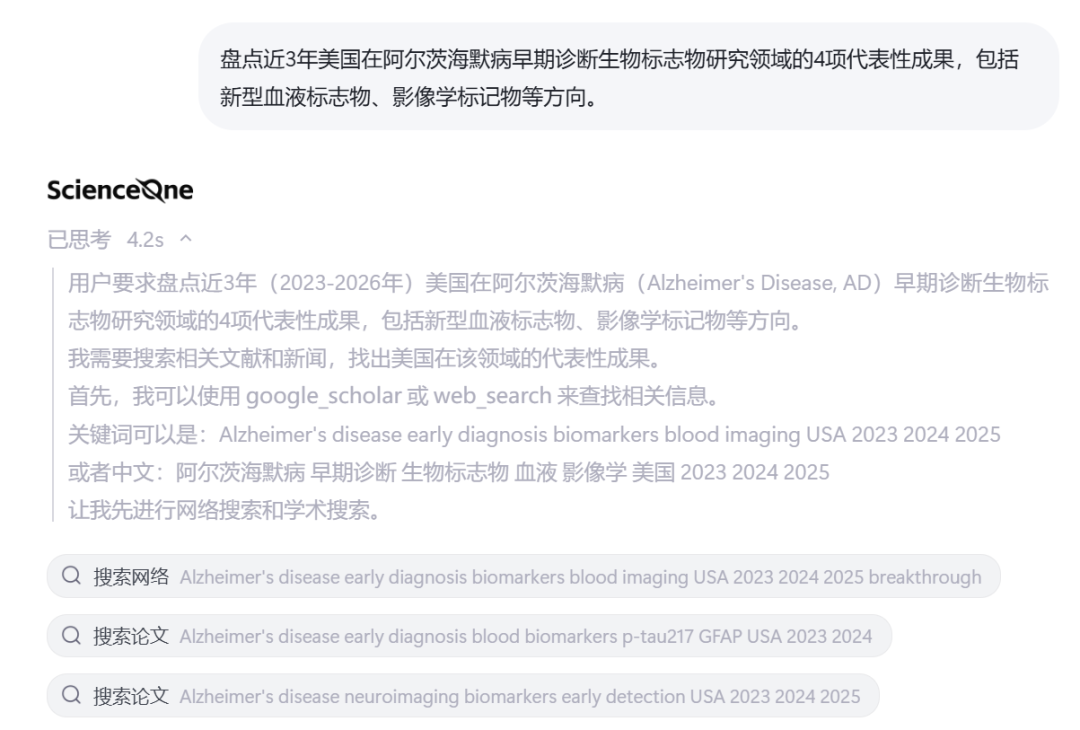
Let's take a look at ScienceOne's reply:
Each achievement lists the research institution, technical direction, key data, and research significance, and finally a summary table is generated, along with reference sources.
The biggest fear in doing research is the black-box operation of large models. ScienceOne directly uses standardized processes, structured results, and clear citation sources, saving a lot of trouble.
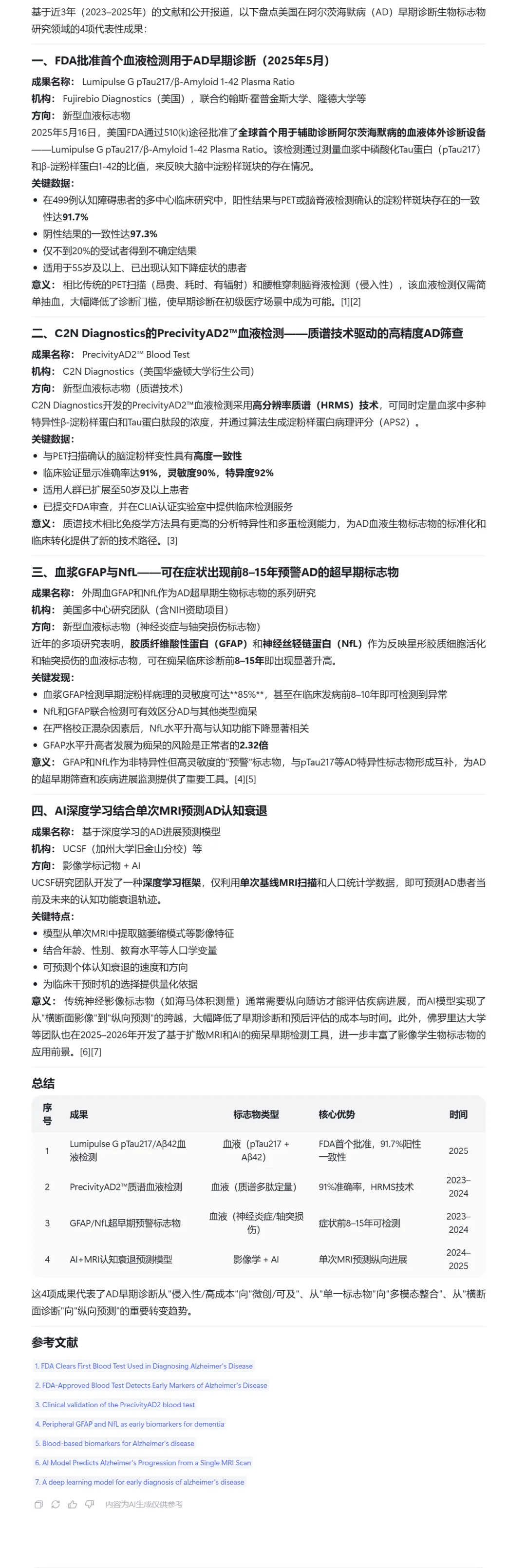
According to ScienceOne's official website,the platform has aggregated more than 5,000 scientific tools and 294 professional datasets, covering research processes such as data processing, model training, and feature analysis. Faced with different tasks, the model can select the corresponding tools in the conversation, without us needing to find and operate them one by one.
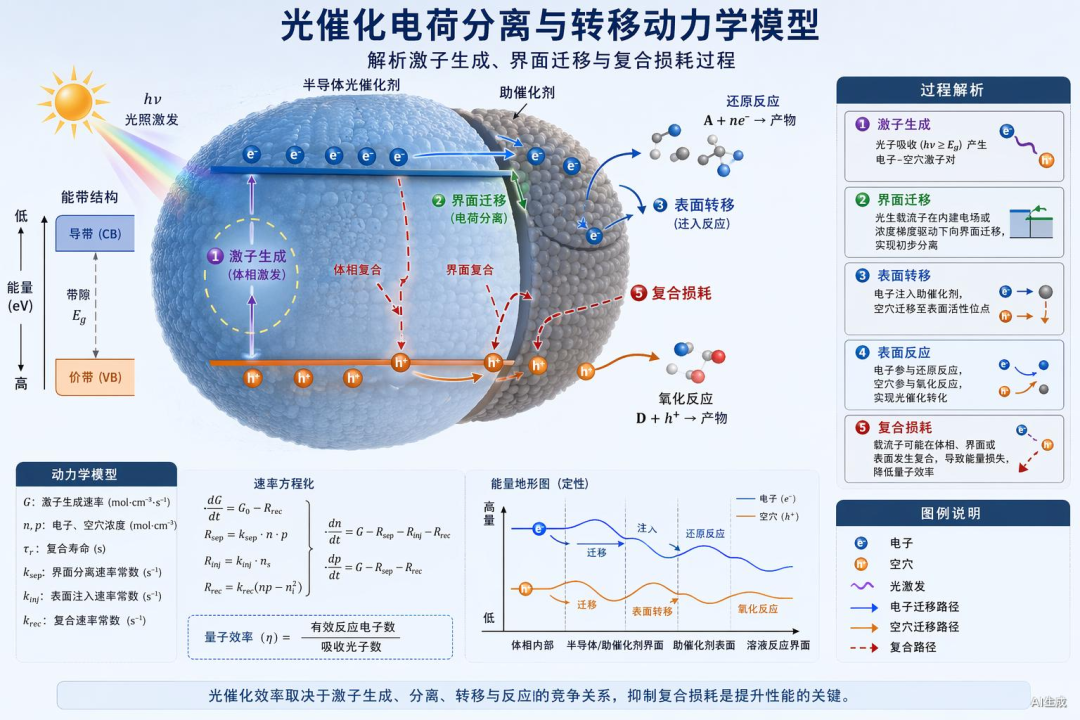
AI-generated figures
When writing a paper and reaching a key point, a high-quality schematic diagram is often needed to assist the explanation. We can have ScienceOne generate research figures through natural language.
Prompt: Construct a kinetic model diagram of photocatalytic charge separation and transfer, analyze the processes of exciton generation, interfacial migration, and recombination loss, and generate a Chinese image.
With one sentence, ScienceOne breaks down the complex photocatalytic process into a vivid image, and attaches the band structure, kinetic model, process analysis, and even a legend explanation.
AI review
After finishing a paper, the most headache-inducing thing is not knowing how to optimize it. Are the innovation points prominent enough? Are there obvious gaps in the experimental design? Are the references too outdated? After staring at the paper dozens of times, it is hard to spot the problems.
ScienceOne's innovation evaluation can first help us do a pre-submission review.
It currently supports two types of tasks: one is topic selection evaluation before project initiation or thesis proposal; the other is quality checking before paper submission.
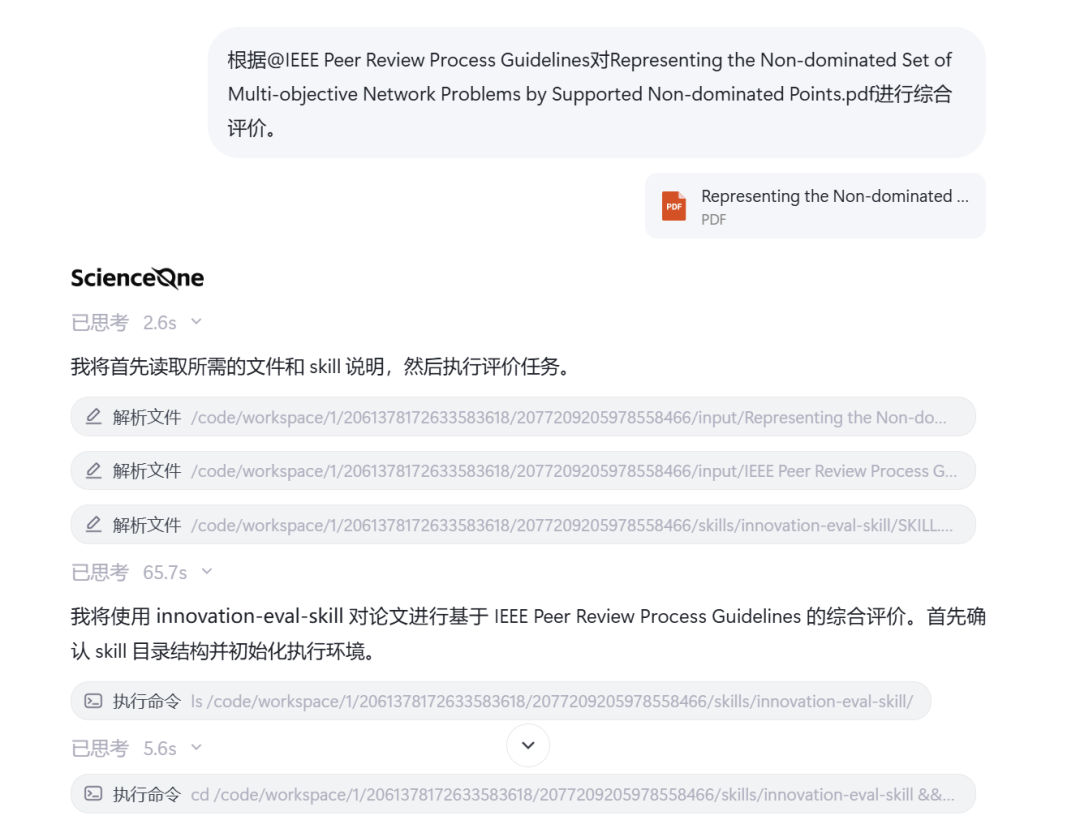
We uploaded an unpublished paper in the field of multi-objective network optimization, and also attached the paper's supplementary files, requiring it to strictly follow IEEE Peer Review Process Guidelines(IEEE Peer Review Process Guidelines)to conduct a comprehensive evaluation.
After the file was uploaded, ScienceOne first read the paper and the review standards, determined the task type, automatically called the corresponding innovation evaluation Skill, and generated a structured review process.
ScienceOne, like a picky real reviewer, checks the paper item by item from 7 dimensions:originality, technical correctness, research relevance, experimental validation, paper expression, references, and publication standards。
In the end, this test paper received a comprehensive score of 3.6/4.0, with a recommendation of acceptance.
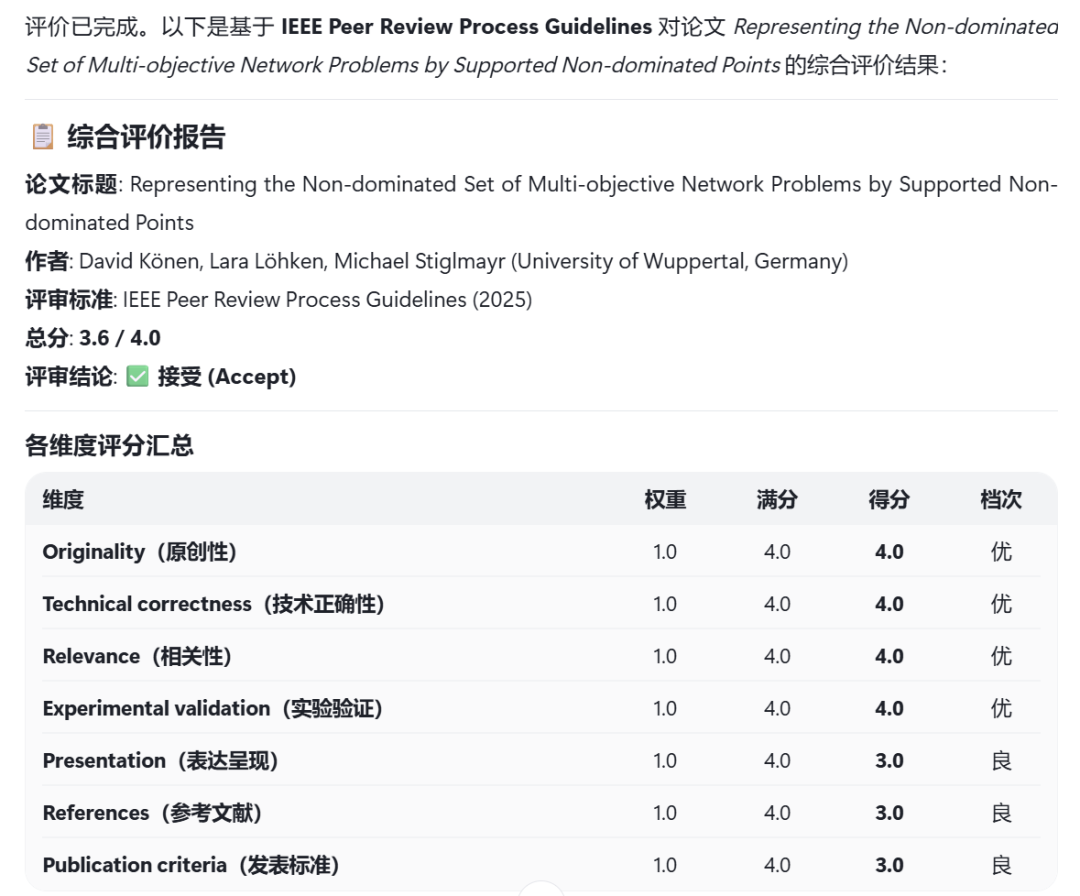
What is more useful is the subsequent detailed evaluation and improvement suggestions across various dimensions.
For example, ScienceOne pointed out that this paper received 4 points for originality, technical correctness, and experimental validation; but only 3 points for paper expression, references, and publication standards. ScienceOne directly located the problems: some English professional expressions are not accurate enough, citation formats need to be unified, theoretical proofs can add more formula details, and the experimental section needs to add more targeted Baseline comparisons.
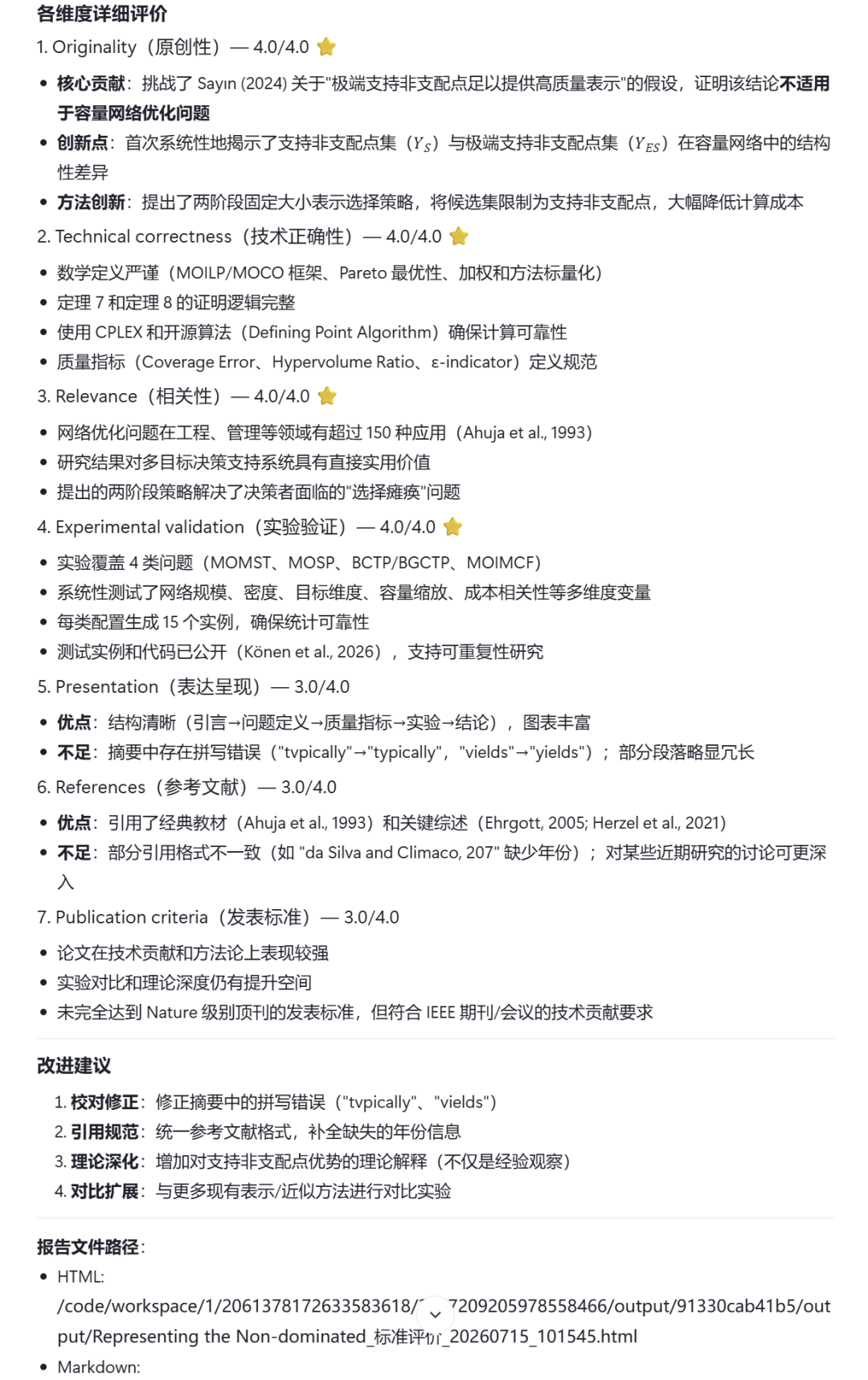
ScienceOne also generated the review results in both HTML and Markdown formats, making it convenient for subsequent revision, sharing, or archiving.
Why can ScienceOne produce such in-depth evaluations of advancement and innovation?
According to the official website,ScienceOne brings together public information on 32 million research projects from more than 40 countries around the world, 700,000 industrial R&D annual reports, and 270 million papers and patents. These massive amounts of data provide a powerful reference background for large models to assess the advancement and redundancy of a piece of work.
Of course, if the AI gives an "accept," it does not mean IEEE will actually accept it.
We can treat it as a first round of health checks before submission, helping us identify and avoid obvious problems in advance. When it truly comes to judgments of innovation, experimental reliability, and publication decisions, supervisors, peer experts, and journal reviewers still need to be the gatekeepers.
Track global research headlines
In addition to active interaction, ScienceOne also provides aresearch headlines section, which collects global research news and cutting-edge papers, covering many categories such as mathematical and physical sciences, chemistry, and life sciences.
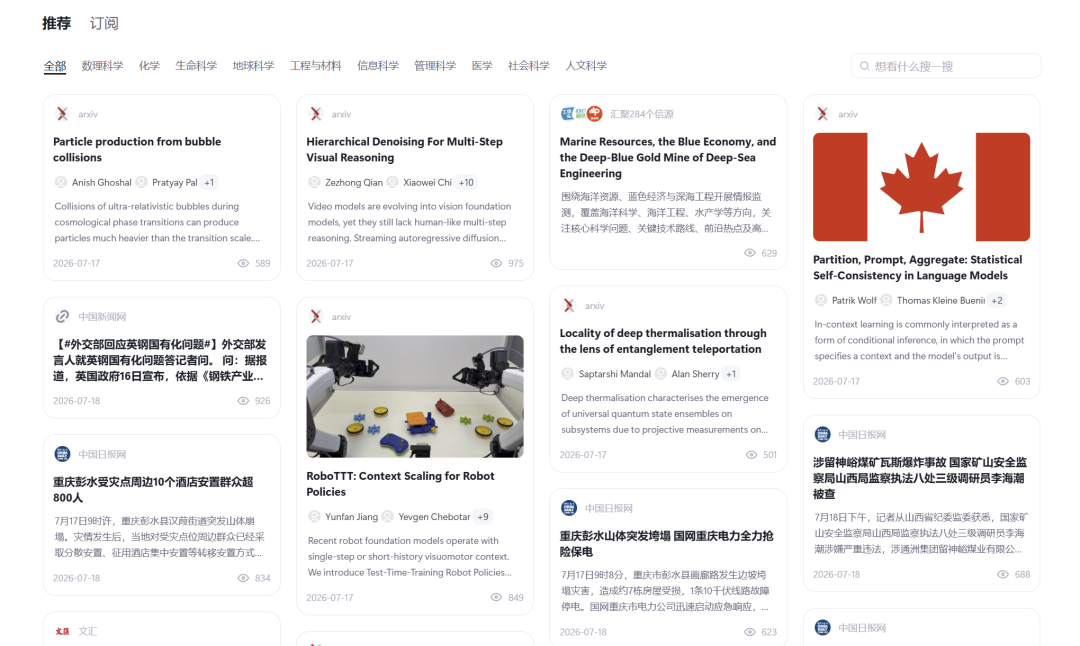
We can subscribe to specific topics according to our own research direction, and the AI will make personalized recommendations based on our subscriptions.

In the past, when tracking cutting-edge information, the common practice was to search keywords again after a period of time.
Now, through this weekly report push and subscription mechanism, the way we obtain cutting-edge information has also upgraded from passive keyword search in the past toactive research insight, which can help us save a lot of energy on literature tracking.
02. Some sharing
Research AI is moving from statistical fitting to logical reasoning. Large models are changing from a cold black box that only gives predicted values into a scientific assistant that can connect with professional researchers at the level of logic and physical common sense.
ScienceOne is taking an extremely lightweight path for research AI. In actual R&D processes, we previously needed to deploy, fine-tune, and maintain several completely different specialized models. Data flow conversion between different modalities was extremely cumbersome, and the comprehensive maintenance cost of software and hardware was very high.
S1-Omni provides a unified scientific large model foundation to connect and drive various vertical domain decoders. It reduces the complexity of environment deployment and makes interdisciplinary cross-research easier to get started with.
This architectural design of unified representation and logic first will become a model for future scientific large model research and development.
We also deeply understand that scientific research is a field with an extremely low tolerance for error, where not the slightest carelessness is allowed. If S1-Omni wants to go more steadily and further in real academic research, it still cannot do without the open source community's continuous supplementation of high-quality data, as well as the repeated testing of its capability boundaries by the vast number of researchers in actual scenarios.
Research friends who are interested can directly try it out~ Currently ScienceOne offers a free one-month trial experience, redemption invitation code:DH26GYZ1688(limited quantity, first come, first served).