
What is Retinex-Diffusion
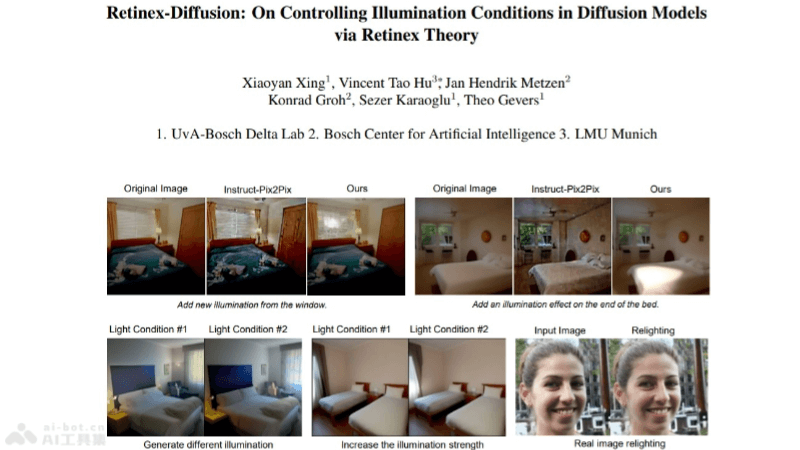
Retinex-Diffusion is an AI image illumination control technology based on Retinex theory, making image light and dark more natural, delicate, and layered. Retinex-Diffusion does not require retraining the model. By identifying illumination elements in the image and guiding the image generation model, users can easily adjust brightness, shadows, and illumination direction. Retinex-Diffusion can generate images with realistic lighting effects, including cast shadows, soft shadows, and mutual reflections, without additional data support, improving the flexibility and practicality of image generation.
Features of Retinex-Diffusion
- Illumination recognition and control: It can identify illumination elements in the image and allow users to control the lighting conditions of the generated image.
- No additional training required: Retinex-Diffusion does not require retraining the model or using additional datasets.
- Lighting effect generation: It can generate images with realistic lighting effects, including cast shadows, soft shadows, and mutual reflections.
- Flexibility: Users can set the type and position of lights to quickly achieve the desired lighting effect.
- Practicality: It is suitable for creating new images or retouching existing images, and the process is simple and easy.
Technical principles of Retinex-Diffusion
- Retinex theory: A theory of visual perception that holds that the human visual system can independently extract illumination and reflectance information from an image. In Retinex-Diffusion technology, this theory is used to identify and control illumination elements in images.
- Diffusion model: Generates new samples by simulating the diffusion process of data. In image generation, diffusion models can generate images with specific attributes.
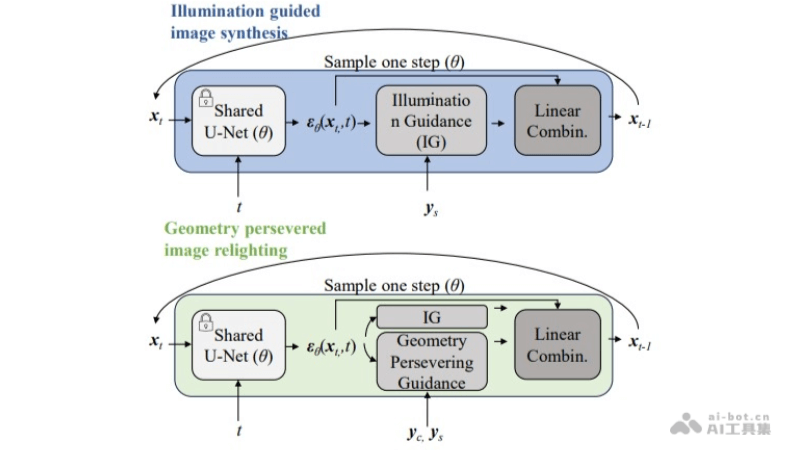
- Energy function decomposition: Retinex-Diffusion technology strategically decomposes the energy function of the diffusion model to separate illumination-related attributes from other attributes, thereby achieving precise control over lighting conditions.
- Illumination-guided image synthesis: During image synthesis, illumination information extracted from Retinex theory is used to guide image generation, ensuring that the generated image has the desired lighting effect.
Project address of Retinex-Diffusion
-
arXivTechnical paper:https://arxiv.org/pdf/2407.20785v1
Application scenarios of Retinex-Diffusion
- Image editing and enhancement: In image editing software, users can use this technology to adjust the lighting effect of pictures, making them look more natural.
- Virtual reality and augmented reality: In VR and AR applications, Retinex-Diffusion technology can simulate more realistic lighting environments and improve user experience.
- Computer graphics: In 3D rendering and animation production, Retinex-Diffusion can generate realistic lighting effects, reduce rendering time, and improve efficiency.
- Artistic creation: Artists and designers can use this technology to create digital artworks with specific lighting effects.
- Game development: In game design, Retinex-Diffusion technology can be used to dynamically adjust the lighting of game scenes, increasing the game's immersion.