
What is PyVideoTrans
PyVideoTrans is an open-source video translation and dubbing tool that automatically translates video content from one language to another and adds corresponding subtitles and dubbing. PyVideoTrans supports multiple languages, features efficient speech recognition and accurate text translation, and uses high-quality speech synthesis technology to generate dubbing. PyVideoTrans is easy to use and is suitable for a variety of application scenarios such as film and television post-production, self-media content creation, education, and corporate promotion, helping content creators easily overcome language barriers and expand their audience.
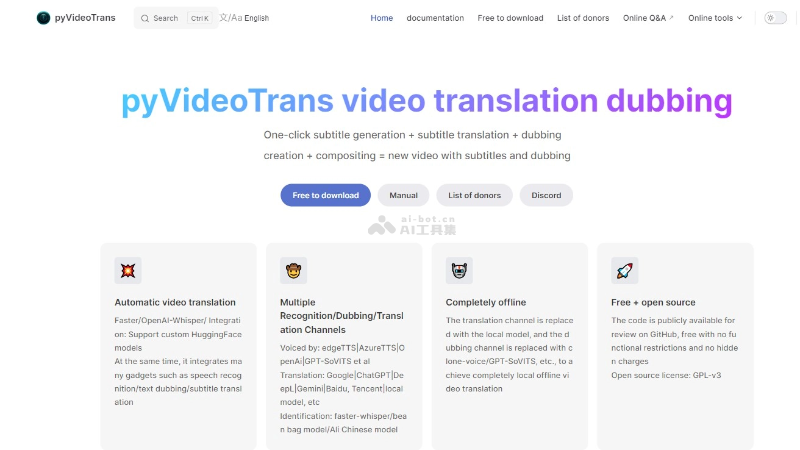
PyVideoTrans's main features
- Multilingual support: Process video content in multiple languages and translate it into any supported language the user needs.
- Speech recognition: Based on advanced speech recognition technologies such as OpenAI Whisper or Faster Whisper, convert speech in videos into text.
- Automatic translation: Integrates multiple translation engines, such as Google Translate, to translate the recognized text into the target language.
- High-quality dubbing: Uses text-to-speech (TTS) technology, such as Microsoft Edge TTS, to provide natural and fluent dubbing for the translated text.
- Subtitle generation: Automatically generates subtitle files synchronized with the video content to enhance the viewing experience.
- Video merging: Merges the translated dubbing and subtitles back into the video to create a complete multilingual version of the video.
PyVideoTrans's technical principles
- ffmpeg wrapper:PyVideoTrans wraps ffmpeg functionality through a Python library, allowing users to perform video and audio processing tasks through Python code without the ffmpeg command-line interface.Simplifies the video processing workflow, improves development efficiency, and enables non-professional users to easily process video files.
- Speech recognition (openai-whisper): Based on the openai-whisper offline model for speech recognition, users can use this feature without an internet connection, protecting user privacy and data security.The openai-whisper model accurately converts speech in videos into text, providing a foundation for subsequent translation work.
- Text translation:Integrates multiple translation interfaces, such as Google Translate. The interfaces provide powerful language translation capabilities, ensuring the accuracy and diversity of translation results.Supports translation in multiple languages, making it easy to translate video content into different languages and meet globalization needs.
- Text-to-speech (TTS):Uses high-quality speech synthesis technologies such as Microsoft Edge TTS to convert translated text into naturally sounding speech,making the dubbing sound more natural and professional.
PyVideoTrans's project address
- Project official website:pyvideotrans.com
- GitHub repository:https://github.com/jianchang512/pyvideotrans
PyVideoTrans's application scenarios
- Film and television production and post-production: Translate foreign movies or TV series into the local language, add dubbing and subtitles, and make them easier for local audiences to watch.
- Education and training: Provide multilingual versions of educational videos to help students from different language backgrounds better understand course content. Create multilingual teaching aids such as lectures, tutorials, and presentations.
- Corporate promotion and market expansion: Translate a company's product introduction, demonstration, or training videos into different languages to adapt to international markets. Provide multilingual video content support for international customers and enhance brand image.
- Self-media content creation: Help content creators translate videos into multiple languages, expand audience reach, and increase the global influence of their content.
- International conferences and events: Provide real-time or pre-recorded translated videos for international conferences to help attendees overcome language barriers.