
What Is Proxy
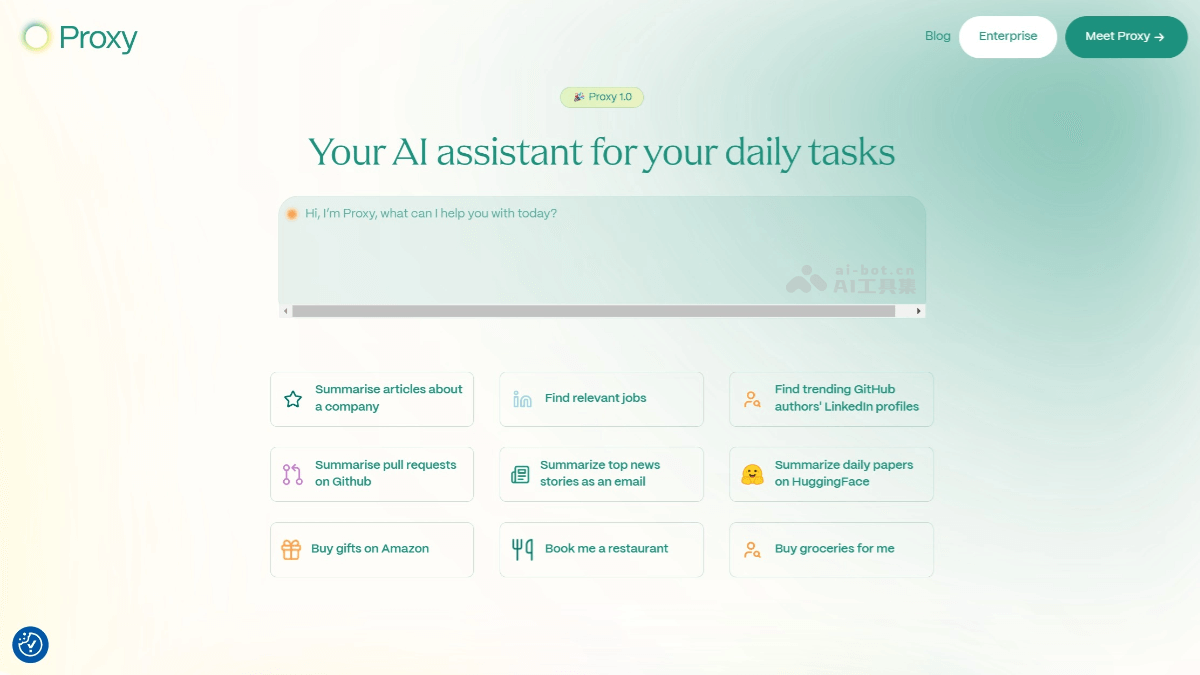
Proxy is a fully automated AI assistant launched by Convergence AI, helping users complete various daily tasks through natural language interaction. It can automatically handle repetitive work such as scheduling, email management, and data entry, and has the ability to learn and improve in real time. Users only need to describe tasks in simple language, and Proxy can execute them automatically and optimize performance based on feedback. Proxy's core advantage lies in its powerful automation capabilities and high accuracy. It achieved 88% accuracy on the WebVoyager benchmark, outperforming other similar products. Proxy supports repeated task execution, allowing users to "set it and forget it," with scheduled tasks completed automatically.
Proxy's Main Features
- Task Automation: Proxy can handle a variety of repetitive tasks, such as scheduling, email management, and data entry.
- Natural Language Interaction: Users can create tasks through simple natural language instructions, without technical knowledge or programming skills.
- Real-Time Learning and Improvement: Proxy can continuously learn during use, optimize task execution results, and make adjustments based on user feedback.
- Task Repetition and Scheduling: Users can set tasks to repeat, such as sending specific reports weekly or analyzing market data daily.
How to Use Proxy
- Registration and Login: Users need to visit the Convergence AI official website to register an account. After registration is complete, log in and choose a plan that suits you (such as the free version or Pro version).
- Create Tasks: Users can describe tasks in natural language, for example: "Schedule a meeting for next Wednesday" or "Summarize this week's sales data." Proxy will automatically identify the task type based on the user's instructions and begin execution.
- Task Management: Users can view task execution status on the platform, including completed, in-progress, or pending tasks. If a task needs adjustment, users can modify it through simple instructions or feedback.
- Custom Settings: Users can set task repetition frequency, priority, or reminder times according to their needs. For example, set reports to be sent automatically every day or specific data to be summarized every week.
- Advanced Features: Proxy supports multitasking, allowing users to run multiple tasks simultaneously. It provides a custom workflow sharing feature for convenient team collaboration.
Examples of Using Proxy
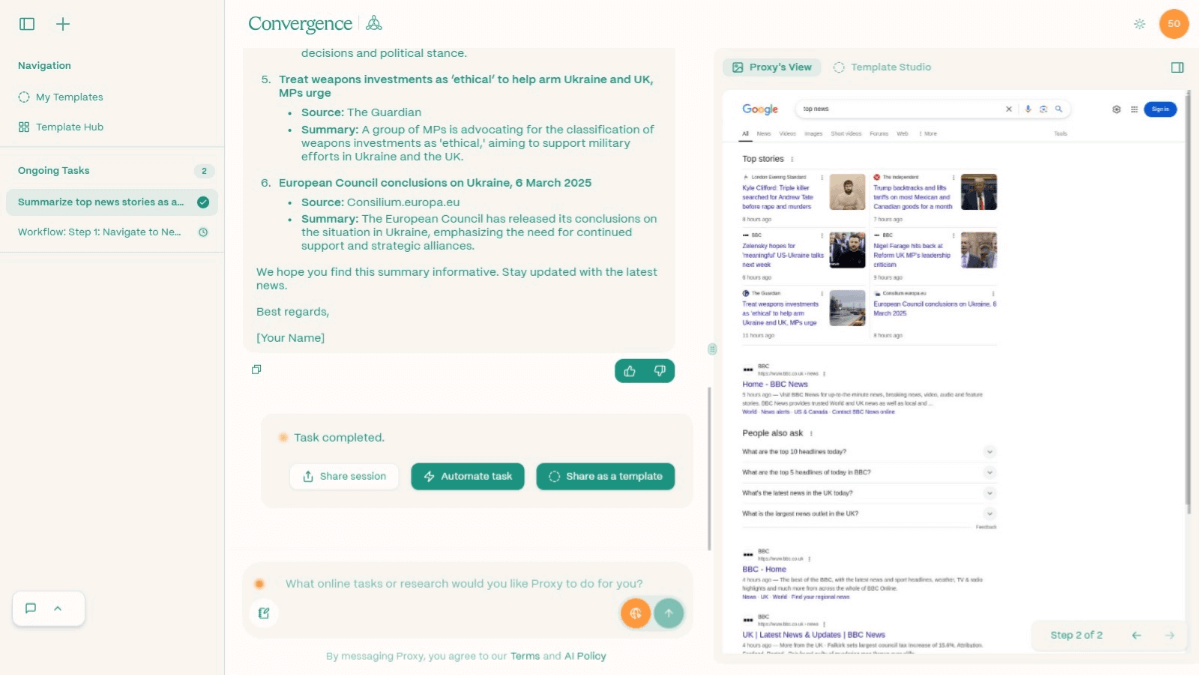
- Example 1: Summarize trending news into an email
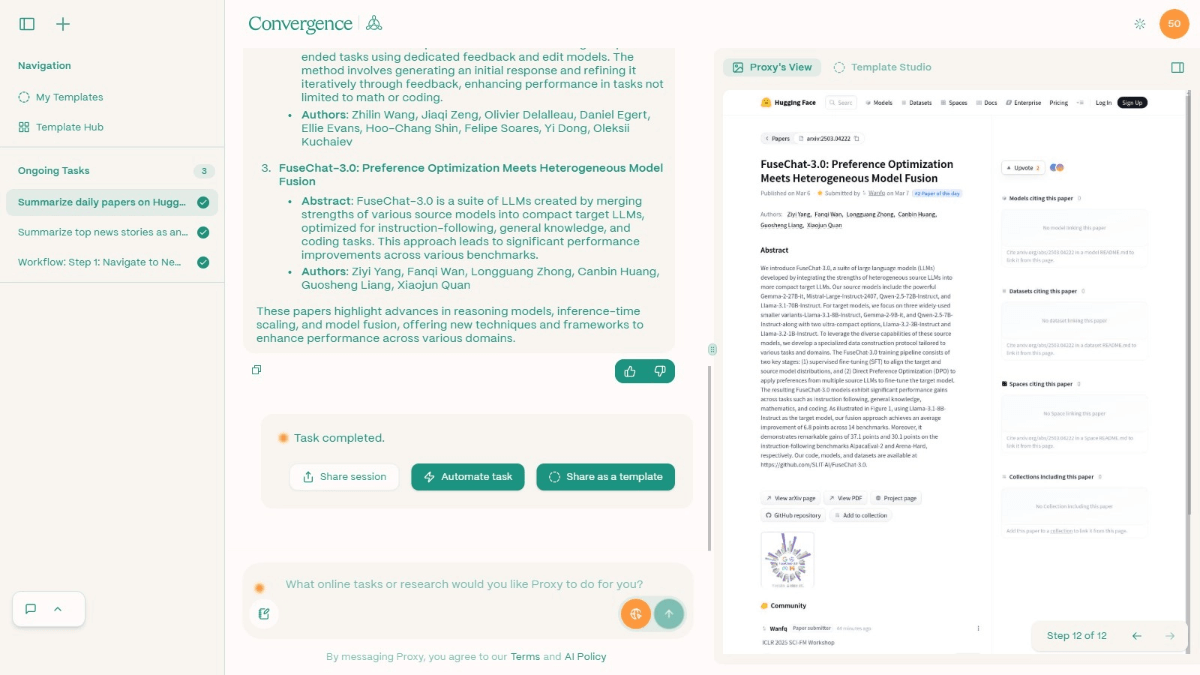
- Example 2: Summarize daily papers on HuggingFace
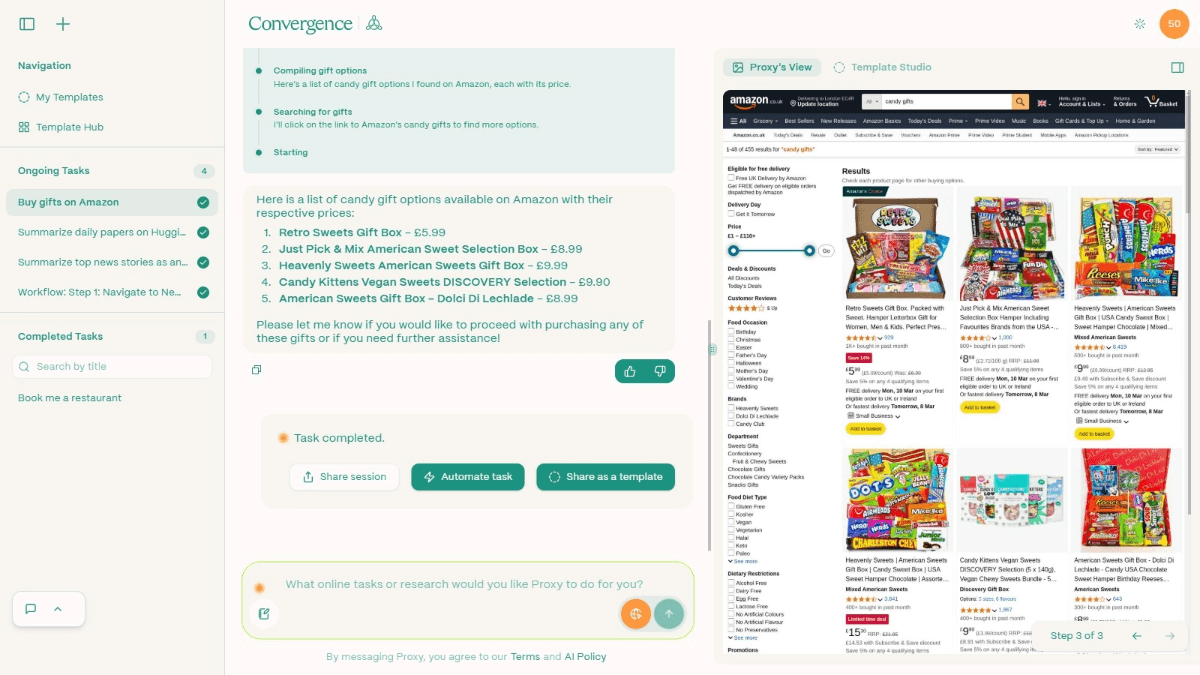
- Example 3: Buy a gift on Amazon
Proxy's Product Pricing
- Free Version: Provides 5 sessions per day and supports 1 automated task, suitable for individual users and small projects.
- Pro Version: $20 per month, providing unlimited sessions and 20 automated tasks, suitable for users who need to handle more complex tasks.
- Enterprise Version: Provides advanced features, suitable for large organizations and teams. Specific pricing and features need to be customized by contacting Convergence AI.
Proxy's Application Scenarios
- Personal Life Assistant: Proxy can help users schedule appointments, book restaurants, purchase products, or handle other personal matters. It can act as an intelligent agent to help users complete daily online tasks such as ordering food, shopping, etc.
- Business and Enterprise Management: In an enterprise environment, Proxy can automate office processes such as organizing customer feedback, summarizing sales data, scheduling meetings, etc.
- Researchers and Academic Applications: Researchers can use Proxy to obtain summaries of the latest academic papers, track research progress, and send relevant information directly to their email.
- Developers and Programming Assistance: Developers can use Proxy to automate code reviews, generate code snippets, summarize code functionality, and reduce the need for synchronous meetings.
- Intelligent Task Assistant: Proxy can help users search, filter, and summarize information, improving the web navigation experience. It can serve as a tool for automating internal enterprise processes, such as data entry and publishing information across systems.