
What is personal.ai
personal.ai is an innovative artificial intelligence platform that supports users in creating and training their own personalized AI assistants. By learning user data and information, it provides customized assistance, including remembering information, automatically replying to emails and chats, and daily task management. personal.ai emphasizes data privacy and security, ensuring the safety and privacy of user information, and provides flexible pricing plans to meet the needs of different users. Users can have a digital assistant that reflects their own personality and style, improving life and work efficiency.
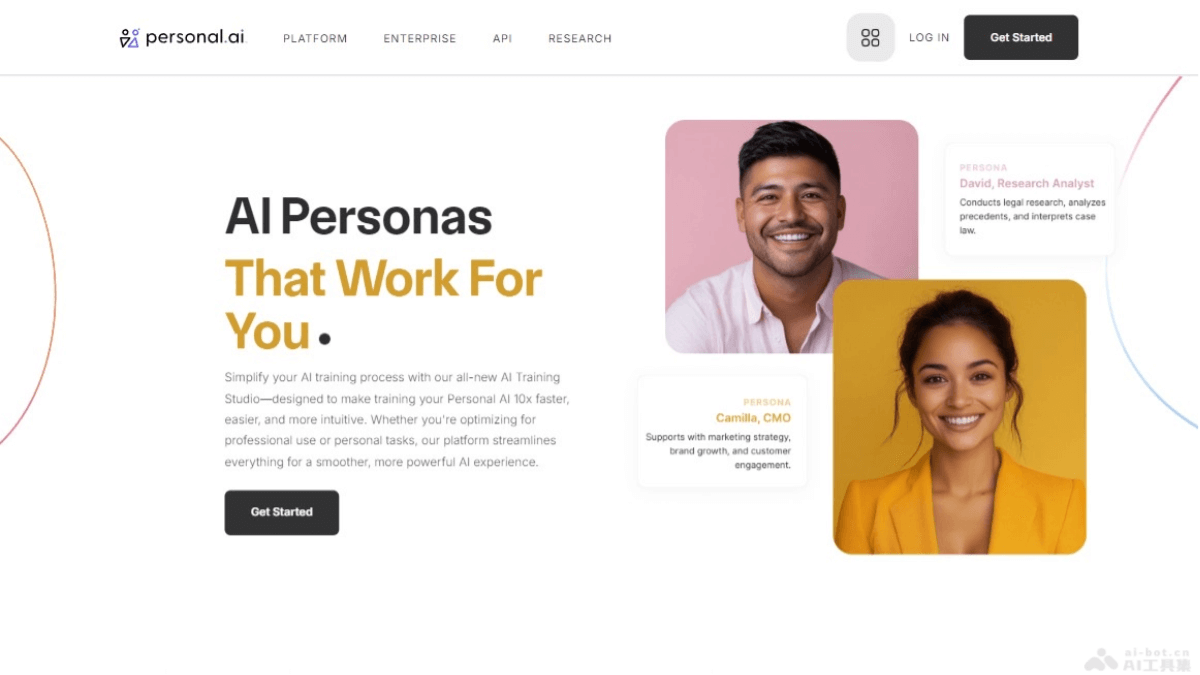
personal.ai's main features
- Personalized AI assistant: Users can create an AI assistant that reflects their own style and knowledge.
- Memory storage: The AI assistant can remember user information, such as meeting content, personal plans, etc., and provide assistance based on memory.
- Auto-reply: Through Copilot and Autopilot features, AI can automatically draft or reply to messages, helping users manage communications.
- Data privacy protection: Personal.ai emphasizes data security, using advanced encryption technology to protect user data.
- Custom training: Users can train the AI based on their own information and documents, making it more personalized.
- Messaging app integration: Personal.ai provides a messaging app that supports users in using the AI assistant in chats.
personal.ai's product official website
- Product official website:personal.ai/
personal.ai's application scenarios
- Personal assistant: As a personal assistant for daily task management and scheduling, helping users track to-dos and schedules.
- Business communication: Automatically draft and reply to emails in business communication, improving work efficiency.
- Customer service: As a customer service representative, providing 24/7 automated customer support and answering common questions.
- Knowledge management: Integrate and store personal or enterprise knowledge bases for easy retrieval and use.
- Education and learning: Assist students and teachers in organizing materials, formulating study plans, and academic communication.
- Content creation: Help authors, bloggers, and content creators draft, edit, and optimize content.