
What is OptoChat AI
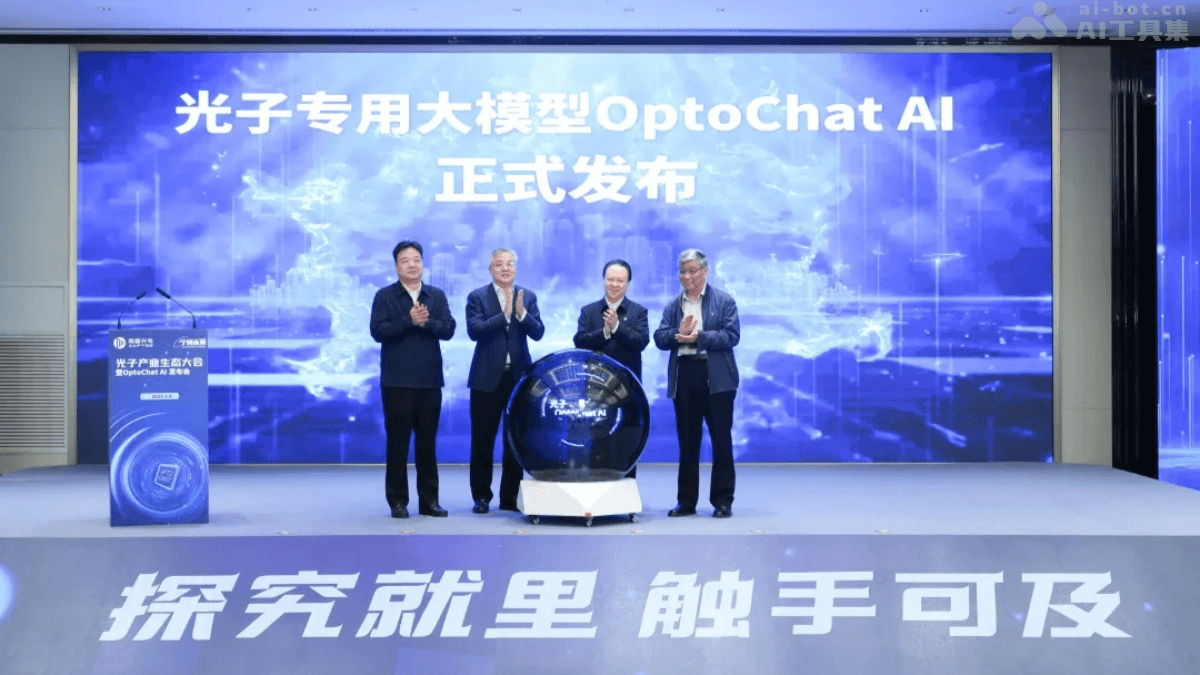
OptoChat AI is China's first photonics-specific large model jointly launched by Nanzhi Photonics and Nanjing University. The model focuses on the entire industry chain in the photonics field, integrating more than 300,000 pieces of photon chip-related patents, literature, and industry data resources, and possesses powerful data analysis and intelligent algorithm capabilities. The model significantly improves the R&D efficiency and industrial transformation speed of optoelectronic chips, compressing the traditional design verification cycle of several weeks to the minute level. The model helps the photonic chip industry transform from traditional trial-and-error R&D to intelligent development, promoting collaborative innovation and sustainable development of the global photonics industry ecosystem.
Main functions of OptoChat AI
- Design optimization: Provides photonic chip design suggestions and quickly finds optimal parameters and structures.
- Process verification: Simulates different process conditions, predicts problems, provides suggestions, and shortens the R&D cycle.
- Literature retrieval: Quickly retrieves literature and patents in the photonics field and provides the latest research results.
- System integration: Optimizes the integrated design of photonic systems and ensures that components work together.
- Intelligent Q&A: Answers professional questions in the photonics field and provides detailed explanations and reasoning processes.
Technical principles of OptoChat AI
- Data-driven: OptoChat AI is trained based on a large amount of photon chip-related data, including patents, literature, experimental data, and more. The data constitutes the model's knowledge base, enabling it to understand and generate knowledge related to the photonics field.
- Deep learning: The model is based on deep learning technologies, especially natural language processing (NLP) and machine learning algorithms. Based on machine learning algorithms, OptoChat AI can learn and understand language patterns, knowledge structures, and logical relationships in the photonics field.
- Knowledge graph: OptoChat AI builds a knowledge graph in the photonics field, structurally representing various concepts, entities, and relationships. The model can perform reasoning and knowledge retrieval more efficiently and provide more accurate answers and suggestions.
- Intelligent algorithms: The model has multiple built-in intelligent algorithms used for optimizing designs, predicting performance, and solving complex problems. The algorithms combine the basic principles of photonic physics and practical engineering experience to provide practical solutions.
- Industry adaptation: OptoChat AI is optimized for the specific needs of the photonics field, better understanding and handling complex problems in the design, manufacturing, and application of photonic chips.
OptoChat AI project address
- Project official website:https://www.nju.edu.cn/info/1056/418461.htm
Application scenarios of OptoChat AI
- Scientific research and academic research: Quickly retrieve literature, optimize experimental design, and verify theoretical models.
- Chip design and manufacturing: Optimize design parameters, improve process flows, and diagnose manufacturing problems.
- System integration and application development: Design system architecture, support application development, and optimize system performance.
- Education and training: Assist teaching, generate training materials, and promote technical exchange.
- Industry and market analysis: Analyze market trends, evaluate technology potential, and support investment decisions.