
What is MemMachine
MemMachine is an open-source AI memory system designed specifically for AI Agents, providing short-term, long-term, and personalized memory capabilities. Through episodic memory, semantic memory, and user profile memory, MemMachine helps AI applications learn, store, and recall past conversation data, enhancing the interaction experience. MemMachine supports multiple deployment methods and database combinations, such as Neo4j and PostgreSQL, to achieve efficient memory management. MemMachine is suitable for various scenarios such as CRM, healthcare, and wealth management, and can significantly improve the intelligence level of AI Agents.
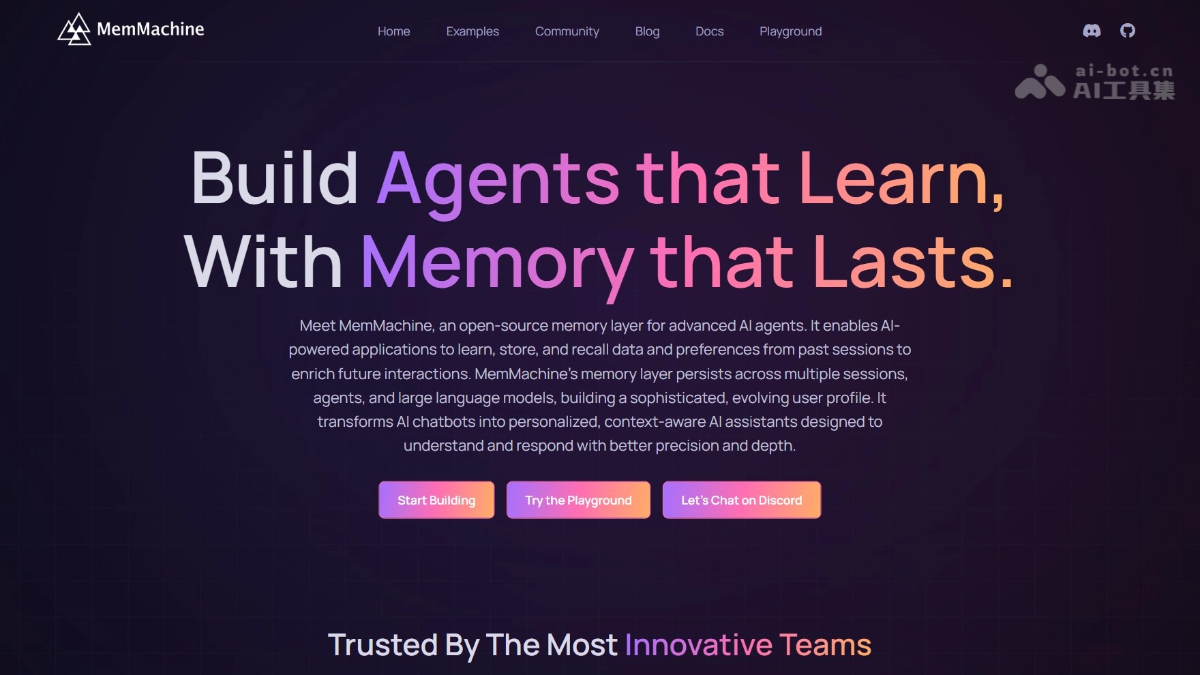
Main Features of MemMachine
-
Multi-type Memory Support:
-
Episodic Memory: Records the details of each interaction between the user and the AI agent, helping the agent understand the context of the current conversation.
-
Semantic Memory: Summarizes and consolidates the user's long-term information, providing structured knowledge storage.
-
Profile Memory: Forms a continuous profile of the user, recording preferences, historical behavior, etc., for personalized responses.
-
-
Cross-session Memory Persistence:The memory layer spans multiple sessions, agents, and large language models, supporting the storage and recall of long-term memory and building complex user profiles.
-
Personalized Interaction:Provides customized responses based on the user's historical data and preferences, enhancing the user experience and interaction depth.
-
Multi-model Compatibility:Supports multiple AI models, including private models and cloud service models, avoiding vendor lock-in.
-
Flexible Deployment Methods:Supports local deployment and cloud deployment, integrating with agent systems through multiple interfaces such as RESTful API and Python SDK.
-
Data Persistence and Management:Uses the Neo4j graph database to store episodic memory and the PostgreSQL relational database to store user profile memory, ensuring data structuring and efficient queries.
Technical Principles of MemMachine
-
Memory Architecture Design:
-
Episodic Memory: Stores conversation events through a graph database (such as Neo4j), using graph structures to efficiently manage complex relationships and contexts.
-
Semantic Memory: Performs semantic processing of user information and stores it in a structured database for fast retrieval and analysis.
-
Profile Memory: Based on the user's historical behavior and preferences, builds a dynamically updated user profile stored in an SQL database.
-
-
Multi-model Access Layer (MCP):Provides a Multi-model Compatibility Protocol (MCP), supports multiple interfaces such as RESTful API and Python SDK, and supports different AI Agent systems in calling memory services.
-
Data Persistence and Query Optimization:Uses the Neo4j graph database to store episodic memory, supporting fast context queries and relational reasoning.Uses PostgreSQL to store user profile memory, ensuring data structuring and efficient updates.
MemMachine Project Address
- Project Website:https://memmachine.ai/
- GitHub Repository:https://github.com/MemMachine/
Application Scenarios of MemMachine
-
CRM Assistant: By remembering customers' historical interactions and transaction stages, it helps sales teams quickly understand customer needs and improves customer relationship management efficiency.
-
Medical Navigation: Remember patients' medical history and treatment progress, provide continuous medical support for patients, and optimize the healthcare experience.
-
Personal Financial Advisor: Based on the user's investment portfolio and risk preferences, provide personalized financial advice to assist with financial planning.
-
Content Writing Assistant: Remember the user's writing style and terminology to ensure document consistency and high quality.
-
Educational Tutoring: Record students' learning progress and preferences, and provide customized learning suggestions and tutoring content.