
What is MARS5-TTS
MARS5-TTS is an open-sourceAI voice cloning toolreleased by CAMB.AI, with breakthrough realistic prosody and support for over 140 languages. It can also handle complex prosody scenarios, such as sports commentary and animeAI dubbing, etc. MARS5-TTS has 1.2 billion parameters, with over 150,000 hours of training data. It guides prosody through simple text markers, supports rapid cloning and deep cloning technologies, and optimizes speech output quality.
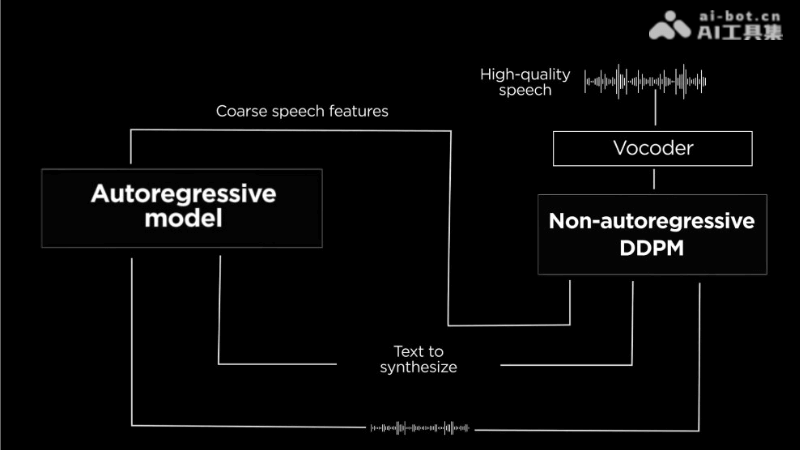
Main features of MARS5-TTS
- Multilingual support: Supports text-to-speech conversion in over 140 languages, meeting the needs of different users.
- High realism: Through advanced model design, the generated speech has realistic prosody and expression, suitable for various scenarios.
- Complex prosody processing: Can handle text with complex prosody, such as sports commentary, movies, and anime.
- Parameter guidance: Users can guide the prosody and emotion of speech through markers such as punctuation and capitalization in the text.
- Rapid and deep cloning: Provides two modes, rapid cloning and deep cloning, and users can choose generation speed or quality according to their needs.
Project address of MARS5-TTS
- Project official website:camb.ai
- GitHub repository:https://github.com/camb-ai/mars5-tts
- Demo experience:https://replicate.com/camb-ai/mars5-tts
How to use MARS5-TTS
- Install dependencies: Make sure Python and its required libraries, such as torch and librosa, are installed.
- Load the model: Load the MARS5-TTS model through torch.hub.
- Prepare audio and text: Select or record a reference audio clip, and prepare the corresponding text.
- Configure the model: Adjust the model's configuration parameters as needed.
- Perform synthesis: Input the text and reference audio into the model to perform speech synthesis.
Application scenarios of MARS5-TTS
- Content creation: Provide realistic dubbing for video, podcast, or animation production.
- Language learning: Help learners practice pronunciation and language rhythm.
- Assistive technology: Provide text-to-speech services for visually impaired people or those with reading difficulties.
- Customer service: Used in call centers or chatbots to provide automated voice responses.
- Multimedia entertainment: Generate character voices in video games or virtual reality experiences.