
What is Lyria 2
Lyria 2 is the third-generation AI music generationmodel launched by Google DeepMind. As a core component of the Vertex AI platform, it has high-fidelity audio generation capabilities and can output professional-grade 48kHz, 24-bit stereo audio. It supports a variety of music styles, including pop, rock, classical, and more, and can achieve cross-style fusion. Lyria 2 extends the Lyria RealTime model and supports real-time creation and adjustment. Creators can trigger AI arrangements in real time through MIDI controllers or microphones. New features such as "Create," "Extend," and "Edit" have been added, respectively used to generate music clips from text, generate continuation content based on existing audio, and adjust audio mood and style.
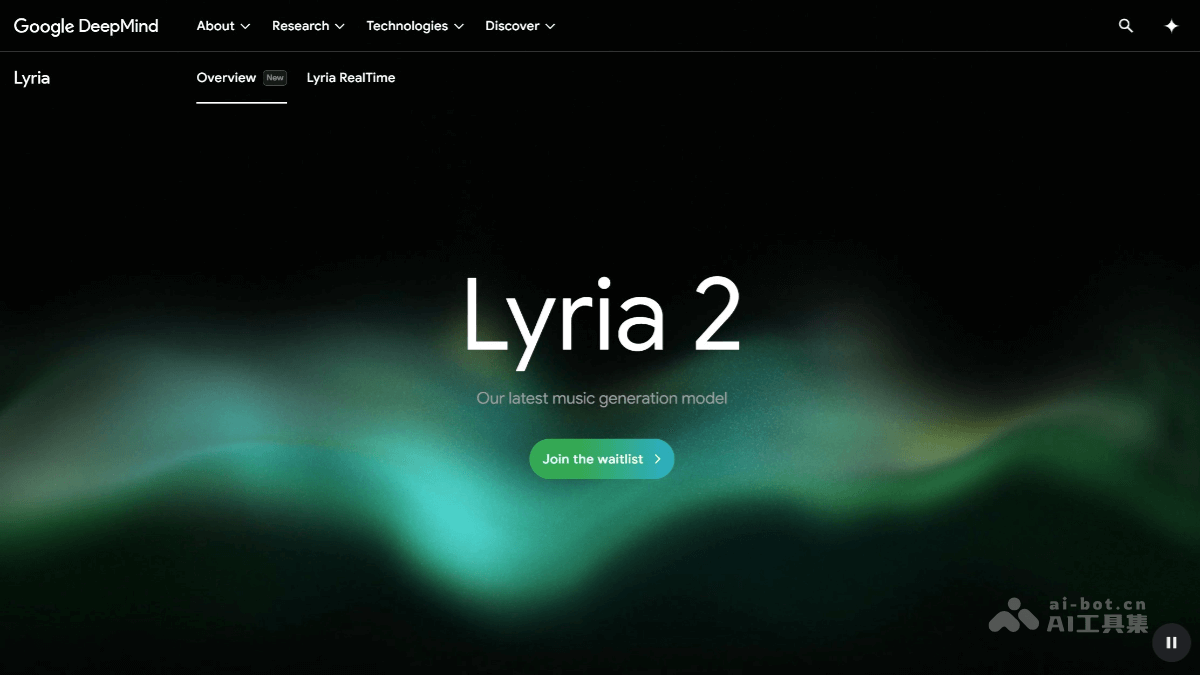
Main features of Lyria 2
- High-fidelity audio generation: Lyria 2 can generate professional-grade 48kHz high-fidelity stereo audio and adapt to a variety of music styles, including pop, classical, electronic, and more.
- Real-time creation and adjustment: It extends the Lyria RealTime model and supports users in creating and adjusting music in real time. It can instantly change the style, rhythm, and emotion of the music, making it suitable for live performances and rapid prototyping.
- Text-driven creation: The new "Create" feature allows users to generate music clips through text descriptions or lyrics, greatly lowering the barrier to creation.
- Audio continuation generation: The "Extend" feature generates continuation content based on existing audio clips, helping creators expand their musical works.
- Audio editing and fusion: The "Edit" feature supports users in adjusting the mood and style of audio through preset options or text prompts, and can fuse different music passages.
- Digital watermarking technology: All music generated by Lyria 2 is embedded with SynthID watermarking technology to ensure the identifiability of AI-generated content and prevent copyright disputes.
Technical principles of Lyria 2
- Multimodal input and parameterized control: Lyria 2 supports multiple input methods such as text, MIDI, and audio clips. Users can control music generation through descriptions (such as "cheerful jazz piano piece") or parameters (such as BPM and mode). The generation engine combines diffusion models and generative adversarial networks (GANs) to achieve style decoupling and recombination.
- Real-time interaction and dynamic creation: The Lyria RealTime feature uses TensorRT acceleration and streaming inference to compress generation latency to within 500ms, supporting live performances and real-time creation. Users can trigger AI arrangements in real time through MIDI controllers or microphones.
- Modular creation platform: Lyria 2 is integrated into the Music AI Sandbox, providing a modular toolchain from melody generation to chord generation, supporting drag-and-drop combination of functional modules, and lowering the barrier to creation.
Project address of Lyria 2
- Project official website:deepmind.google/technologies/lyria/
Application scenarios of Lyria 2
- Professional music production: Lyria 2 can generate professional-grade 48kHz high-fidelity stereo audio and supports a variety of music styles, including pop, classical, electronic, and more, helping musicians quickly generate background music, sound effects, or complete soundtracks.
- Inspiration stimulation: Users can generate music clips through text descriptions (such as "cheerful jazz piano piece") or lyrics, breaking through creative bottlenecks.
- Film and television soundtracks: Lyria 2 can generate dynamic soundtracks that match the emotional tone of the visuals based on script keywords, supports real-time adjustments, and significantly improves creative efficiency.
- Advertising background music: Quickly generate customized music through "brand keywords + emotion tags", helping advertising teams iterate quickly and reduce costs.
- AI music courses: Develop AI music courses in collaboration with institutions such as Berklee College of Music and Stanford CCRMA to drive innovation in music education.