
The development of artificial intelligence is undergoing a profound "memory revolution." AI systems represented by large language models (LLMs) perform excellently in generating fluent text and answering questions, but their core capabilities are largely limited by an inherent "instantaneous memory." The limited context window severely constrains their performance in multi-turn conversations and long-term tasks, resulting in a lack of coherence and true personalization in interactions. To break through this fundamental limitation, a revolution to give AI "long-term memory" is emerging. Designing a smarter long-term memory system is essentially about building an underlying architecture that can span the lifecycle of sessions, continuously accumulate, dynamically update, and precisely retrieve knowledge. This transformation is not only a technical optimization but also a fundamental leap in AI capabilities, enabling AI to evolve from a passive question-answering tool into a proactive intelligent partner capable of deeply understanding user preferences, accumulating historical experience, and performing complex reasoning, laying a solid foundation for key application scenarios such as personalized services, lifelong learning, and advanced decision support.

Application Scenarios and Design Considerations
AI Agents: Building Interactive Partners with "Memory"
Design Goals
In the application scenarios of AI agents, the core design goals of long-term memory systems are to achieve contextual coherence in interactions and precise user profile construction. Traditional AI agents are limited by fixed context windows, causing them to "forget" what users said earlier in multi-turn conversations, making the interaction experience fragmented and lacking depth. An AI agent with long-term memory capabilities can transcend session boundaries and continuously track conversation history, user preferences, intent evolution, and even emotional states. This capability enables the agent to build a dynamic and rich user profile and provide more personalized and thoughtful services in subsequent interactions.
Key Considerations
To achieve the above design goals, the memory system of an AI agent must focus on two key issues during design: real-time memory updates and personalized retrieval.
- Memory must be dynamic and able to update in real time as interactions proceed. User preferences and intentions are not static; the memory system needs efficient "update" and "consolidation" mechanisms to integrate new pieces of information into the existing user profile while correcting or forgetting outdated and inaccurate information. This requires the system to not only store information but also understand and handle changes in information.
- Retrieval must be highly personalized and contextually relevant. When the agent needs to recall memories, it should accurately extract the most relevant and valuable information from a vast memory store based on the current conversation context and user identity. This requires a powerful "indexing" and "retrieval" mechanism that can understand the deep semantics of queries and efficiently locate relevant memory fragments. For example, the Zep system builds a temporal knowledge graph to dynamically integrate conversation data and retrieve based on timelines and relationships, performing excellently when handling complex, time-dependent user queries.
Knowledge Base Construction and Dynamic Updates: Building a Living Knowledge Engine
Design Goals
Achieve structured storage of knowledge, transforming unstructured text, semi-structured tables, and structured database information into machine-understandable and machine-reasoning formats, such as knowledge graphs or vector databases. Structured representations facilitate efficient retrieval, can reveal complex relationships among knowledge entities, and lay the foundation for deep analysis and reasoning. Another core design goal is to support the dynamic evolution of knowledge. The system needs to be able to identify conflicts, supplements, or update relationships between new information and old knowledge, automatically complete knowledge merging, correction, or version iteration, and ensure that the knowledge base always remains in the latest and most accurate state.
Key Considerations
Building a dynamic knowledge base faces two key challenges:
- Multi-source Heterogeneous Data Fusion: Enterprise data comes from diverse sources and in different formats, including text documents, database records, API interface data, user-generated content, and so on. How to effectively fuse heterogeneous data is a complex technical problem. A memory system needs strong data preprocessing and representation learning capabilities to map data of different modalities and different structures into a unified semantic space, achieving cross-source knowledge association and integration. The core Graphiti engine of the Zep system can simultaneously process unstructured dialogue data and structured business data, fusing them into a unified temporal knowledge graph.
- Knowledge Conflict Resolution: When information from different sources conflicts, the system needs to have the ability to resolve knowledge conflicts. For example, an internal report and an external news article describe the same event differently. The system needs to be able to identify such conflicts and, based on factors such as the reliability, timeliness, and context of the information sources, determine which information is more accurate, or retain multiple viewpoints while annotating their sources and uncertainty. A complex belief tracking and uncertainty reasoning mechanism is needed to ensure that the knowledge base can still maintain logical consistency and reliability when facing contradictory information.
Decision Support Systems: Intelligent Advisors Based on Historical Experience
Design Goals
In decision support systems, the design goal of long-term memory systems is to become an "intelligent advisor" that can provide traceable and explainable decision-making bases. Unlike models that purely pursue prediction accuracy, decision support systems need to clearly show decision-makers the reasoning process and basis, enhancing the transparency and credibility of decisions. Long-term memory systems provide a solid foundation for this. When the system gives a decision recommendation, it can retrieve from long-term memory the historical cases, relevant data, expert knowledge, and rule logic that support the recommendation, and present them to the decision-maker in a structured way.

Key Considerations
To achieve the above goals, the memory design of decision support systems needs to focus on the extraction of decision logic and risk assessment.
- The system needs to have the ability to focus on decision logic. This involves extracting rules from text reports, learning strategies from successful cases, or discovering key influencing factors through causal inference. The extracted decision logic needs to be stored in the memory system in a clear and verifiable form, such as in the form of a rule engine or causal graph.
- The system must have risk assessment capabilities. Decisions are accompanied by uncertainty, and the memory system needs to be able to quantify uncertainty and assess the potential risks of decision recommendations. This includes evaluating the reliability of information sources, the confidence of the model, and the negative consequences that decisions may bring. For example, the system calculates the success rate of a certain decision recommendation based on historical data, provides a confidence interval, and at the same time simulates the worst-case scenarios under different decision paths, providing decision-makers with a comprehensive risk view. The dual consideration of decision logic and risk ensures that the decision support system can give the answer to "what it is," provide insight into "why," and foresee "what will happen."
Analysis and Comparison of Key Technologies
With the growing demand for long-term memory in AI, memory systems that address the context window limitations of LLMs have emerged. Mem0, its enhanced version Mem0-g, and Zep are three representative technologies that have attracted much attention. They adopt different architectural philosophies, from simple fragment memory to complex graph structures and temporal knowledge graphs, demonstrating different trade-offs in memory design.
Mem0: Fragment-Based Memory Management
Mem0 is a scalable long-term memory system designed for production-grade AI agents. Its core idea is to dynamically extract, consolidate, and retrieve key information from ongoing conversations, overcoming the limitations of the LLM's fixed context window. Its design philosophy leans toward practicality and efficiency, providing a lightweight and powerful memory layer.
Core Architecture
It mainly revolves around a two-stage process: Memory Extraction and Consolidation and Memory Retrieval.
- In the first stage, when a new conversation occurs, Mem0 uses an LLM to identify and extract important "memory snippets" from the conversation content. Snippets are usually facts, preferences, or key events about the user. The system compares and consolidates the newly extracted snippets with the existing memory bank. If the new snippet is an update or correction to existing memory, the system modifies the old memory accordingly; if it is entirely new information, the system adds it to the memory bank. This process ensures the continuous evolution and accuracy of the memory bank.
- In the second stage, when a response needs to be generated, Mem0 retrieves the most relevant memory snippets from the memory bank based on the current conversation context and provides them as additional contextual information to the main LLM, generating a more coherent and personalized reply.
Storage Mechanism
In terms of storage mechanism, Mem0 adopts a vector-based representation method. Each extracted memory fragment is converted into a high-dimensional vector and stored in a vector database. The unstructured storage approach has high flexibility and can handle memory information of various forms and content. During retrieval, the system converts the current query into a vector and, by computing the similarity between the query vector and the memory vectors (such as cosine similarity), quickly finds the most relevant memory fragments. The search mechanism based on vector similarity is very efficient and suitable for rapid retrieval of large-scale data. The unstructured representation also brings a potential limitation: it is difficult to explicitly capture the complex logical relationships between memory fragments, such as causal relationships, temporal order, or hierarchical relationships, which can limit performance in tasks requiring complex reasoning.
Advantages and Limitations
The main advantage of Mem0 lies in the simplicity and efficiency of its architecture. In the LOCOMO benchmark test, Mem0 performs well across multiple task categories, and its latency and token cost are far lower than baseline methods that process the complete conversation history. The fragment-based and vector-based architecture determines its limitations. Due to the lack of explicit modeling of relationships between memories, Mem0 struggles with complex tasks that require multi-step reasoning, relational queries, or timeline analysis.
Mem0-g: Introducing Relational Memory with Graph Structure
To compensate for Mem0's shortcomings in relational reasoning, the research team proposed an enhanced version—Mem0-g—which introduces a graph-based memory representation.
Core Architecture
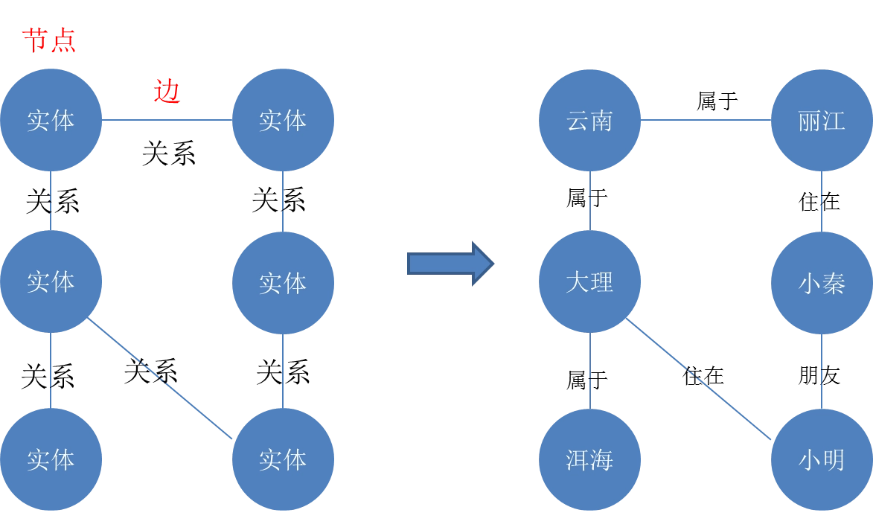
The architecture of Mem0-g can be seen as an extension of Mem0. It retains Mem0's original memory extraction and integration process, and adds a graph structure at the storage and retrieval levels. After memory fragments are extracted from the conversation, Mem0-g stores them as vectors and uses an LLM to identify the entities in the fragments and the relationships between them.
Storage Mechanism
In terms of storage mechanism, Mem0-g adopts a hybrid storage mode: unstructured memory fragments are stored in vector form, while structured entities and relationships are stored in graph form. The hybrid mode combines the advantages of both representation methods. In the LOCOMO benchmark test, Mem0-g's overall score is about 2% higher than the base version of Mem0, mainly due to its excellent performance on tasks requiring multi-step reasoning and relational understanding.
Zep: Complete Context Engineering Driven by a Temporal Knowledge Graph
Zep is positioned not only as a memory storage layer, but also as a more comprehensive "Context Engineering Platform". Through its core component Graphiti—a dynamic knowledge graph engine with temporal awareness—it addresses more complex memory needs in enterprise-level applications.
Core Architecture
The core of Zep's architecture is the temporal knowledge graph engine Graphiti. Unlike the static graph of Mem0-g, Zep's graph is dynamic and timestamped, capable of storing entities and relationships, and also recording the time periods during which facts and relationships hold. More importantly, Zep is designed to integrate multiple data sources, including unstructured conversation messages and structured business data.
Storage Mechanism
Zep's storage mechanism is a temporal knowledge graph. When new information is received, the Graphiti engine parses it and integrates it into the knowledge graph. If new information conflicts with existing knowledge, Zep retains historical versions and records the validity period of each version. This non-destructive update approach ensures that the complete historical trajectory of knowledge is preserved. For example, if a user's address changes, Zep records the validity period of the user's "old address" and the start time of the "new address." This mechanism is crucial for enterprise applications that need to track information changes, conduct historical analysis, or perform compliance audits.
Advantages and Limitations
Zep's greatest advantage lies in its powerful context understanding and reasoning capabilities, especially when handling complex time-related queries. In the Deep Memory Retrieval (DMR) benchmark, Zep achieved an accuracy of 94.8%, exceeding MemGPT's 93.4%. In the more challenging LongMemEval benchmark, Zep improved accuracy by up to 18.5% over baseline implementations while reducing response latency by 90%, fully demonstrating its value in enterprise-grade applications. Zep's powerful capabilities mean that its architecture is relatively complex, and its deployment and maintenance costs are higher than lightweight solutions such as Mem0. Therefore, Zep is more suitable for enterprise-grade application scenarios that have extremely high requirements for context understanding and possess the corresponding technical resources.
Technical Comparative Analysis: Architecture, Performance, and Applicable Scenarios
To more clearly show the differences among the three technologies, a summary comparison is made from multiple dimensions.
Institutional Comparison
- Storage Structure Comparison: From the perspective of storage structure, the three represent different design philosophies. Mem0's pure vector storage pursues ultimate flexibility and efficiency, making it suitable for quickly retrieving semantically similar content. Mem0-g's "vector + graph" hybrid storage attempts to strike a balance between flexibility and structure, compensating for vectors' shortcomings in relationship representation by introducing a graph structure. Zep's temporal knowledge graph moves toward a fully structural representation. It stores entities and relationships, introduces a temporal dimension, and can handle the most complex temporal and relational reasoning problems. The evolution from unstructured to semi-structured and then to fully structured reflects the trend of memory systems developing from simple storage toward deep understanding.
- Retrieval Mechanism Comparison: Differences in retrieval mechanisms directly determine the types of tasks each system excels at. Mem0's similarity search is very suitable for scenarios such as personalized recommendations and rapid question answering. Mem0-g's graph traversal capability gives it an advantage when handling relationship-chain questions such as "my friend's company." Zep's context assembly capability makes it unmatched in scenarios that require understanding the entire chain of events, such as analyzing the handling history of customer complaints.
Performance Comparison
Evaluating the performance of long-term memory systems is key to technology selection. The recent controversy surrounding the LOCOMO (Long Conversations Memory) benchmark reveals the complexity of performance evaluation. In a paper published by the Mem0 team in April 2025, they claimed to have achieved State-of-the-Art (SOTA) results on the LOCOMO benchmark. The benchmark includes conversations as long as 600 turns and about 26,000 tokens, and designs four types of questions: Single-Hop, Multi-Hop, Open-Domain, and Temporal reasoning, enabling comprehensive evaluation of a system's long-term memory capability.
According to the data in the Mem0 paper, its system performs excellently on multiple metrics. As shown in the table below, Mem0 achieves LLM-as-a-Judge (J) scores of 67.13 and 51.15 on single-hop and multi-hop questions, respectively, significantly outperforming baseline systems such as LangMem and Zep. The graph-structured variant Mem0-g performs even better on open-domain and temporal reasoning tasks, with J scores reaching 75.71 and 58.13, respectively, and achieving one of the highest scores on the latter. In terms of efficiency, Mem0 demonstrates a huge advantage. Compared with baseline methods that process the full context (about 26,000 tokens), Mem0 reduces p95 latency by about 92% (from 17 seconds to 1.44 seconds) and saves more than 90% of token costs, making it highly practical in production environments.
| System | Single-hop questions (J Score) | Multi-hop questions (J Score) | Open-domain questions (J Score) | Temporal reasoning questions (J Score) | Total latency (p95, seconds) |
|---|---|---|---|---|---|
| Mem0 | 67.13 | 51.15 | 72.93 | 55.51 | 1.44 |
| Mem0-g | 66.50 | 50.32 | 75.71 | 58.13 | 2.59 |
| Zep | ~59 (estimated) | ~47 (estimated) | 76.60 | ~45 (estimated) | 1.29 (p50) |
| Full-Context | – | – | – |
Comparison of applicable scenarios
- Mem0:With its simplicity, efficiency, and ease of integration, it is suitable as a memory augmentation module for general-purpose conversational AI. For example, in chatbots, personal assistants, or educational tutoring applications, Mem0 can help AI remember users' preferences, key points from historical conversations, and important facts, providing more personalized and coherent interaction experiences. Its low latency and low token consumption make it perform excellently in scenarios requiring fast responses.
- Mem0-g:It is more suitable for scenarios with clear needs for relational reasoning. For example, in intelligent question-answering systems, financial risk control analysis, or medical diagnostic assistance, understanding complex associations between entities is crucial. The graph structure of Mem0-g can effectively represent and reason about relationships, providing deeper and more accurate answers.
- Zep:With powerful context engineering capabilities and integration of business data, it is mainly aimed at enterprise-level applications. It is suitable for complex systems that require deep understanding of customers, integration of multi-source data, and provision of interpretable decision support, such as advanced CRM intelligent assistants, personalized recommendation engines, or enterprise knowledge management platforms. In these scenarios, Zep can provide the most comprehensive and reliable contextual information, and the complexity of deployment requires enterprises to have corresponding technical strength and resource investment.
Core challenges and solutions
Challenge 1: Memory scalability and efficiency
As the interaction time between AI agents and users increases, the amount of data in the memory bank grows exponentially. The explosion in data volume brings a dual challenge. First is the storage cost issue. As mentioned earlier, systems like Zep consume a huge amount of tokens, and the storage overhead of long-term operation cannot be underestimated. Second is the retrieval efficiency issue. When the memory bank contains millions or even billions of memory fragments, how to quickly and accurately find the information most relevant to the current context becomes a huge technical challenge. Traditional vector search performance drops significantly when the data volume is extremely large.
Solution
- Tiered Storage: Drawing on the memory hierarchy of computer systems, the most frequently used "working memory" is stored in high-speed storage media, while the large amount of "long-term memory" is stored in lower-cost storage systems.
- Index Optimization: Adopting more advanced approximate nearest neighbor (ANN) search algorithms, such as the HNSW graph index, can significantly reduce search latency while ensuring a relatively high recall rate.
- Memory Compression: Using an LLM to summarize lengthy conversation histories or documents, extracting the core facts and viewpoints, and storing only highly compressed memory fragments.
Challenge 2: Dynamic Updating and Consistency of Memory
Information in the real world changes dynamically, user preferences change, and facts are updated. A static memory bank will quickly fill with outdated and erroneous information, causing the AI to make inappropriate decisions. The memory system must have the ability to update dynamically. Dynamic updating brings new challenges: information obsolescence and knowledge conflicts. When a user provides new information, the system needs to determine whether it supplements, corrects, or completely overturns the old information. When information from different sources contradicts one another, the system needs the ability to adjudicate.
Solutions
- Timestamp Mechanism: Each memory or fact is stamped with a creation and update timestamp. Zep's temporal knowledge graph uses a bi-temporal model to record the valid time of each fact in the real world and its processing time in the system.
- Version Control: Manage knowledge like managing code. When information is updated, do not directly delete the old version; create a new version and retain the historical version.
- Belief Tracking: The system should store not only definite facts, but also the degree of belief (confidence) in the facts. When information conflicts, dynamically adjust the degree of belief in each fact based on factors such as the reliability of the information source and the amount of evidence.
Challenge 3: Personalization and Privacy Security of Memory
Long-term memory systems store a large amount of sensitive personal information about users, including preferences, habits, social relationships, and even emotional states. Once data is leaked or misused, it will pose a serious threat to user privacy. If the memory system is maliciously attacked, attackers can extract users' private information through carefully crafted queries. Therefore, how to ensure the security and privacy of user data while providing personalized services is a core ethical and technical challenge that long-term memory systems must address.
Solutions
- Local Deployment: Deploy the memory system on the user's local device or private server, so that data does not leave the local environment, fundamentally avoiding the risk of cloud data leakage.
- Data Encryption: Encrypt the memory data stored in the database so that even if the database is compromised, attackers cannot read the plaintext information. At the same time, encryption protocols such as TLS should be used during data transmission.
- Access Control and Auditing: Implement strict access control policies to ensure that only authorized users or agents can access specific memory data. At the same time, record all access and operation logs for memory data.
- Privacy Computing Technologies: Explore the use of technologies such as federated learning and differential privacy. Federated learning can jointly train models using data from multiple devices without sharing the raw data.
Performance Evaluation Metrics and Methods
Evaluating the degree of "intelligence" of a long-term memory system is far more complex than calculating accuracy or latency. A multi-dimensional and comprehensive evaluation framework is needed, one that measures the accuracy of retrieved information and examines operational efficiency, scalability, and the relevance of the provided context. An excellent memory system should achieve high scores in benchmark tests and demonstrate stable, efficient, and intelligent characteristics in real application scenarios.
Accuracy: The correctness of memory retrieval
Evaluation Methods
Accuracy is the most core and most intuitive metric for evaluating a memory system, measuring the extent to which the information retrieved by the system is correct and consistent with the facts. The evaluation method is question-answering testing based on specially designed benchmark datasets. For example, the LOCOMO (Long Conversations Memory) benchmark includes conversations as long as 600 turns and about 26,000 tokens, and designs four types of questions: single-hop, multi-hop, open-domain, and temporal reasoning, comprehensively evaluating the system's long-term memory capability.
Key Metrics
- F1 score and BLEU-1 scoreare commonly used evaluation metrics, but they have obvious limitations in long-term memory evaluation, mainly because they are based on lexical overlap and have difficulty capturing factual errors.
- LLM-as-a-Judge (J) : Use a more powerful and fairer LLM (as a "judge") to evaluate the quality of the generated answer. The "judge" LLM simultaneously receives the original question, the ground truth answer, and the generated answer of the system being evaluated, and makes a comprehensive judgment from multiple dimensions such as factual accuracy, relevance, completeness, and contextual appropriateness, ultimately giving a comprehensive quality score, namely the J-score.
Efficiency: The system's response speed and cost
Evaluation Methods
In real-time interactive applications, efficiency and accuracy are equally important. No matter how high the accuracy of a memory system is, if it responds slowly or is costly, it cannot be deployed in an actual production environment. The evaluation of efficiency mainly focuses on two aspects: the system's response speed and resource consumption. Evaluation methods usually include latency testing, throughput testing, and token consumption testing. Latency testing measures the time required for the system to process a single request; throughput testing measures how many requests the system can process per unit of time; token consumption testing counts the total number of tokens consumed by the system during processing, which is directly related to the cost of using the LLM API.
Key Metrics
- Latency: Usually measured by the median (p50) and the 95th percentile (p95). p95 latency reflects the response time of the slowest 5% of requests and is an important metric for measuring system stability and user experience.
- Token Consumption: By extracting and retrieving only the most core factual memories, Mem0 significantly reduces the number of tokens input to the LLM and can save more than 90% of token costs.
Scalability: the system's ability to handle large-scale data
Evaluation Methods
Scalability evaluates whether a memory system can maintain performance and stability when facing continuously growing data volumes and user requests. It is crucial for AI applications that need to run for a long time and accumulate large amounts of memory. Evaluating scalability requires stress testing and load testing. Stress testing can find the limits of the system by continuously increasing the number of concurrent users or the amount of data and observing at which point the system's performance begins to decline sharply or even collapse. Load testing tests the system's performance under expected normal and peak loads to ensure that it can run stably in daily operations.
Key Metrics
The key evaluation metrics include the maximum supported data volume (the upper limit of the total amount of memory the system can efficiently retrieve) and the number of concurrent users (the number of users the system can serve simultaneously).
- Maximum Supported Data Volume: The upper limit of the total amount of memory the system can efficiently retrieve.
- Number of Concurrent Users: The number of users the system can serve simultaneously.
Contextual Relevance: the relevance of memory to the current task
Evaluation Methods
An intelligent memory system must be able to "remember" and "recall" the information most relevant to the current task. Contextual relevance evaluates how useful the memory fragments retrieved by the system are for solving the current problem. This is a more subtle and advanced evaluation dimension than accuracy. A memory fragment may be correct at the factual level, but it may be of no help for advancing the current conversation, or even a distraction. Evaluating contextual relevance is usually more challenging, and it often requires deeper semantic understanding and task understanding.
Key Metrics
- Contextual Precision: It measures how many of all retrieved memories are truly relevant to the current task.
- Contextual Recall: It measures how many of all memories relevant to the task were successfully retrieved by the system.
Designing a smarter long-term memory system is a key step in driving AI's evolution from a "tool" to a "partner." The path to truly intelligent memory is not smooth sailing. The explosion in data volume, the dynamic changes in information, and the protection of user privacy constitute three core challenges. Technologies such as tiered storage, timestamp mechanisms, and privacy computing provide us with effective tools to solve these problems. At the same time, a multidimensional evaluation system covering accuracy, efficiency, scalability, and contextual relevance is the cornerstone for scientifically measuring and optimizing the performance of memory systems.
Long-term memory systems will continue to evolve toward deep integration with reasoning, drawing on mechanisms of the human brain, supporting multi-agent collaboration, and achieving lifelong learning. No matter how technology develops, ethics, data security, and privacy protection will always be the bottom line that intelligent memory cannot cross. Only by ensuring that technology is used for good and is trustworthy to users can long-term memory systems truly unleash their potential and bring a more profound impact to human society. Ultimately, a successful long-term memory system will be an intelligent partner capable of continuous learning, deep understanding, reliable execution, and trustworthiness, and will join us in shaping a smarter future.