
What is LAM
LAM is a new artificial intelligence model introduced by Microsoft called "Large Action Model" (LAM for short). Unlike traditional language models, LAM can autonomously operate Windows programs and achieve real task execution. It can understand text and transform user requests into concrete actions, such as launching programs or controlling devices. LAM is the first model specifically designed to work with Microsoft Office products and other Windows applications. Tests in the Word environment show that LAM has a 71% success rate in completing tasks, higher than GPT-4's 63%, and executes faster.
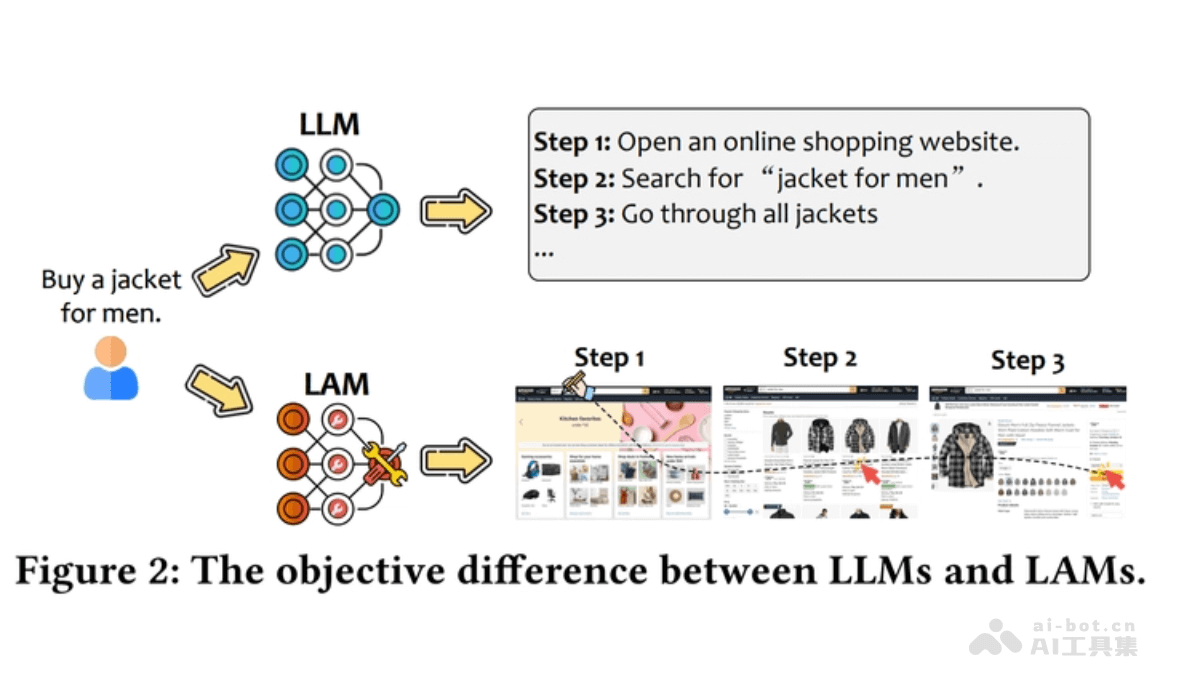
Main functions of LAM
- User intent interpretation: LAM can accurately understand user intent from multiple input forms (such as natural language, voice, images, etc.) and transform it into executable plans and action steps.
- Action generation: LAM transforms user intent into concrete action instructions. Actions may include graphical user interface (GUI) operations, API calls, robotic physical operations, etc.
- Dynamic planning and adaptation: LAM can decompose complex tasks into multiple subtasks, dynamically adjust plans and actions according to environmental changes, and respond to unexpected situations during execution.
- Specialization and efficiency: For specific environments or tasks, LAM is based on specialized training, improving accuracy and adaptability in specific domains while reducing computational overhead and improving response speed.
- Environment interaction: LAM integrates with agent systems, can interact with external tools, maintain memory, and interface with the environment, achieving actual impact on the physical world.
- Autonomous execution: LAM can autonomously execute tasks, including understanding tasks, planning action steps, executing actions, and making adjustments based on feedback.
- Automated software tasks: LAM can perform office automation tasks such as document editing, data entry, and spreadsheet processing.
Technical principles of LAM
- Multimodal input understanding: LAM can interpret diverse inputs such as natural language requests, voice commands, images, or videos, and understand user intent.
- Data collection and preparation: LAM's training is based on collecting data on user requests, environmental states, and corresponding actions. This data is cleaned and preprocessed to provide the basis for model training.
- Model training: Using the collected data, LAM is trained to perform specific actions based on techniques such as supervised fine-tuning and reinforcement learning.
- Environment integration: The trained LAM is integrated into an agent system to interact with the environment, including collecting observation data, using tools, maintaining memory, and implementing feedback loops.
- Evaluation: Before actual deployment, LAM undergoes strict reliability, robustness, and safety evaluations to ensure performance in different environments and tasks and to effectively handle unexpected situations.
Application scenarios of LAM
- Automated software tasks: LAM can perform office automation tasks such as document editing, data entry, and spreadsheet processing, improving work efficiency.
- Smart home management: LAM can control smart home devices, such as adjusting lighting, temperature, and security monitoring, providing users with a more intelligent living environment.
- Customer service and support: Based on chatbots providing real-time help and technical support, LAM can automatically diagnose problems and provide solutions, improving customer experience.
- E-commerce: LAM can automate the online shopping process, including product search, order placement, and payment processing, providing users with a convenient shopping experience.
- Education and Training: As a virtual teaching assistant, LAM provides personalized learning plans and teaching content, enhancing the interactivity and personalization of education.