
What Is LabelU
LabelU is an open-source multimodal data annotation tool that supports annotation of images, videos, and audio. It offers image annotation capabilities such as bounding boxes, polygons, points, lines, classification, and description, meeting the needs of computer vision task scenarios such as object detection, image classification, and instance segmentation. Through the free combination of tools, LabelU allows custom annotation tasks. It supports data export in COCO and MASK formats, making data annotation work convenient and efficient. LabelU also supports AI-assisted annotation, allowing one-click loading of pre-annotation data for refinement and adjustment as needed, improving annotation efficiency and accuracy.
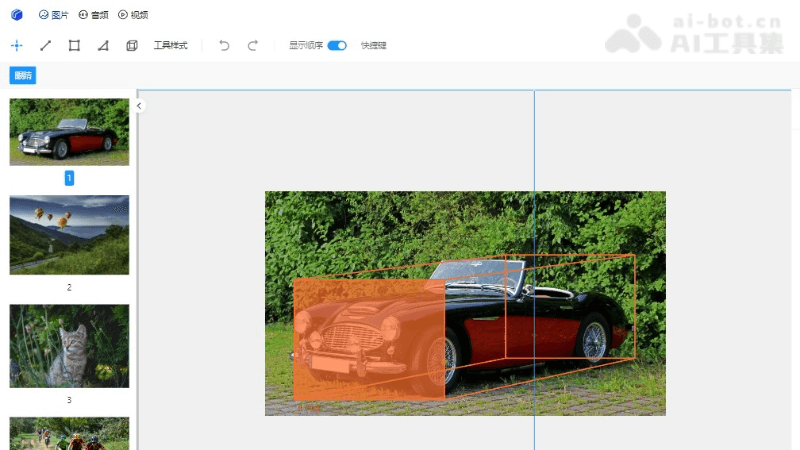
LabelU's Main Features
- Multifunctional Image Annotation Tool: Provides multiple annotation methods such as 2D bounding boxes, semantic segmentation, polylines, and keypoints, meeting needs for object detection, scene analysis, image recognition, machine translation, and more.
- Powerful Video Annotation Capabilities: Supports functions such as video segmentation, video classification, and video information extraction, suitable for tasks like video retrieval, video summarization, and behavior recognition, helping users process long-duration videos and extract key information.
- Efficient Audio Annotation Tool: Has the capabilities of audio segmentation, audio classification, and audio information extraction, visualizing complex sound information and simplifying the audio data processing workflow.
- AI-Assisted Annotation: Supports one-click loading of pre-annotation data. Users can refine and adjust as needed, improving annotation efficiency and accuracy.
How to Use LabelU
- Installation and Deployment: You cantry it online, or download the source code from theGitHub repositoryand install it according to the provided documentation.
- Create an Annotation Project: After installation is complete, create an annotation project. LabelU supports creating different types of annotation tasks, including image, video, audio, and more.
- Data Import: After creating the project, import the data to be annotated into LabelU. Currently, LabelU supports importing local data.
- Task Configuration: After data import, configure the annotation. According to the task scenario, select appropriate annotation tools and labels. LabelU provides a rich set of annotation tools, such as bounding boxes, polygons, points, lines, classification, and description.
- Start Annotating: After configuration is complete, start data annotation. LabelU provides a simple and intuitive operation interface, supports shortcuts and visual task management, and improves annotation efficiency.
- Export Results: After annotation is complete, you can export the results in formats such as JSON, COCO, and MASK, facilitating subsequent model training and data analysis.
- Local Development(if needed): If you need to perform secondary development or integration on LabelU, you can follow the official documentation for local development and environment configuration.
LabelU's Project Address
- Product Introduction:labelU
- Project Address:https://pypi.org/project/labelu/
- Demo Experience:https://opendatalab.github.io/labelU-Kit/#/image
- Github Repository:https://github.com/opendatalab/labelU
Application Scenarios of LabelU
- Data ScientistsandMachine Learning Engineers: Need to annotate large amounts of image, video, and audio data to train and optimize AI models. The tools provided by LabelU can meet various needs ranging from basic object recognition to complex scene analysis.
- Researchers: In academic research, LabelU supports tasks such as image classification, text description, and object localization, helping researchers conduct in-depth analysis and research.
- DevelopersandAlgorithm Engineers: Need to annotate specific datasets, supporting custom machine learning projects or algorithm development.
- Enterprise Users: For enterprises that need large-scale data annotation, the local deployment option provided by LabelU can ensure data security and privacy, while also supporting team collaboration to improve annotation efficiency.
- Independent DevelopersandSmall Research Teams: LabelU's versatility improves annotation efficiency for independent developers and small teams.