
What is Moshi
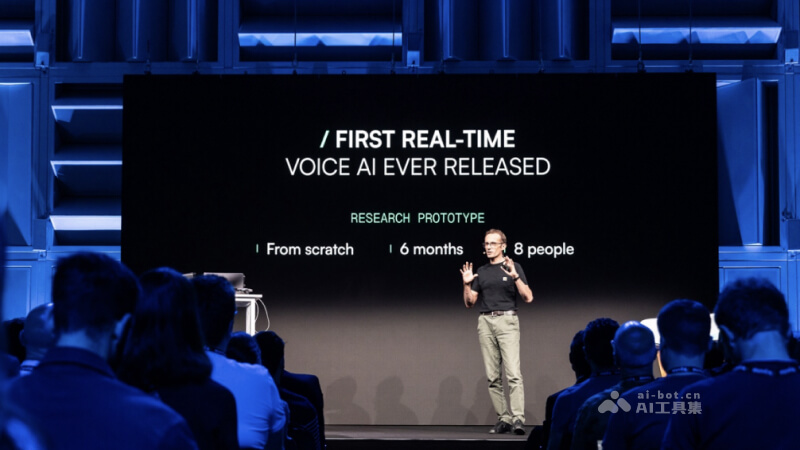
Moshi is an end-to-end real-time audio multimodal AI model launched by the French artificial intelligence research lab Kyutai. It has the ability to listen, speak, and see, and can simulate 70 different emotions and styles for communication. As an alternativeGPT-4oto the open-source model, Moshi can run on an ordinary laptop, has low-latency characteristics, supports use on local devices, and protects user privacy. Moshi's development and training process is simple and efficient, completed by an 8-person team within 6 months. The model's code, weights, and technical paper will soon be open-sourced, freely available for global users to use and further research and develop.
Moshi's Features
- Multimodal interaction: As a multimodal AI model, Moshi can not only process and generate text information, but also understand and generate speech, enabling Moshi to communicate with users more naturally and intuitively, just like talking to a real person.
- Emotion and style expression: Moshi can simulate 70 different emotions and styles for dialogue, making AI conversations more vivid and realistic. Whether expressing joy, sadness, or seriousness, Moshi can convey the corresponding emotion through changes in speech, enhancing the communication experience.
- Real-time response with low latency: Moshi's responses have low-latency characteristics, can quickly process user input, and respond with almost 0 latency. This is very helpful for application scenarios that require instant feedback, such as customer service or real-time translation.
- Speech understanding and generation: Moshi can handle listening and speaking tasks simultaneously, can generate answers while listening to the user speak, improves the efficiency and fluency of interaction, and provides a natural and seamless conversation experience.
- Mixed pretraining of text and audio: Moshi is pretrained by combining text and audio data, enabling the model to better capture semantic and contextual information when understanding and generating language, improving the model's accuracy and reliability.
- Runs on local devices: As a fully end-to-end audio model, Moshi can run on users' local devices; an ordinary laptop or consumer-grade GPU is sufficient to meet the operating requirements.
How to use Moshi
- Visit the Moshi platform: Visit Moshi's official websitehttps://moshi.chat/?queue_id=talktomoshi。
- Provide an email: After entering the website, you only need to provide an email address. Click Join queue to start using it for free.
- Check device compatibility: Make sure your device (whether a phone or computer) is equipped with a microphone and speaker, because Moshi's interaction mainly relies on voice input and output.
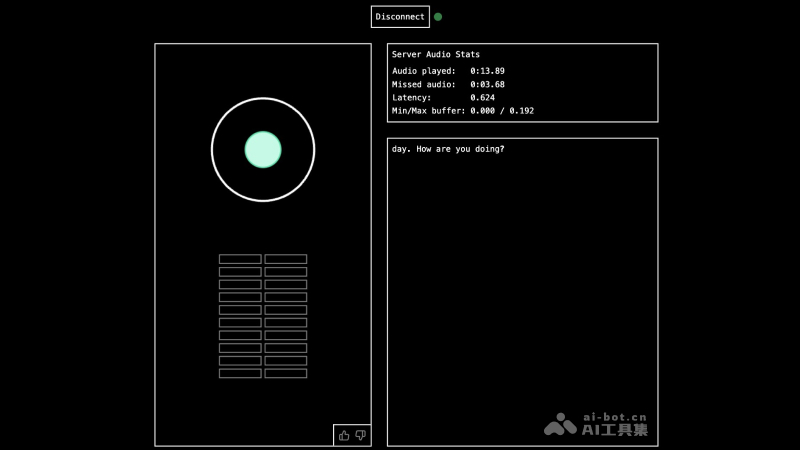
- Start voice interaction: After providing an email, you can start voice interaction with Moshi. The system will prompt you to use the microphone for voice input.
- Ask a question or give a command: Ask a question or give a command into the microphone, and Moshi will understand your question or command through speech recognition technology.
- Listen to the answer: Moshi will generate an answer based on your question, convert the text to speech through speech synthesis technology, and then play it through the device's speaker.
Currently, Moshi mainly supports English and French, and does not yet support Mandarin Chinese. In addition, the Kyutai team said that Moshi will soon be open-sourced, with the code, model weights, and paper released.
Moshi's application scenarios
- Virtual assistant: Moshi can serve as a virtual assistant for individuals or businesses, providing voice interaction services to help users complete daily tasks, such as setting reminders and searching for information.
- Customer Service: In the field of customer service, Moshi can serve as an intelligent customer service agent, communicating with customers through voice, answering inquiries, and providing immediate help.
- Language Learning: Moshi can simulate different accents and emotions, which helps language learners practice listening and speaking and improve their language skills.
- Content Creation: Moshi can generate speech in different styles and emotions, providing voiceover services for videos, podcasts, or animations.
- Assisting People with Disabilities: For people with visual or hearing impairments, Moshi can provide speech-to-text or text-to-speech services to help them better access information.
- Research and Development: Researchers can use Moshi for research in fields such as speech recognition, natural language processing, and machine learning.
- Entertainment and Gaming: In gaming and entertainment applications, Moshi can interact with users as a character, providing a richer user experience.