
What is KAEDIM
KAEDIM is an AI-driven3D asset generation platform, focused on providing fast, high-quality 3D model generation services for game developers and other creators. By uploading images or descriptions, KAEDIM's machine learning algorithms work with an in-house 3D team to quickly generate production-grade 3D assets. It aims to simplify the 3D content creation process, accelerate game development, and support diverse needs from indie studios to AAA studios. KAEDIM's vision is to accelerate the transition from 2D to 3D and drive the application of 3D technology in multiple fields such as gaming, e-commerce, and architectural design.
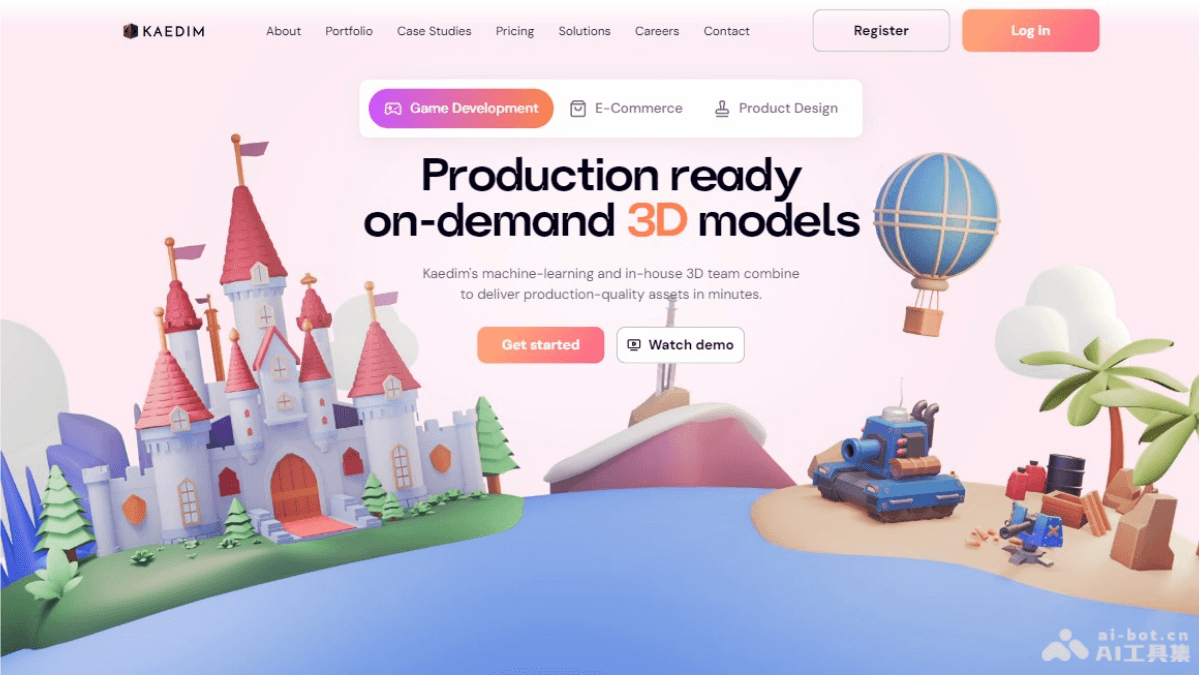
KAEDIM's main features
- AI model generation: Users can upload images or provide text descriptions, and KAEDIM's AI will create 3D models based on these inputs.
- Production quality assurance: KAEDIM combines machine learning algorithms and a professional 3D team to ensure that the generated models meet production standards.
- Fast delivery: Compared with traditional 3D modeling, KAEDIM significantly shortens model generation time and achieves fast delivery.
- Scalability: The platform supports on-demand art production, allowing teams to flexibly scale 3D asset generation according to project needs.
- Reduced management overhead: Through AI-driven outsourcing services and a production management platform, it reduces the complexity and cost of managing suppliers.
- Enhance internal teams: It provides internal teams with more than 80% starting points, reducing manual modeling time and allowing teams to focus on higher-quality game development.
KAEDIM's product official website
- Product official website:kaedim3d.com/
KAEDIM's application scenarios
- Game development: Quickly generate various 3D models needed in games, such as characters, props, environments, etc., improving the efficiency of game development.
- Film and animation production: Used to create 3D scenes, characters, and special effects in films or animations, speeding up the production process.
- Virtual reality (VR) and augmented reality (AR): Generate 3D models required for VR or AR applications, enhancing the realism of virtual experiences.
- Architecture and interior design: Assist designers in quickly building and visualizing 3D models of buildings or interior spaces.
- E-commerce: Create 3D display models of products for online retailers, improving the online display effect of products.
- Education and training: Create 3D models in educational content to help students better understand complex concepts and objects.