
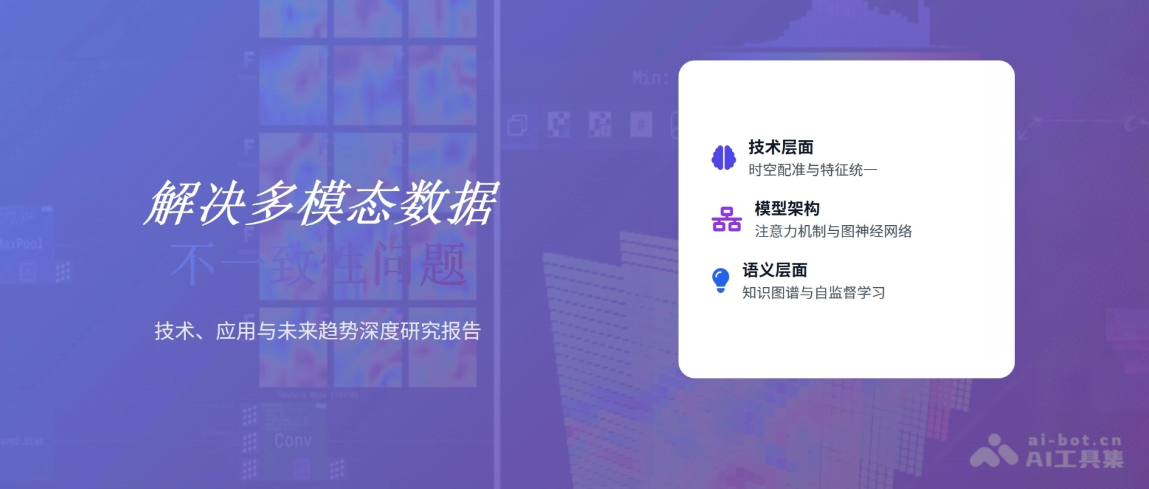
The core of solving the problem of multimodal data inconsistency lies in bridging the gaps in format, spatiotemporal characteristics, and semantics among data from different sources and modalities through technical means. This involves solutions at three major levels: at the technical level, heterogeneous data is handled through precise spatiotemporal alignment algorithms (such as coordinate transformation and dynamic time warping) and unified feature representation learning (such as contrastive learning); at the model architecture level, advanced models such as attention mechanisms (especially Transformers) and graph neural networks (GNNs) are used to dynamically capture and fuse complex cross-modal correlations; at the semantic level, with the help of knowledge graphs and self-supervised learning, external knowledge and unlabeled data are introduced to solve deep-seated problems such as conceptual conflicts, label ambiguity, and annotation scarcity. Multiple technologies work together to build an intelligent system that can process multimodal information in a unified, robust, and efficient manner.
The Root of the Challenge: Technical Gaps and Semantic Ambiguity
Inconsistency at the Data Collection and Annotation Level By integrating data from different sensors or information sources, such as text, images, audio, video, and various types of structured and unstructured data, multimodal systems can build a more comprehensive and robust understanding of the complex real world, showing enormous application potential in fields such as autonomous driving, medical diagnosis, and smart cities. Inconsistency runs through both the technical and semantic levels of data, severely constraining the performance, reliability, and generalization ability of multimodal models. Inconsistency at the technical level is mainly reflected in the inherent differences in data formats, sampling rates, spatiotemporal alignment, and feature representations. Heterogeneity makes direct data concatenation and fusion extremely difficult.
Deeper challenges originate at the semantic level. When different modalities express the same concept, problems such as semantic gaps, conceptual conflicts, and label ambiguity exist, causing models to fail to establish accurate cross-modal associations and producing "Multimodal Hallucination," that is, generating descriptions that do not match the input visual content, which may lead to catastrophic consequences in critical applications.
Inconsistency at the Technical Level
Heterogeneity of Data Formats and Sampling Rates
One of the most significant differences in multimodal data lies in the heterogeneity of data formats and sampling rates. Data from different modalities has completely different internal structures and representation forms. For example, text data is represented as variable-length sequences or word vectors, while image data exists in the form of two-dimensional or three-dimensional pixel matrices. Even more complex is the difference in sampling frequencies. In scenarios with extremely high real-time requirements such as intelligent driving, the sampling rates of different sensors differ by several orders of magnitude. For example, the scanning frequency of LiDAR is 10-20Hz, while the frame rate of cameras is usually 30-60fps.
The Complexity of Temporal and Spatial Alignment
Temporal and spatial alignment is a core challenge in multimodal data fusion. Temporal Alignment can precisely synchronize data streams from different modalities in time. For example, in video analysis, it is necessary to ensure that the correspondence between the audio stream and video frames is accurate. Spatial Alignment can register data from different modalities in a unified coordinate system. It is crucial in remote sensing image analysis and medical image fusion.
Differences in Feature Representation and Dimensions
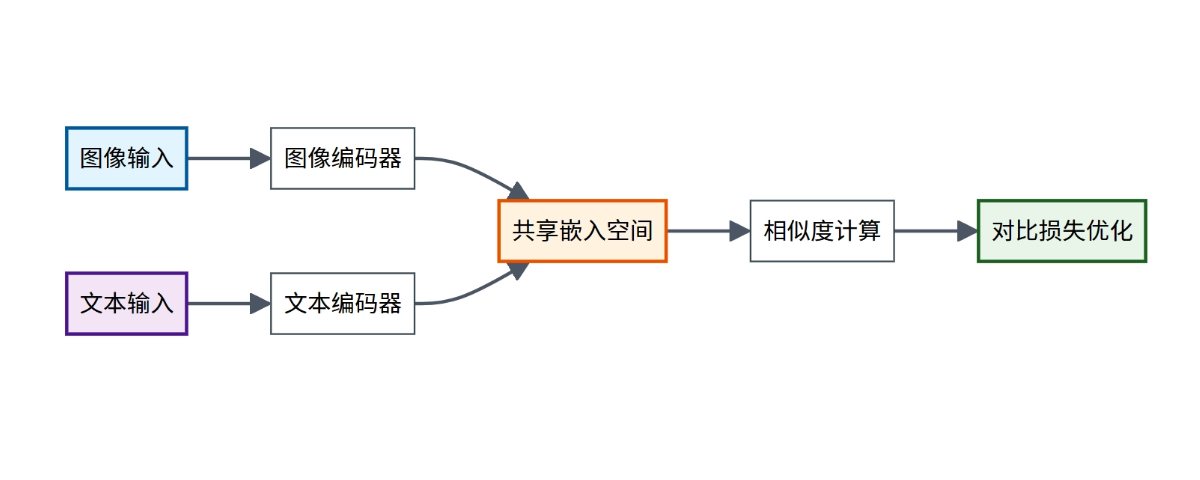
The differences in feature representations and dimensions across modalities are an important manifestation of technical-level inconsistency. The data of each modality exists in its own unique feature space, with different dimensions and physical meanings. For example, after encoding, text data can form hundreds-dimensional word embedding vectors, while the pixel matrix of a high-resolution image may contain millions of dimensions. To solve this problem, researchers map data from different modalities into a unified, shared latent space. For example, the CLIP (Contrastive Language-Image Pre-training) model successfully maps images and text into the same semantic space through large-scale image-text contrastive learning.
Semantic-level inconsistency
The semantic gap (Semantic Gap) is the greatest obstacle to achieving true "understanding" in multimodal AI systems. A model can perfectly align the timestamps of video and audio, yet fail to understand that the "smile" in the picture and the "choking up" in the sound express contradictory emotions. Deep-level semantic inconsistency will lead to degraded model performance and may trigger serious problems such as "multimodal hallucinations," greatly affecting the reliability and trustworthiness of AI systems.
Cross-modal semantic gap and concept conflict
The cross-modal semantic gap refers to fundamental differences in the symbol systems and internal logic used by different modalities when expressing the same concept, making it difficult for machines to establish direct semantic mappings. The root of conflicts and gaps lies in the different ways modalities carry information and their different levels of abstraction. Text is highly abstract and symbolic, excelling at expressing logic, concepts, and relationships; images and videos are concrete and intuitive, excelling at conveying spatial, appearance, and dynamic information. When two completely different sources of information need to be integrated, friction and inconsistency arise. For example, in an intelligent driving scenario, the camera recognizes a "plastic bag" ahead, while the point cloud data from the LiDAR shows a "small obstacle." The two are spatially aligned, but there is a difference in semantic concept: one is a specific object category, and the other is an abstract obstacle description. How to resolve the concept conflict and enable the model to understand that a "plastic bag" is a type of "lightweight obstacle" requires building more complex cross-modal knowledge associations and reasoning mechanisms.
Label ambiguity and annotation inconsistency
In multimodal supervised learning, the quality and consistency of labels directly determine the upper limit of model performance. Due to the complexity of multimodal data, obtaining high-quality, consistent labels is itself a huge challenge. Label ambiguity (Label Ambiguity) refers to the fact that the same data sample may have multiple reasonable but different labels. For example, in the annotation of control signals for autonomous driving, when faced with the same scenario, different drivers will take different reasonable actions, such as slightly decelerating or changing lanes to overtake. Both behaviors are correct, which leads to inherent ambiguity in the supervision signal. Multiple possible solutions make it difficult for the model to converge during training, and the learned policy is unstable and lacks generalization ability.
Annotation inconsistency (Annotation Inconsistency) arises more from subjectivity and differences in the manual annotation process. In multimodal data annotation, especially in fields such as medical imaging that require domain experts, different annotators make different judgments about the lesion area, type, or severity in the same image. In cross-modal annotation, ensuring that labels for different modalities such as image-text and audio-video correspond completely in semantics is extremely difficult. For example, when generating descriptive text for an image, different annotators will use different vocabulary and sentence structures, resulting in diversity and inconsistency in text labels and affecting the model's learning of image-text correspondence relationships.
Entity alignment challenges in knowledge graphs
Applying knowledge graphs to multimodal fusion faces the enormous challenge of entity alignment. Entity alignment can identify and link entities from different knowledge graphs or data sources that refer to the same real-world object. In multimodal scenarios, this means corresponding visual entities in images (such as a face), named entities in text (such as a person's name), and voiceprint features in audio to the same "person" entity in a knowledge graph. The process is extremely complex because the ways entities are described across different modalities differ greatly. For example, the "Eiffel Tower" in an image is a visual outline, "Eiffel Tower" in text is a string, and the pronunciation in audio is a series of sound wave signals. How to bridge modal differences and accurately determine whether they refer to the same entity is a core challenge in knowledge graph fusion.
Core Technical Solutions
To address the challenges of inconsistency in multimodal data at the technical and semantic levels, academia and industry have proposed innovative fusion techniques and model architectures. The core idea of the solutions lies in mapping heterogeneous, inconsistent multimodal data into a unified representation space with semantic consistency through different mechanisms, thereby achieving effective integration and complementarity of information.

Multimodal Alignment Techniques
Multimodal Alignment is the first step in addressing data inconsistency, with the goal of establishing precise correspondences between data from different modalities. Correspondences can occur at different granularities, from coarse-grained instance-level alignment (such as an image corresponding to a descriptive text) to fine-grained element-level alignment (such as a region in an image corresponding to a word in text). Alignment techniques are a prerequisite for effective fusion; if modalities are not correctly aligned, the subsequent fusion process will introduce noise and cause the model to learn incorrect associations. According to the level at which alignment occurs, multimodal alignment techniques are divided into feature-level alignment, semantic-level alignment, and temporal and spatial-level alignment.
Feature-Level Alignment
Feature-level alignment is the most fundamental and critical step in multimodal fusion, with the core goal of mapping data from different modalities with different feature representations and dimensions into a shared, low-dimensional semantic subspace. Traditionally, Canonical Correlation Analysis (CCA) is a classic statistical method for achieving feature-level alignment. To overcome the limitations of CCA, deep learning-based feature alignment methods have emerged. Contrastive Learning is a very successful strategy. Taking the CLIP model as an example, trained on a huge image-text paired dataset, it successfully maps images and text into the same semantic space.
Semantic-Level Alignment
Semantic-level alignment is a deepening of feature-level alignment. It pursues the proximity of feature vectors in mathematical space and is dedicated to establishing precise correspondences at the level of high-level concepts, entities, and relations. The core idea is to use structured knowledge, especially Knowledge Graphs (KG), to guide and constrain the cross-modal alignment process. The rise of Large Language Models (LLMs) provides new tools for semantic-level alignment. LLMs are used to automatically extract entities and relations from unstructured text, construct or enrich knowledge graphs, or directly utilize their internally embedded knowledge during reasoning to assist alignment.
Temporal and Spatial-Level Alignment
Temporal and spatial layer alignment is a key technology for dynamic multimodal data. The classic algorithm is Dynamic Time Warping (DTW). DTW is an algorithm for measuring the similarity between two time series, finding the optimal matching path between the two series by nonlinearly "warping" the time axis.
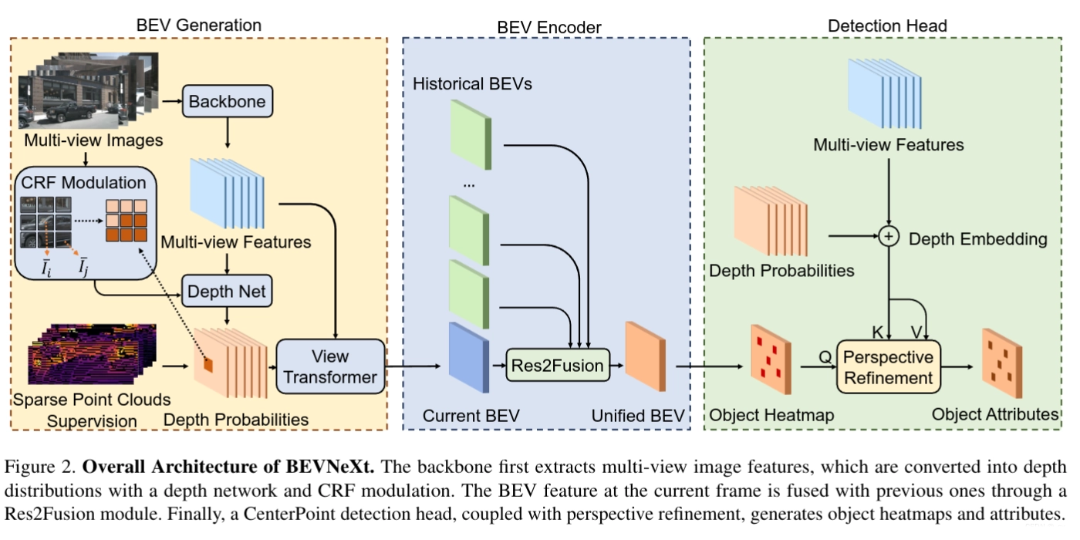
Spatial Alignment is mainly applied in the fields of computer vision and robotics. Modern registration algorithms increasingly adopt deep learning techniques, directly predicting the deformation field between images by training end-to-end neural networks. In intelligent driving, to fuse the 2D images captured by cameras with the 3D point clouds of LiDAR, the extrinsic and intrinsic parameters of the sensors are needed to project the point cloud onto the image plane. BEV (Bird’s-Eye View) perception is currently a very popular spatial alignment and fusion solution.
Attention Mechanism and Transformer Architecture
The Attention Mechanism and the Transformer architecture built upon it have become the standard paradigm in the field of natural language processing and have rapidly expanded to multiple fields such as computer vision and multimodal learning.
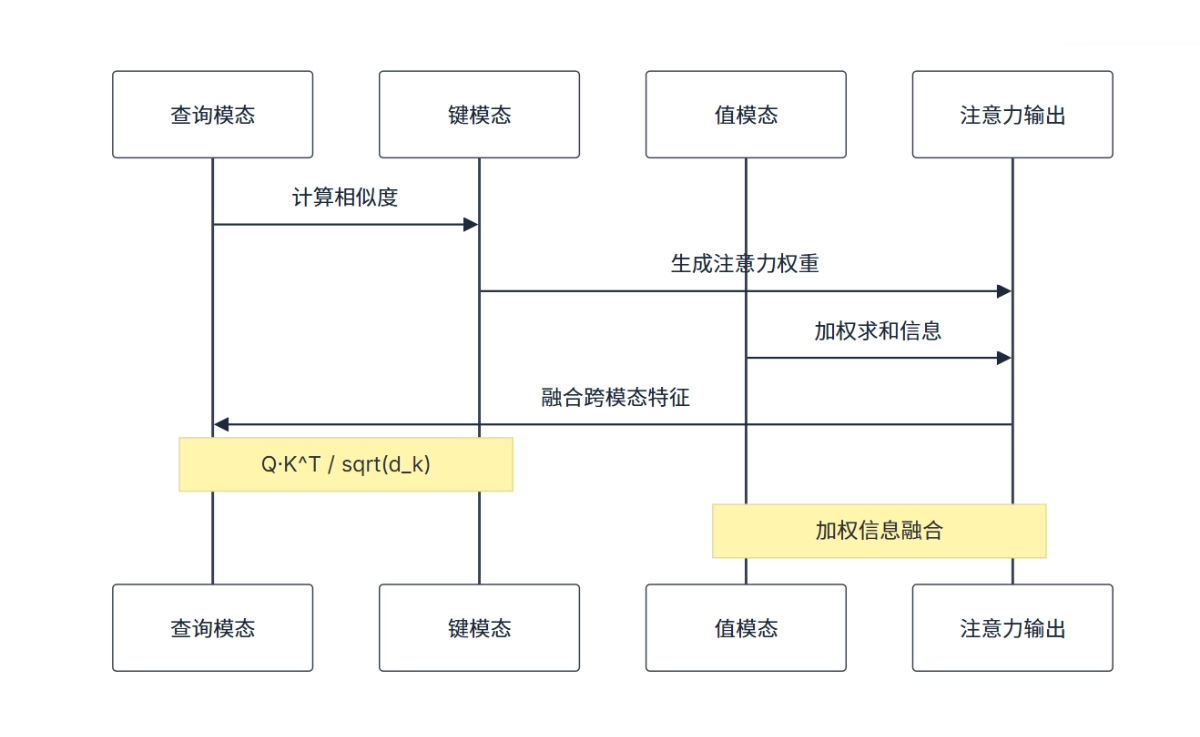
Cross-Attention
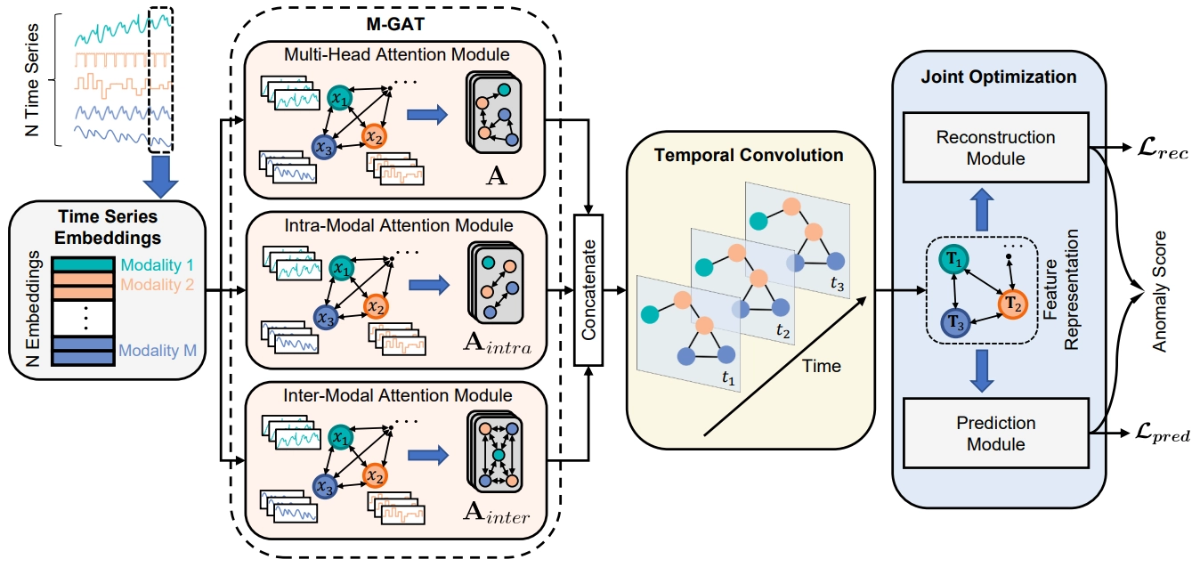
The Self-Attention mechanism is the core component of the Transformer architecture, enabling the model, when processing a sequence, to compute the dependencies between each element in the sequence and all other elements. Intra-modal self-attention is used to capture the structures and relationships within a single modality, while inter-modal cross-attention is the key to achieving cross-modal information fusion.
In the Visual Question Answering (VQA) task, the text features of the question serve as the query to search for relevant visual regions in the image features, achieving precise localization and understanding of the image content. This dynamic and variable interaction method enables the model to flexibly establish fine-grained cross-modal associations.
Architectural Advantages
The Transformer architecture provides a unified and powerful modeling framework for multimodal fusion, with its advantages mainly reflected in the following aspects.
- Unified serialized processing: Transformer treats data from different modalities as a sequence and maps them to a unified vector space through an embedding layer.
- Powerful long-range dependency modeling capability: The self-attention mechanism enables any two elements in a sequence to interact directly, effectively solving the problems of vanishing gradients and difficulty in capturing long-range dependencies faced by traditional RNN models when processing long sequences.
- Flexible architectural variants: Researchers have proposed various architectures based on Transformer suitable for multimodal tasks, such as the single-stream model, which concatenates the inputs of all modalities and feeds them into one Transformer encoder, and the dual-stream model, which designs an independent encoder for each modality.
Graph Neural Networks (GNN) and Knowledge Graphs
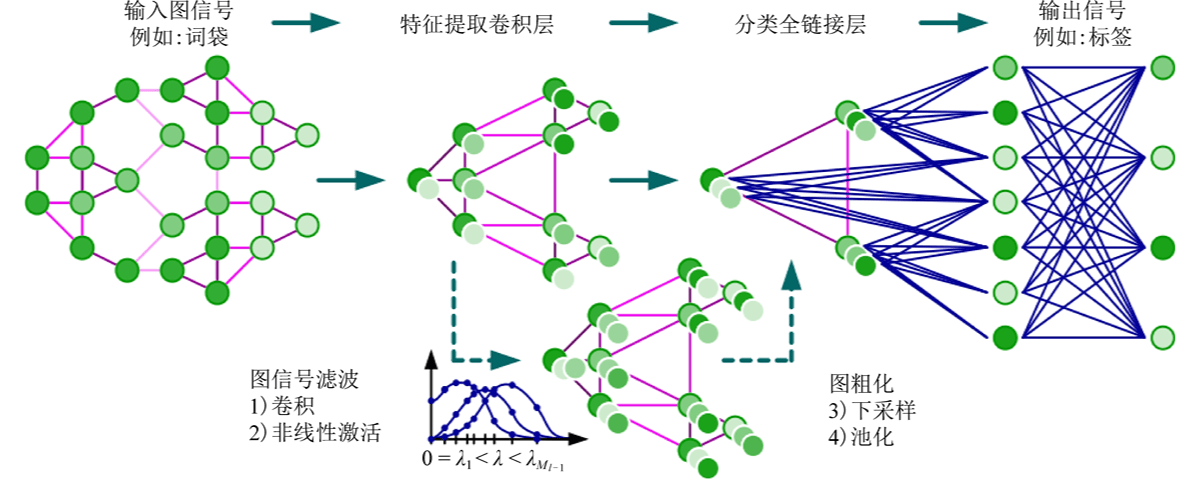
Graph Neural Networks (GNN) and Knowledge Graphs (KG) provide powerful tools for handling complex relationships in multimodal data. They represent data as graph structures, with nodes representing entities and edges representing the relationships between them.
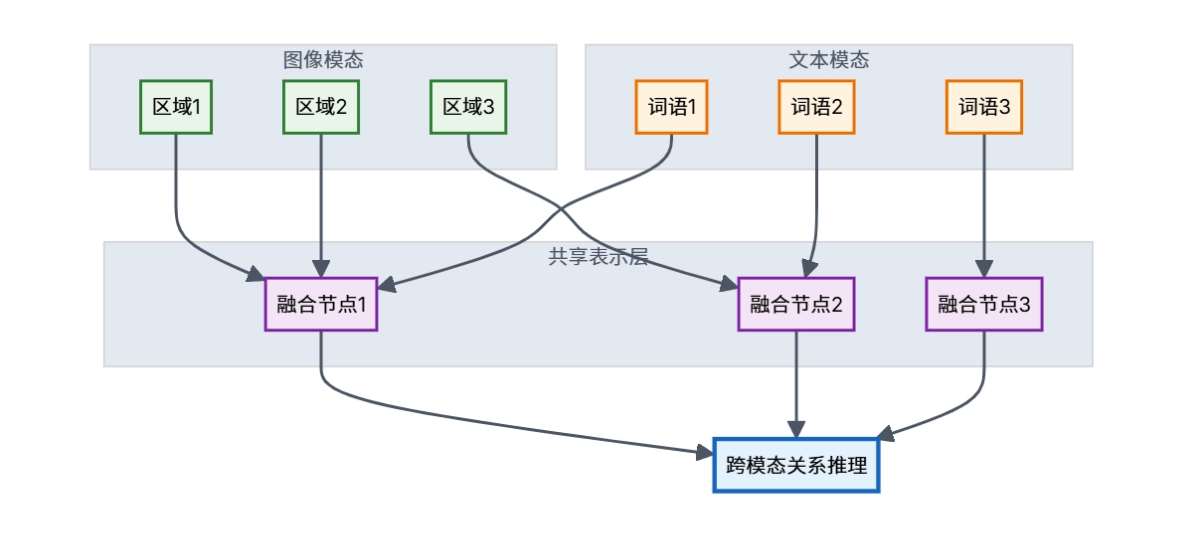
Heterogeneous Graph Modeling
In multimodal fusion, GNNs are used to construct a heterogeneous graph (Heterogeneous Graph) that contains nodes from different modalities. Through message passing (Message Passing) on the graph, GNNs enable each node to aggregate information from neighboring nodes and update its own feature representation. The process supports information propagation and interaction between nodes of different modalities, learning the relationships between modalities. In autonomous driving, a dynamic graph containing entities such as vehicles, pedestrians, and traffic signs can be constructed, and GNNs can be used to predict interactions between entities and future motion trajectories.
Knowledge Empowerment
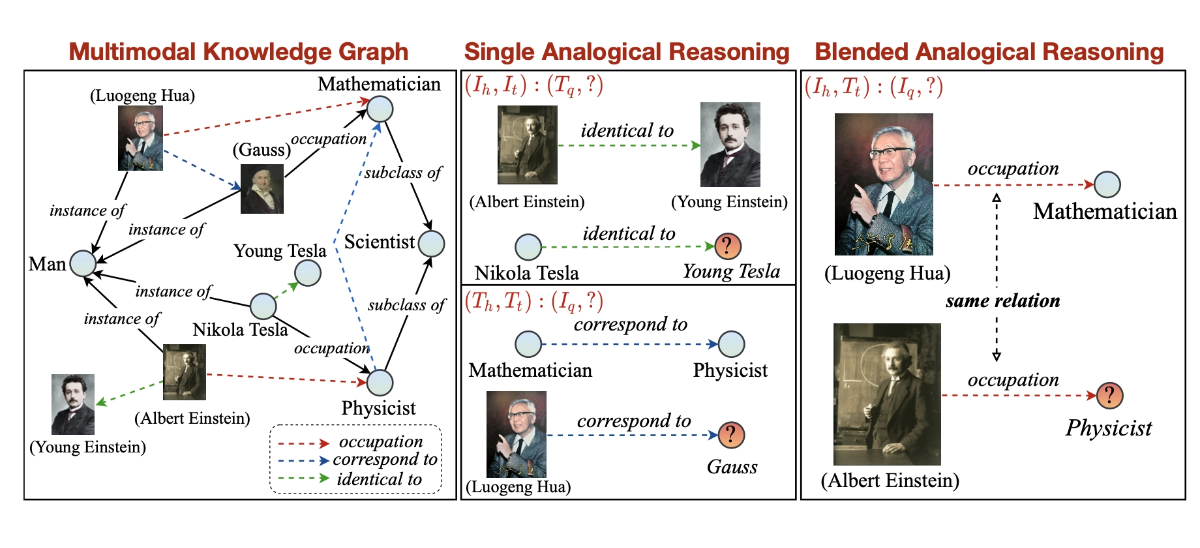
A knowledge graph (KG) itself is a large-scale graph structure that provides rich prior knowledge and structural constraints for multimodal semantic fusion. In a multimodal knowledge graph, nodes contain entities from different modalities and attribute information of the entities. By combining multimodal data with knowledge graphs, AI systems can perform more complex reasoning. For example, in medical diagnosis, the system associates a patient's imaging data and medical record text with a medical knowledge graph, and through path queries and reasoning on the graph, assists doctors in discovering potential disease associations or treatment plans.
Self-Supervised and Generative Learning
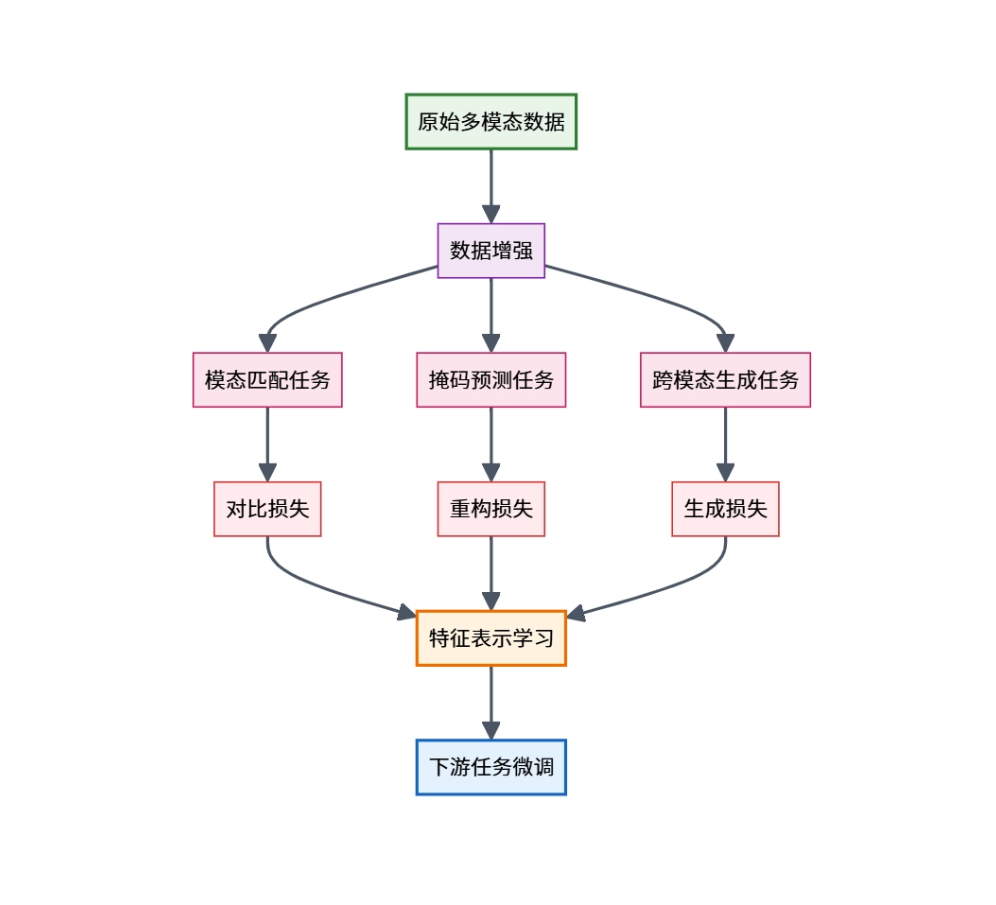
Against the realistic backdrop of high data annotation costs and difficulty in obtaining annotations, self-supervised learning (Self-Supervised Learning) and generative learning (Generative Learning) provide new paradigms for multimodal fusion, enabling the learning of effective representations from unlabeled or sparsely labeled data.
Self-Supervised Learning
The core idea of self-supervised learning is to design ingenious "pretext tasks" (Pretext Task), allowing the model to learn the intrinsic structure and patterns in the data by solving the tasks. In the multimodal field, common self-supervised strategies include contrastive learning (Contrastive Learning) and masked language/image modeling (Masked Language/Image Modeling).
Generative Adversarial Networks (GAN)
Generative learning, especially models represented by generative adversarial networks (Generative Adversarial Networks, GAN), plays an important role in multimodal fusion. A GAN consists of a generator (Generator) and a discriminator (Discriminator), which improve each other through adversarial training. In cross-modal image generation tasks, such as converting MRI images to CT images, GANs play an important role. The SynMSE method from the Shenzhen Institute of Advanced Technology, Chinese Academy of Sciences, uses a Structure-Constrained CycleGAN generator to simulate grayscale differences between modalities and maintain anatomical topological consistency.
Industry Best Practice Application Scenarios
Solutions to the problem of multimodal data inconsistency should not remain at the theoretical level; they have been deeply practiced and validated in leading enterprises and top research institutions across multiple industries. Cutting-edge solutions push the boundaries of technology and are gradually being implemented, transforming into applications with enormous commercial value and social benefits.
Intelligent Driving: BEV+Transformer Perception Fusion Solution
In the field of intelligent driving, the BEV (Bird's-Eye View) + Transformer perception fusion solution has become the industry mainstream and is regarded as a key technical path for solving multi-sensor data inconsistency and achieving high-precision environmental perception.
Practical Cases of Automakers Such as Tesla and XPeng
Tesla is a firm advocate and pioneer of the pure vision BEV approach. Its FSD (Full Self-Driving) system relies entirely on image data collected by 8 cameras, using complex neural network models to convert 2D image information into a 3D BEV spatial representation. In Tesla's approach, the key module is the multi-camera fusion network, which uses a Transformer-like attention mechanism to allow features from different camera viewpoints to "converse" with one another.
Domestic emerging automakers such as XPeng have adopted a more aggressive multi-sensor fusion BEV approach. In addition to cameras, they also feed LiDAR point cloud data directly into the BEV network. Through the Transformer architecture, the model can simultaneously process the semantic information of images and the geometric information of point clouds, achieving deeper fusion.
How BEV+Transformer Solves the Data Inconsistency Problem
The BEV+Transformer approach can effectively solve the problem of multimodal data inconsistency, mainly in the following aspects:
- Unified Spatial Representation: BEV space provides a unified, standardized coordinate system that transforms data from different sensors and different viewpoints onto the same plane. It fundamentally resolves the complexity of spatial alignment, making subsequent fusion and decision-making more intuitive and efficient.
- Powerful Cross-Modal Association Capability: The cross-attention mechanism in the Transformer architecture can dynamically establish associations between features of different modalities. For example, based on the semantic information in an image (such as "this is a car"), the model queries and reinforces the geometric information of the corresponding region in the LiDAR point cloud (such as "the shape and size of this object"), achieving fine-grained feature fusion.
- End-to-End Optimization: The entire BEV+Transformer network can be trained end-to-end, meaning that from the raw sensor data input to the final BEV perception output, the entire process is globally optimized for the final perception task (such as 3D object detection and semantic segmentation). This enables the model to automatically learn the optimal fusion strategy.
Medical Imaging: Semantic Alignment in the MultiXpert System
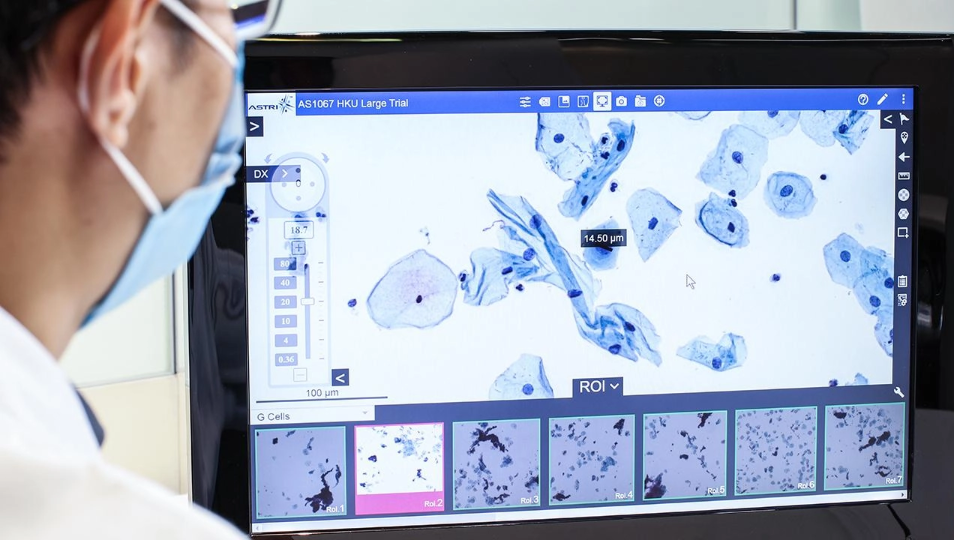
In the field of medical imaging analysis, the inconsistency of multimodal data, especially the inconsistency of lesion annotations, is a key bottleneck constraining the development of AI-assisted diagnostic systems. A research team from the Chinese Academy of Sciences has developed the MultiXpert system, which has made important breakthroughs in solving the semantic alignment problem of multimodal imaging.
Innovations of the Chinese Academy of Sciences MultiXpert System
The core innovation of the MultiXpert system lies in its Lesion-Aware Masking mechanism and cross-modal semantic alignment capability. Traditional medical imaging AI models usually require large amounts of precisely annotated data for supervised learning, but as mentioned earlier, obtaining consistent annotations is very difficult. The MultiXpert system takes a different approach, using self-supervised learning to let the model autonomously learn feature representations of lesions from unannotated multimodal imaging data.
Application of Lesion-Aware Masking and Cross-Modal Semantic Alignment
The Lesion-Aware Masking mechanism is key to the MultiXpert system. It can automatically identify potential lesion regions in images and randomly mask them, letting the model predict the masked lesion regions based on the remaining healthy tissue information. By completing the "fill-in-the-blank" task, the model is forced to learn the contextual relationship between lesions and healthy tissue, improving its sensitivity and expressive capability for lesion features without explicit annotations.
The MultiXpert system can further achieve cross-modal semantic alignment. It maps image features from different modalities (such as CT and MRI) into a shared semantic space. In this space, images from different modalities may differ greatly in appearance (for example, a hypodense lesion on CT and a hyperintense lesion on MRI), but as long as they point to the same pathological concept (such as "liver cyst"), their feature representations will be close to each other. Alignment at the semantic level greatly improves the model's performance and robustness on multimodal image analysis tasks, providing new ideas for developing smarter and more reliable AI-assisted diagnostic tools.
Enterprise-Level Knowledge Graphs: Breaking Down Data Silos
In enterprise-level applications, data usually exists in heterogeneous and scattered forms across different business systems and departments, forming serious "data silos." Multimodal Knowledge Graph (MKG) technology is regarded as an effective way to break down these data silos and achieve enterprise-level data fusion and intelligent decision-making.
Application Cases of Multimodal Knowledge Graphs in Enterprises
Many large enterprises, especially giants in finance, retail, and manufacturing, have already begun to build their own multimodal knowledge graphs. For example, a large bank builds a knowledge graph containing entities such as customers, accounts, transactions, products, and risk events. In the graph, structured transaction data is included, and through entity alignment technology, unstructured and multimodal data such as voice recordings from customer service calls, user comments on social media, and ID card photos are integrated.
Deep Mining of Cross-Modal Associations and Intelligent Decision-Making
The value of multimodal knowledge graphs lies in integrating data and deeply mining cross-modal associations to support more advanced intelligent decision-making. In the retail industry, by associating product sales data (structured), user purchase reviews (text), and product images (visual) in a knowledge graph, enterprises can discover hidden insights. In the manufacturing industry, by fusing equipment sensor data, maintenance manuals (text), and fault videos (visual) to build an intelligent operations and maintenance knowledge graph, engineers can be helped to quickly locate the causes of faults and recommend optimal maintenance plans, greatly improving production efficiency and equipment utilization.
Future Development Trends and Research Challenges
Technology Trends
Future multimodal large models will develop in the following directions:
- Stronger Unification: Researchers are working to build a "grand unified" model that can handle any number and any type of modalities. This means the model is no longer limited to a fixed set of modalities, but can flexibly adapt to new modal inputs, achieving true general multimodal intelligence.
- Larger Scale and Higher Efficiency: With the growth of data and computing power, the scale of multimodal models will continue to expand, learning richer world knowledge. At the same time, how to improve the training and inference efficiency of large models and reduce their application costs is an important research topic.
- Integration with Embodied Intelligence: Combining multimodal large models with physical entities such as robots so that they can interact and learn in the real world through multimodal perception is an important path to achieving artificial general intelligence (AGI).
Research Challenges
As multimodal AI systems are increasingly widely used in critical fields, explainability, security, and data privacy issues have become increasingly important and have become challenges that future research must face.
- Challenges of Explainability and Security: Currently, many advanced multimodal models, especially those based on deep learning, have internal decision-making processes that resemble a "black box" and are difficult to explain. This is unacceptable in high-risk fields such as healthcare, finance, and justice. How to design inherently interpretable models or develop effective post-hoc explanation methods is an important direction for future research. Multimodal models face the risk of malicious attacks. Attackers construct specific "adversarial examples" by adding tiny perturbations to images or text that are imperceptible to the human eye, causing the model to make completely wrong judgments. How to improve model robustness and resist attacks is a prerequisite for ensuring safe applications.
- Data privacy protection: The fusion of multimodal data requires aggregating massive data from different institutions and different users, inevitably bringing the risk of data privacy leakage. In the healthcare field, centrally training patient data from multiple hospitals can improve model performance, but it violates privacy regulations. Federated Learning, as an emerging distributed machine learning paradigm, offers a possible solution to this challenge. In federated learning, data remains local, model training is performed locally, and only model parameters (not raw data) are uploaded to a central server for aggregation. This enables collaborative modeling among multiple parties without sharing raw data and effectively protects data privacy. Applying federated learning to multimodal fusion will be one of the key technologies for realizing safe, compliant, and efficient multimodal AI applications in the future.
Conclusion and Outlook
Solving the problem of multimodal data inconsistency requires building a layered and progressive technical system: at the technical level, resolving the physical heterogeneity of data through spatiotemporal alignment and representation learning; at the model level, using attention mechanisms and graph neural networks to achieve deep cross-modal fusion; at the semantic level, using knowledge graphs and self-supervised learning to resolve conceptual conflicts and label ambiguity. The three levels are closely interconnected, jointly building an intelligent system capable of uniformly processing multimodal information and providing a reliable technical foundation for key fields such as autonomous driving and medical diagnosis.
Multimodal AI will develop toward a more unified, more intelligent, and safer direction. Technologically, it will realize a paradigm revolution of "arbitrary modality input, unified architecture processing," deeply integrating causal reasoning and neuro-symbolic AI. The boundaries of application will expand to frontier fields such as the metaverse and brain-computer interfaces, while safety, ethics, and governance will become focal points—model interpretability and data privacy protection urgently need breakthroughs, and corresponding technical standards and ethical frameworks need to be jointly built by global society. This path is a technical challenge, and even more so an essential journey toward the next generation of artificial intelligence.