
What is HubSpot
HubSpot is an integrated customer relationship management (CRM) platform that helps businesses attract, serve, and retain customers by providing software tools for marketing, sales, service, and content management. The platform is based on AI technology, simplifies customer data management, optimizes sales and service processes, and improves efficiency through automation. HubSpot offers a free basic version and a variety of paid versions to meet the needs of businesses of different sizes. HubSpot's solutions are designed to provide a unified customer view, enabling teams to collaborate effectively throughout the entire customer journey.
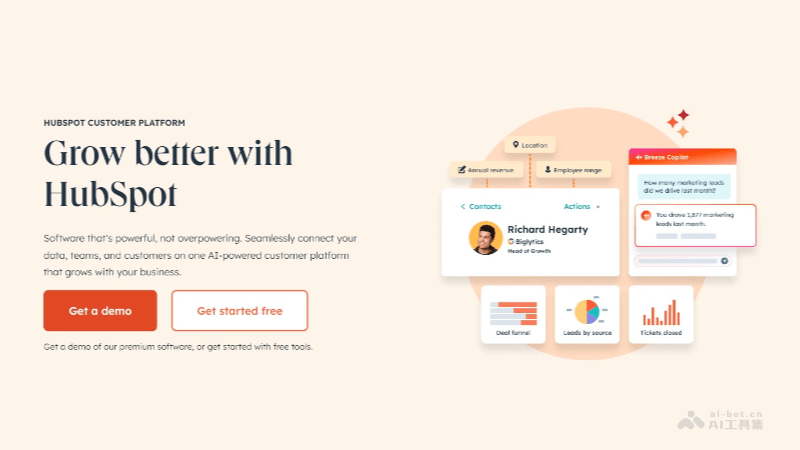
HubSpot's main features
- CRM system: Provides customer relationship management tools, including management of contacts, companies, and deals, as well as tracking of sales funnels and pipelines.
- Marketing automation: Allows users to create and optimize email marketing campaigns, manage social media posts, and automate marketing processes.
- Lead capture: Generates and tracks leads through forms, landing pages, and call tracking tools.
- Customer service: Provides omnichannel support, including chat, tickets, and customer feedback management.
- Content management: Includes blogs, SEO tools, and content optimization suggestions to help users create and publish high-quality content.
- Sales tools: Includes sales tracking, predictive analytics, and deal management, as well as personalized sales email templates.
HubSpot's product official website
- Product official website:hubspot.com
HubSpot's application scenarios
- Marketing managers and teams: Responsible for developing and executing marketing strategies, managing marketing campaigns, analyzing performance, and optimizing strategies.
- Salespeople: Need to manage leads, track sales opportunities, and improve conversion rates.
- Customer service representatives: Provide customer support, track service cases, and customer interactions.
- Content creators: Responsible for writing blogs, articles, and other marketing content, and using the platform to publish and manage content.
- SEO specialists: Focus on optimizing websites and content to improve search engine rankings.
- Social media managers: Manage the brand's presence on social media and use tools to plan, publish, and analyze social media campaigns.