
Today, in 2025,AI digital humansare no longer a sci-fi concept but diverse presences deeply integrated into our daily lives—from 24/7 online customer service, to dazzling virtual idols, to personalized educational companions. Current technological achievements are merely the prologue to this grand evolution. This article explores in depth the future evolution paths of AI digital humans, analyzing the technological changes that are occurring and about to occur across three core dimensions: the "brain" (cognitive intelligence), the "body" (expressive capability), and the "form of existence" (interaction paradigm). It reveals that the evolution of AI digital humans will be a journey from simulations that "combine form and spirit" toward a new era of "virtual-real symbiosis" deeply integrated with human society and co-creating value.
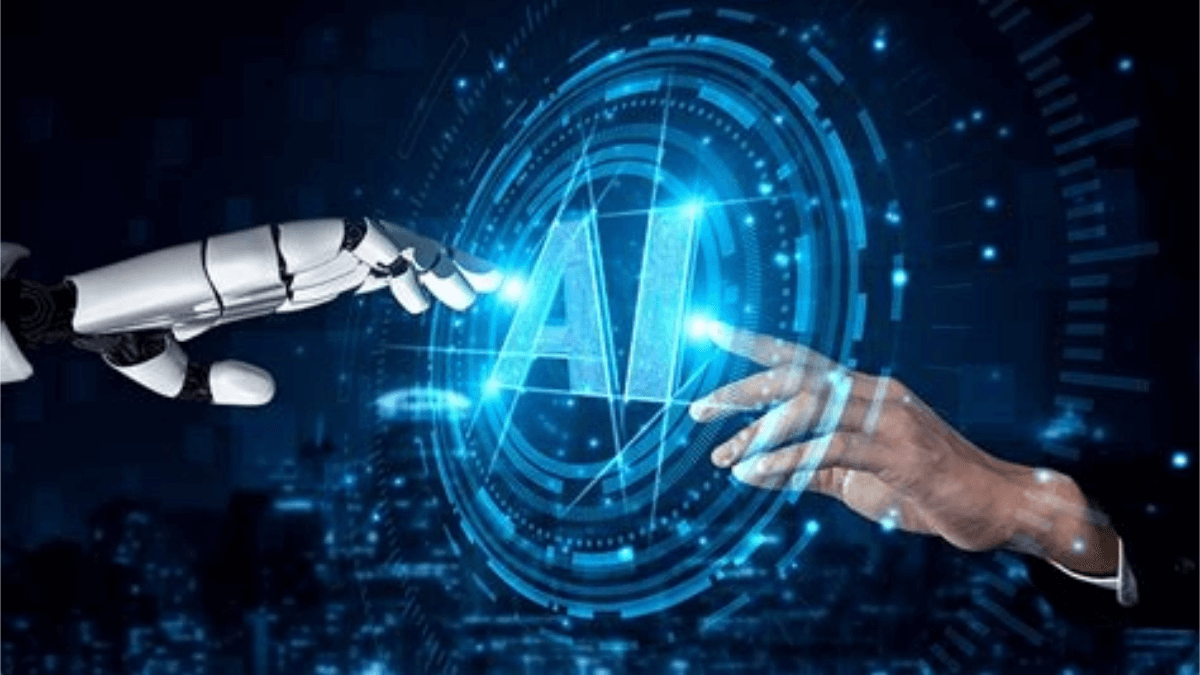
Current State: The 2025 AI Digital Human Technology Landscape
To understand future evolution, one must first examine its solid present. Current AI digital human technology has already built a technology iron triangle composed of "high-fidelity appearance," a "multimodal interaction brain," and an "efficient production pipeline."
The Ultimate Pursuit of Appearance: Cinematic Real-Time Rendering: Today's leading digital humans are generally built using high-performance rendering engines (such as Unreal Engine 5 and Unity 3D), achieving fine simulation of skin textures, hair lighting and shadows, and even micro-expressions, pursuing photorealistic realism and low-latency real-time interaction. This has enabled digital humans to reach a visually "indistinguishable from real" level.
The Core Driver of Interaction: Multimodal AI and Large Language Models: The "soul" of a digital human comes from the powerful AI brain behind it. By integratingautomatic speech recognition (ASR)、natural language processing (NLP), and text-to-speech (TTS) technology, digital humans can converse fluently with users. Furthermore, improvements in multimodal interaction capabilities allow them to understand and respond to users' expressions, gestures, and vocal tones, enabling more natural communication. In particular, the deep integration of large language models (LLMs) gives digital humans the ability to understand context, reason with knowledge, and even plan tasks, so conversations are no longer limited to scripted question-and-answer exchanges.
The Industrial Revolution in Production: AIGC Reduces Costs and Increases Efficiency: Traditional digital human production is costly and time-consuming. However, with AIGC (AI-generated content) technology, especially the maturation of diffusion models in recent years, the cost and efficiency of digital human generation have improved dramatically. AI can now assist with or even fully automate complex work such as 3D modeling and facial rigging, greatly lowering the barrier to digital human applications.
Current Challenges:
Current digital humans still face challenges such as semantic consistency of expressions, deep emotional expression, and achieving high-performance real-time interaction on mobile devices. These challenges are precisely the starting point for their next stage of evolution.
Near-Future Evolution: Leaps Driven by Three Major Technology Engines
The evolution of AI digital humans is not linear development along a single dimension, but a systemic leap driven jointly by multiple cutting-edge technology directions. We predict that within the next 2-3 years, the following three directions will become the core engines driving their evolution.
Evolution of the Brain: Toward General Intelligence and Deep Personalization
The core value of digital humans lies in their intelligence. Future evolution will make their "brains" smarter, more understanding of you, and more capable.
- From Multimodal to Cross-Modal:Unified perception and generation. Current "multimodality" mainly refers to understanding multiple input signals. The future direction of evolution is"cross-modal" generation, that is, digital humans can not only understand images, text, and audio, but also freely generate content in one modality based on information from another modality. For example, it can listen to your verbal description and generate a corresponding image in real time, or, based on the melody of a piece of music, improvise and perform a dance movement that matches the emotion. Behind this relies onself-supervised multimodal learningbreakthroughs, allowing models to autonomously learn the deep associations between different modalities from massive amounts of unlabeled data, escaping dependence on expensive manually annotated data.
- Long-term memory and personalized learning:From "general assistant" to "exclusive partner". Most current digital humans lack true long-term memory, and every conversation feels like meeting for the first time. The key breakthrough in the future lies in giving themlong-term memory and continuous learning capabilities . Imagine a digital human being able to remember the content of your conversations over the past few weeks or even months, your preferences, and your important anniversaries, and based on this information provide highly personalized suggestions and interactions. This requires solving the long-standing "catastrophic forgetting" problem in the AI field, by building a memory mechanism similar to the human brain, allowing digital humans to learn new knowledge while not forgetting old interaction history.
- Zero-shot/few-shot adaptation:Instantly learning new skills. Future digital humans will possess powerfulzero-shot or few-shot adaptation capabilities . This means that you do not need to write complex programs for it; you only need to issue a completely new instruction in natural language or show it a few examples, and it can quickly understand and master a new skill. For example, you can tell it: "Now you are a legal consulting advisor, please help me interpret this contract." It can immediately call upon the relevant knowledge base and analyze it in a professional tone. The realization of this capability will exponentially expand the application scenarios of digital humans.
The evolution of the body: infinitely realistic and instantly generated
A smarter "brain" needs a more expressive "body" to carry it. AIGC technology, especially diffusion models, is reshaping the "physical form" of digital humans.
- Diffusion model-driven hyper-realistic animation: As we witnessed in 2024-2025, diffusion models are completely changing the way facial and body animation is generated. Traditional animation relies on complex "skeletal rigging" and manual adjustments by animators, while diffusion models can directly "conjure" extremely delicate, natural, and highly emotion-consistent micro-expressions and body language from speech or text. This means that in the future, generating an animation of a digital human being happy, sad, or pensive may be as simple as inputting a sentence, and its detailed expression (such as the movement of the orbicularis oculi muscle and the rise and fall of breathing) will far exceed traditional methods.
- Real-time AIGC generation of full-body dynamics: Evolution will extend from the face to the whole body. The future technology roadmap clearly points to real-time generation of full-body movements based on multimodal information (such as text, audio, and music). Digital humans will be able to match natural body postures and gestures in real time according to the content of the conversation, and even improvise a powerful dance when hearing a rock song. This will make their expressiveness no longer limited to a "talking head," but rather a complete, dynamic, and highly expressive "performer."
The evolution of deployment: ubiquitous lightweight presence
No matter how powerful a digital human is, if it cannot conveniently appear in front of users, its value will be greatly reduced. Therefore, the evolution of deployment methods is equally crucial.
- Real-time Rendering Optimization and Edge Computing: Running a cinematic-quality digital human on devices with limited computing power, such as ordinary phones or AR glasses, is a huge challenge. The future solution is"cloud rendering + edge computing/inference"collaborative architecture. Complex graphics rendering and AI large-model inference are completed in the cloud, and then the results are streamed to the user's device (edge side) with extremely low latency. Through lightweight 3D engines, model quantization, and advanced compressed streaming technologies, users can experience smooth, high-definition, real-time digital human interaction even if they are using ordinary devices. Continuous optimization of performance indicators, such as keeping end-to-end latency within 100 milliseconds, will be key to widespread adoption.
- Technical Challenges and Solutions
- Computing power limitations:Ordinary devices struggle to handle high-precision rendering and complex AI models
- Network latency:Latency needs to be controlled within 100ms to ensure a real-time experience
- Energy consumption issues:High-performance rendering consumes a lot of battery, and algorithm efficiency needs to be optimized
- Storage requirements:High-resolution models require a large amount of storage space
Far-Future Evolution: Reshaping the Ultimate Form of Human-Computer Interaction
If the evolution of the near future is the deepening and integration of existing technologies, then the evolution of the far future will be a disruptive paradigm shift. AI digital humans will serve as the core interaction interface and deeply integrate with next-generation computing platforms.
- "Presence" interaction in the era of spatial computing: AR/VR and holographic projection,With the widespread adoption of AR/VR glasses and spatial computing devices, digital humans will break free from the constraints of two-dimensional screens and appear in our physical world in three-dimensional form. Imagine a virtual history teacher standing in your study in the form of a holographic image, explaining the architecture of ancient Rome to you; or, in AR glasses, a digital guide accompanying you through a museum at life size. This sense of "presence" will completely transform the experience of education, entertainment, social interaction, and work.
- The ultimate interaction of thought synchronization: the integration of brain-computer interfaces (BCI), is the boldest and also the most profound direction of evolution. Brain-computer interface technology aims to establish a direct communication channel between the brain and the computer. When AI digital humans are combined with BCI technology, human-computer interaction will transcend the limitations of language and movement and enter the level of "thought synchronization." Preliminary research has already demonstrated that by decoding brain signals, the facial expressions of a virtual avatar can be directly driven, helping patients with aphasia communicate. In a more distant future, you may only need to conceive a question in your mind, and the digital human connected to it will understand it immediately and provide an answer; it will be able to perceive your emotional fluctuations and proactively provide emotional support or adjust interaction strategies. This will be the ultimate form of human-computer collaboration.
Social evolution: co-construction of ethics, regulations, and trust
The evolution of technology is inevitably accompanied by social adaptation and challenges. A responsible path of evolution must place ethics and governance at its core.
- From defense to co-governance: addressing the challenge of deepfakes.The widespread adoption of AI digital human technology also brings the risk of identity theft and the spread of false information. Future evolution must include a robust "immune system." This includes not only more advanced deepfake detection technology, but alsodigital watermarking and content provenanceand other proactive defense mechanisms. More importantly, a governance framework involving government, enterprises, and the public must be established, platform responsibilities clarified, and generated content clearly labeled as "AI-generated".
- Building Legal and Ethical Frameworks: Clarifying Identity, Privacy, and Responsibility. As digital humans become increasingly autonomous, a series of legal and ethical issues urgently need to be resolved: Who bears responsibility for the statements made by digital humans? How should the user data they collect during interactions be protected? How should the ownership rights of digital twins be defined? Global regulations such as the European Union's Artificial Intelligence Act are paving the way for this. In the future, we will see more detailed industry standards and legal provisions introduced, providing clear boundaries and codes of conduct for the healthy development of digital humans.
- Key Legal Issues
- Liability Attribution:Determination of liability when digital humans cause harm
- Data Protection:Safeguarding the privacy of user interaction data
- Identity Rights:Defining the legal status of digital twins
- Content Regulation:Authenticity and transparency of AI-generated content
The Long March Toward "Digital Life"
The evolutionary path of AI digital humans is a long march from tools to companions, and then to symbiotic extension with human intelligence.
- Near Term (1-3 Years), we will witness digital humans driven by multimodal large models and AIGC technology achieving a dual leap in intelligence and expressiveness; they will become more widespread, more practical, and more capable of emotional connection.
- Mid Term (3-5 Years), with deep integration with spatial computing technologies such as AR/VR, digital humans will become the core interaction载体 for entering the metaverse and the digital world, providing unprecedented immersive experiences.
- Long Term (5-10+ Years), combined with cutting-edge technologies such as brain-computer interfaces, may give rise to entirely new interaction paradigms, making digital humans a direct extension of human cognitive abilities.
This evolution is not only an iteration of technology, but also a profound reflection on the definitions of "communication", "companionship", and even "existence" itself. Ultimately, whether AI digital humans can become a trustworthy and beneficial part of human society depends not only on the sophistication of code and the power of algorithms, but also on the humanistic care, ethical principles, and profound wisdom we instill in them. The endpoint of this evolutionary path may not be the creation of a perfect "imitation", but rather the opening of a new era of harmonious coexistence and co-creation between humans and AI.
Excellent Application Scenarios for AI Digital Humans
📰Media and Entertainment
- News Broadcasting: such as the digital anchors of National Business Daily, N小黑 and N小白, which can deliver global financial news 24/7 without interruption.
- Virtual Idols: including virtual singers such as Hatsune Miku and Luo Tianyi, as well as virtual idol groups A-soul, which have accumulated a large fan base by holding concerts, participating in livestreams, and commercial endorsements. The virtual idol launched by Ranmai Technology, AYAYI , has also joined Alibaba as a "digital employee" and conducted new product promotions with brands in multiple fields such as beauty and jewelry.
🏦Finance and E-commerce
- Digital Employees:
- The digital employee in Vanke Group's finance department, 崔筱盼, responsible for collecting prepaid accounts receivable overdue documents, with a write-off rate reaching 91.44%.
- China Merchants Group and Sequoia Capital also respectively launched digital human employees Zhao Xiaoying and Hong, providing services in various business scenarios.
- E-commerce Livestreaming:
- Xiaoice Company created a virtual streamer for Florasis, Jiaren, capable of 24/7 uninterrupted digital human livestreaming.
- China Telecom's digital human technology in e-commerce livestreaming scenarios improves the consumer experience through virtual-real integrated livestreaming and virtual human co-hosts.

🎓Education Sector
- Virtual Teachers and Teaching Assistants: Some educational institutions have designed highly approachablevirtual teachersto provide personalized teaching services. China Telecom also launcheddual-teacher classroomsandholographic classrooms, using digital humans to achieve a 1:1 replica of the teacher's image and deliver lessons at other teaching locations.
- Intelligent Teaching Assistants: Digital humans can serve as virtual teaching assistants, taking on tasks such as grading homework and providing personalized tutoring.
🏛️Government, Enterprise and Cultural Tourism Services
- Intelligent Customer Service and Exhibition Hall Narration: China Telecom uses digital human technology for automated narration in exhibition halls, for example introducing the operating status of internal networks, server rooms and cloud platforms. CS&S Intelligent's "Xiaolan" provides intelligent services through technologies such as intelligent voice and facial recognition.
- Virtual Tour Guides: In cultural tourism scenarios such as museums and scenic historic sites, digital humans can serve as virtual tour guides, introducing attractions and explaining history to visitors. China Telecom's digital human technology is also applied in such scenarios to interact with audiences.
👥Virtual Companionship and Self-Media
- Virtual Companions: Digital humans can serve as virtual companions, providing users with emotional companionship and psychological counseling services, such as companion robots for the elderly and mental health counseling robots.
- Self-Media and Short Videos: Many self-media creators use digital humans to record short videos and conduct livestreams. Some tools also support a "mass production" function, where uploading multiple scripts at once can generate videos on multiple themes, improving content creation efficiency.
💡Technology Platforms and Multi-Industry Coverage
- Tencent Cloud Intelligent Digital Humans: Its solutions provide 2D and 3D digital human images, widely used in virtual image broadcasting and real-time voice interaction scenarios, covering multiple industries such as finance, media, government affairs and cultural tourism.
Cases show that AI digital humans are playing an important role in reducing costs, improving efficiency and enhancing user experience through their intelligence, customizability and high efficiency.