
What is Grokipedia
Grokipedia is the AI version of Wikipedia launched by Elon Musk's xAI company. Built on xAI'sGrok AIsystem, it uses AI technology to correct information in the knowledge base and supplement background. The core highlight of Grokipedia is its integration of the Grok AI chatbot, which can automatically screen and correct errors in platform content. Musk emphasized that Grokipedia will uphold the concept of "open and accessible," allowing any AI or human to freely use it. Grokipedia operates differently from Wikipedia: content is generated and reviewed by AI rather than edited by human volunteers. Users can submit edit suggestions but cannot directly edit content. Grokipedia's goal is to be "unfiltered, unbiased, and uncensored." Grokipedia plans to integrate multimedia resources such as images, audio, and video to build the world's most comprehensive knowledge base.
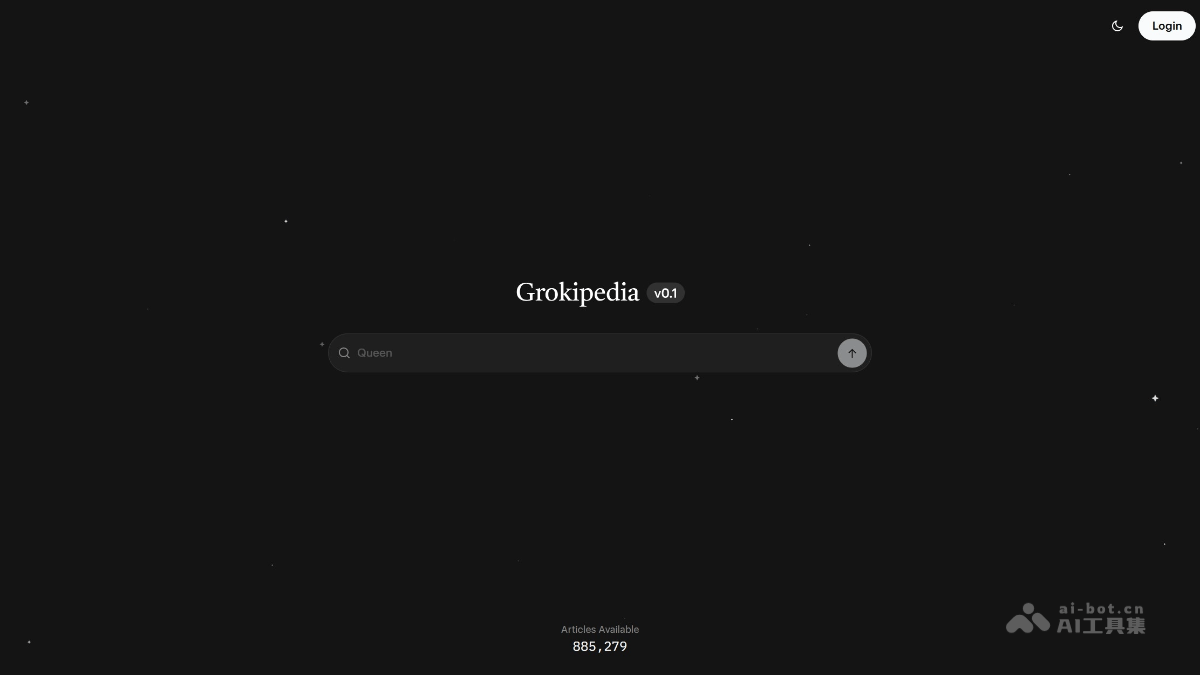
Grokipedia's main features
-
AI generation and review: Driven by Grok AI, it automatically generates and reviews content to ensure the accuracy and objectivity of knowledge.
-
Real-time updates: Supports real-time updates, allowing users to obtain the latest information when querying, while also supporting seamless multilingual switching.
-
Multimodal resources: Integrates multimodal resources such as images, audio, and video to enrich the forms of knowledge presentation.
-
User contributions and community review: Users can submit edit suggestions, which are put on-chain after community review, enabling collaborative knowledge building.
-
Dynamic pages: Provides dynamic pages that integrate multi-source data to enhance the user experience.
Grokipedia's official website address
- Official website address:https://grokipedia.com/
Grokipedia's application scenarios
-
Knowledge learning and research: Provides students, researchers, and professionals with accurate and comprehensive knowledge resources to support academic research and learning.
-
Information query and reference: Users can quickly query information on various topics and obtain real-time updated knowledge to meet daily information needs.
-
Multimedia learning experience: By integrating multimodal resources such as images, audio, and video, it provides users with a richer learning experience.
-
Community knowledge co-building: Users can submit edit suggestions and participate in the construction and improvement of the knowledge base, forming a knowledge-sharing community.
-
Cross-language learning: Supports seamless multilingual switching, helping users from different language backgrounds acquire knowledge and promoting cross-cultural communication.