
What is Figma-Low-Code
Figma-Low-Code is an open-source project based on the Luisa framework that enables developers to convert Figma designs directly into Vue.js applications. It greatly reduces the handoff time between designers and developers, reduces front-end coding work, and ensures that Figma designs serve as the single source of truth. Figma-Low-Code supports zero-code rendering of designs, prototypes, and design systems, allowing design changes to be made without code modifications, clearly separating UI from business logic, letting developers focus on writing business logic code, and letting designers continue using the Figma tools they are familiar with.
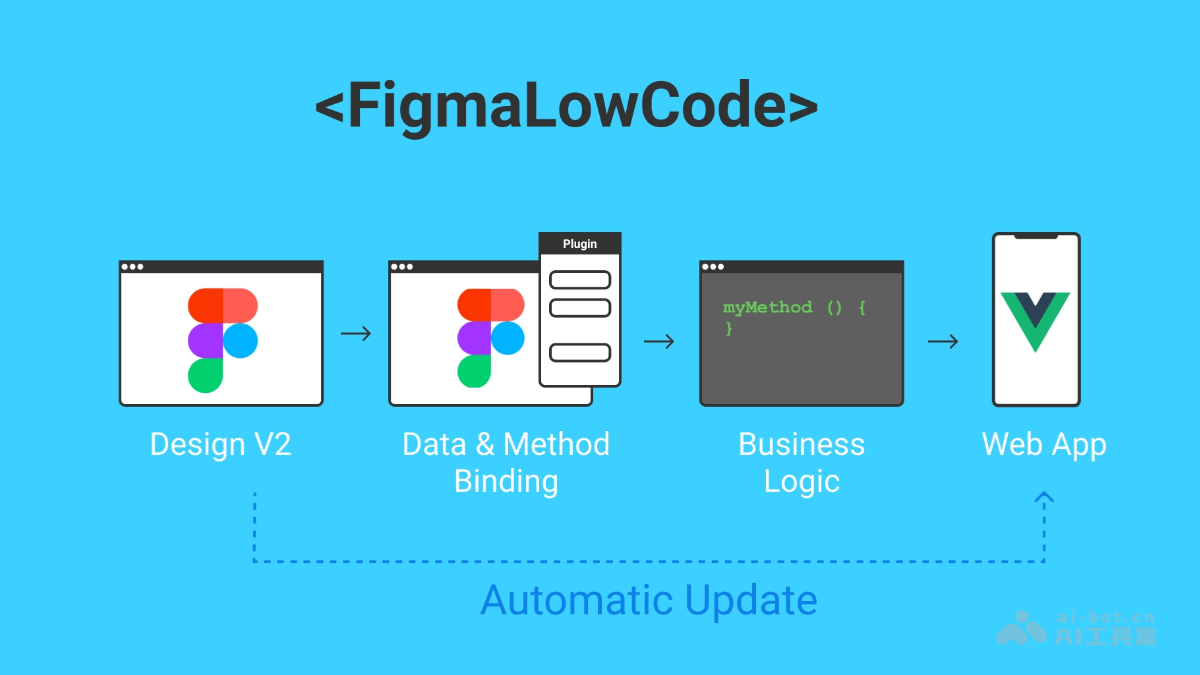
Main features of Figma-Low-Code
- Design-to-code conversion: Converts Figma designs directly into Vue.js applications, reducing the handoff time between designers and developers.
- Low-code rendering: Achieves zero-code rendering of application designs, prototypes, and design systems.
- Data binding support: Supports Vue data binding, keeping elements in the design synchronized with the application's data model.
- Business logic separation: Clearly separates UI from business logic, allowing developers to focus on writing business logic code.
- Custom component extension: Supports developers in adding custom Vue components to extend the functionality of the design system.
- Responsive rendering: Supports rendering different Figma pages according to different screen resolutions.
Technical principles of Figma-Low-Code
- Figma API integration: Based on the Figma API, converts elements and layouts in design files into Vue components.
- Luisa framework: Based on the Luisa framework, enables automated conversion from design to code.
- Data binding: Based on the Vue.js data binding mechanism, connects elements in Figma designs with the application's data state.
- Componentization: Encapsulates elements in Figma designs as Vue components, achieving reusability and modularity.
- Plugin mechanism: Based on Figma plugins, supports developers in directly setting element types, data bindings, and event callbacks in Figma design files.
- Responsive design: Automatically adjusts the layout and styles of Vue components according to the responsive rules in Figma designs.
Project address of Figma-Low-Code
- GitHub repository:https://github.com/KlausSchaefers/figma-low-code
Application scenarios of Figma-Low-Code
- Rapid prototyping: Quickly turns designers' ideas into interactive prototypes for preliminary user testing and feedback collection.
- Agile development: In agile development processes, accelerates the conversion from design to development, allowing teams to iterate products quickly.
- Minimum Viable Product (MVP) development: Helps teams quickly build an MVP, making it easier to enter the market early and start collecting user feedback.
- Internal tool development: Enables enterprises to develop internal tools and applications without investing a large amount of front-end development resources.
- Education and learning: In educational environments, students learn how to convert designs into actual code without needing to deeply understand complex programming concepts.