
Friends, have you noticed a very interesting phenomenon recently? CLI is undergoing a "revival."
In the Agent era, CLI is no longer just a command-line tool exclusively for programmers; it has also become the standard interface layer for AI to call enterprise capabilities.
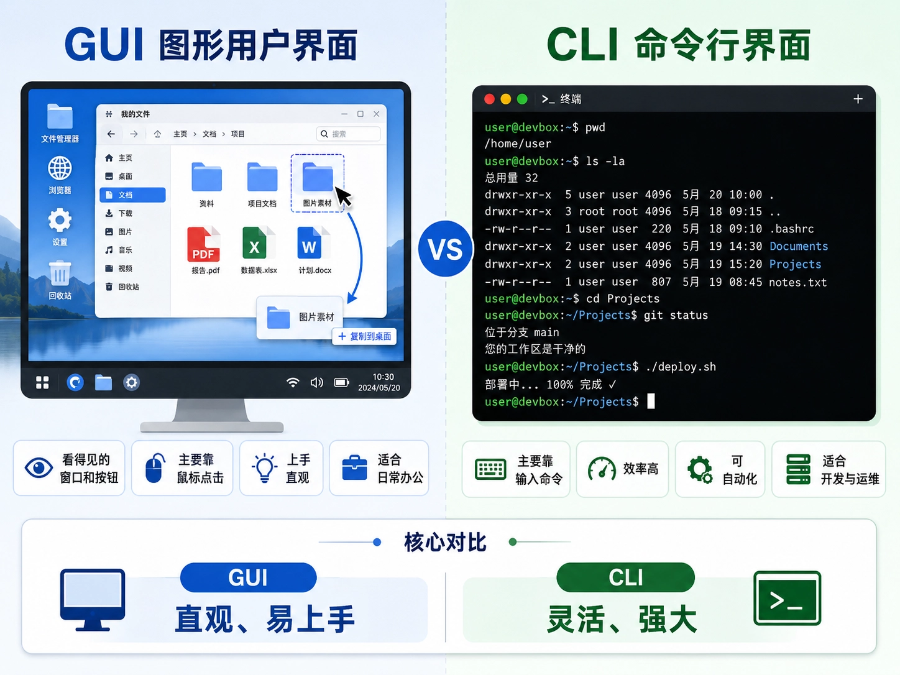
We ordinary people most often come into contact with GUI, graphical user interface, which means using a mouse to click various good-looking buttons and menus, and is very friendly to human eyes and hands.
But in the eyes of AI, these fancy interfaces are meaningless. CLI, command-line tools, are the kind of pure text commands with white text on a black box that go straight to the underlying logic and are more accurate.
Around the end of March, three major Chinese companies, Feishu, WeCom, and DingTalk, almost within the same time window, turned their office capabilities into CLIs and pushed them onto GitHub, paving a path for Agents to directly enter enterprise workflows.
From then on, AI Agents no longer only chat; they can directly send messages in work groups, remind relevant colleagues to handle tasks, read meeting minutes... covering documents, smart tables, messages, contacts, to-dos, meetings, email, calendars, and so on.
More than a month has passed. How are the three actually performing?
Without further ado, today let's do a hands-on comparison.
01. Differences in GitHub popularity
After a month, how are the open-source projects of these companies progressing and being received? Let's first look at the most intuitive data. As of May 18, 2026, the three GitHub projects are roughly as follows:
Feishu CLI has about 11,870 Stars, about 796 Forks, and about 140 Open Issues. WeCom CLI has about 2,063 Stars, about 148 Forks, and about 46 Open Issues. DingTalk Workspace CLI has about 1,897 Stars, about 115 Forks, and about 44 Open Issues. This gap is still quite obvious.
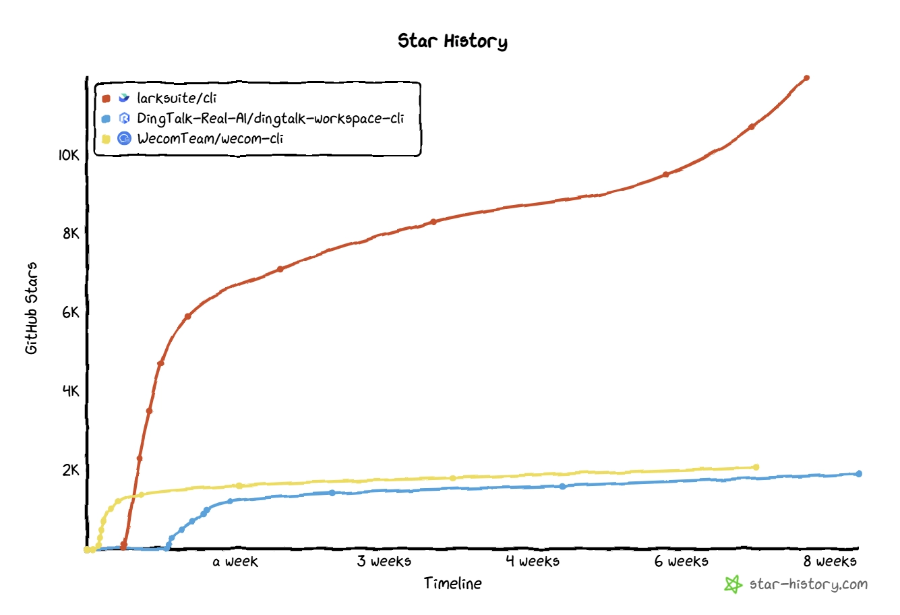
If we look only at GitHub attention, Feishu has basically already reached the first tier. WeCom and DingTalk are relatively close, but WeCom's Stars and Forks are both slightly higher。
Of course, GitHub data does not entirely equal product capability.
More Stars may be because the product expression is clearer, or because the developer community spread is stronger, or because the Agent-related positioning hits the mark more accurately.
But for an open-source tool like CLI, GitHub feedback is very important. It represents whether, after the project is released, it has truly been seen by developers and Agent players.
From this perspective, Feishu's current momentum is indeed the strongest.
02. Hands-on comparison of capabilities
Let's compare the official capability descriptions of Feishu, WeCom, and DingTalk CLIs.
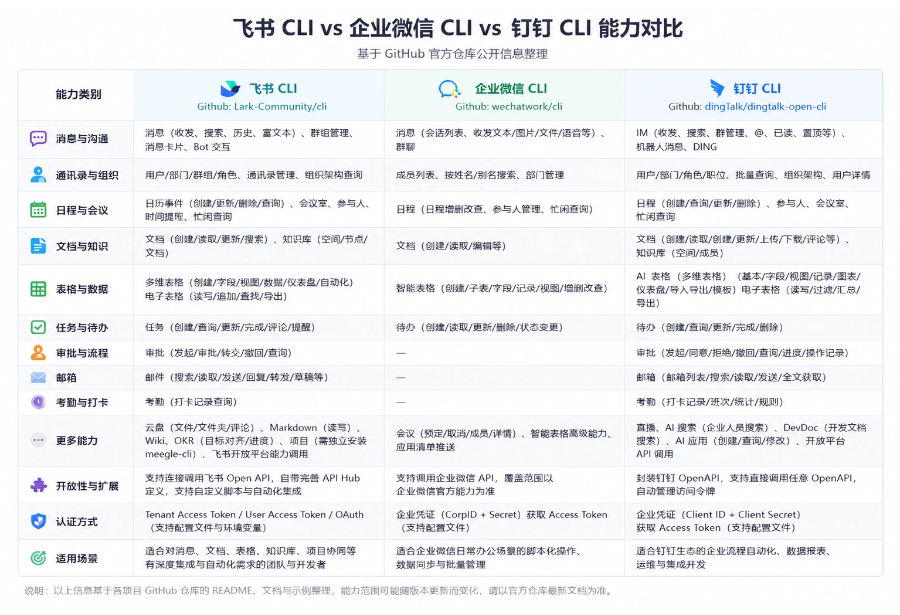
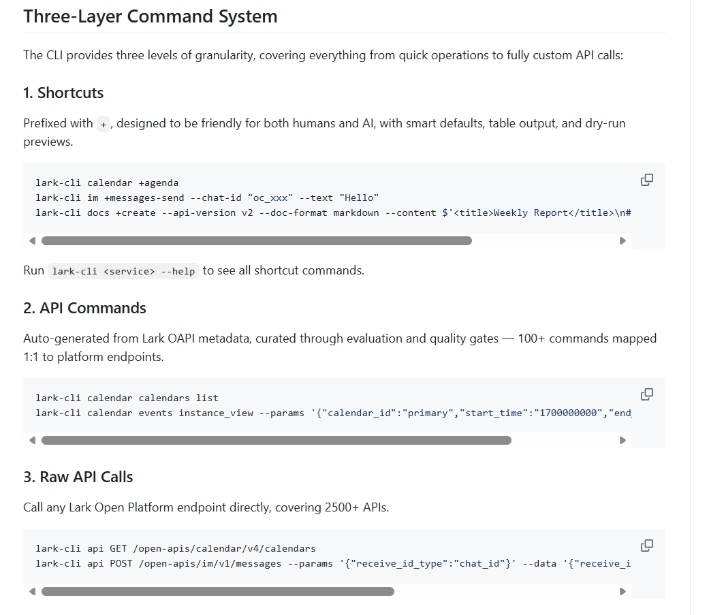
Feishu CLI covers core business domains such as messages, documents, multi-dimensional tables, spreadsheets, slides, calendars, email, tasks, meetings, Markdown, and more.
The most eye-catching points in the README are: 200+ commands, 2500+ Raw API, 24 AI Agent Skills, and a three-layer command architecture: Shortcuts, API Commands, Raw API. This design is very Agent Native.
Feishu CLI separates usage scenarios of different complexity, and also has built-in Agent Skills, so that Agents clearly know which commands to use in which scenarios, how to authenticate, how to handle errors, and how to avoid random operations.
What DingTalk open-sourced this time is DingTalk Workspace CLI, also called dws. The first batch of capabilities opened includes: AI tables, calendars, logs, to-dos, robots, contacts, DING messages, attendance, open platform documents, and the workspace.
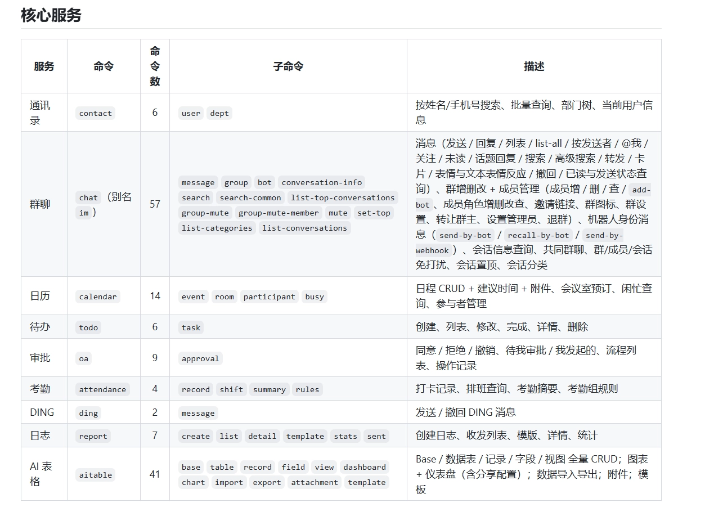
Its coverage is actually not narrow.
But from the actual experience of my subsequent runs, DingTalk still needs to further consolidate these capabilities into a smoother Agent workflow.
Now looking at WeCom, the open capabilities include: messages, events, documents, smart sheets, meetings, to-dos, and contacts.
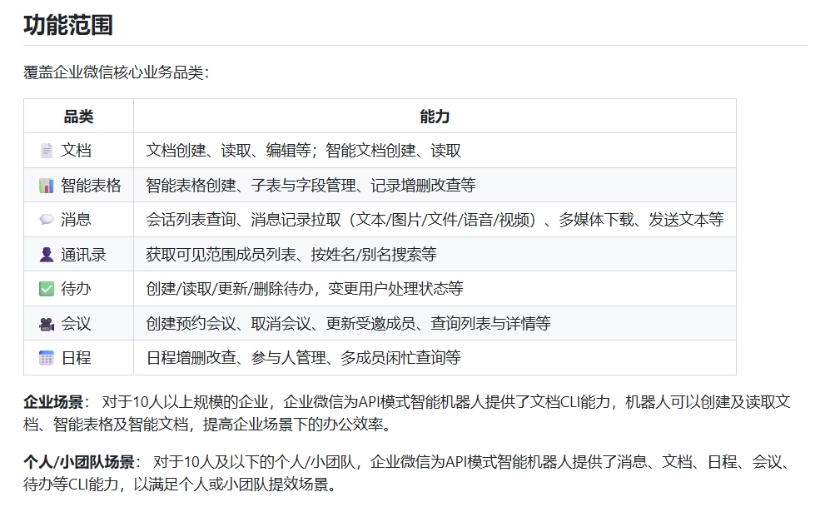
These capabilities are actually very close to WeCom's advantage scenarios, especially messages, contacts, and meetings. After integrating an Agent, many things can be automated.
However, from the perspective of Agent friendliness and overall level of openness, what WeCom feels like to me right now is: usable, but the degree of systemization is not as strong as Feishu.
This time I mainly tested a few of the most common scenarios in office work: generating cloud documents, creating meeting schedules, sending messages, reading materials, and organizing multidimensional tables.
Basically covered the five core modules of messages, cloud documents, tables, calendars, and meetings.。
Case 1 Generate a cloud document
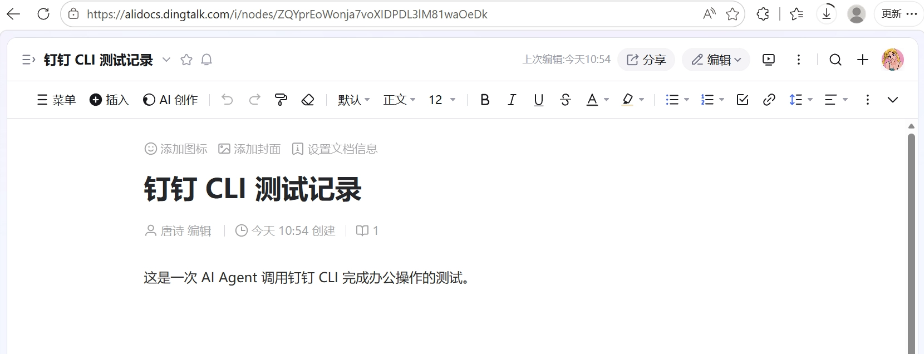
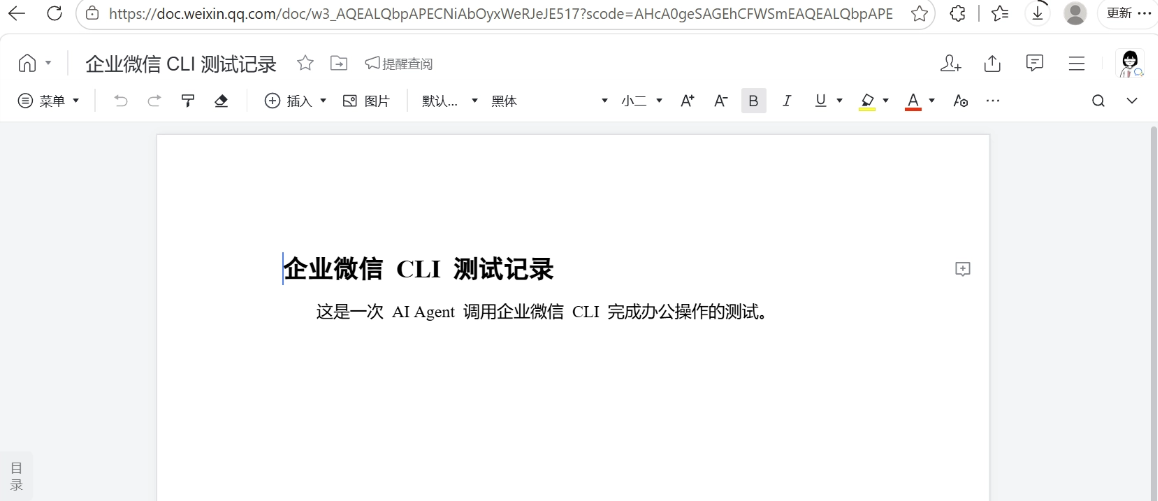
Please use XX CLI to help me create an XX document, titled "XX CLI Test Record", with the content: This is a test of an AI Agent calling XX CLI to complete an office operation. After completion, return the document link to me.
Feishu is the smoothest. It will separately request the partial authorization items needed for the task, and from authorization to generation it is basically done in one go.
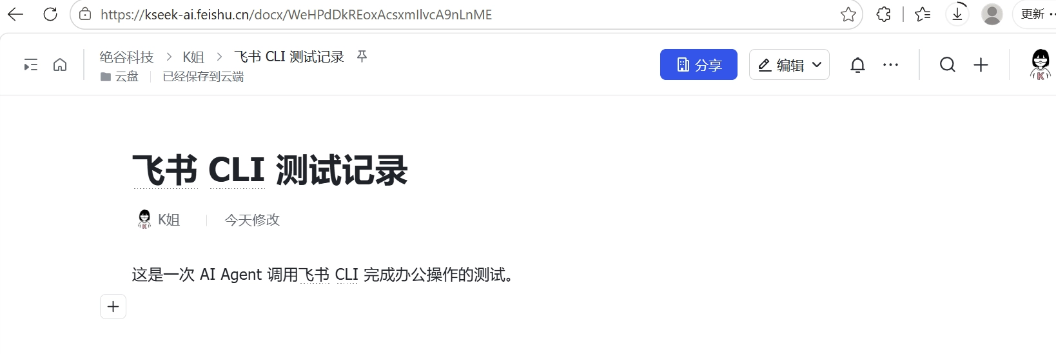
DingTalk also created it successfully, but the process was relatively less smooth. The CLI capability is there, but the smoothness of operation still needs improvement.
WeCom also successfully created the document, with a good degree of completion, and the overall experience is between Feishu and DingTalk.
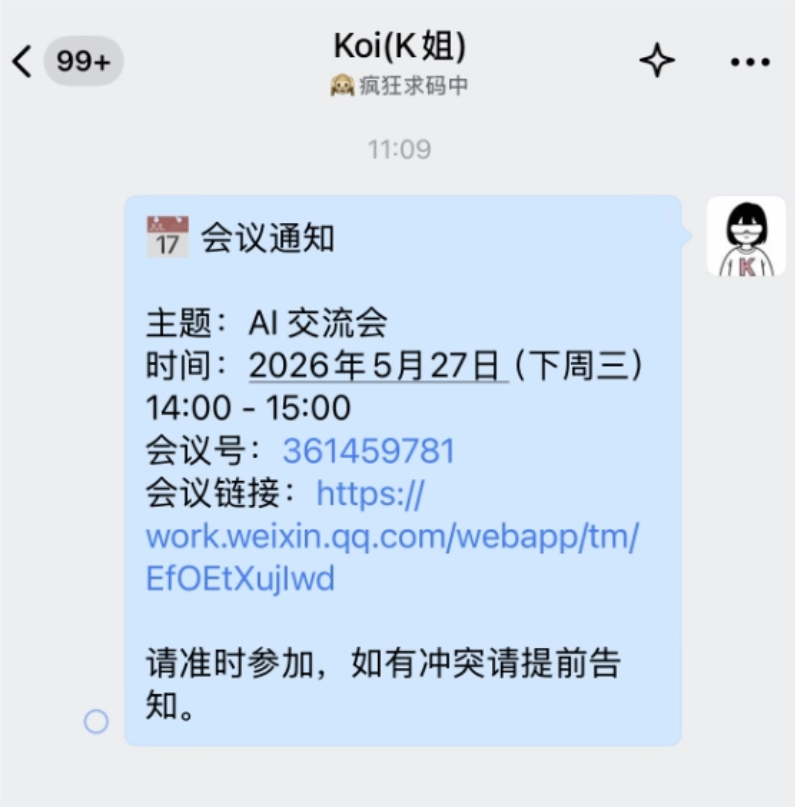
Case 2 Meetings, schedules, messages
This task is much more complex than creating a document and is also closer to a real Agent office scenario, requiring the contacts, calendar, meetings, and messages modules to be linked together.
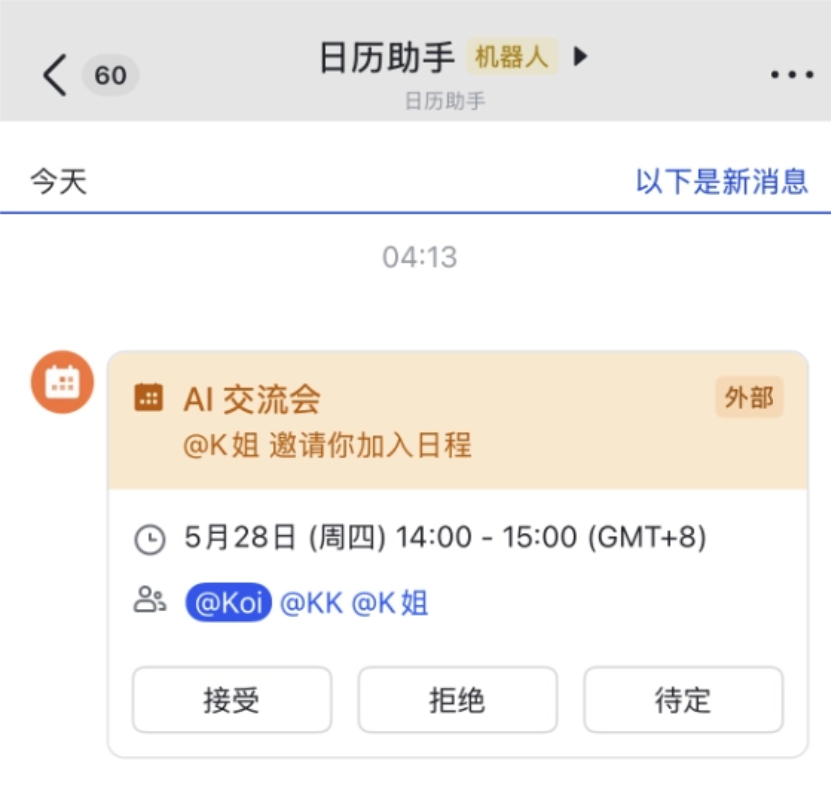
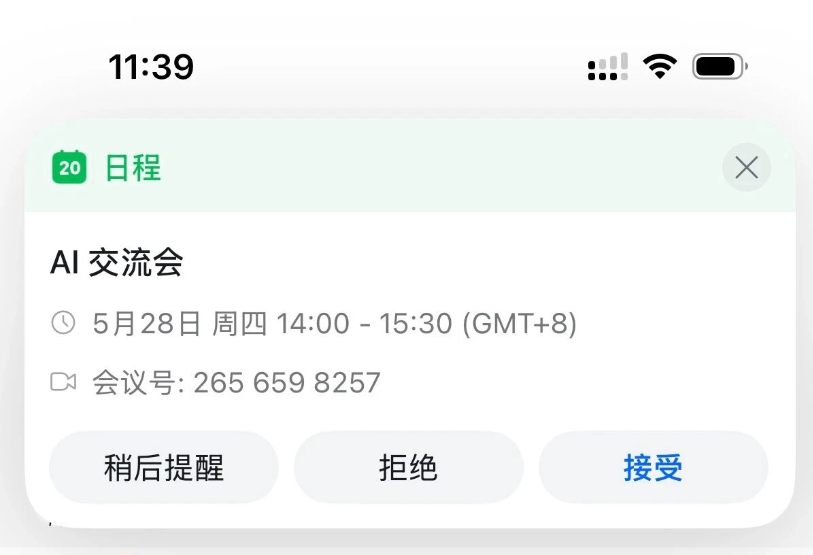
Help me arrange an AI exchange session for next Wednesday afternoon. The attendees include KK and Koi. Please first find suitable attendees, then check their free time, create a meeting schedule, invite the attendees, and send a meeting notice in the group.
Feishu's overall chain is the most complete. The Agent can understand the task breakdown relatively naturally: first find people, then check schedules, then create the meeting, and finally send notifications.
DingTalk has quite a few capability modules, but in multi-step tasks, the experience is more likely to be interrupted by authorization, confirmation, and command invocation.
WeCom has a natural advantage in scenarios such as finding people and sending messages, but in actual use it still needs clearer prompts and confirmation actions.
Case 3 Multidimensional tables
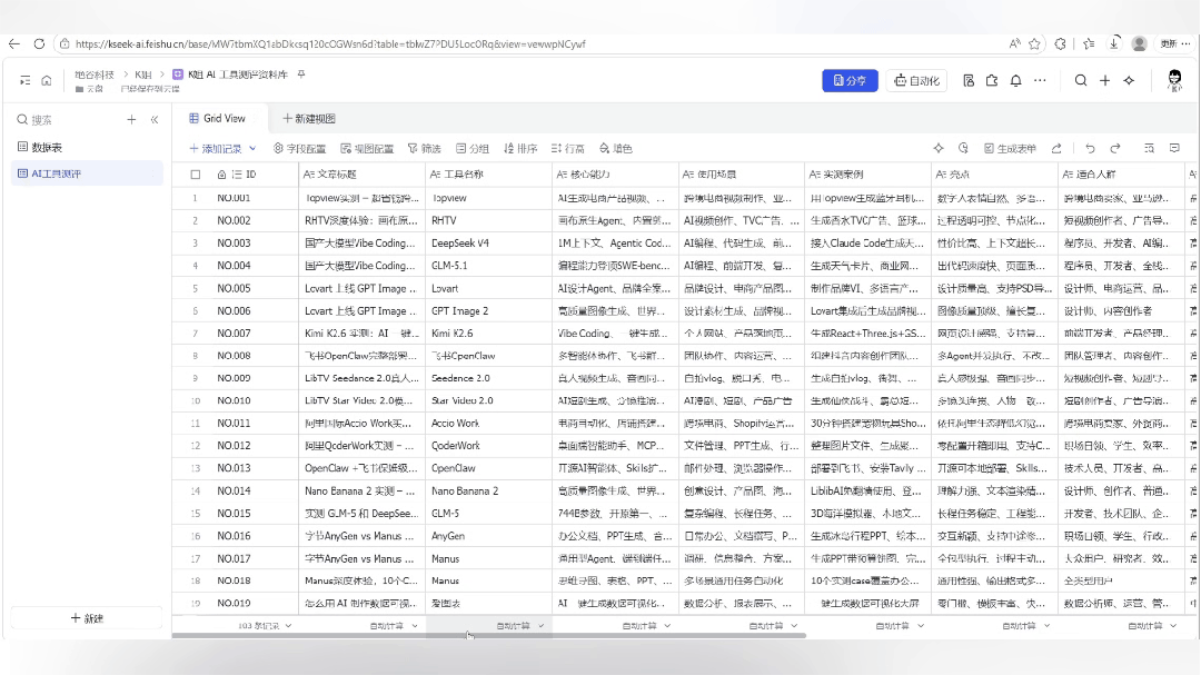
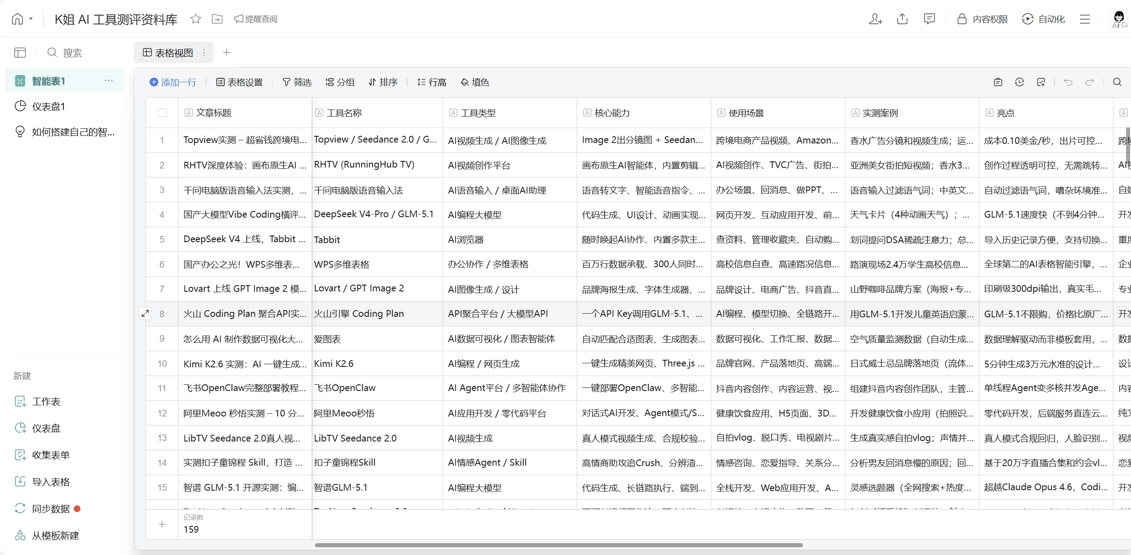
Please use WeCom CLI to read the historical official account articles I have organized. The file address is "D:\KjieGZH\CLI\My Articles". Extract the AI tools, products, models, and tested cases involved, and create a multidimensional table "K Sister AI Tool Review Resource Library".
Fields include: article title, tool name, tool type, core capability, use scenario, tested case, highlights, suitable audience, content value, directions for secondary creation, and whether it is worth continuing to follow up.
If an article involves multiple key tools, please split it into multiple records; do not fabricate missing information.
Finally, please return the multidimensional table link to me.
Feishu was very fast, basically executing according to my prompt requirements, and it sent me the link in about 10 minutes.
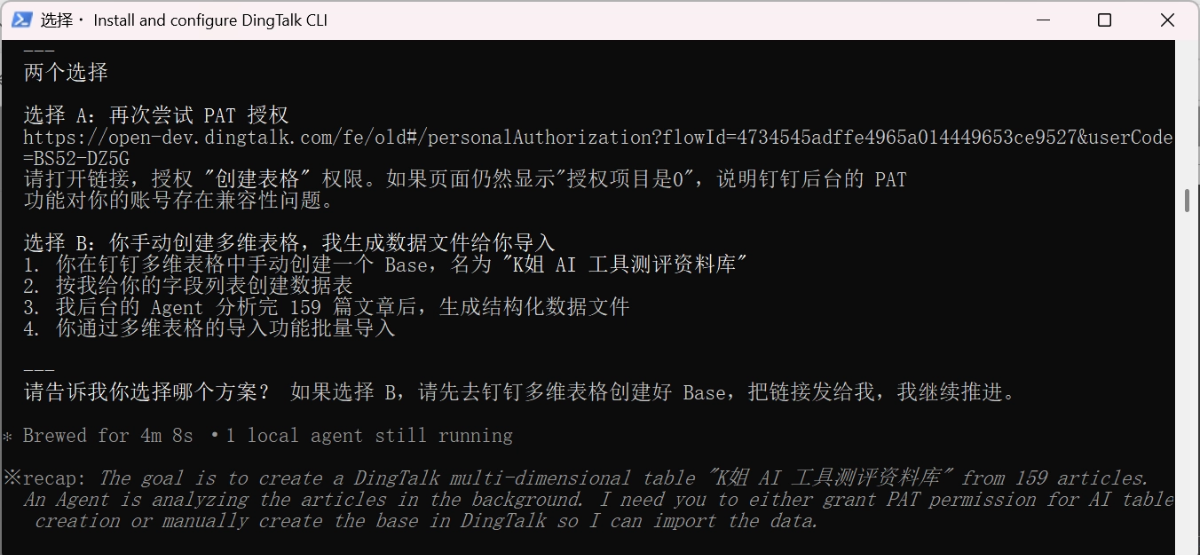
I clearly authorized DingTalk, but during execution it kept repeatedly asking me for authorization, looping several times, and it simply could not run. I could not stand it anymore. Damn, DingTalk, what are you doing? Oh my *, can you give me a good CLI?!
WeCom ran for an hour, spent 30 yuan, and only did 70-something articles. It hurts a bit.
Moreover, it only let me confirm after every 10 articles, so it ultimately took over two hours to finish running, and cost over 60. Fortunately, the final result was still decent.
Also, if we want to make a commonly used slide deck, among the current three, only Feishu has native Slides capability.。
If you need to create, read, modify, overwrite, or export Markdown files, or do document format conversion, Feishu CLI is also the most complete among the three.。
If you ask me: the boss wants to build an AI Agent internally at the company that can actually get work done—which company's system should it be connected to underneath?
Feishu is unquestionably in a league of its own. Feishu CLI's openness is extremely deep and thorough; in actual tests, complex database writes are basically fully automatic, and its underlying architecture is inherently an operating system foundation prepared for Agents.
WeCom is very stable for basic use, but in multi-step tasks it requires repeated manual confirmation, which is time-consuming and costly, and it is still far from truly automated work.
DingTalk appears to have an extremely broad range of modules on the surface, but in complex multi-step operations, it easily falls into an endless loop of constantly requesting authorization, causing it to crash, and it still needs optimization.
03. Some sharing
The true Agent era has arrived. Software is no longer exclusively for humans, but a productivity tool for AI.
Many people may think: in this GUI era where even the mouse is almost being phased out, is it a historical regression for the big companies to come back and compete over black-box, white-text CLI?
On the contrary, this is a renaissance prepared specifically for AI. For humans, clicking buttons is the most intuitive; but for large models, the fancy stuff on the screen is meaningless. What they need are structured, deterministic, machine-readable interfaces.
A platform like Feishu that dares to open its entire underlying business core to Agents is transforming from a collaborative office software into essential infrastructure for enterprises in the Agent era.
The Agent era has only just begun, and CLI is only the first step. The green code running in terminals today may, in a few months, become super digital employees that handle all our tedious chores.
Original link:Hands-on test of three major office CLIs—Feishu really has something this time!