
What is ERNIE 5.0
ERNIE 5.0 (ERNIE 5.0) is a native omni-modal large model launched by Baidu, with 2.4 trillion parameters. The model adopts a unified autoregressive architecture to achieve integrated understanding and generation of multimodal data such as text, images, audio, and video, which is different from traditional late-fusion approaches. Built on the PaddlePaddle deep learning framework, ERNIE 5.0 uses an ultra-sparse mixture-of-experts architecture and reinforcement learning training, giving it powerful capabilities in multimodal understanding, creative generation, and agent planning, reaching a globally leading level. It ranks among the top on international large model leaderboards, demonstrating strong comprehensive capabilities and providing powerful technical support for multimodal applications. The ERNIE 5.0 Preview model has been launched onERNIE Bot web version、ERNIE App, and has also been launched on the Baidu Qianfan large model platform, where users can directly call API services. Currently, the Preview version supports omni-modal input (text, images, audio, video) and multimodal output (text, images). The full version with omni-modal output is being optimized for product experience and will be released progressively.
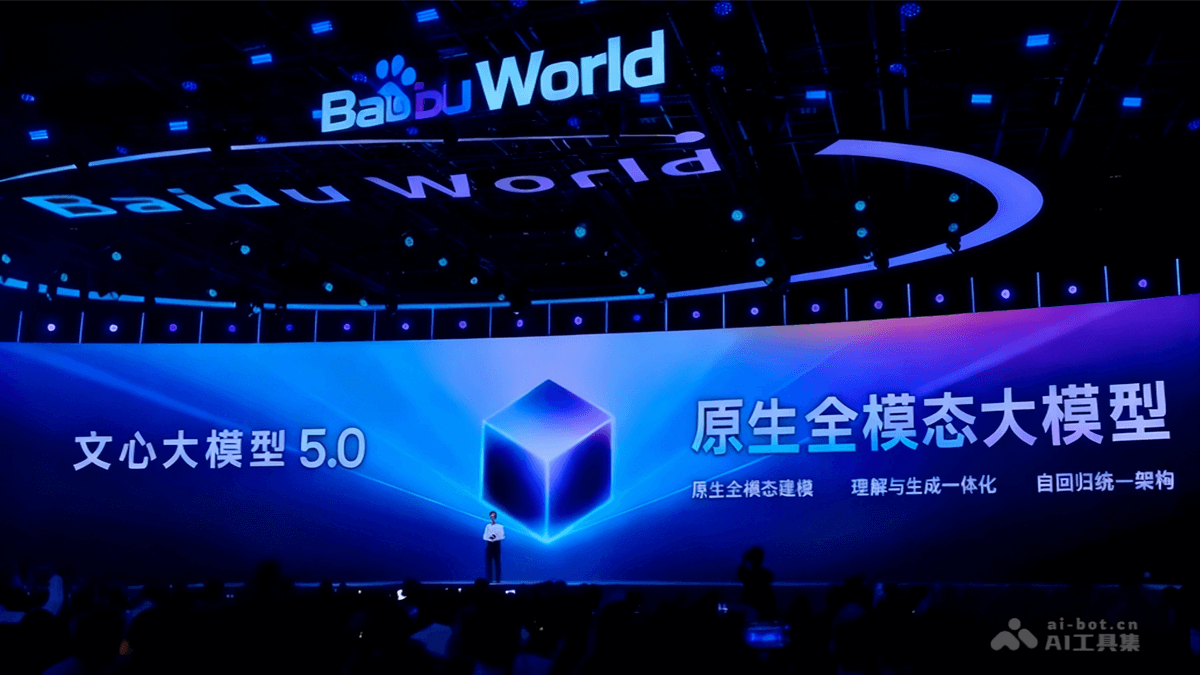
Main features of ERNIE 5.0
- Multimodal understanding and generation: Supports multiple input and output modalities such as text, images, audio, and video, enabling understanding and generation of cross-modal content.
- Creative writing and content creation: Possesses powerful text generation capabilities and can complete tasks such as creative writing, copywriting, and story continuation.
- Agent planning and tool invocation: Autonomously invokes external tools for information retrieval, provides task planning and decision support, and enhances the intelligent interaction experience.
- Precise instruction following: Accurately understands and executes user instructions, provides accurate feedback, and adapts to a variety of complex scenarios.
- Interaction and optimization: Supports real-time dialogue and multi-turn interaction, optimizes output based on user feedback, and provides answers that better meet needs.
Technical principles of ERNIE 5.0
-
Native omni-modal unified modeling: The model adopts a unified autoregressive architecture, fusing and modeling multimodal data such as text, images, audio, and video from the ground up to achieve integrated understanding and generation, avoid information loss from late fusion, and improve multimodal collaborative optimization capabilities.
-
Ultra-sparse mixture-of-experts architecture (MoE): The model has a total parameter count of 2.4 trillion, with an activated parameter ratio of less than 3%. Through a sparse activation mechanism, it dynamically allocates computational resources, maintaining strong performance while significantly improving inference efficiency, making it suitable for large-scale applications.
-
Reinforcement learning based on chain-of-thought and chain-of-action: By simulating the human thinking process and multi-turn interaction training, the model gradually reasons and optimizes action strategies in complex tasks, significantly improving agent planning and tool invocation capabilities, and achieving end-to-end efficient task execution.
-
PaddlePaddle deep learning framework: Built on Baidu's PaddlePaddle framework, it provides powerful distributed training capabilities, supports large-scale data processing and model optimization, and combines with Baidu's ecosystem resources to provide comprehensive support for model development and application.
How to use ERNIE 5.0
- ERNIE experience:
- Visit the official website: VisitERNIE Botofficial website or downloadERNIE App, and enter the homepage.
- Registration and Login: Users without an account register using a phone number or email; users with an existing account directly enter their account and password to log in.
- User Interface: After logging in, enter a simple interactive interface that includes an input box and a file upload button.
- Enter Instructions: Enter text instructions in the input box, such as "Write an article about artificial intelligence"; or click the upload button to select files such as images, videos, audio, or documents.
- Get Output: After the model processes the input content, it returns output in the form of text or images, such as describing image content or generating a video summary.
- Interaction and Feedback: If the result does not meet expectations, adjust the instructions or supplement the context information, and obtain the optimized output again.
- Baidu Qianfan Platform Experience:
- Visit the Baidu Qianfan Platform: Visit the official website of the Baidu Qianfan Platform https://console.bce.baidu.com/qianfan/,注册账号,完成身份验证,获取访问权限。
- Create a Project and Obtain an API Key: After logging in to the platform, create a new project and obtain an exclusive API key for subsequent calls to the model interface.
- Select the ERNIE Large Model 5.0 Service: In the project, select the ERNIE Large Model 5.0 service and configure model parameters (such as input modality, output format, etc.) to meet specific needs.
- Call the API Interface: Use the API key to call the ERNIE Large Model 5.0 interface through an HTTP request, input data, and obtain the response results generated by the model.
- Integrate into an Application: Integrate API calls into your own application or service to implement functions such as intelligent customer service and content generation.
Application Scenarios of ERNIE Large Model 5.0
-
Intelligent Customer Service: ERNIE Large Model 5.0 can quickly and accurately answer user questions, provide efficient and personalized customer service, and improve user experience and customer service efficiency.
-
Content Creation: The model can generate high-quality advertising copy, literary works, film and television scripts, as well as image and video content, providing rich creative support for fields such as advertising, film and television, and literature, and meeting diverse creative needs.
-
Educational Tutoring: The model can provide students with personalized learning suggestions and knowledge point explanations, assist teachers in instructional design, and improve teaching effectiveness and the learning experience.
-
Intelligent Office Work: The model can perform office tasks such as document processing, scheduling, and data analysis. By intelligently understanding user needs, it provides efficient and convenient office automation solutions, significantly improving office efficiency and work quality.
-
Medical Assistance: The model can analyze multimodal data such as medical images and medical record texts, assist doctors in disease diagnosis and treatment plan formulation, provide a scientific basis for medical decision-making, and improve the accuracy and efficiency of medical services.